In his 1961 poem To New York (for jazz orchestra and trumpet solo), Senegalese poet, cultural theorist, and future president Léopold Sédar Senghor wrote:
“New York! At first I was bewildered by your beauty…
Harlem, Harlem! Now I’ve seen Harlem, Harlem!
A green breeze of corn rising from the pavements
Plowed by the Dan dancers’ bare feet,
Hips rippling like silk and spearhead breasts,
Ballets of water lilies and fabulous masks
And mangoes of love rolling from the low houses
To the feet of police horses…
Listen, New York! O listen to your bass male voice,
Your vibrant oboe voice, the muted anguish of your tears…
No need to invent the Sirens.
Just open your eyes…
And your ears, especially your ears, to God
Who in one burst of saxophone laughter
Created heaven and earth in six days…”
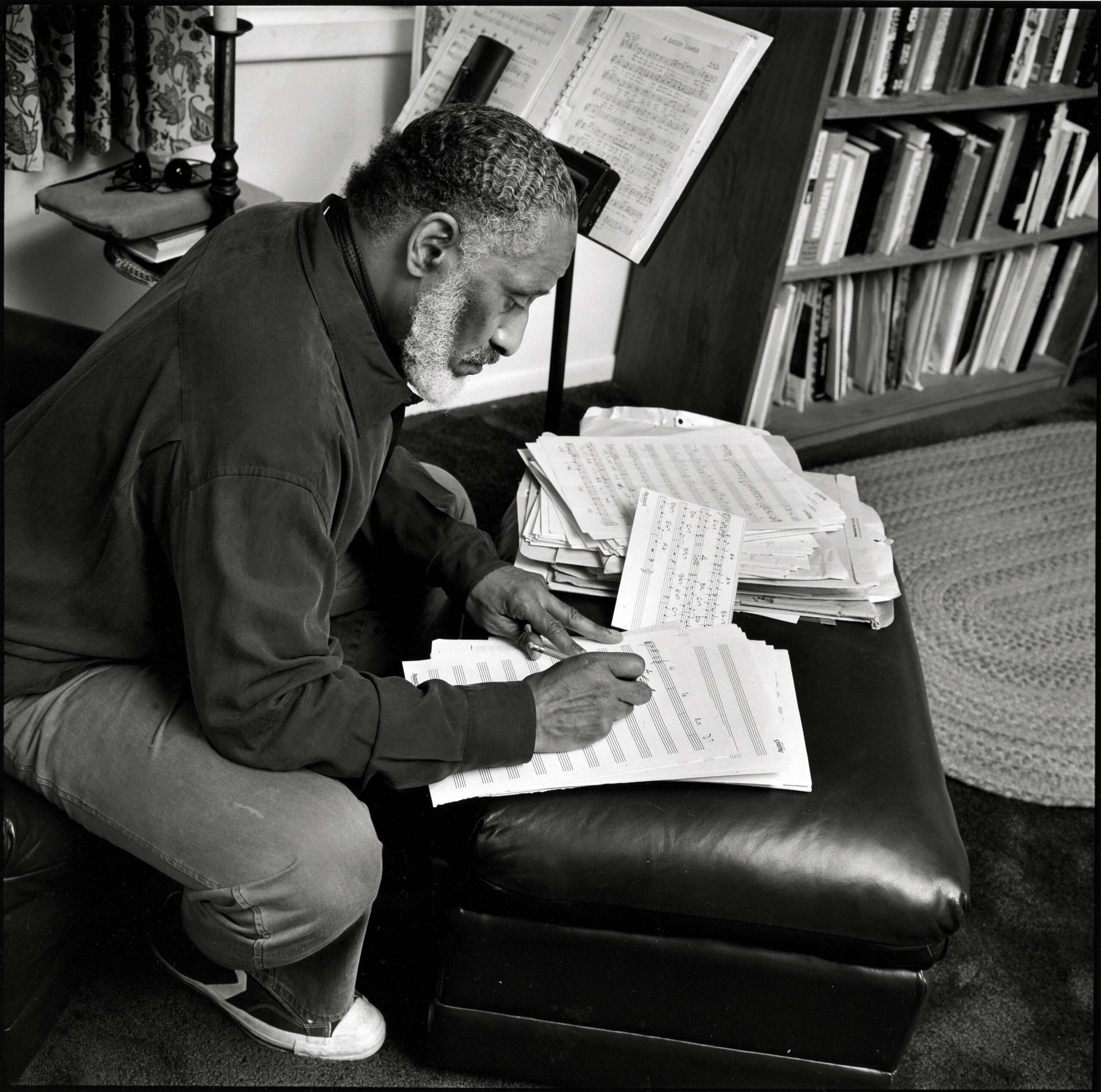
It was here, in glorious and rhythmic Harlem, New York, that legendary bandleader, composer and saxophonist Walter Theodore “Sonny” Rollins was born in 1930. Growing up in Sugar Hill, a historic neighbourhood known for its community of prominent artists, intellectuals, and civil rights activists, in his mid-teens Rollins took up the alto saxophone before progressing to the tenor saxophone. Still a “youngster,” he quickly earned a reputation as “a formidable player.”
Becoming widely regarded as the most audacious, brash, innovative, talented and witty young tenor on the scene, Rollins was beloved by elders and peers alike. From hard bop to free jazz, his brilliance was recognised by those already regarded as luminaries of the genre, such as Charlie Parker, Coleman Hawkins, John Coltrane and Thelonious Monk, as well as by contemporaries, such as Babs Gonzales, Bud Powell, J.J. Johnson, and Miles Davis.
Boisterous yet philosophical, grounded yet searching, alongside a devotion to the practice of his instrument, Rollins engaged with wide-ranging intellectual and spiritual enquiry. Immersing himself in the study of European classical composition, the structure and principles of Raja and Hindu music, and traditional Japanese Oki-do instruments, as well as anthropology, biology, philosophy, politics, spirituality, and West African poetry, his playing came to embody not just melodies, but ideas. Whether in landmark studio albums such as Saxophone Colossus (1956), Tenor Madness (1956), and Freedom Suite (1958), in live improvisational sessions, or in unaccompanied solo performances, he delighted audiences with melodious harmonies that often erupted into startling segues, spiralling improvisations, and mesmeric variations on popular songs—detouring and returning, layering and looping from one motif, pattern and theme to the next.
Yet despite his early acclaim and seemingly effortless virtuosity, Rollins’ decades-long career was also marked by personal dissatisfaction, restlessness, and uncertainty around quality and style. Recording his thoughts in private notebooks since the early 1950s—more recently published as The Notebooks of Sonny Rollins in 2024—his singular jazz writings reveal a complex inner life: one moment starkly self-critical, the next wryly humorous (“As I look in mirror, too much fat ass”).
Between 1959 and 1961, at what many would consider the height of his fame, Rollins quietly stepped away from public performance. While the jazz world speculated about his silence, believing he could play better he practiced each day on Williamsburg Bridge. Though his searching would lead him to sabbaticals around the world, it is here—to the “miraculous” Bridge—that Rollins’ answers endearingly return.
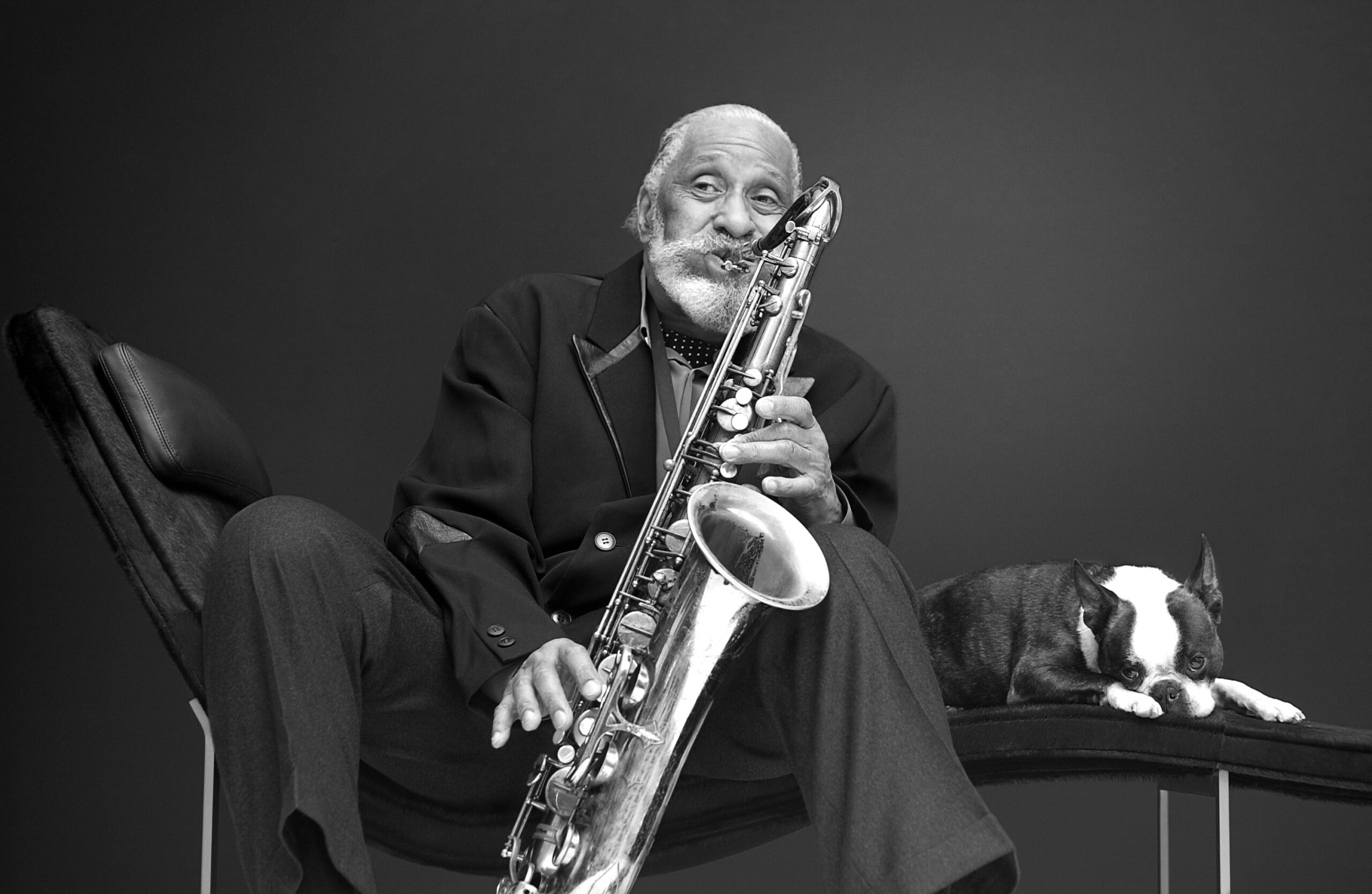
For all his seriousness as a musician, the emotion that resonates throughout our landline call is one of surprising and boundless joy. With the perspective of a man now in his mid-nineties, Rollins tells me that “[his] love for the instrument came out to be superior to [his] ability to play it”—a staggering claim when one considers the calibre with which he played. “Not high on [his] greatest achievements,” his gentlemanlike humility is quietly contradicted by the highest honours bestowed upon him in recognition of his mastery, including a Grammy Award for Lifetime Achievement, induction into the American Academy of Arts and Sciences, and a National Medal of Arts.
Now retired from playing, in parting Rollins earnestly wishes me luck “in trying to establish what it meant to do what [he] did.” And while neither one of us may ever truly be able to put into words what it was to practice, as Rollins did, in the skies above New York, I find myself arriving at a joy second only to the “burst of saxophone laughter” with which Sédar Senghor wrote God created Heaven and Earth, in all its poetic simplicity.
Well, I always loved it as a child. It was a good time for me. I didn’t think of it as anything special, I just liked it—you know what I mean?
Well, thank you so much. I had to practice and study so it was not that easy to jump right into it, but I did my best and eventually my love for the instrument came out to be superior to my ability to play it.
There were many great players, many great saxophonists. I was lucky—I guess I could say that—that everybody liked what I was doing. The next thing you know, we were putting out Saxophone Colossus. Actually, it was another guy that instituted the name. He was a guy that was into the business [side of things]. He came up with the name Saxophone Colossus. It was a good thing. The album was okay—I’ve done better, I’ve done worse—but I was happy that it reached as many people as it did.
There were many people that I admired. People like Coleman Hawkins, Lester Young, John Coltrane, Charlie Parker… I mean, there were many good players who inspired me to play. So there you go, here I came onto the scene: a youngster. I was younger than all the people I just mentioned, most of the guys that were playing at that time, but I was able to establish myself as a formidable player. I was just lucky. I’m so happy that they liked me a lot. I appreciated it, and here I am today.
Well, the thing is, in New York there were very few places where a musician, someone of my calibre, could really practice… I always wanted to find a place where I could just practice, relax, and take the time to understand some of the things I was trying to get under my fingers, as they say. This was a perfect place.
Well, yes and no. I didn’t practice that much, but that’s the way it was in New York so I had to accept it and practice when I could. It was a big problem for me that I could not pick up my horn any place, any time and play. There was no place to practice for a pianist, or a drummer, or whatever. Not in the big city of New York.
There was a lot that I wanted to do, but I couldn’t. I thought I could have been better. One of the most wonderful things that happened to me was finding the Bridge one day, coming across it, seeing it from down where I lived actually. I lived on the Lower Eastside and I happened to be walking along the street and “Wow!”, I said, “Look at this Bridge!” I happened to have my horn and I started walking across the Bridge, and boy was I surprised—happily—because there weren’t that many people on the Bridge or across from the Bridge. It was like a gift. It was like, should your mother and father, let’s say, buy you a little blue dress that you had been looking at and you say, “Oh, mom! I’ve been looking at that”… Going up on the Bridge answered a lot of questions for me… It came out to be something that I thank God for all the time…
No, no one interrupted. Very few times, very seldom, I’d see somebody crossing the Bridge, which was between Brooklyn and Manhattan—it connected the two [neighbourhoods].
Well, not really. When I was up there I was enjoying myself tremendously… I didn’t care if anybody came up there or not. I was in what they call “Seventh Heaven.” Being up there, I didn’t think there was anything I couldn’t do. I was happy. I didn’t need to know who was listening.
Then finally, this guy—I think he was a music writer, he knew that Sonny Rollins had disappeared from the music scene—put two and two together. I think his name was Ralph. Ralph Berton, I believe. Anyway, there were very few people that knew me. Very few people, the many days I was up there. I was up there everyday, so you would think I would have met more people who would know who Sonny Rollins was but they didn’t. Maybe nobody cared about me. I didn’t care about them! [Both laugh].
I was too involved with what I was doing. I had finally found a place in the world where I could study, practice, think about music, the idea of music, the world. It was just the perfect place, the absolute perfect place… I used to go up there everyday, I even went up there sometimes at night, but especially in the daytime. It was such a beautiful experience. There was nobody to complain that I was making too much noise. I was so happy to go up there everyday. There would even be times where I would take a friend of mine up there and it would be snowing. He’d look at me and see that I had gloves on, and he’d say, “Oh, God! Here we go again!” It was just an amazing, amazing thing.
I know it was a spiritual thing because I had been looking, looking, looking, finding no place in the crowded New York City. So that’s what it was to me when I found a place, where I could look up into the sky and be carried away by the beautiful skies, I could look down at the water and see some boats coming by. The trains were on the same level as I was, but I had a spot on the Bridge where they couldn’t see me. As the trains came by, they heard me playing and wondered where it was coming from. And there were also some boats on the river below that I used to play with. They played and they wouldn’t know where I was, so I had a lot of fun doing that. I like to think of myself as a chameleon. [Laughs].
Well, [they] probably influenced it quite a bit, I’m assuming. But again, I was there for one thing: playing my instrument in private. There are so many different aspects that I had the chance to go through by practicing all by myself on the Bridge. I did everything I wanted to do… I had a chance to practice all the wonderful sequences that I wanted to practice. For me, [finding that Bridge] was really one of the greatest things that has ever happened to me. My wife used to have a day job in a University, and so she used to work during the day. She was happy and I was happy, and there came the story of the Bridge.
I was able to reach a certain—I hate to say this to you, but there was a certain spiritual thing that happened when I was on the Bridge. I was often alone, but I began becoming very much connected to the spiritual world and when I practiced it took me right into that world. It was miraculous. I don’t like to talk about that, because often people don’t understand what I mean by that, they don’t know quite how to deal with my saying that, but it was absolutely a spiritual thing. It was somewhat like going to Church, you know what I mean?
Well, I’m a little bit too modest to mention anything by me.
Well, I’m sure there have been great performances by various people through the years, so again, I’m too shy to put my name in there.
Oh, definitely! Definitely! I really was hard on myself, so to speak. I had my idea of what I wanted, how I wanted to sound, and then I had my own songs, etudes… I went up [to the Bridge] everyday. I didn’t go just once a week. I was up there everyday! By the way, I used to get a lot of exercise walking up the Bridge. [Both laugh].
[Laughs]. It certainly added something, yes!
That question, it’s going to be difficult for me. Being a serious artist, there were times when I thought I sounded okay and there were times when I didn’t think I sounded okay. So, it’s hard to look back and say, “Oh, I sounded okay last week, but not the week before.” It was very difficult to be sure that I was playing well, but every time I played was an attempt at sounding as good as possible.
Oh, I think it’s all important! I think everything is important.
Well, I’m a very modest person so I am not high on my greatest achievements. I’ll leave that to other people. But one of the greatest things that ever happened to me, in the fact that I became a musician, was the fact that I found the Bridge, and the Bridge found me.
No, thank you very much for bringing this all about. I’m so glad you did, because the fact that you are interested in how the whole thing came about is remarkable.
I wish you luck in trying to establish what it meant to do what I did. [Practicing on the Bridge as I did], it was such a great thing. I know it was a spiritual thing. Many times, I would actually pray to whatever the force was. Working up in the skies and getting the blessing that I got, I just felt that, if I didn’t pray, I was being very ignorant. I am so happy that you think it is important enough for you to write about. I do too. God bless you.
God bless!