Across centuries and continents, human cultures have found in music not merely a form of entertainment or emotional release, but a system of meaning—an alternative, and at times, a superior language.
Long before the written word, drums echoed across savannahs to convey news, the flutes of druids summoned spirits in the mist-laced groves of Celtic Europe, and voices rose in tonally precise chants that imitated the cadence of birds, rivers, and winds. Music did not stand apart from language—it was language, encoded in breath, body, and crafted object.
To speak of music and instruments, then, is to enter the realm of semiotic systems—material embodiments of culture, identity, memory and resistance. Just as alphabets crystallise speech into form, instruments give shape to cultural consciousness. They are more than artefacts: they are vehicles of transmission, capable of carrying not only melody but ancestral memory, cosmology, and political longing. They can invoke gods, bind communities, and resist empires. They serve as repositories of knowledge, continuity, and identity, and persist across borders—even when language, territory, or ritual have been disrupted.
As instruments move, they transform—adapting to new contexts, crossing cultural boundaries, and acquiring new voices. A sound once used in ritual may become protest; a rhythm born in ceremony might loop into club music. An Andean panpipe might echo in a Paris subway; a Nigerian talking drum might punctuate a Berlin techno track. These are not new phenomena, but extensions of something ancient: sound travels, and meaning travels with it.
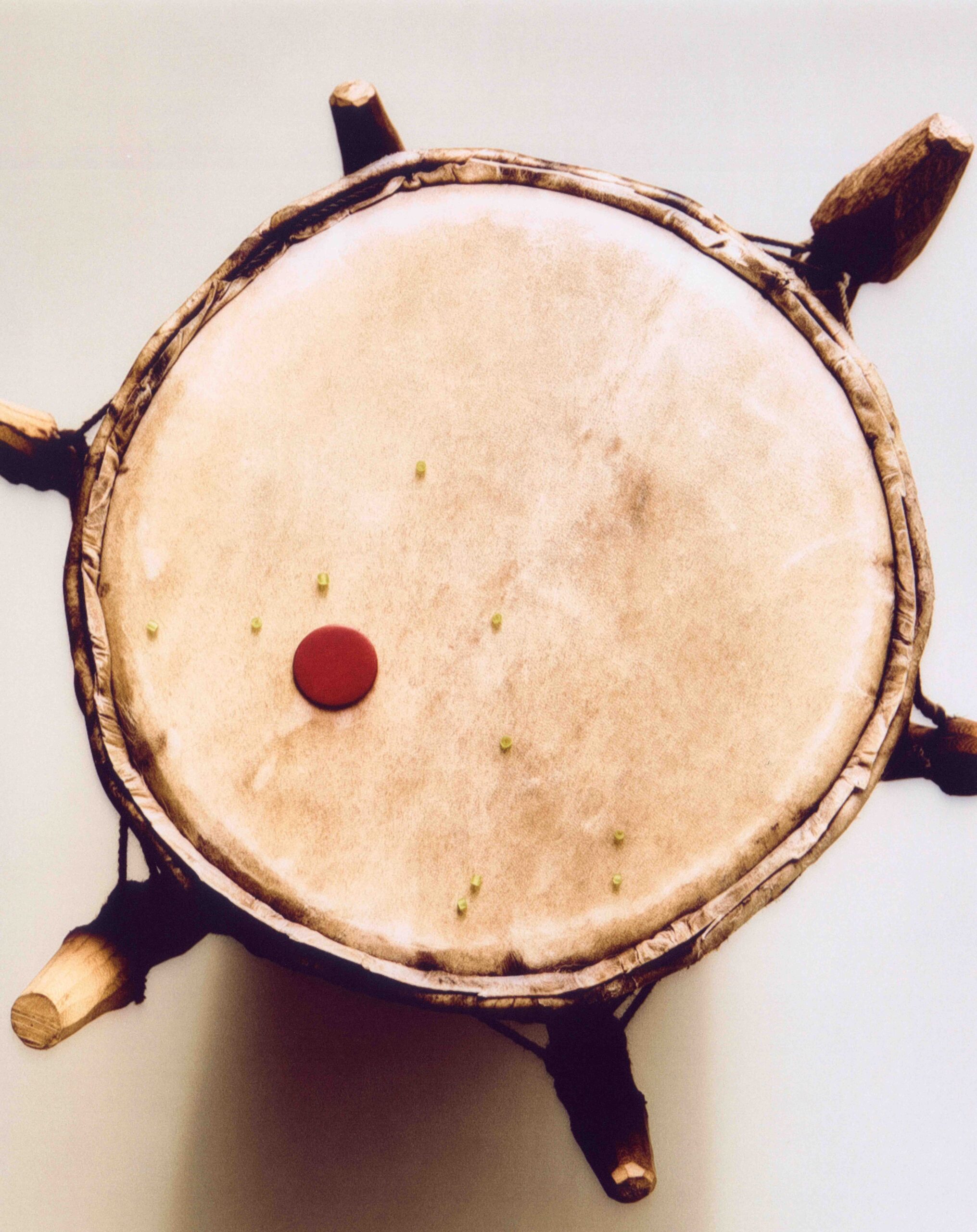
A messenger arrives breathless at the edge of the village, but the message has already arrived. Hours earlier, the dùndún drum began to “speak,” transmitting the news: a chief has died. The succession ceremony must begin. In villages miles apart, people stir, prepare, mourn—not because they have been told in person, but because of the music they have heard.
In pre-colonial West Africa, talking drums such as the dùndún (Yoruba) or atumpan (Akan) played a crucial communicative role. In tonal languages, where pitch changes can alter meaning, these drums once reproduced speech itself, delivering proverbs, praise names, and public messages. They functioned as surrogates for language, extending the human voice across long distances—especially in societies without widespread literacy.
Thousands of miles away, in the rainforests of Papua New Guinea or on the islands of Vanuatu, a different kind of drum performs a similar function. The slit drum—carved from hollowed logs and known locally as garamut, tamtam, or nkoko—produces deep, resonant tones that travel through dense forest. Unlike the talking drum, it doesn’t mimic pitch variation but communicates through fixed rhythmic patterns that represent particular words or phrases.
These percussion instruments remind us that music, in many traditions, is not separate from language—it is, in fact, language. Whether through pitch or rhythm, drums have functioned as information networks, diplomatic tools, and carriers of cultural authority. They don’t merely accompany social life; they structure it. And in societies without written archives, such instruments become central to how knowledge circulates—how news is spread, memories are preserved, and relationships are sustained across distance.
But instruments don’t only speak across space—they also speak across time. In the absence of written archives, or in the aftermath of their destruction, music becomes a vessel for memory, preserving lineages, recording migrations, and transmitting ancestral names and ethical codes from one generation to the next. Whether strummed, beaten, or blown, some instruments become living archives, preserving and reinterpreting the past when other records are lost, forbidden, or never formally documented at all.
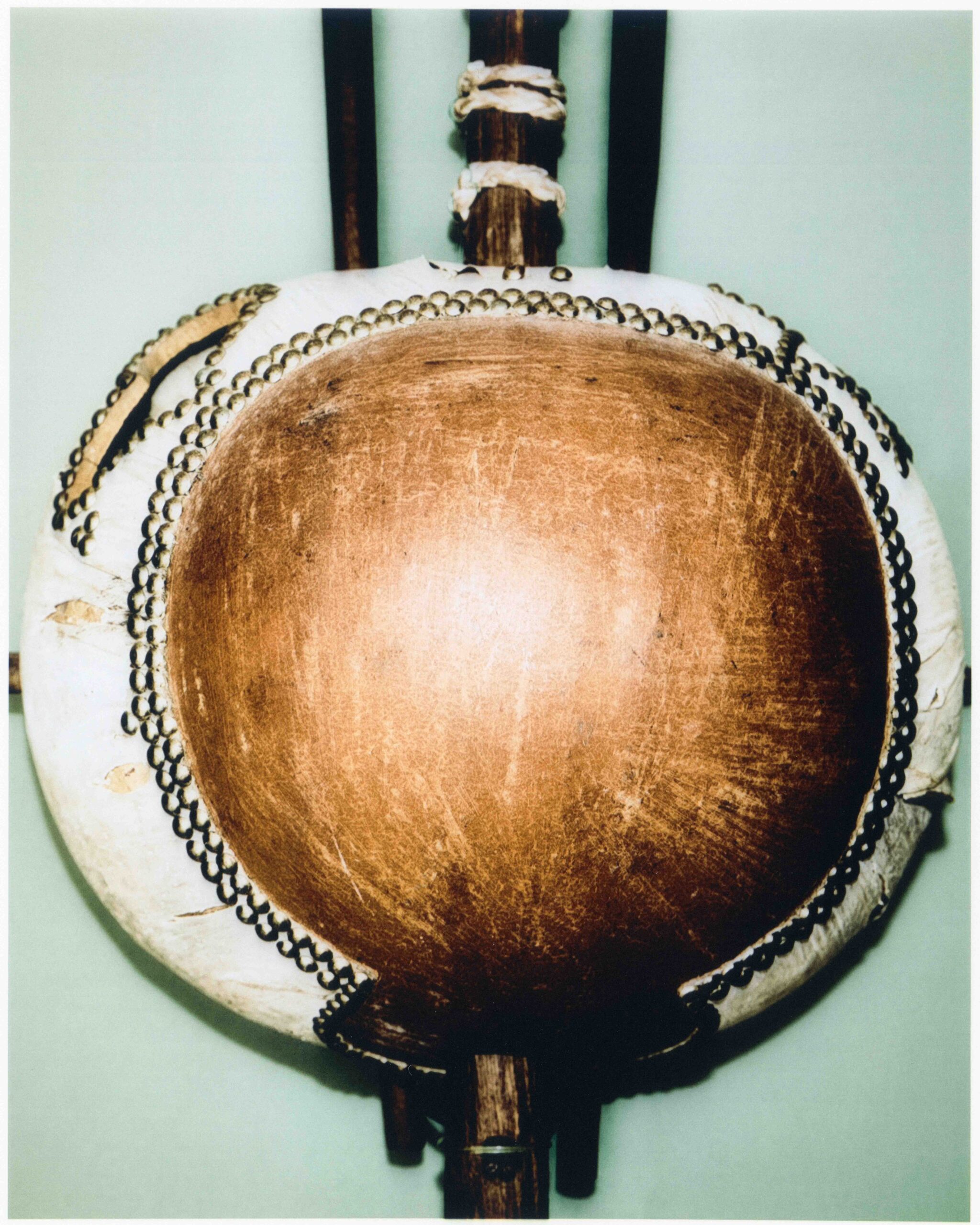
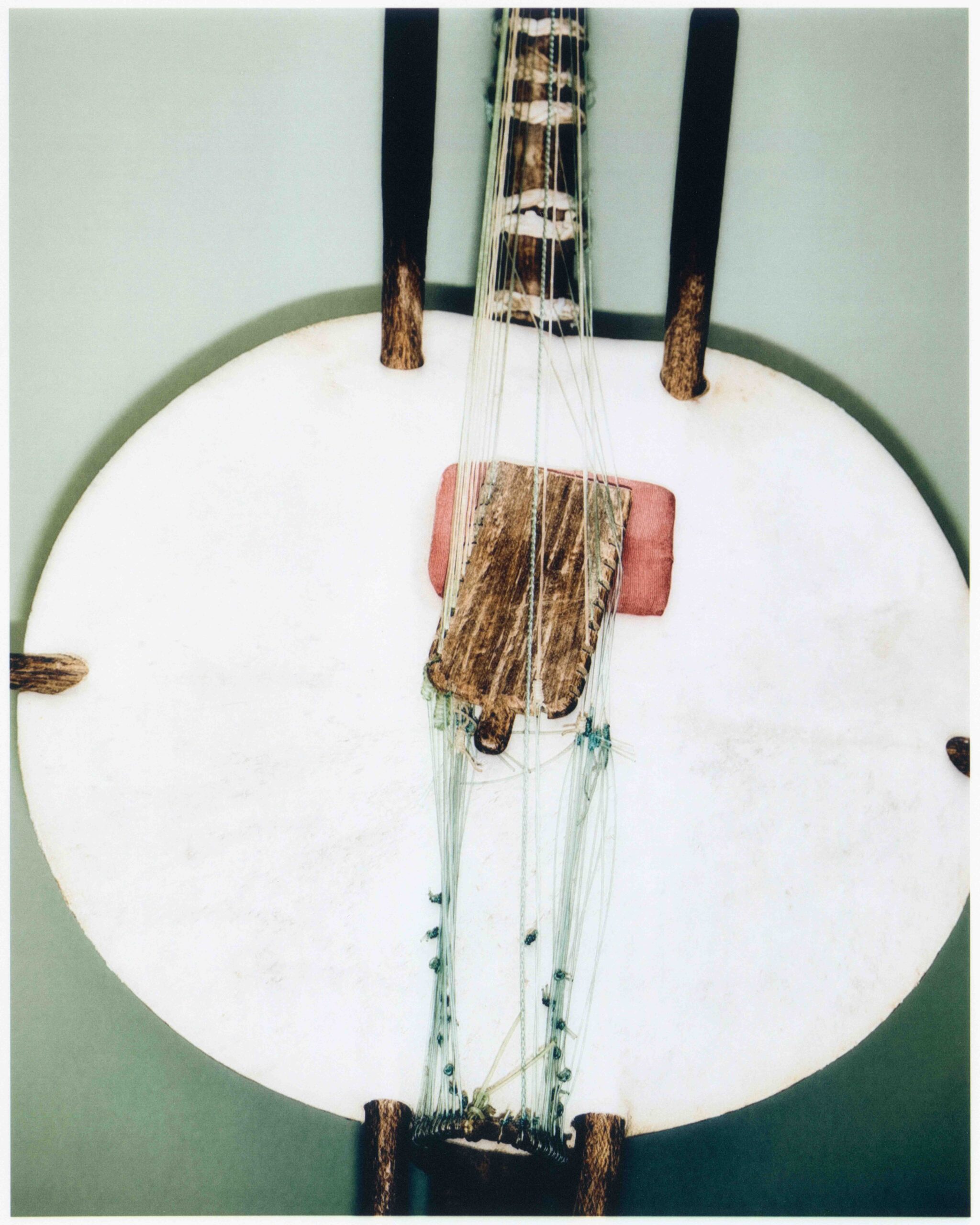
A good example of this is the kora, a 21-string harp-lute central to the griot tradition of West Africa. Griots (or jalis) are hereditary musicians who serve as historians, genealogists, philosophers and praise-singers. Each phrase plucked on the kora carries memory: of lineage, of battles won and lost, of ethical codes passed down through generations. Much like the Homeric bards who preserved Greek history through epic poetry, griots sustain communal memory through song. These performances are not improvised at whim—they are carefully maintained, taught within families, and subtly reshaped over time.
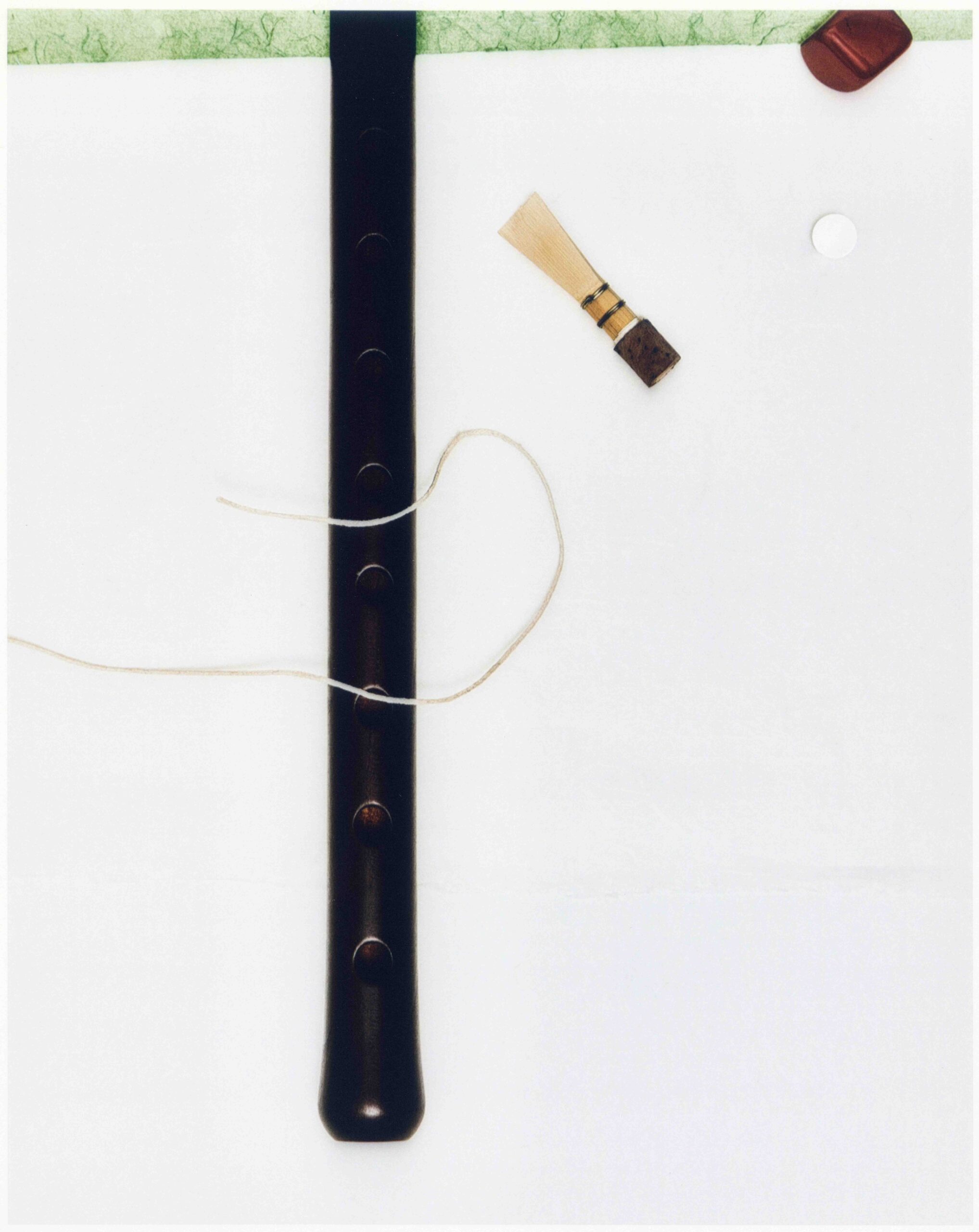
The role of the instrument as a vessel of memory is not unique to West Africa. In Armenia, the duduk serves a similar function. A double-reed woodwind instrument traditionally made from apricot wood, the duduk has long held a central place in Armenian musical life. Typically played in pairs—one musician carrying the melody, the other sustaining a drone—the duduk is known for its slow, breathy tone. While used historically in both folk and liturgical contexts, the duduk took on a new significance after the Armenian genocide of 1915. Within the diaspora, it has become a symbol of loss and continuity—an instrument that carries the sound of mourning, displacement, and cultural survival. Its timbre often evokes memories of villages destroyed and family histories interrupted.
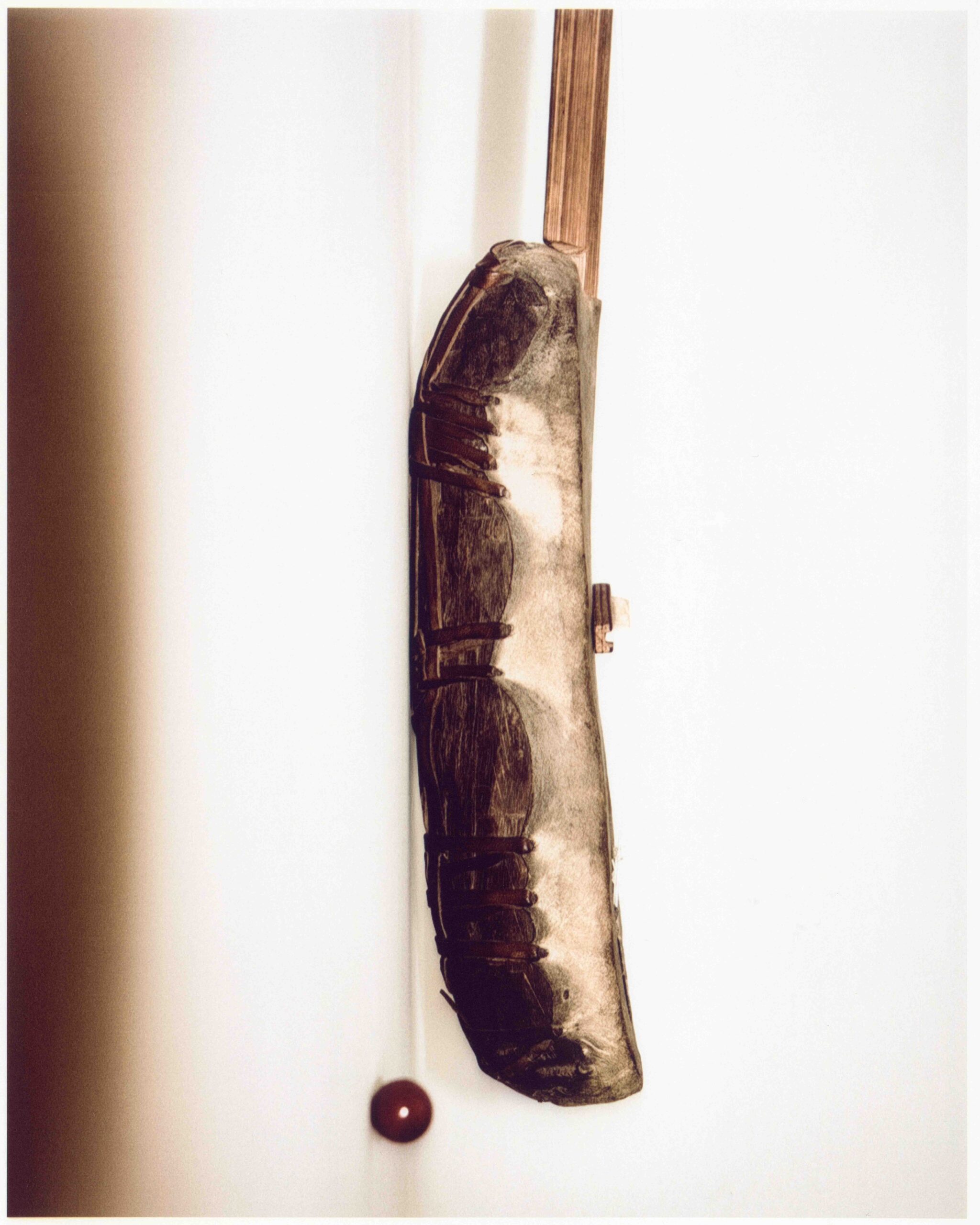
In contrast, the guqin of China whispers its history inward. A seven-stringed zither with roots reaching back over 3000 years, the guqin has long been associated not with courts or crowds, but with solitude. It was cultivated by poets, scholars, and mystics—those who played not to impress, but to understand. Each note, each slide and pause, is layered with philosophical meaning. Some passages evoke elements of nature—wind, water, pine—others allude to Confucian ethics, ancient poems, or metaphysical principles. Surviving imperial collapse, cultural revolution, and globalisation, the guqin remains a quiet continuity in the din of history—a spiritual document of string and sound, sustaining not just music but worldview.
Beyond the realms of memory and communication lies another dimension: one in which instruments serve not to inform, but to invoke. In many cultures, instruments act as portals to the unseen, blurring the line between the physical and the spiritual, the human and the divine.
Take the shō, a mouth organ at the heart of gagaku, the court music of imperial Japan. Made of 17 bamboo pipes arranged in a circular cluster, the shō produces extended, shimmering chords that hover in the air. Its shape reflects ancient cosmological diagrams, and its sound is meant to resemble the breath of heaven. It doesn’t produce melody in the conventional sense—just a slow unfolding of harmonies that suggest stillness, not motion. In performance, little seems to happen. But that’s precisely the point: gagaku is designed to suspend time, creating a space where the earthly and the divine briefly coexist.
On the other side of the world, the yidaki—often referred to as the didgeridoo—holds a sacred place in the ceremonies of the Yolŋu people of Northern Australia. Carved from eucalyptus trees naturally hollowed by termites, each instrument is hand-tuned, inherited, and deeply embedded in kinship lines. Its low, resonant drone doesn’t follow scales or melodies; it vibrates. Played during rituals that invoke the Dreaming—the ancestral time of creation when land, law and life were sung into being—the yidaki is not simply a musical instrument, but a living conduit between people, place and story. Far from a generic cultural icon, its use is tightly governed by Yolŋu law: who may play it, when, and in what context is defined by tradition, responsibility, and respect.
In Morocco, the guembri also holds a distinct spiritual significance. Central to Gnawa ceremonies, the guembri is a three-stringed bass lute covered in camel skin, played in lila rituals—ceremonial, all-night gatherings that are part concert, part healing session, part possession rite. Played alongside metal castanets called qraqeb, the guembri’s repetitive, pulsing lines are meant to bring participants into a trance, opening channels to spirits known as mluk who are invited in, honoured, and sometimes even danced with. Not unlike humans of flesh and bone, a few are said to linger long after the guembri’s music ends—a reminder to always be careful what you summon.
If some instruments call to spirits, others confront power. In many traditions, music resists when speech is silenced—becoming message, presence and protest.
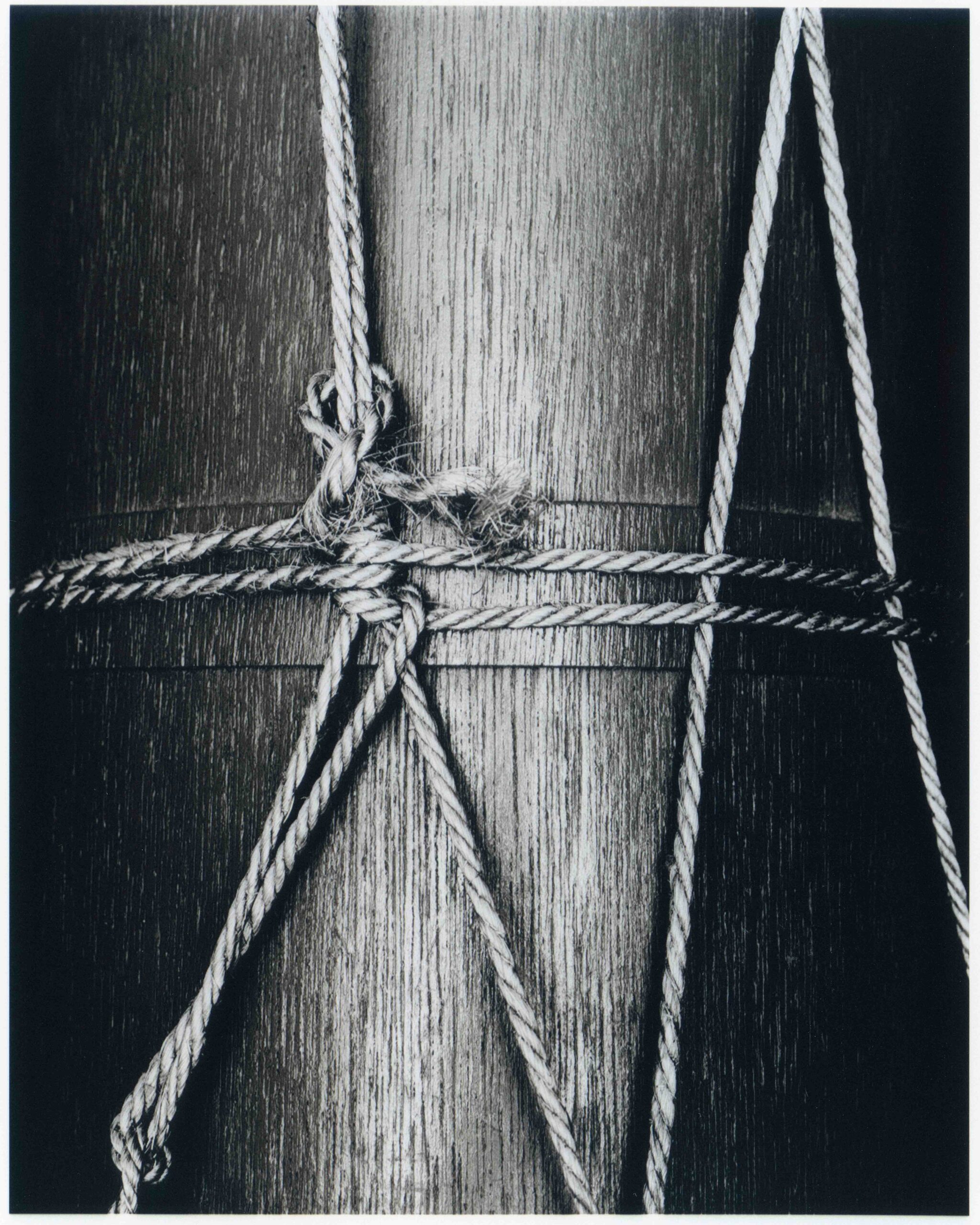
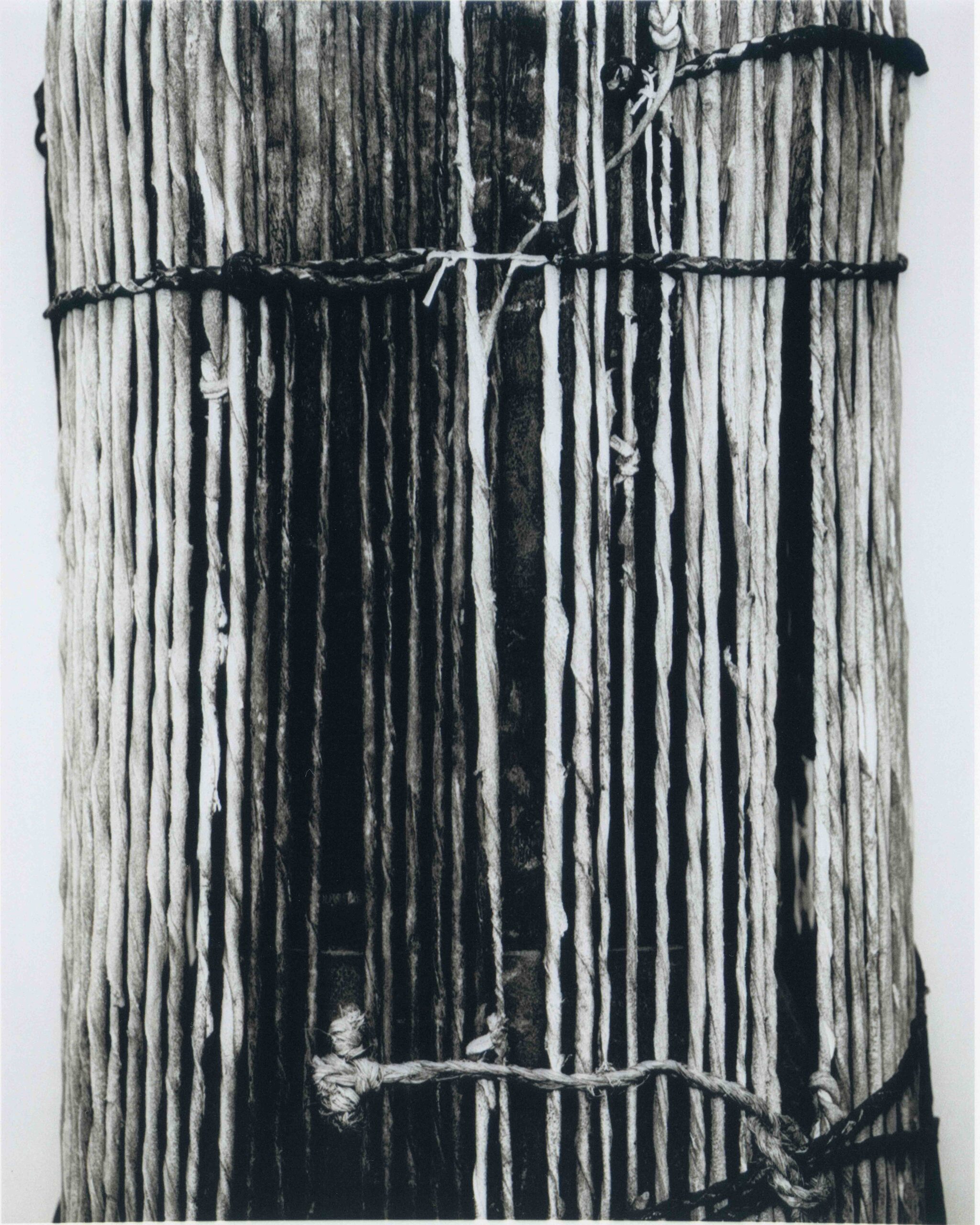
In Trinidad and Tobago, the steelpan emerged in the 1930s and 1940s as both invention and resistance. In response to colonial bans on African drumming, musicians in the working-class districts of Port of Spain turned to what they had: discarded oil barrels from the island’s refineries. Through trial and error, they discovered that careful hammering and heating could transform scrap metal into a tuned instrument.
The steelpan—widely considered the only entirely acoustic instrument invented and internationally adopted in the 20th century—did not emerge from conservatories or state commissions, but from the streets. Its earliest public appearances during Carnival, where it boomed from pan yards and street processions, challenged colonial bans and reasserted cultural identity in sonic form. While its creators were often harassed or arrested for disturbing the peace, today the steelpan is taught in universities, performed by symphony orchestras, and featured on the world’s most prestigious stages. Shaped by necessity and frustration, it stands as a historical document—encoding both resistance to erasure and the creativity of a community that refused to be silent.
In this way, the steelpan reminds us that instruments can be more than mere archives; they can be cultural and political arguments. In many cultures, music becomes a form of non-violent resistance—not through slogans or anthems, but through presence, persistence, and subversive beauty. When identity is outlawed and language suppressed, instruments become acoustic protest flags: declarations of selfhood, defiance, and survival. After all, a melody is far more difficult to confiscate than a pamphlet.
This link between sound and sovereignty isn’t unique to the Caribbean. In 18th- and 19th-century Ireland, where the Irish language was repressed and native customs criminalised, music became a quiet, covert form of defiance. The uilleann pipes—softer and more intimate than the martial Highland bagpipes—carried the fragile breath of a nation in hiding. Played indoors and often in secret, the uilleann pipes weren’t performed for audiences—they transmitted identity, sustaining cultural memory through poetry and ballads. Entire repertoires survived through oral transmission within piping families, passed down by ear from one generation to the next.
A similar story of endurance plays out high up in the Andes, where the sound of the siku—traditional panpipes—continues to assert Indigenous presence in landscapes long reshaped by colonial rule. Once central to seasonal rituals and agricultural festivals, the instrument was often suppressed or dismissed under colonial modernity. Today, it has re-emerged not just as a symbol of heritage, but as an active agent of cultural continuity.
At festivals like Qoyllur Rit’i in Southern Peru, ensembles known as tropas perform siku panpipes in large groups, with each musician contributing only part of the melody. This communal structure reflects the Andean principle of ayni, or reciprocal exchange, where sound is built through cooperation rather than hierarchy. This principle also encodes a deeper worldview. Siku music unfolds in repeating cycles, rejecting the colonial imposition of linear, progressive time. Its circular rhythms express a philosophy in which life is shaped by return, renewal, and continuity with the past. As anthropologist Catherine J. Allen puts it: “Time in the Andes is not a line but a spiral, where the past is never left behind but constantly revisited.” In this sense, each breath and silence in siku music becomes an act of cultural resistance, reclaiming time, space, and meaning on Indigenous terms.
As people move—through migration, displacement, or exile—their instruments move too. But sound doesn’t migrate passively. In new environments, instruments often shift in form and meaning. They are adapted, remixed, repurposed, sometimes by choice, sometimes by necessity. In the diaspora, instruments frequently serve as tools of cultural translation. They retain elements of their origins—materials, techniques, tunings—but they are also absorbed into other genres, assigned new roles in unfamiliar contexts, or reshaped by digital technologies. This process isn’t always celebratory, raising difficult questions about appropriation, authorship and continuity.
The ngoni, a West African lute, has undergone a quiet but striking evolution in recent decades. Traditionally carved from wood with a skin-covered body and strung with gut or fishing line, hereditary griots long used the ngoni to accompany praise songs, oral histories, and epic tales. Its playing style is rhythmic, percussive, and intricately tied to storytelling, making it not just a musical instrument but a narrative device.
In the hands of contemporary musicians, however, the ngoni has entered a new chapter. Artists like Bassekou Kouyaté have amplified it, looped it, and run it through effects pedals—blending it with genres as diverse as the blues, rock and jazz. Kouyaté, often referred to as “the Hendrix of the ngoni,” has pushed the instrument’s expressive limits without abandoning its traditional grammar. His playing retains the driving, syncopated pulse of the griot lineage, even as it ventures into improvisation-heavy performances with electric bass, drums, and Western harmonies.
A parallel transformation can be seen in the evolution of the taiko, a traditional Japanese drum. Once confined to Buddhist temples, Shinto rituals, and seasonal festivals, the taiko was historically played in specific ceremonial contexts, with tight ties to agricultural cycles, purification rites, and local deities. Its thunderous power was used to drive away evil spirits, summon the gods, or unify a village through shared rhythm.
In the 1950s, however, the taiko began a dramatic reinvention. Innovators like Daihachi Oguchi developed kumi-daiko—ensemble-style drumming designed for stage performances rather than ritual use. Since then, the taiko has spread far beyond Japan, particularly across North America, where diasporic communities and cultural activists have embraced it as a symbol of ethnic identity, pride, and collective resilience.
Today, taiko ensembles perform in concert halls, parades, and even pop culture events. They have become both a cultural bridge and a spectacle—amplified, choreographed and stylised. And while this transformation has helped preserve the instrument’s visibility, it has also raised complex questions: When does adaptation become aesthetic detachment? Whose story does the sound now carry, and whose has been silenced in the process? The taiko, like the ngoni, reminds us that instruments can thrive in movement, but not without tension.
The oud, another ancient lute central to Arabic, Turkish and Persian classical music, offers a different trajectory in diaspora—one of continuity in motion. Long associated with poetic melancholy and classical refinement, it has become a symbol not only of memory, but of movement across Palestinian, Syrian, and North African communities. Some say the oud is the grandfather of the European lute, its shape carried westward by centuries of migration and cultural exchange. Legend has it that the first oud was carved from the hanging corpse of a grieving man’s son—a myth that, while it may not be historically accurate, speaks volumes about the instrument’s enduring link to both sorrow and resilience.
In the hands of diasporic musicians, the oud speaks in new tongues. Artists like Tunisian oud player Anouar Brahem and the Palestinian trio Le Trio Joubran have woven it into jazz, flamenco, and ambient improvisation, extending its sonic range while honouring its emotional core. The instrument’s fluid tonality and expressive depth make it a perfect carrier of both continuity and change. Its double strings allow for rich ornamentation and tremolo, often likened to the human voice in its ability to weep, sigh, or shimmer with longing.
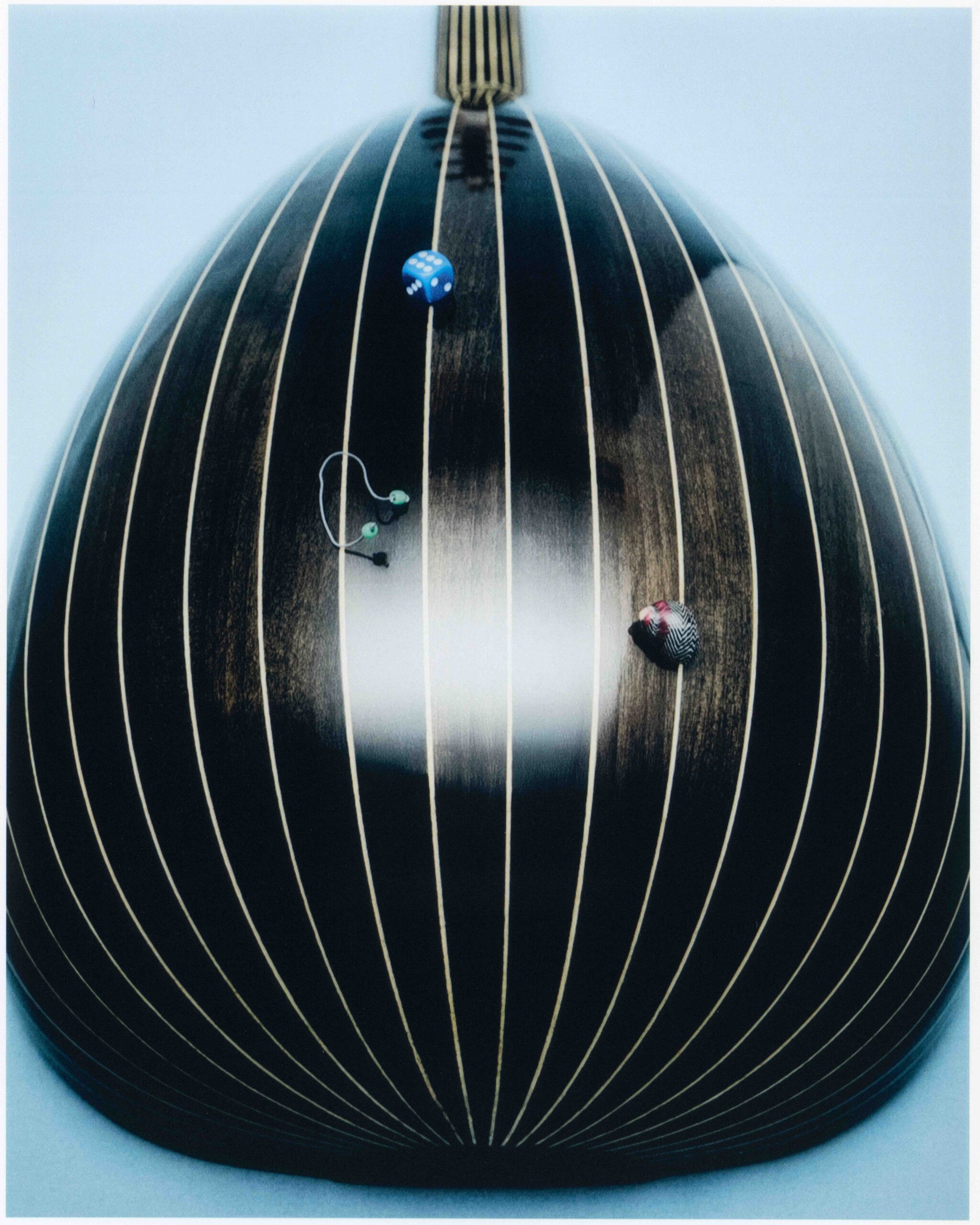
For Le Trio Joubran, the oud is also an instrument of resistance. Their compositions often incorporate poetry by Mahmoud Darwish, and their performances channel the political urgency of displacement and occupation. In their hands, the oud becomes a voice for Palestine—one that refuses erasure, not through slogans but through the endurance of sound. And now, as Gaza lies in ruins—its homes reduced to ash, its stories buried beneath rubble—there is reason to believe the oud will carry forward that which endures. The memory of Gaza will survive not only in words, but as vibration—a tremble of resistance, sorrow, and belonging that no bomb can silence.
“Music creates order out of chaos,” writes violinist Yehudi Menuhin in Unfinished Journey (1977). “Rhythm imposes unanimity upon the divergent, melody imposes continuity upon the disjointed, and harmony imposes compatibility upon the incongruous.” But the kind of order music creates is not merely sonic—it is cultural.
Instruments do more than organise sound. As we have seen, they preserve memory, transmit belief, embody resistance, and give shape to identity. They function as archives when written records are destroyed or denied, as oracles in ritual and trance, and as emissaries that cross borders—adapting, translating, and carrying fragments of the worlds they leave behind into those they enter.
In an age saturated with noise—where speed, distraction, and information readily overwhelm—musical instruments remain a different kind of voice. One that doesn’t need to shout to be heard, but endures through vibration, attention, and presence. They remind us that meaning is not always loud, but often lives in what is sustained, repeated, and most importantly, felt as resonance in the body.