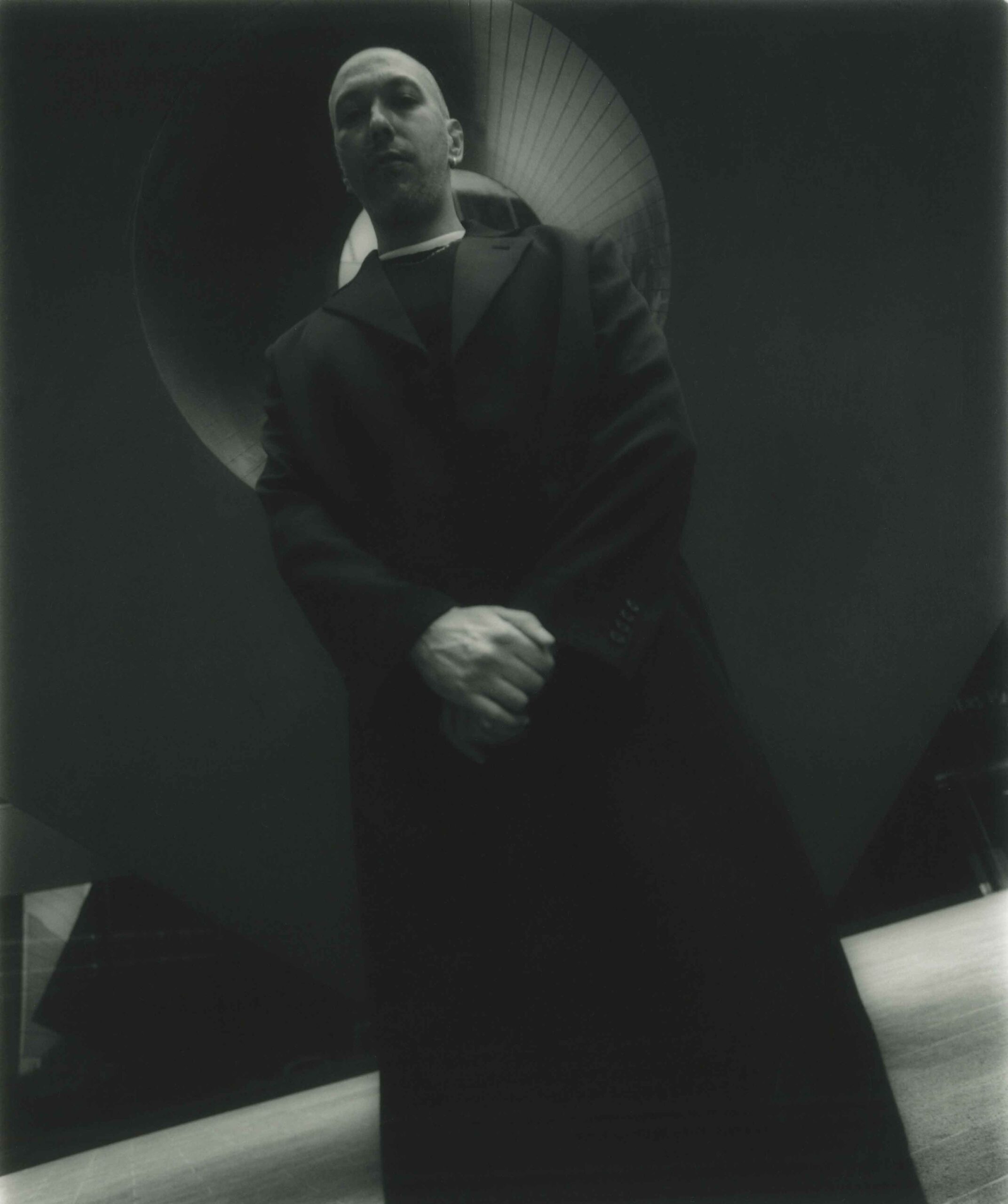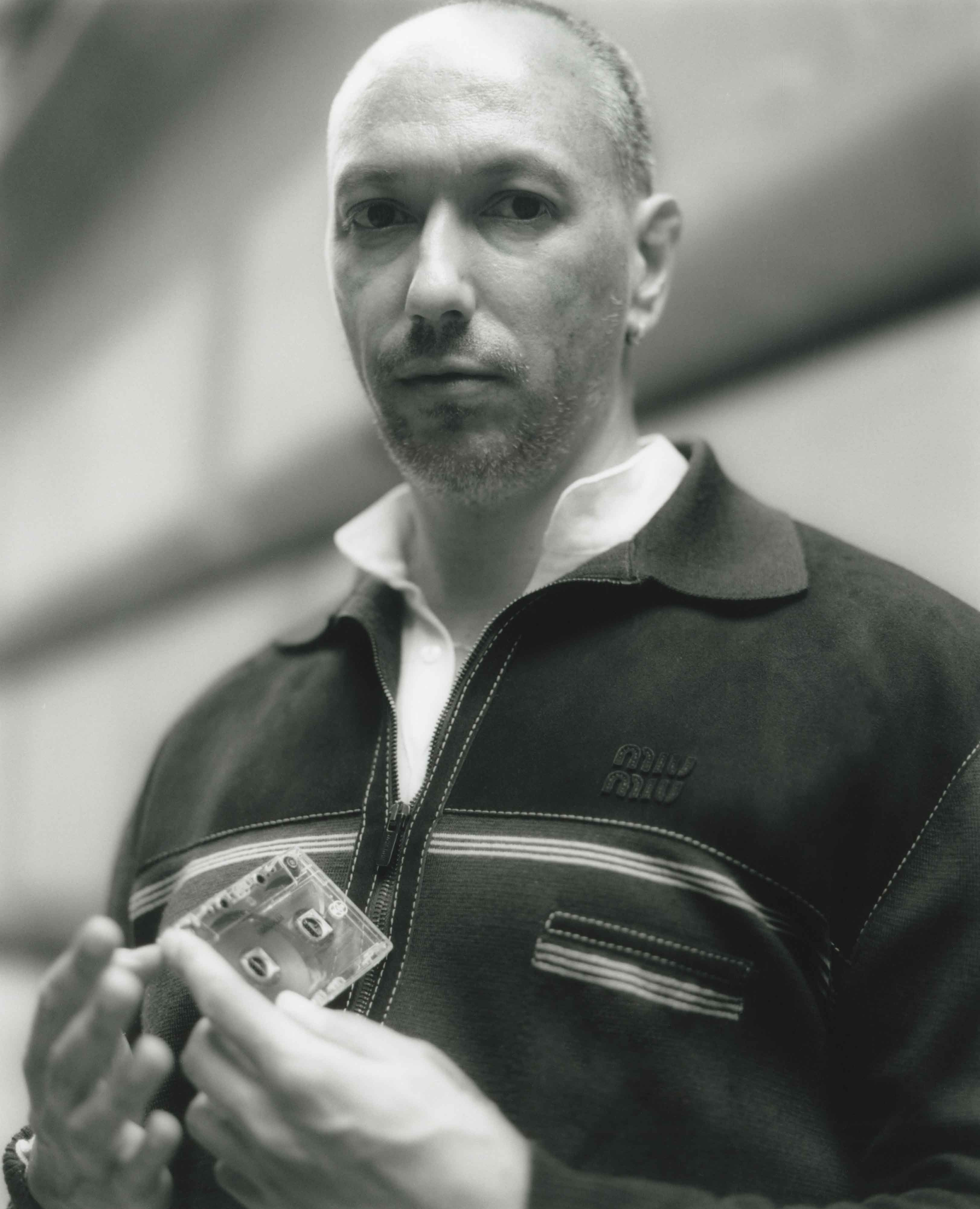
In the eyes of Oliver Hermanus, the world of filmmaking remains a persistent journey of exploration. Alongside a rigorous desire to maintain a state of play, for Hermanus this desire to explore can be attributed to the need to navigate a world in which the increasing pressures of the craft of filmmaking confine storytellers to the expectation of instant impeccability.
Originally from Cape Town and raised in Plettenberg Bay, South Africa, Hermanus graduated with a degree in film, media, and visual studies from the University of Cape Town before receiving a scholarship (funded by filmmaker Roland Emmerich) to study at London Film School. Hehas since assembled a formidable filmography, with a debut and subsequent win at Cannes, spotlights at Venice and Sundance, and nods at the Academy Awards and BAFTAs. Additionally, his showcase at this year’s Cannes Film Festival suggests no signs of stoppage or regression in his trajectory.
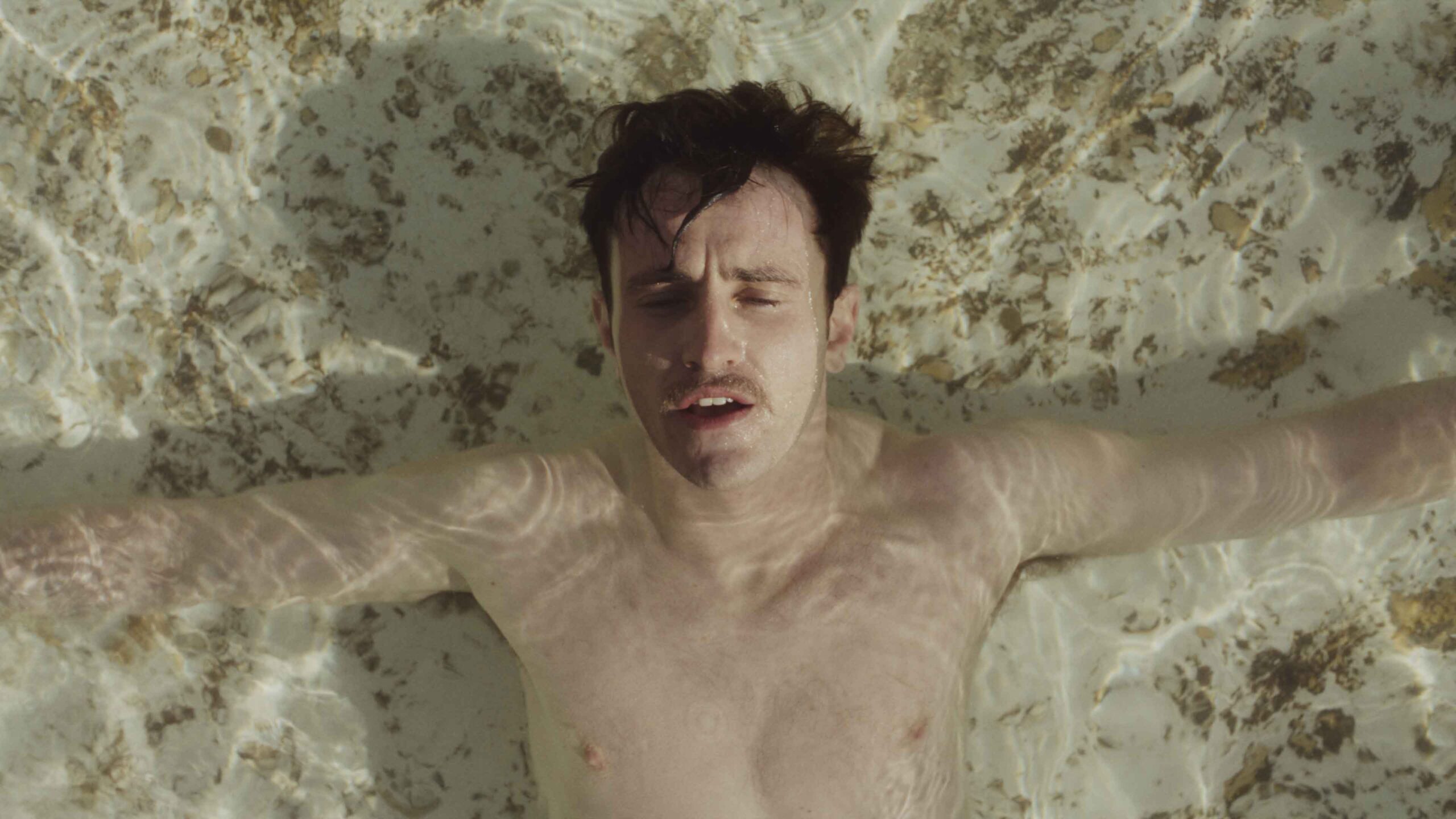
His most recent feature film, The History of Sound (2025), illustrates an unwavering commitment to his principles of creation. Set in 1917, the historical drama—adapted from Ben Shattuck’s original story—follows characters Lionel (played by Paul Mescal) and David (played by Josh O’ Connor), who meet at a music conservatory and together journey through a post-World-War-I America collecting folk songs. In more ways than one, the film unfolds as a hushed elegy to love and longing. Characters are portrayed and translated with a subtlety and tenderness idiosyncratic to Hermanus’ unique sensibilities. Glances speak volumes, tenderness is woven into subtle gestures, and folk melodies linger long after being sung.
Following the film’s theatrical release, Present Space caught up with Hermanus to discuss the evolution of his expectations alongside his craft. His measured thoughtfulness and astute insights suggest that he is, at the base of it all, as radically devoted to the earnestness and evolution of his stories as he is devoted to the process by which he tells them.
I suppose filmmaking is craft, and so the more projects you get involved with and evolve with, the more you learn about it as a whole: the creative, the physical act of making a film, and the business side of it. I’ve worked in multiple countries, and they’re all very different when it comes to how they work… I think, today, the film business is under a lot of pressure. Directors are under a lot of pressure to be these commercial products that are instantly successful. Filmmaking is a lifelong career—it’s devotion to a craft that takes your whole life to perfect or to get to a place of real execution that feels like it’s operating at the highest level. We seem to be given a lot less time to develop ourselves as filmmakers these days, you know?
I made my first film when I was 24, and that’s very young. I had received a scholarship to leave South Africa and to go to England, and that was such an extreme thing. It was such a huge opportunity that I couldn’t imagine spending those three years in London, at huge expense to somebody, and then going back to South Africa and having nothing to do with it because there was no major film industry [there] when I was graduating. The only way that I felt like I could go back and have something to potentially kickstart a career was if I got to make a feature, so I negotiated with my film school in London to make one, as a thesis essentially. They said no multiple times, and I said to them, “Well, I can’t go back to South Africa and make a short film because it’s not really going to set me up to have a career. I suppose one of the first people to discover me, in that sense, was [Roland Emmerich], who put me through film school. It was me going to him and saying, “I need to make a feature film.” I had written a screenplay, which I had in my head for a long time, and he agreed to give me—I think it was $100,000 to make that movie. And I said, “Well if you give me $135,000, I could pull it off.” That was my first film. But I remember, at the time, there was so much pressure on [me] to make the greatest film of all time. I think the cinematics and commercial world of cinema have become so impatient that directors have to make a debut that premieres at Cannes or wins multiple prizes, or gets nominated for an Oscar or something. I mean, Michael Haneke’s career peaked when he was in his seventies. This is a long way of answering your question, but I feel like my process of discovery is that I want to have a career that is long, in the sense that I will always get to evolve as an artist.
I suppose I’ve explored the question of sexuality in multiple films I’ve made, and I’ve explored it in many different ways. The first film that I made that dealt with sexuality was my second film, [Beauty (2011)]. It was all about being in control of who perceived which aspects of the character [and at when]. The movie is ultimately about those walls falling apart because of desire. I suppose, with The History of Sound, the irony [of] these two characters is that they’re not intentionally hiding. Perhaps the only thing they’re hiding from is the strong indication of their relationships to each other, and they’re very young so they don’t have the life experience to recognise the difference between the real, profound importance of your life [and] something that feels like it’s very fleeting that you move on from. There’s a lack of concern, which I really liked about the short story. There’s always that moment between two queer people of awareness, or acknowledgement, or confirmation that my desire for you and your desire for me is being met, as opposed to the fear that it’s going to be rebuked or that I’m going to suffer some kind of punishment for my advance toward this other person. There isn’t that moment where the fear comes in, and these two people have to confirm, non-verbally, permission for their desire. It’s not done fearfully. It’s done as flirtation, which is liberating in that they seem to be so open, so free, and so passionate about music that the connection is instant.
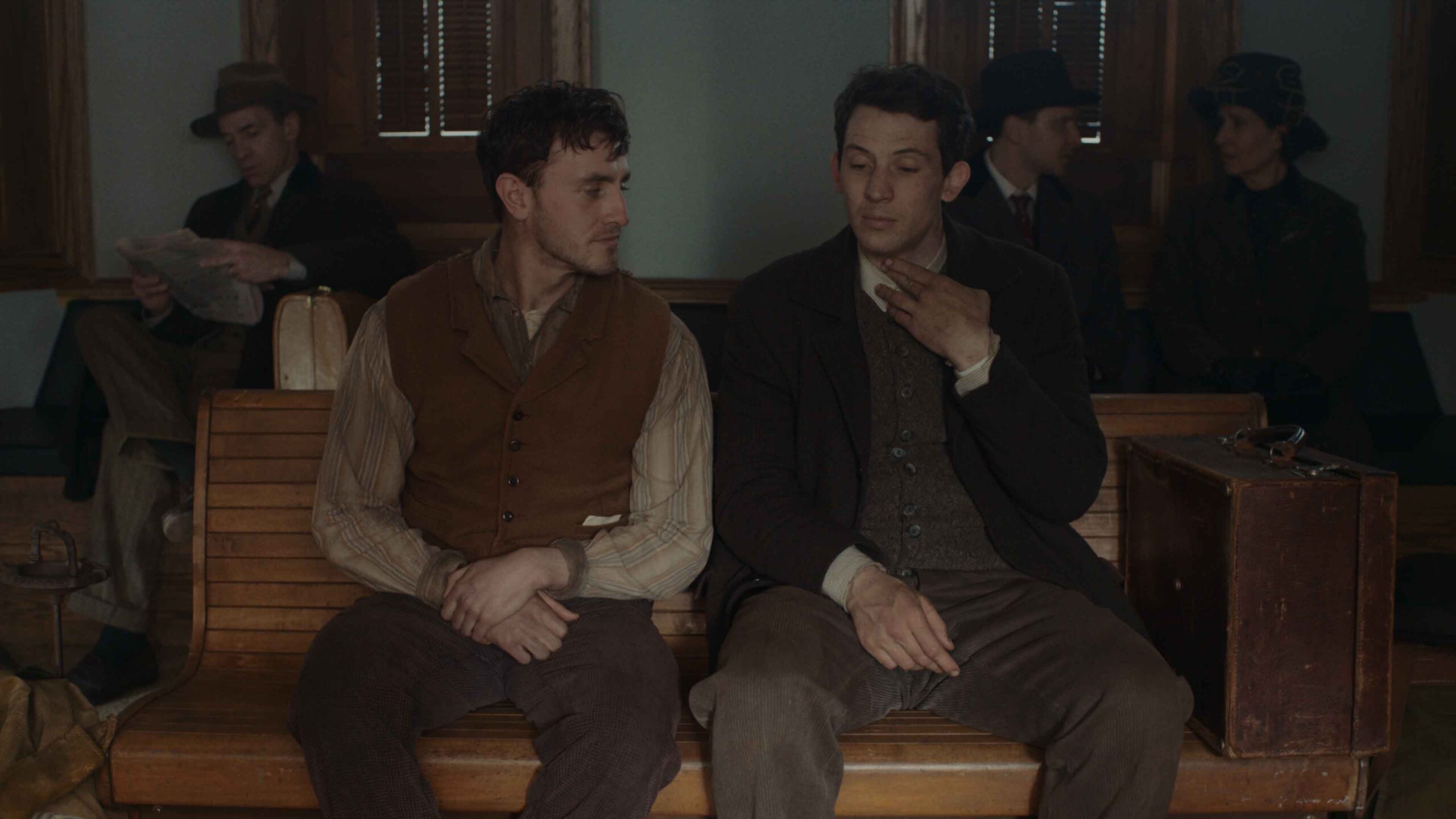
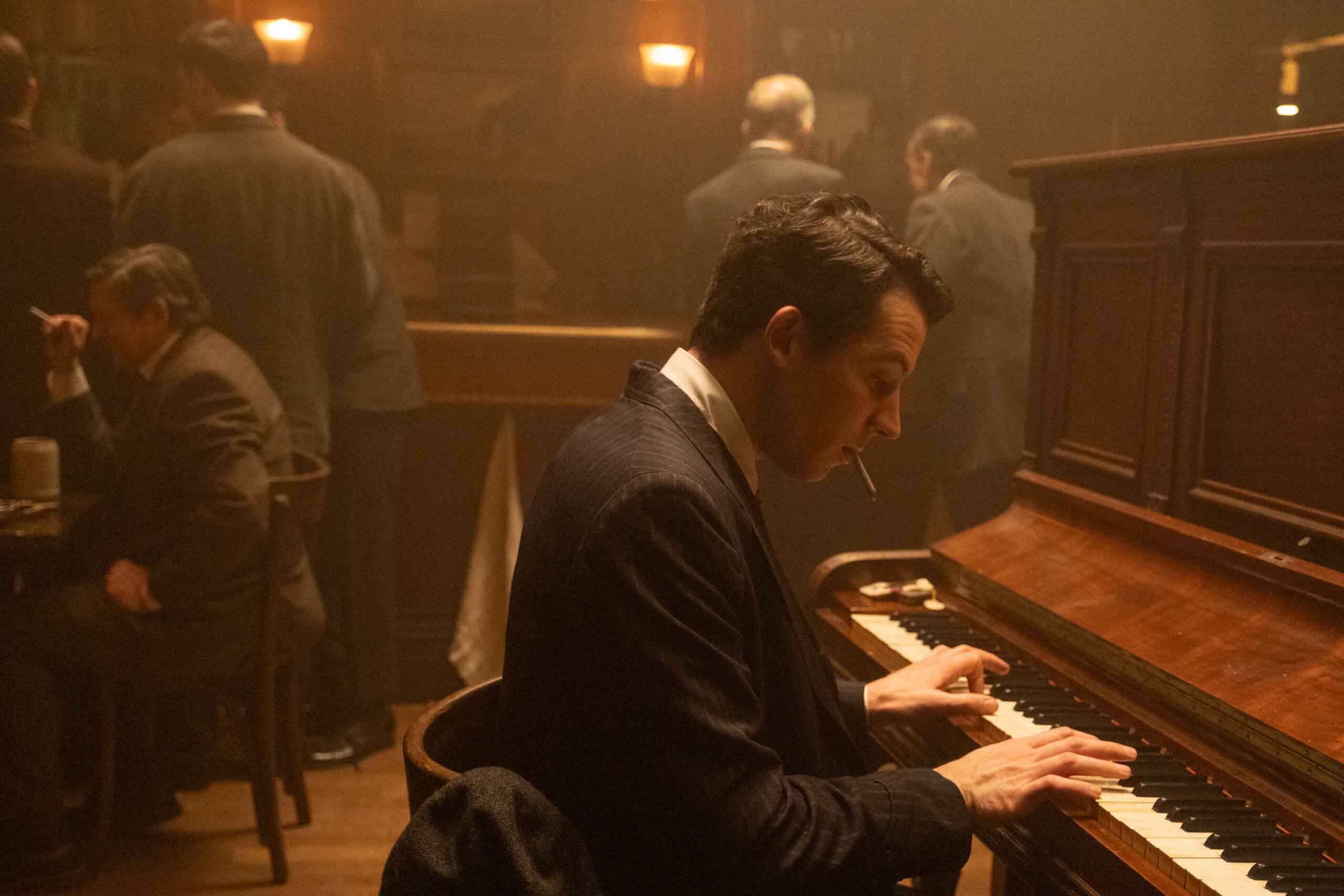
If I receive a piece of material, or I read or get offered something, if it’s very close to the completion of whatever I’ve made before, I’m usually curious about [whatever is] furthest away from what I’ve just made. Because my film before The History of Sound was very violent, very aggressive and intense, I was drawn to the beauty, wisdom and serenity of this story. There was something very cathartic about the exploration of a man’s life in this very poignant way. You could tell the writer, [Shattock], had a finger on the pulse of something he knew to be true about life. You look for that in writing. You always look for that sense that the writer has acknowledged [what] you might not have. There’s the opportunity to learn from that, which is why I think it’s helpful that Ben wrote the screenplay. It just always felt that these characters lived inside of him and that he knew them better than anyone.
I think we all live our lives with frequent questioning of the road untravelled. I’ve personally lived a life that has had a series of pretty big choices, [whether] deciding to throw caution to the wind and quit my job for film school or moving countries in pursuit of new work opportunities. There’s always that feeling of taking big steps, and I suppose, from my personal, racial, South African background and political family, those steps probably felt a lot bigger because they felt like steps that I didn’t know anyone who had taken before, so it kind of felt like I was getting on a spaceship. The History of Sound has that very delicate idea at the centre of it, [of] “What if?” In terms of love relationships, we all have that. We all wonder about what would have happened if that thing hadn’t ended. Sometimes it feels like you’ve dodged a bullet, but there’s the other thought (especially as we get older) of “What would my life be like?” or “Would I be the same person?”
I definitely think choosing your collaborators is a part of the evolution of a filmmaker—recognising other people’s sensitivity to your taste or your methodology. I think I’ve been very lucky to have worked with amazing people who have taught me how to go from the idea of something to the execution at the highest level. I think, [in terms of] filmmaking, I’ve worked with an extraordinary team of people (especially in England). England is renowned for its production design and physicality of filmmaking. The demand on anyone who wants to be the best in that arena is that you have to pursue excellence with such veracity. That’s such an important part of every aspect of filmmaking.
With directing, 90% of my job is choice-making. I’m not physically doing anything on a set. Everyone else has a physical job. They’re physically engaging with something, while directing is watching other people work and being responsive to questions, and at some moment, all these elements are ready for you to have 20 minutes where you are now using this giant machine to execute a series of takes or shoot a scene of a film. The ratio of time is so interesting. You have spent hours setting up, and then [there is] this brief moment of performance where all the elements are now at your disposal. If you see it that way, [you] then realise that it’s so important to be encouraging, [to be] a leader, and to get the best out of people. Even with the choice of actors, I find that casting is also a huge part of my job—making sure you’re working with actors that fit your own aptitude. Being educated in the United Kingdom, I was taught to have a certain kind of language with actors. It became part of how I developed my directing skills, so I find it hard to work with actors who perhaps don’t have that kind of training that I had, in terms of process and performance. It’s such an instant thing for me. Sometimes, when I talk to actors about a role and listen to how they compute it or engage with it, I can instantly tell there’s a language between us that will be able to sustain the production of the film.
It really depends on the situation you’re in. You have to find your own way of working out whether you can work together. I like to meet and discuss with them, to get a sense of who they are and what draws them to their process. Acting is one of the strangest, most incredible things anyone can do. It’s a very particular talent. I don’t have that talent. I only have the curiosity to provide an environment for that person to do what they do, and so I have to know what that actor is after and get a sense of whether I can provide that for them. It’s such a deep collaboration, and I’ve been very lucky. I’ve worked with many different actors, and it’s my job to adapt to all of them. Some filmmakers set a tone that the actors regiment in, and I love the sadomasochist idea of being directed in some sort of aggressive way—like lose 1000 kilos, or learn to sword fight, or ride a horse, or play the piano—they love the challenge of that. Sometimes I think I could be that person, but I feel I get a lot more out of it when there’s a sense across the board of autonomy over performance and I have a certain level of autonomy over how I frame that performance.
I’ve come to realise that I make movies more organically. I set sail on something and make a lot of decisions, particularly visually. I might have strong ideas about the tonality of the whole piece, but then I find that, as I shoot a film and start to see the actor’s techniques and mannerisms, I go with that. I think I totally understand this concept of play, which is what I really fight for in terms of rhythm on a set. I’ll make the hard choices about the [cinematic] language of the scene, but I won’t necessarily make those choices about the performances. We’ll discuss and do it, and maybe after a couple of runs we’ll discover something else. I want the time to be able to do that. I think that’s what I loved about Paul [Mescal] and Josh [O’Connor], they have that same instinct. That, I feel, for a group of directors and actors, becomes creatively fulfilling because you feel like you won’t have regrets about whether you could’ve interpreted a scene differently. I believe in that sense of discovery.
Oh yeah!
I think, once you’ve had the experience of going “Oh fuck, I should have done something else there,” you then [factor] that into your thinking when you approach [the next thing]. A director’s job is to think. I remember, that’s what Mike [Leigh] once said to us in film school. As things are unfolding, you’re plotting and planning and considering and chewing over your screenplay and all the elements and the time that remains, making decisions in your head. You’re the person who holds the film in your head, and everyone else has to plug into that so the task is very much about active thinking. If you do get to a point where you see the rushes and think you’ve missed something, you have to take those moments as education.
Audiences have changed. I went to a premiere recently with someone, and they probably lasted about 35 minutes before they had to check their phone. The act of relinquishing yourself to a dark theatre and an hour and a half of single line focus on the story in front of you has become increasingly hard for a lot of people to be able to do. You find it’s not the movies becoming more passive or introspective, it’s also the ability of audiences to be present in the moment of active watching. The History Of Sound is about listening. There’s the stillness of it, there’s a real demand for [the act of] watching and listening. I’ve come to appreciate that cinema, sometimes, is an active participation, as opposed to an overstimulating experience. I think there is a place where movies ask you to be still.
It’s been a huge part of my career. When I first started, it was very much about establishing an African presence in spaces like Cannes and Venice, bringing South African stories to those places and representing the narratives and the existence of a background that was my own. What I’ve always loved about cinema, from any country, is that it gives me an insight into the people of those places. There’s always that want to tell your story—to represent yourself, to represent your background. It was quite surprising that [My Father’s Shadow] was the first Nigerian film at Cannes. I didn’t know that. I took the very first South African film to Venice in competition in 2015. I also didn’t know that until it happened. You kind of go, “Why has it taken this long?” There’s a lot of politics to that. Representation is such a dense thing, because my second film, [Beauty (2011)], was banned in a vast majority of African countries due to the subject matter. The nature of the story was deemed illegal, in some ways, so I’ve had to face the backlash of having queer stories or provocative work that challenges where you’re from and challenges people to introspect. My film Moffie (2019) was particularly difficult for a lot of people because it was about reframing the war, and a lot of people who went through that experience found it to be very confronting to their politics. But cinema is meant to pose strong questions.
There is an important conversation to be had, on the impact of the representation of masculinity and the denouncing of it, in some way, in many societies. We think about it in terms of labels, leadership, power, money, and race. I have maybe unconsciously navigated those things. But in The History Of Sound, for the first time, it’s almost like masculinity wasn’t in my head. It was very much about these two people; there’s nothing that feels like it’s chipping away at masculinity, and I think that’s [what’s] nice about it. They demonstrate a different quality in the nature of the connection between two people.
It’s always an expensive question, especially when you’re dealing with a period film because you have to convincingly generate that world. In a movie like Living (2020), I was fortunate to work with extraordinarily creative people who did it at a very low cost. My background is in photography, so I always try to use photography as a way of giving texture. But world-building is storytelling, and for me, it’s all about the want of a bigger canvas. I suppose that’s part of the great joy of cinema, you get to create an escapist, imaginary, or realistic world through your perspective. I remember [being] told that, in making a period film, you’re not making a film about the period your film is set in, you’re making a film about the period before because each period is a reflection or rejection, in some ways, of what has come before. Somebody in America in 1917 is actually wearing clothing from 1910, and you and I are wearing clothes from the mid-1990s or 2000s, so it’s such a delicate thing to rebuild and I love that process.
Moving countries is not practical, because I’m running out of options now! But to be more serious, I suppose I always have multiple things happening at the same time. I like to work, I like to make things, so there are always multiple things in my head. I’m currently working on is a genre film about a very intense relationship set in San Francisco, about a man and a woman. You could probably call it an erotic thriller, but it’s sort of my deep fascination with San Francisco from a cinematic point of view. I love the idea of pivoting. I always want to be able to make things I’ve never made before. I would never want to repeat myself.
Maybe, for me, the impulse to tell a story is related to my impulse as an audience. The films I admire the most, or remember the longest, or refer to again and again, are the films that seem to have transcended into some kind of emotional or psychological impact. They define a certain part of my life, or a place. I think that’s what great music does, too. It time stamps, in a way. It becomes part of the journey of your life. And so, for me, with filmmaking the impulse is always to contribute to someone else’s life in that way. It’s not just purely to entertain people, it’s very much to kind of linger with them, to have some kind of presence or value. I remember when I made Living, when I first considered the concept of making it, I thought: “The good thing is it’s by Kazuo Ishiguro, I get to work with Ish.” And the negative was: “It’s a remake of a Kurosawa film, which is like a fool’s errand and I’m going to get slaughtered for that.” But then I got to this middle place, which was that I loved the idea of watching Bill Nighy play this character and what it would feel like, emotionally, to explore that in 1950s England and to offer the audience a warm embrace. I had never done that as a filmmaker, I had never made anything that warm. My dream was to release that film on Christmas Day, and Sony Pictures Classics agreed because that was who I made the film for. I made it for someone who was going to see a film that would move them and feel like an embrace. The History Of Sound is a deeply romantic, melancholy film, but also in the sphere of giving [its audience] some encouragement about the nature of love.