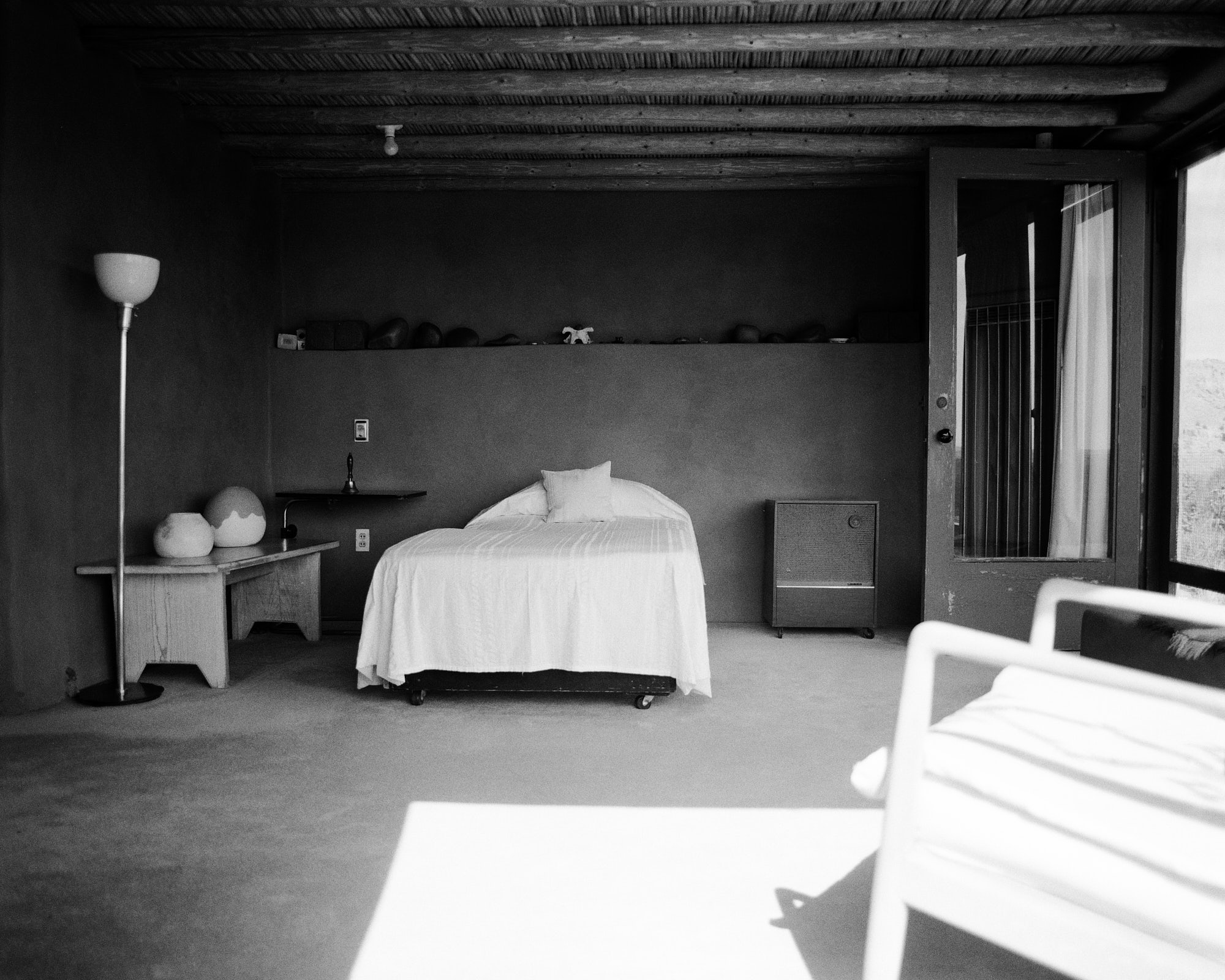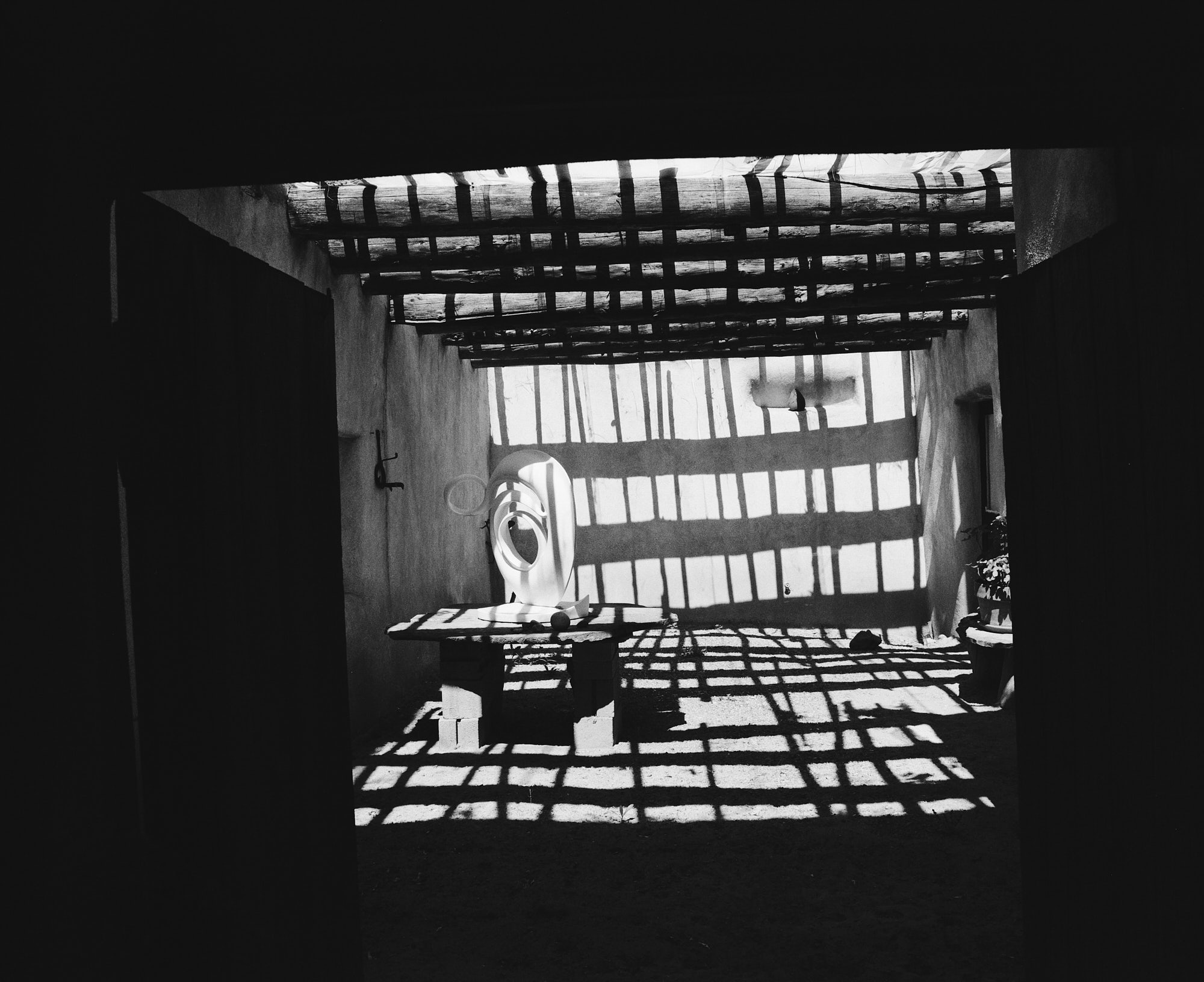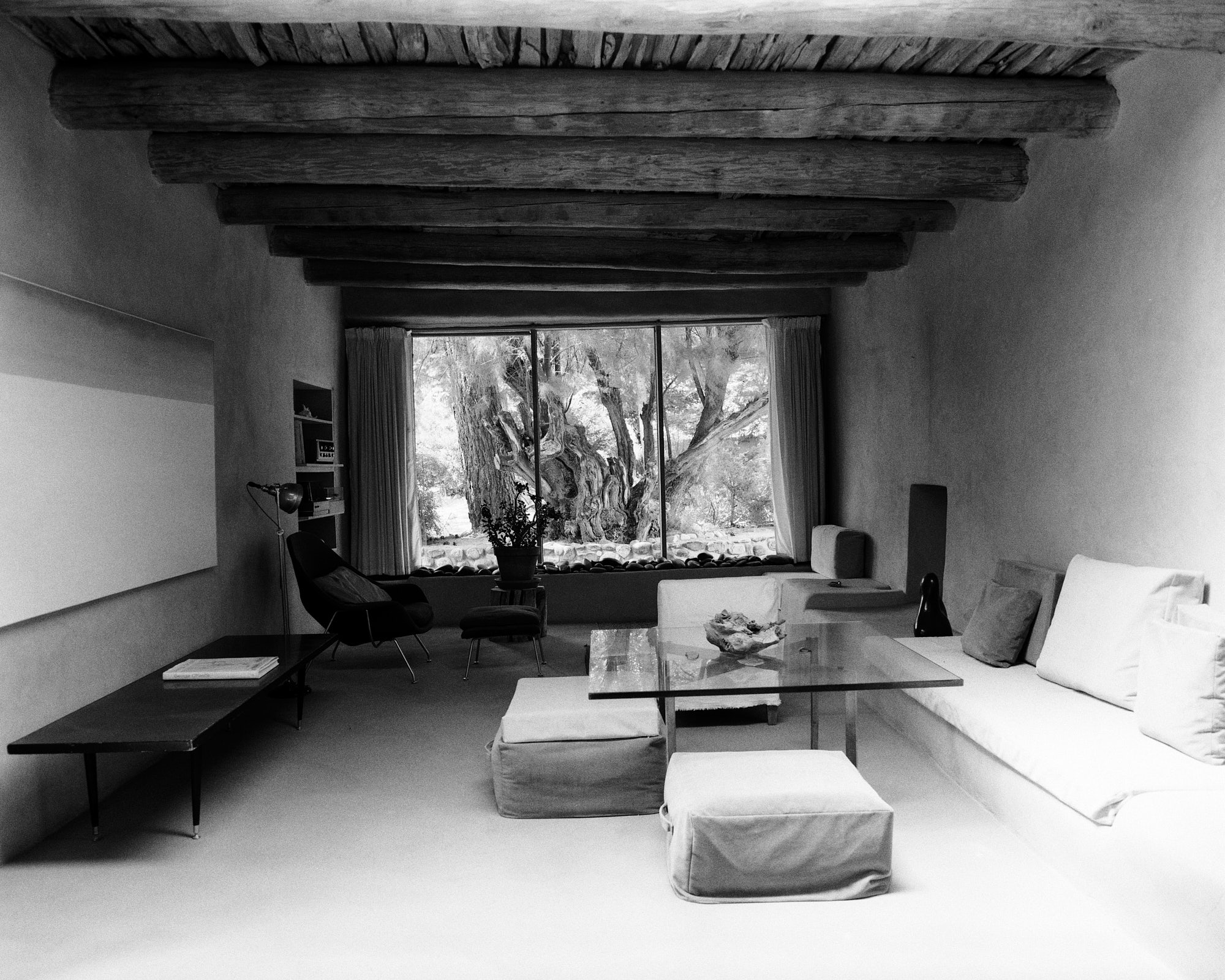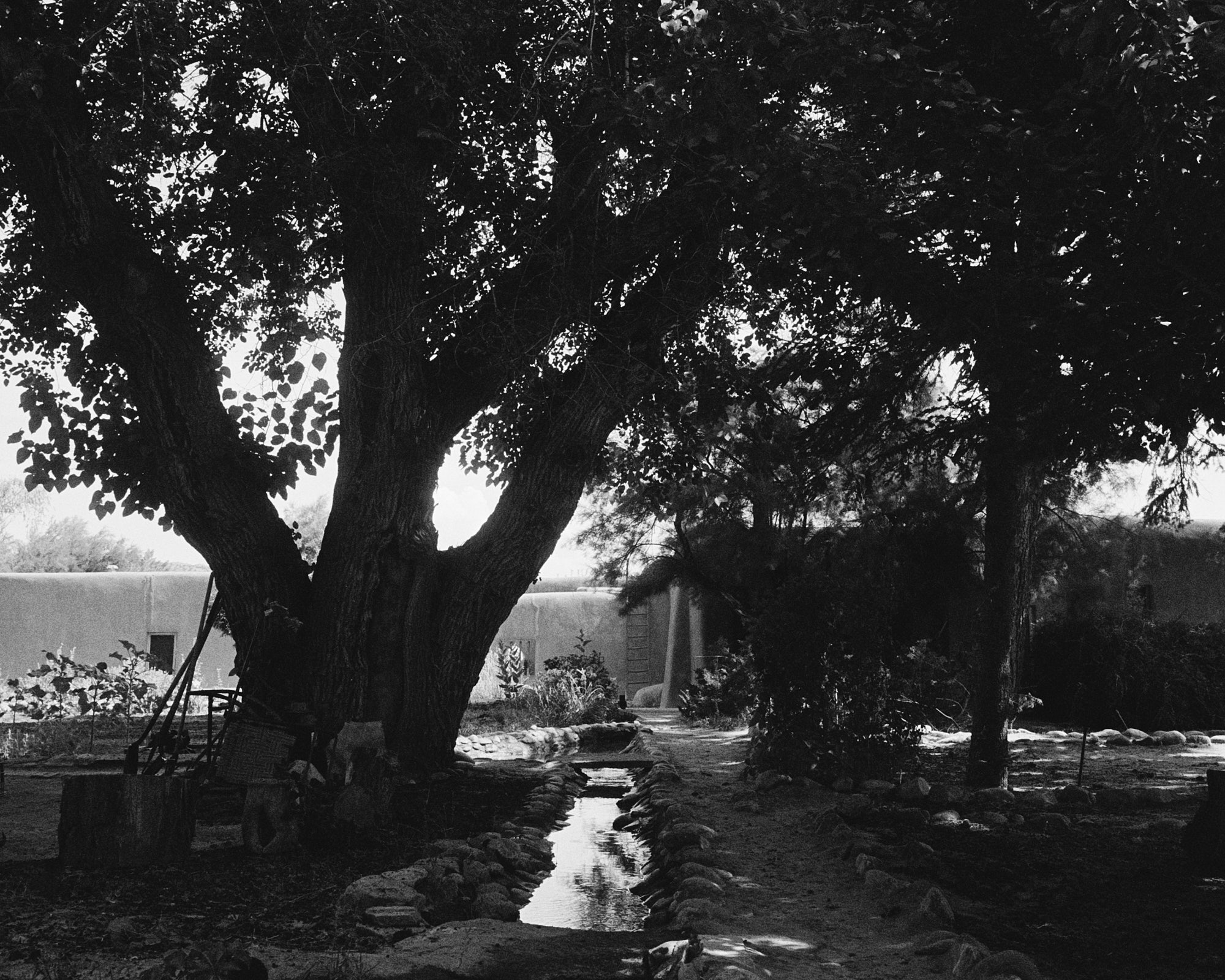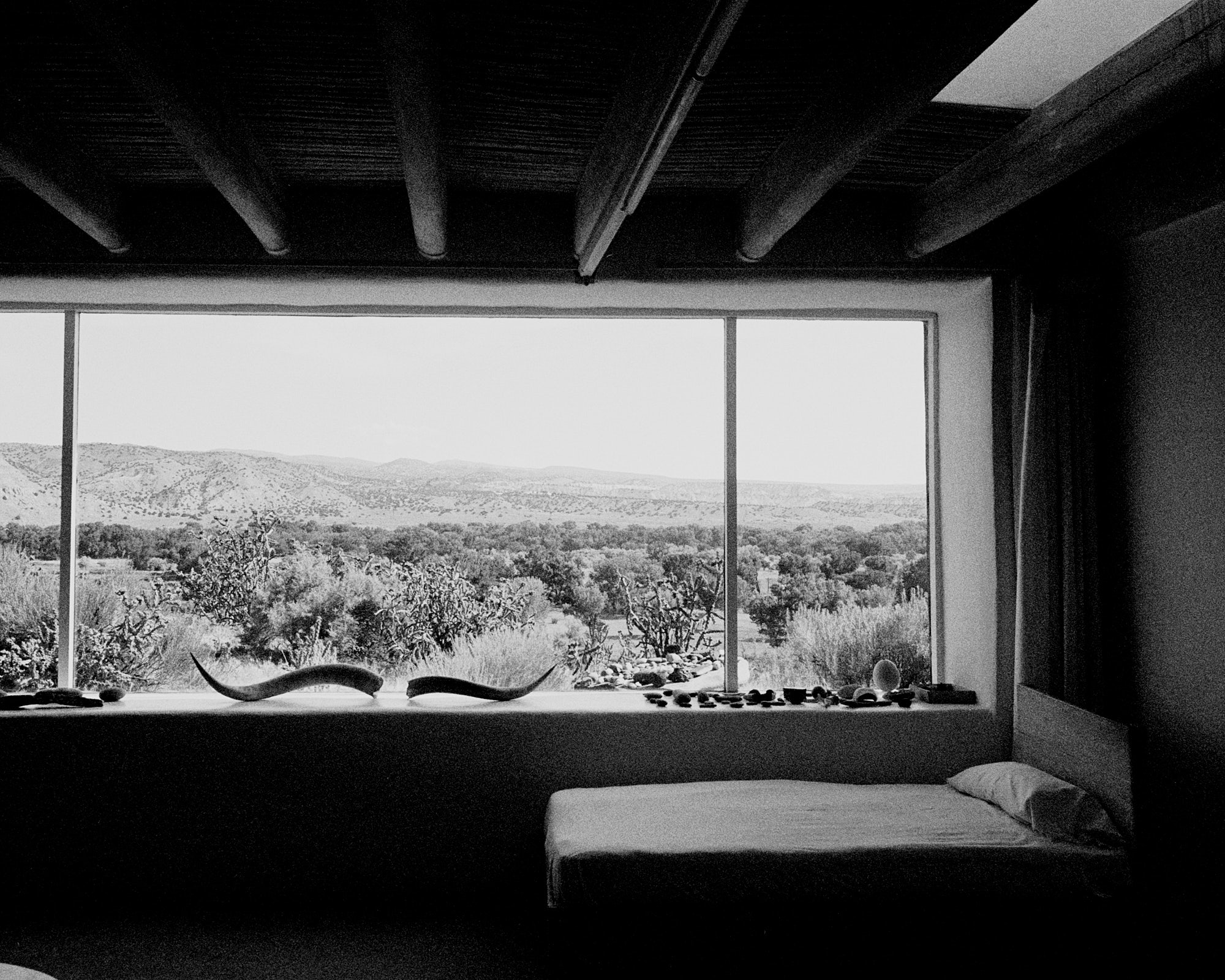
The small, unincorporated town of Abiquiu lies just over 50 miles north of Santa Fe, New Mexico, United States. With a population of less than 200, Abiquiu is home to a small church, post office, general store and library. Amongst its few attractions is the former house and studio of the late American artist Georgia O’Keeffe, who lived there from 1949 until 1984 (she died in Santa Fe two years later, aged 98). Opened to the public in the mid-1990s, the house forms part of the wider Georgia O’Keeffe Museum, which includes a welcome centre in Abiquiu and a gallery, library and archive in Santa Fe.
Born in 1887 in the Upper Midwest (Sun Prairie, Wisconsin to be precise), O’Keeffe would go on to develop a deep affinity for New Mexico. Growing up in a creative household—she took watercolouring lessons as a child—O’Keeffe was keen to pursue art from a young age. She studied at the School of the Art Institute of Chicago before teaching art in Texas in the 1910s. While in Texas, O’Keeffe painted vivid watercolours of her surroundings. In works such as Sunrise (1916) or a series of three watercolours titled Light Coming in off the Plains (1917), the artist captured the awe-inspiring sensation of watching the sunrise over such a vast expanse. These years spent teaching in Texas shaped O’Keeffe’s enduring fascination with depicting light, colour and form in the natural world.
In 1918, O’Keeffe moved to New York to pursue her artistic practice, with the assistance of the art dealer Alfred Stieglitz, who later became her husband. It was in New York in the early 1920s that O’Keeffe began making the oil paintings of flowers for which she is now well known. This association stems, in part, from the (mis)interpretation—amongst male critics—that O’Keeffe’s sumptuous, close-up paintings of flowers were sexual in nature. Although O’Keeffe rebuffed this reading of her flower paintings, it persisted for many years. Instead, the artist’s depiction of botanical subjects reflected her longstanding interest in natural forms.
While in New York at a time of remarkable architectural transformation, the artist began making oil paintings of the city’s glittering skyline. These scenes were inspired by the sweeping views from the apartment she shared with Stieglitz on the 30th floor of the Shelton Hotel. Yet by the end of the decade, the artist had already ceased making this series of works and had instead started to look beyond the confines of New York (partly provoked by her discovery of Stieglitz’s infidelity).
In 1929, O’Keeffe ventured to New Mexico in search of respite from the chaos of her life in the city. She visited Santa Fe and spent the summer in the town of Taos with her friend Beck Strand, staying with the artist Dorothy Brett and the writer and arts patron Mabel Dodge Luhan. In New Mexico, O’Keeffe found a sweeping and restorative landscape. She returned to New Mexico almost every year for the next two decades, spending months at a time exploring the landscape of the desert, where she collected and painted rocks, animal skulls and other detritus. That same year, O’Keeffe learned to drive, purchasing a Ford Model A which she used for trips into the desert; the back of the automobile was converted into a makeshift studio for painting on the go.
O’Keeffe’s exposure to the New Mexican landscape provided the artist with fresh inspiration, harking back to her fascination with the sun’s light against the vast, dusty plains of Texas. “I’d never seen anything like it before,” she wrote of New Mexico, “but it fitted me exactly. It’s something that’s in the air, it’s just different. The sky is different, the stars are different, the wind is different.” Instead of tightly cropped, magnified flowers, O’Keeffe broadened her scope, painting sweeping landscapes of mountains and flat-topped mesas.
In works such as Black Mesa Landscape, New Mexico / Out Back of Marie’s II (1930), the artist captured the colours and creases of a vast expanse—deep blue mountain peaks in the background contrasted with ochre hills and luscious plant life in the foreground. O’Keeffe’s paintings of New Mexico emphasise the changing nature of the landscape; in Pedernal with Red Hills (1936), for example, the flat-topped Cerro Pedernal, covered in shrubbery, stands out against the red rock formations in the foreground of the artist’s view.
From 1934 onwards, O’Keeffe stayed at the Ghost Ranch, just 12 miles north of Abiquiu, before purchasing a house and seven acres of land on the ranch in 1940. The location gave her direct access to the spectacular surroundings that provided her with so much inspiration. In My Front Yard, Summer (1941), for example, O’Keeffe depicted Pedernal in the distance, which imposed a majestic dominance over her chosen home.
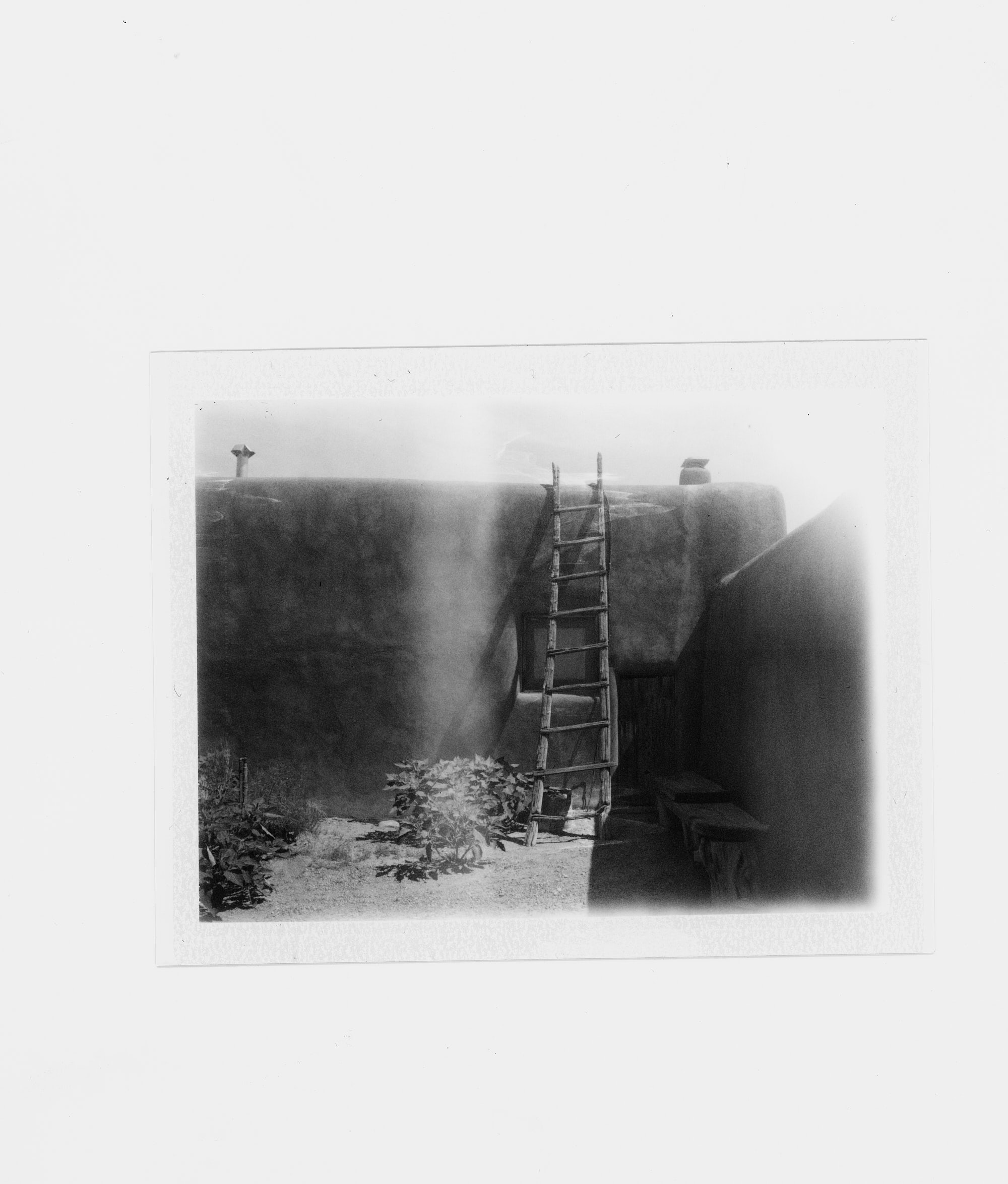
Later, in 1945, O’Keeffe bought a small compound in Abiquiu from the local church, which included a derelict nineteenth-century adobe house that had been built during the earlier expansion of a building originally dating back to the mid-eighteenth century. In 1949, following the death of Stieglitz three years earlier, O’Keeffe made her move to New Mexico permanent. She lived at Ghost Ranch during the summer months and Abiquiu during the winter and spring. These surroundings continued to provide her with vital inspiration; the grassy mesas that could be seen in the distance from the artist’s homes were subjects that she continued to depict well into the 1950s.
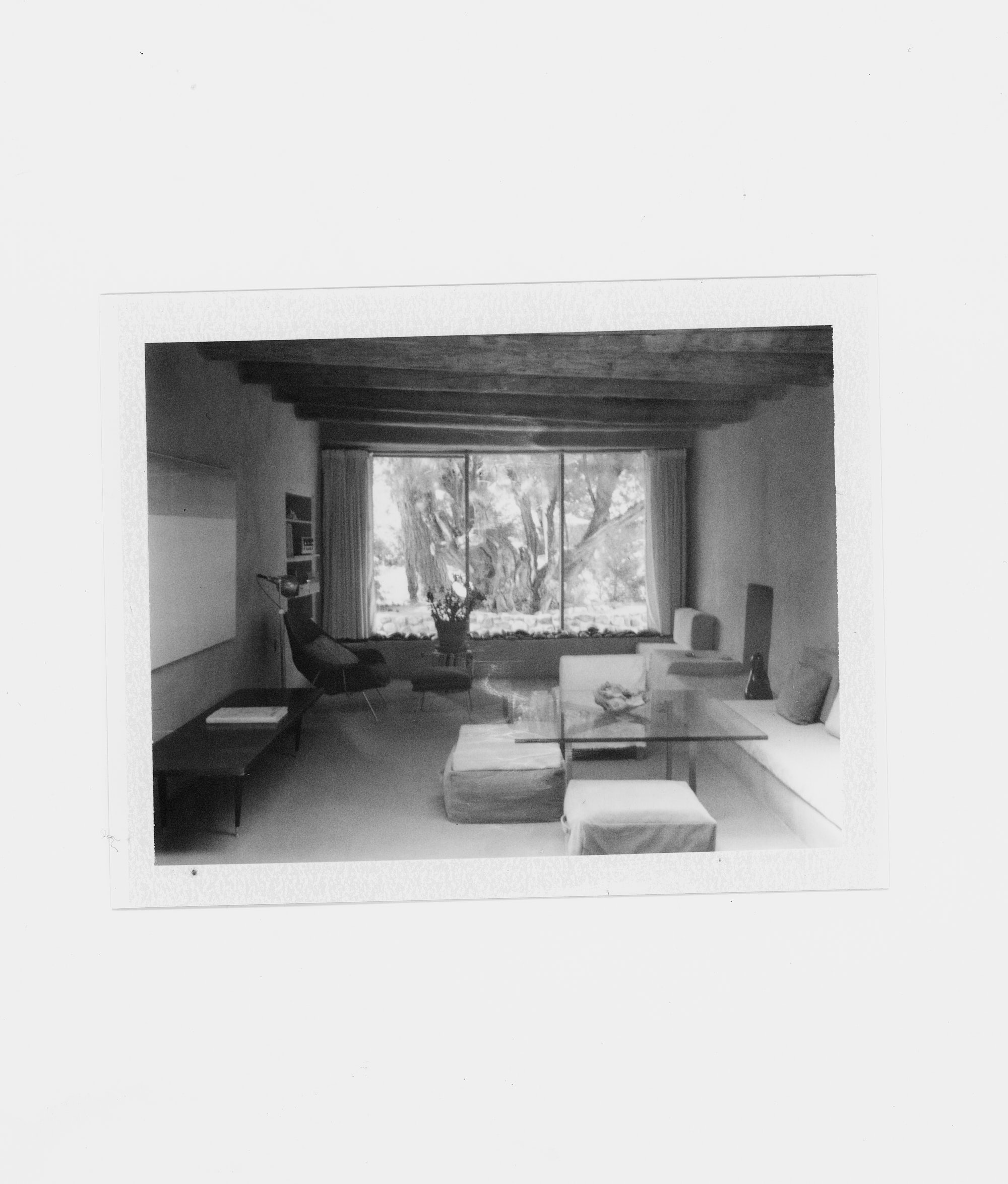
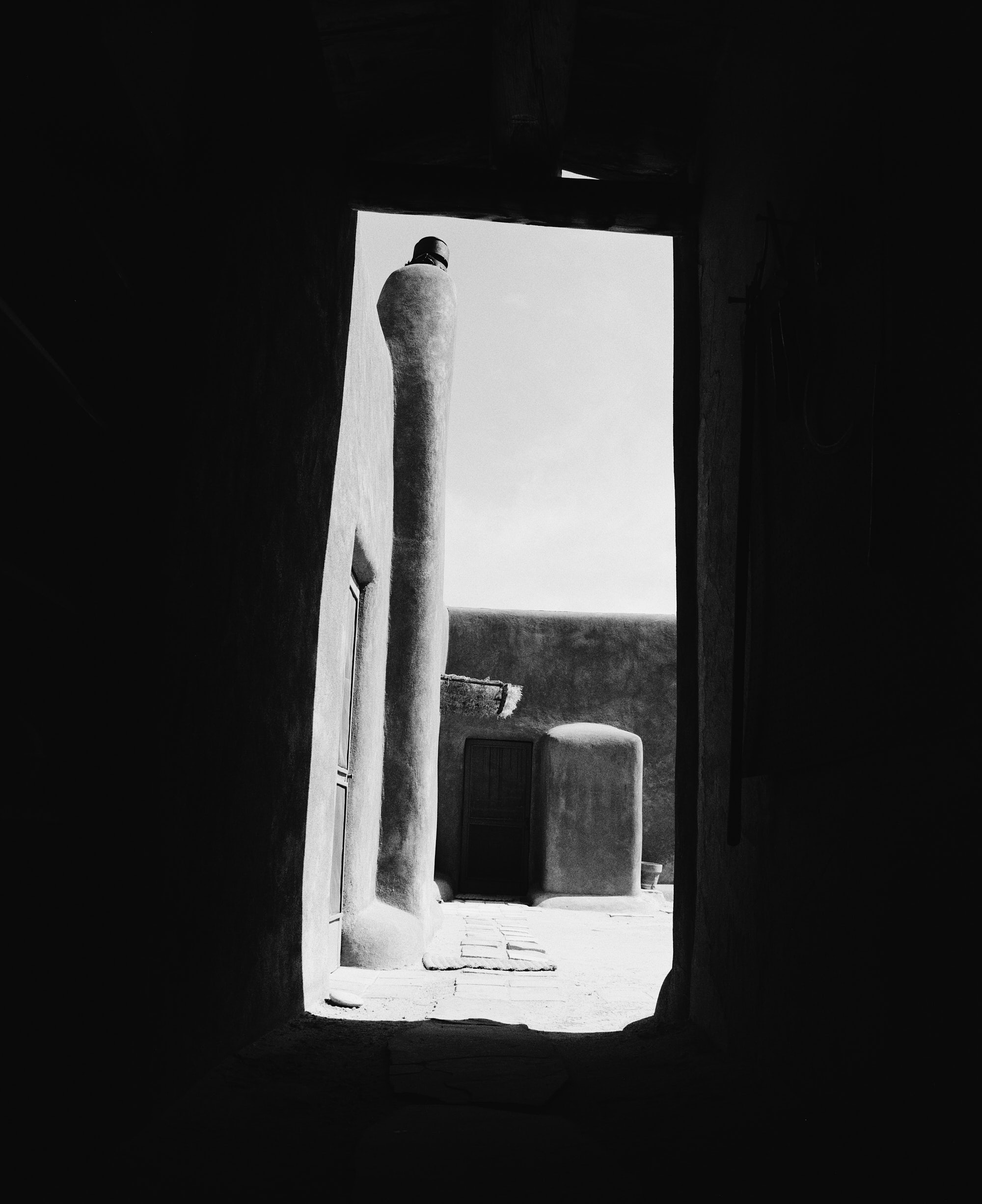
O’Keeffe’s domestic environment in Abiquiu provided creative inspiration, too. As the writer Olivia Laing notes, the artist “liked to paint the same thing again and again, until she had penetrated to its essence, unravelling the secret of her attraction.” [1] This included a door at the house in Abiquiu, which she painted countless times. In fact, O’Keeffe’s fascination with the door—a black door leading from a courtyard on the property—contributed to the artist’s decision to purchase the house.
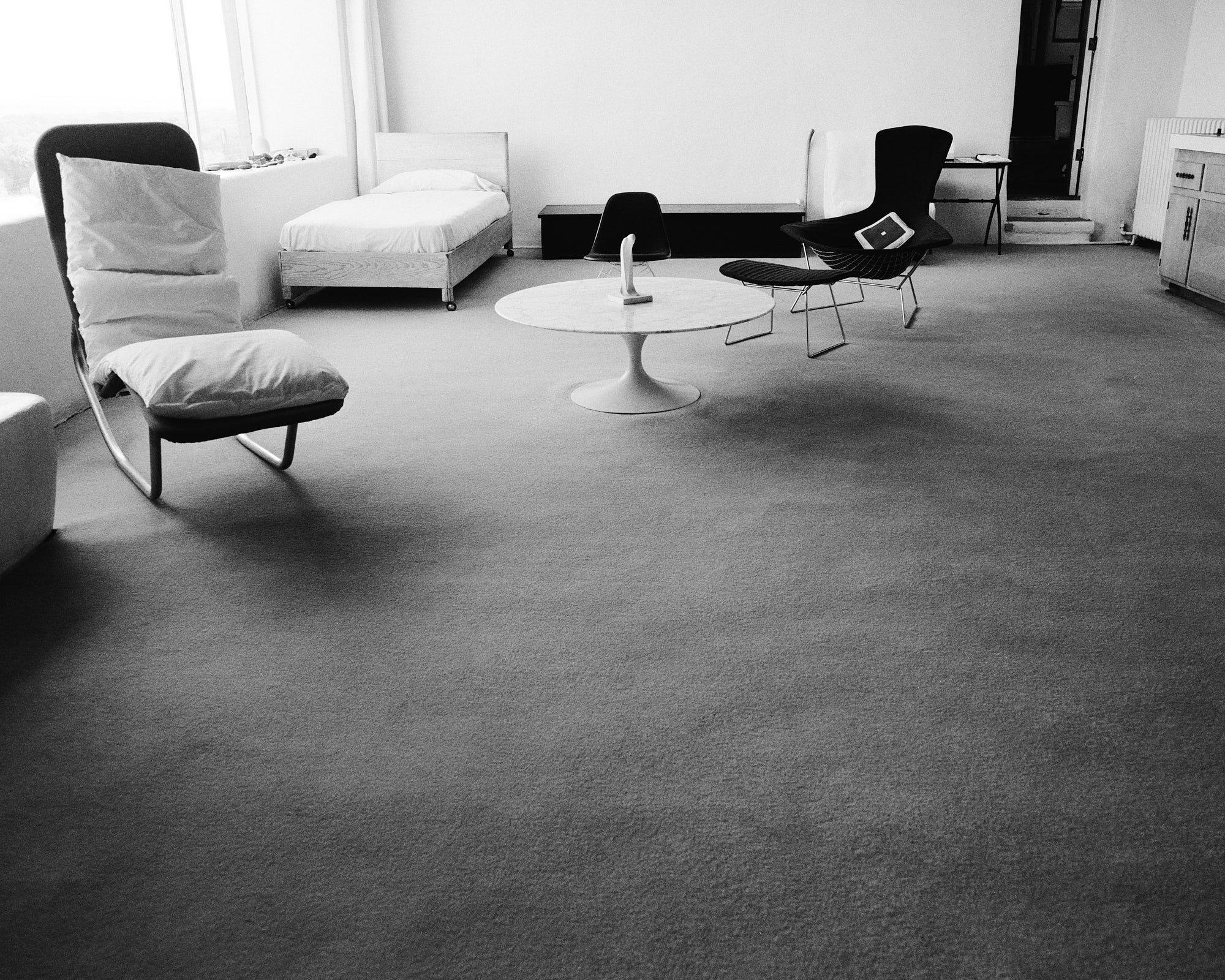
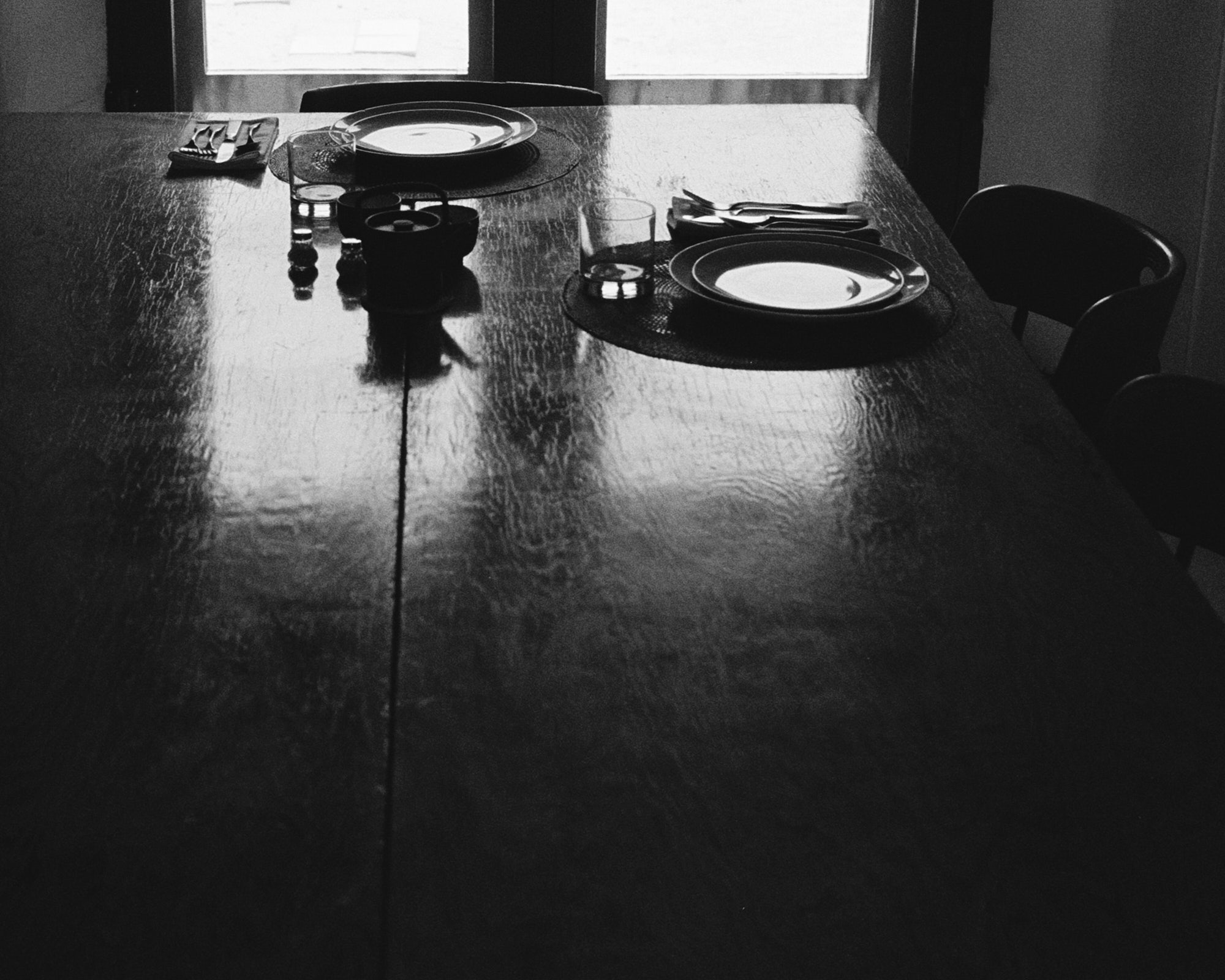
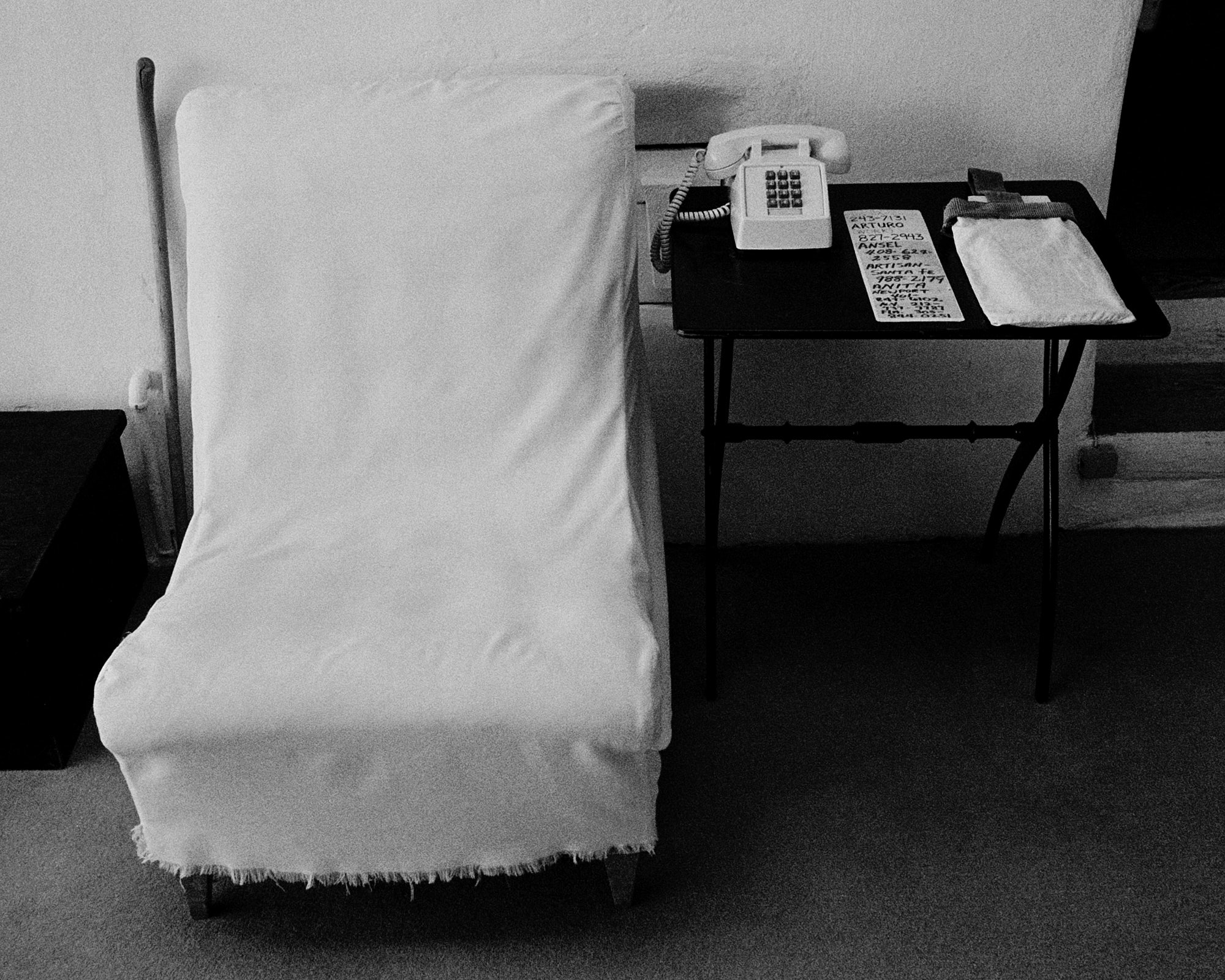
The artist used her home in Abiquiu as a space for working and living. She incorporated modern furnishings into the space which, in referencing the geometric shapes of the natural world, complemented the earthy interior of her adobe home. At the same time, large picture windows gave O’Keeffe sweeping views of the New Mexican desert—a far cry from the dramatic vertical views of New York that she had long-since left behind. Here, O’Keeffe was, instead, at one with the transcendental landscape outside.
Alongside art, O’Keeffe was passionate about music (growing up, she had taken piano and violin lessons). She once recalled an experience she had while at Columbia University Teaching College in the early 1910s, where she heard music playing from a room along a corridor in the art department: “Being curious, I opened the door and went in. The instructor was playing a low-toned record and asked the class to make a charcoal drawing. So I sat down and made a drawing too… It gave me an idea that I was very interested to follow—the idea of lines like sounds.” [2]
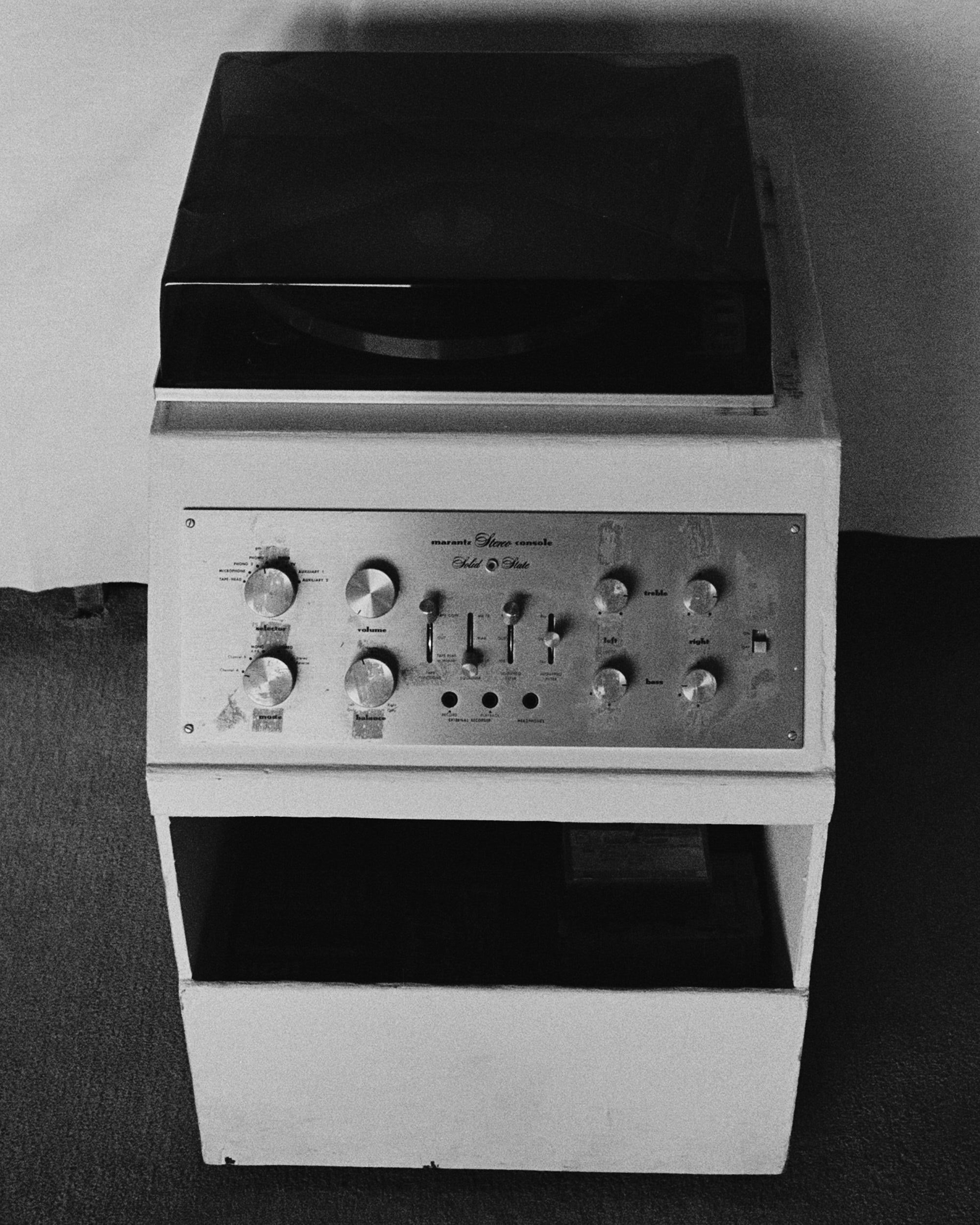
In 1912, the artist Vasily Kandinsky had published Concerning the Spiritual in Art, his theory of synaesthesia which set out that colours had sounds and, at the same time, that sound could be seen as colour. This had a profound effect on O’Keeffe, as suggested by the titles of paintings such as Blue and Green Music (1919–21), which offer vivid insights into how the artist imaged music onto the canvas. As she later noted, “Music could be translated into something for the eye.” The verve with which O’Keeffe captured the sensory experience of listening to music in vivid pinks and blues—as in Music, Pink and Blue II (1918)—recalls the same passion that went into depicting her remote surroundings in New Mexico.
In the 1950s, O’Keeffe’s love of travelling took her around the world, with overseas trips by aeroplane. As her 1960 painting of Mount Fuji in Japan attests, the artist’s unwavering fascination with vast landscapes continued as she ventured to new locations outside of North America. One of the most striking series that O’Keeffe worked on in her later years was Sky Above Clouds, eleven paintings made between 1960–77 that show the artist’s view from an aeroplane window, looking down at the clouds below. The series captures something of O’Keeffe’s embrace of the modern world, from paintings of New York skyscrapers to her beloved Ford Model A and air travel—something which gave the artist a new proximity to the vast skylines that had long informed her work.
But still, it was in New Mexico—whether at the Ranch or her adobe home in Abiquiu—that O’Keeffe was at one with the natural world. Photographs of O’Keeffe taken by Todd Webb from the mid-1940s onwards provide a rare glimpse into the domestic life of an artist who lived an otherwise secluded life. As well as scenes of the artist at home, Webb’s photographs capture O’Keeffe amongst the vast rock formations that provided her with enduring inspiration. By the early 1970s, O’Keeffe’s vision had become severely limited as a result of macular degeneration and she was unable to paint without assistance. One can imagine her sitting in the sanctuary that she had created in Abiquiu, listening to records on her turntable and taking in the ambience of the New Mexican landscape she had made her home: music for the mind’s eye.