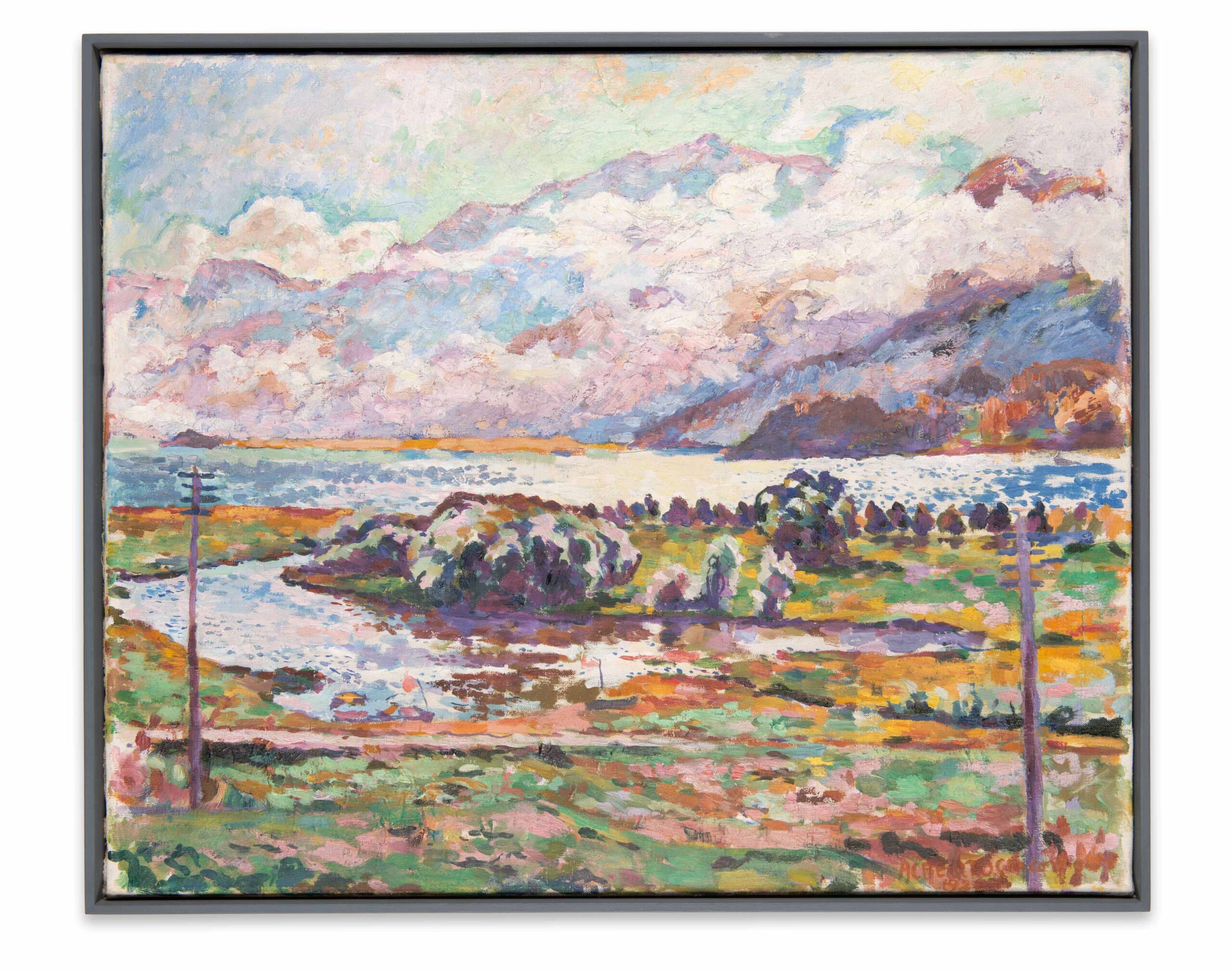
Nearly 60 years after his death, Alberto Giacometti has returned to his Swiss mountains in the hushed, high-altitude galleries of Hauser & Wirth St. Moritz. While Giacometti is best known for the sculptures produced in his Parisian studio, the exhibition Faces and Landscapes of Home (13 December 2025–28 March 2026), curated by Tobia Bezzola, revels in the artist as “the son of the Alps”—a naturalist whose figurative, stretched sculpts trace their roots to his own diaspora. It is an exhibition that offers a necessary recalibration: a reminder that Giacometti’s centre of gravity was never the Parisian Left Bank, but the vertical landscape that first defined his eye.
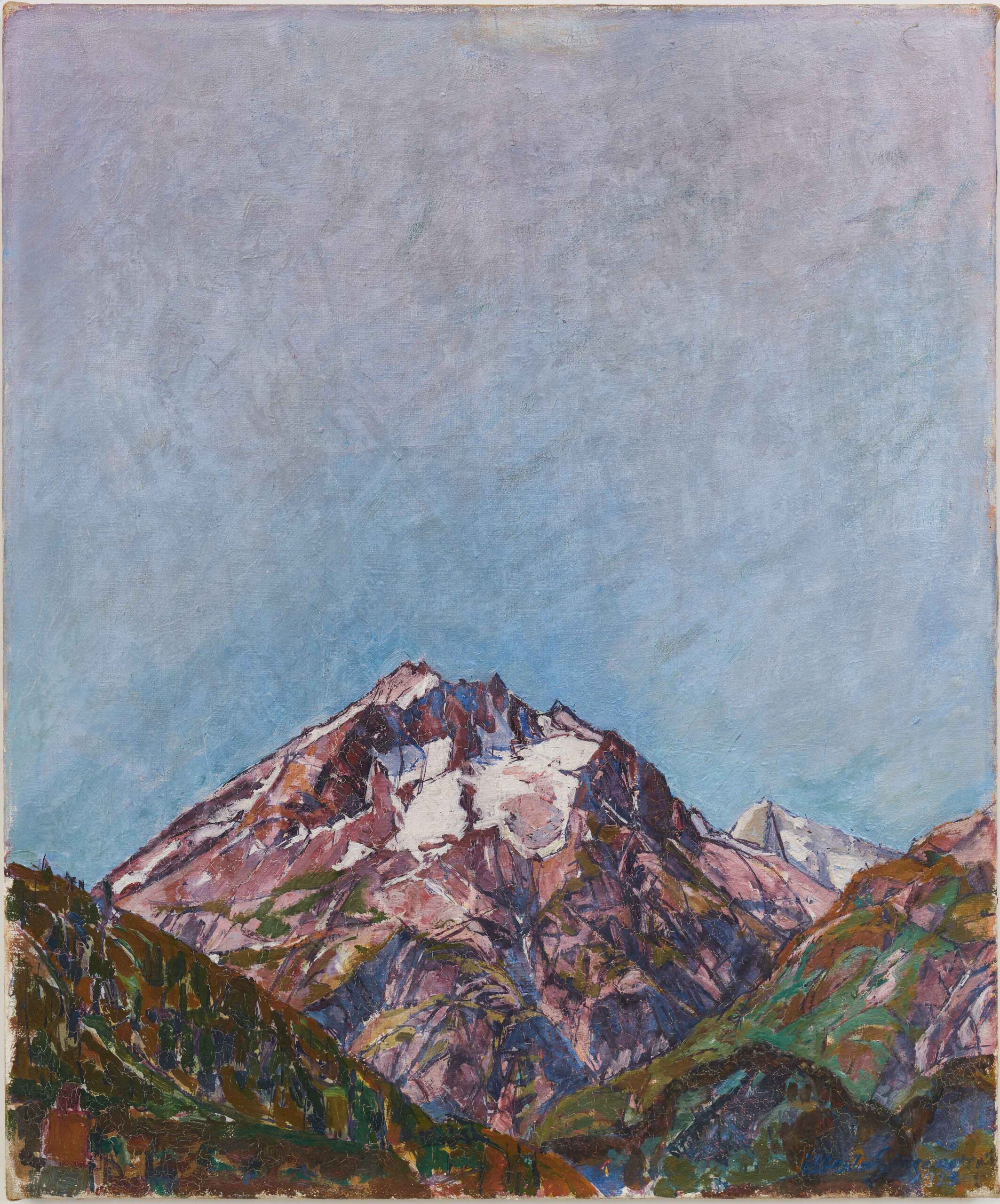
The son of a leading Post‑Impressionist, Giacometti showed an early intensity long before his sculptures were claimed by Parisian Existentialism. One of the exhibition’s early works—the painting Monte del Forno (1923)—shows him grappling with the structural weight of his Alpine landscape. The mountain is an assemblage of thickly stroked, crackled triangles, filled by gold and lilac pools of twilight. It is a claustrophobic scene, slightly too zoomed‑in for pure naturalism—a mountain that’s felt rather than just seen. The young Giacometti, in this exhibit, acts like something of a climber: looking, integrating, and capturing remote views.
But the mountains, and their rural isolation, were also a cage for him. By 1922, he had left for Paris, reinventing himself as a sculptor and falling in with the Surrealists. Works like Boule suspendue [Suspended Ball] (1930)—a frustrated, almost violent anti-machine with a ball locked by a triangle that couldn’t move—and Le palais à quatre heures du matin [The Palace at 4 am] (1932) sculpted his emotions of desire, fragility and unease.
Surrealism, however, quickly rang hollow for an artist who came from a valley where sunshine might not appear for months. At Café Cyrano in 1935, Giacometti announced he wanted to capture a real face. Realising that, by focusing on an ear or a mouth, he’d quickly lose sight of the whole, he arrived at a dilemma. His patron, André Breton scoffed: “Everyone knows what a head is!” Giacometti’s reply—“I don’t”—drove the rest of his work. Sketching, interrogating and stretching would become his mantra. The mountains, his first source of solace.
At the onset of the Second World War, the exhibit makes clear how Giacometti retreated to those Alpine mountains. Based in a tiny room at Hôtel de la Rive in Geneva, he decided to sculpt figures as he saw them from a distance. When you look at a person across a street, he argued, they don’t appear as a collection of muscles and skin; they resemble a thin line.
The exhibit brings this insight out wonderfully: distance was a motif, and the more he chased it, the smaller his clay sculpts became. Working with only a needle, Giacometti carved his subjects until most were reduced to dust. At the close of the war, he returned to Paris with years of work stored in only six matchboxes. It was minimalism pushed to the edge of non‑existence.
Back in Paris, Giacometti abandoned the matchbox figures. In turn, he began to stretch them out. The exhibit frames how these became his iconic large‑scale works: the elongated, spindly bronzes such as L’Homme qui marche [The Walking Man] (1960) and L’Homme au doigt [The Pointing Man] (1947). To the Parisian Existentialists (Beauvoir, by this time, was a confidante), their slim, tense forms carried the angst of the postwar years without abandoning a core human figure. As Sartre noted, Giacometti was simply “taking the fat off space.”
Sartre may have confused psychology for space itself. The surfaces of these works in the exhibit are restless—gouged, scraped, pockmarked—as if someone buried matchstick heads in the clay before lighting the kiln. Their bodies resemble mountains. But, as the St. Moritz exhibition reminds us, this was a return to a “deepened analysis of figuration,” not a break from his Alpine origins. These more mature works were made possible through his childhood fixations—anchored by the Swiss valley Giacometti circuited like a moth.
While the world saw Giacometti as the face of French Existentialism, the Hauser & Wirth exhibit reminds us that his inner world remained, with clockwork precision, Swiss. The exhibition focuses on the “private sanctuary” of his birthplace of Stampa—the second home that was overshadowed by his Parisian success. While his Paris studio, caked in plaster and ash, held a public fascination, Stampa was where he went to reflect. Fittingly, the exhibition gathers portraits of the people who tethered him—his mother, Annetta; his wife, Annette; and his brother, Diego.
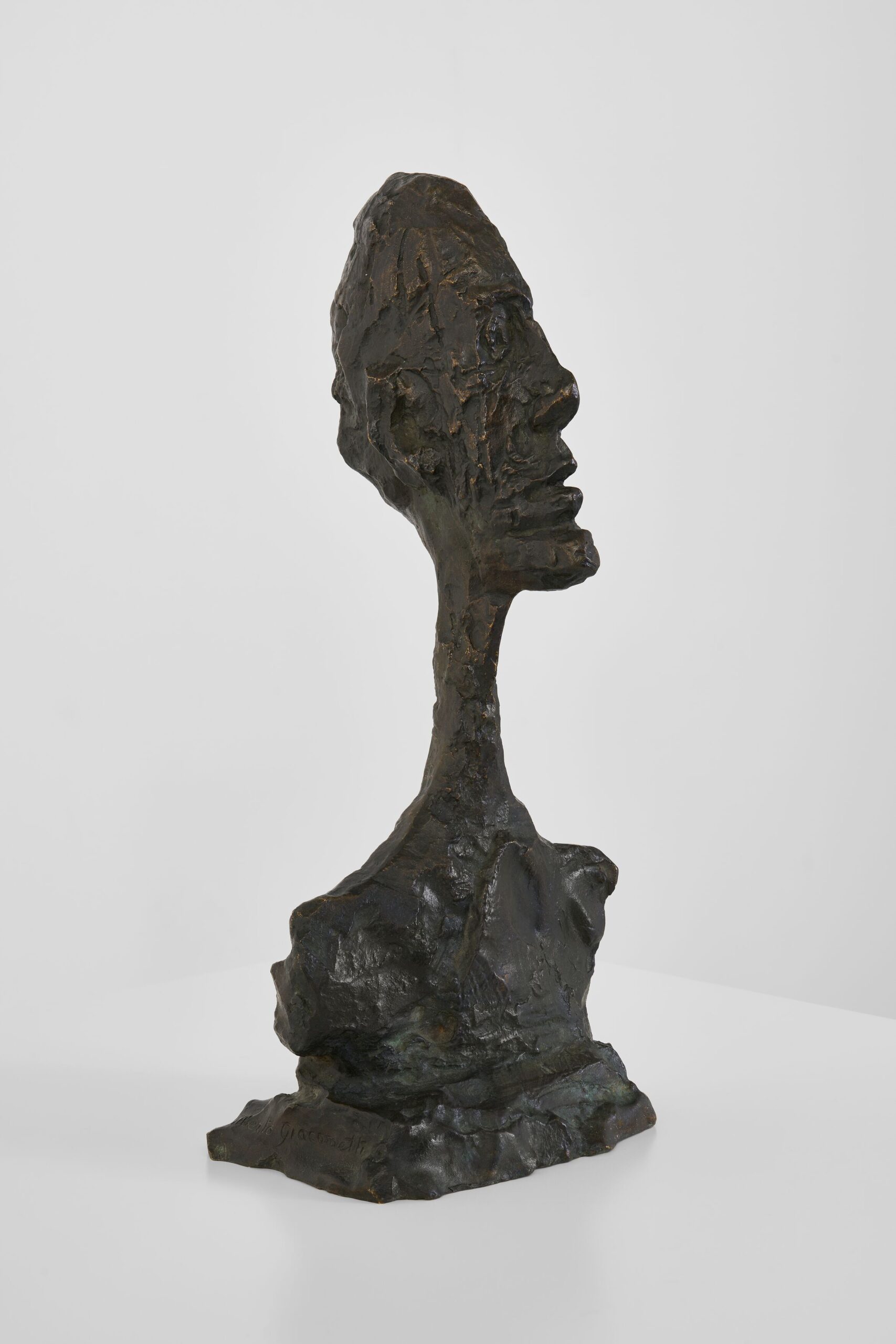
Diego Giacometti was perhaps the most important figure in Alberto’s life. A talented designer and bronze caster in his own right, Diego was Alberto’s most frequent model—both a mirror and a proxy self. Alberto’s gaze could be intense: his other siblings described feeling like “prey” as he sculpted them. The bronzes on view, such as Tête au long cou [Head with Long Neck] (ca. 1949), revel in that familial intimacy. The figure shown is taut, as if stretched from heat, thin enough that it is a single line in the pale mountain light, except in profile. The effect is warm, true, lyrical: a title that reads almost like a private joke between brothers.
These Alpine inspirations are enriched through the lens of Ernst Scheidegger. A close friend and collaborator, Scheidegger first met the artist in 1943. It is a surreal, pastoral moment in the exhibit: despite Giacometti’s fame, Scheidegger was the only one trusted to document the artist’s intensely private Swiss existence. His photographs give the work its grain: plaster dust turning the studio into a site of archaeological excavation. Giacometti, gaunt and wiry, is at his easel, absorbed, almost in pain; splayed next to him, in another array of photographs, are the domestic exchanges with the mother he adored. It is a crucially personal lens: via Scheidegger, we find the same intimacy Giacometti searched for in his work.
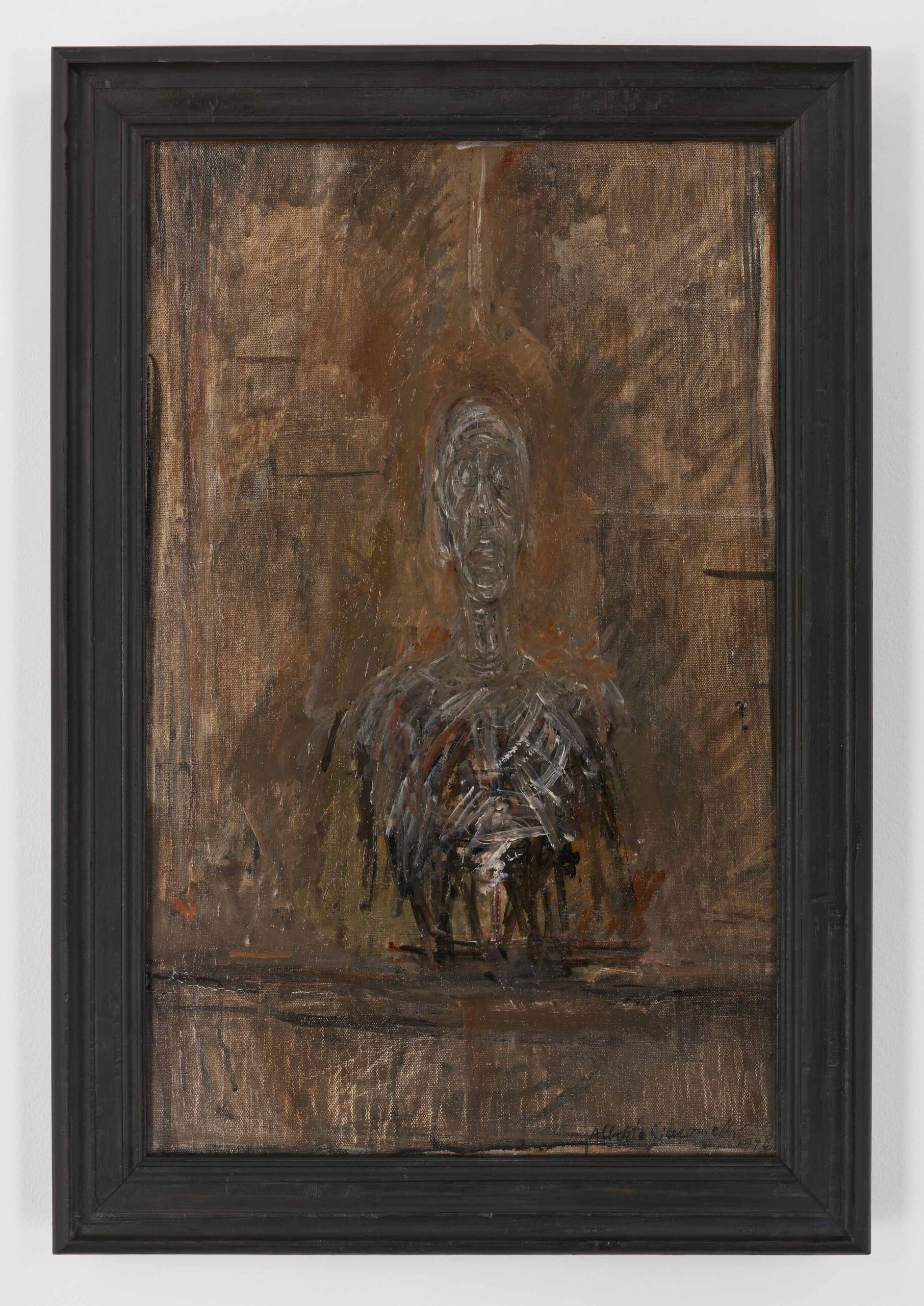
By the 1950s, Giacometti’s work had come full circle—moving back from sculpture to experimenting with the early Impressionist painting style his father had taught him. It is a return the St. Moritz exhibition makes unmistakable, highlighting the darker, moodier paintings of a mature period. The works on show are sketchy, more confident in the abstract, romantic notes his early mountain paintings showed. Crucially, there is a focus on the face, the person, and familiarity. Giacometti worked through them again with the same stubborn precision, each canvas tightening a mental loop. The works mark a fixation with place. Dissatisfied, Giacometti even destroyed one sketch of his lifelong housekeeper, Rita Amadò, before proudly exclaiming: “I will take it with me to Paris. I have it in my head.” The portrait that survived feels like a spitting image: taut, tired, yet incandescently warm.
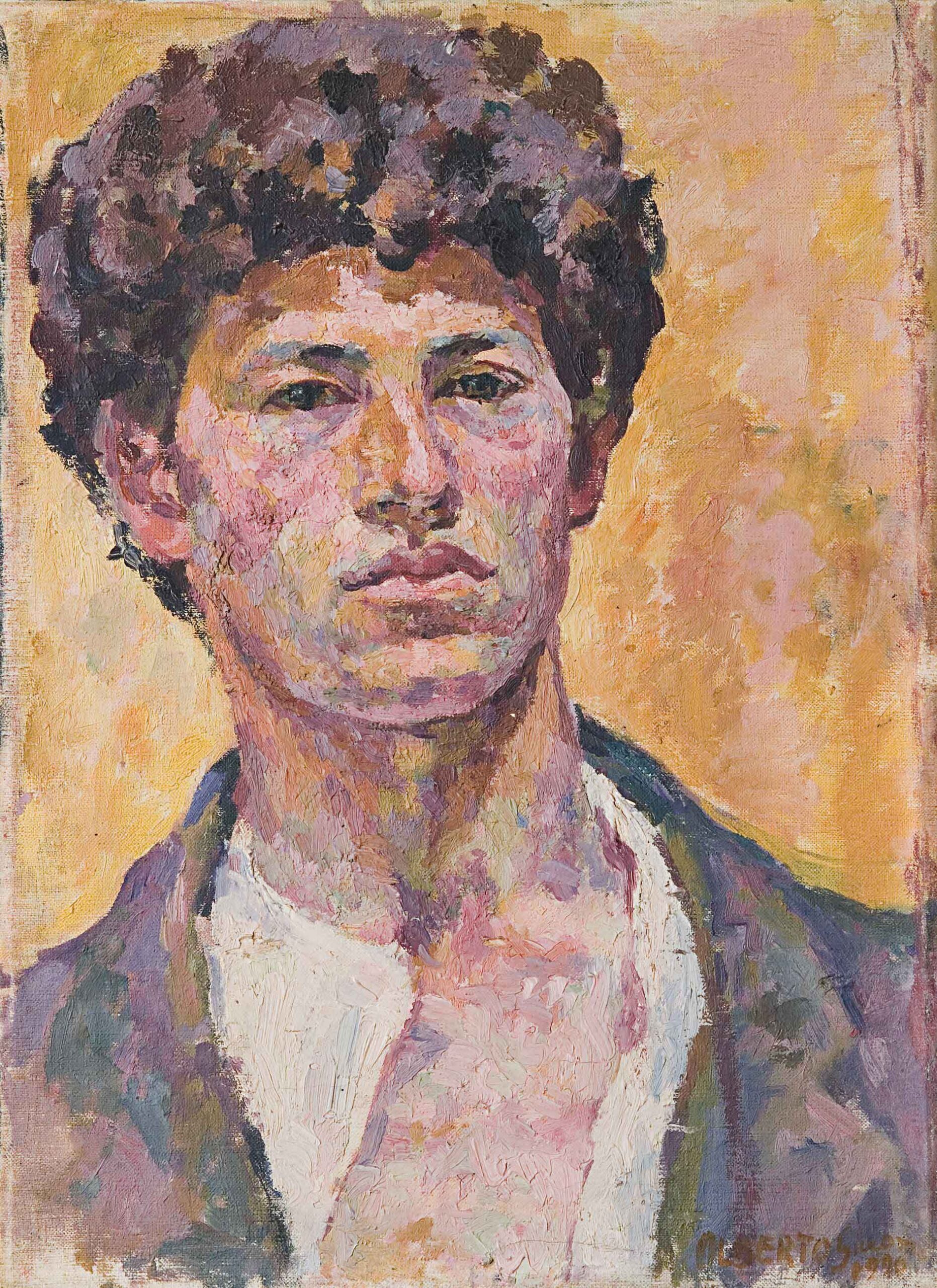
Giacometti died in 1966, chain-smoking his way into bronchitis. He left behind a body of work that redefined the human silhouette: stripping figures into the most essential of elements. The pockmarked surfaces, even on his paintings, are rough canvases that naturally invite dissatisfaction—a flurry of movement by the artist that can easily reduce their subjects to dust. What remains, in his return to Switzerland, is that slender form pared to its essence—the pictures, photographs and sketches that inform the weight of what’s been carved away. It is this distance that the St. Moritz exhibition brings into focus most sharply, calibrating the artist not as an avant-garde existentialist, but a naturalist obsessed by indissoluble truths.
What the exhibition makes clear is that Giacometti’s essentialism was never Parisian at all, but Alpine—a way of seeing shaped by distance, terrain, and the comforts of his valley home. While there is a slight pastoral romance to the theme, Giacometti, too, never felt he finished a work; he only “abandoned” them when they became too much to continue. “The more I work,” he claimed, “the more I see things differently.” Giacometti’s return to the Alps feels less like nostalgia and more like a necessary recalibration. A look at his private Swiss life reframes the myth of the isolated Parisian genius, and instead—like his figures—revels in simplicity: that the longest way back is often the shortest way home.