In his own written reflections on his practice, British artist Wycliffe Stutchbury invokes the German French sculptor, painter and poet Jean Arp to articulate nature’s tendency to buckle modern society’s overdependence on reason. At the heart of Stutchbury’s work lies this tension between the human desire to impose order on the natural world and its unwillingness to conform. Wood, he suggests, corrupts, erupts, distorts and discolours before it ever submits, asserting its own internal logic through external force.
In this interview, Stutchbury vividly recalls early encounters with “heroic” hawthorns—formative moments that led him to dedicate nearly two decades of his life to furniture making. Yet over time, the formality of this traditional craft came to feel at odds with the expressive potential of the natural material he had grown to care so deeply for. Turning away from industrial processes—electric planers, large-scale dimension saws, and extraction systems—he scaled down to a bandsaw and an array of hand tools, developing what has become a singular artistic practice.
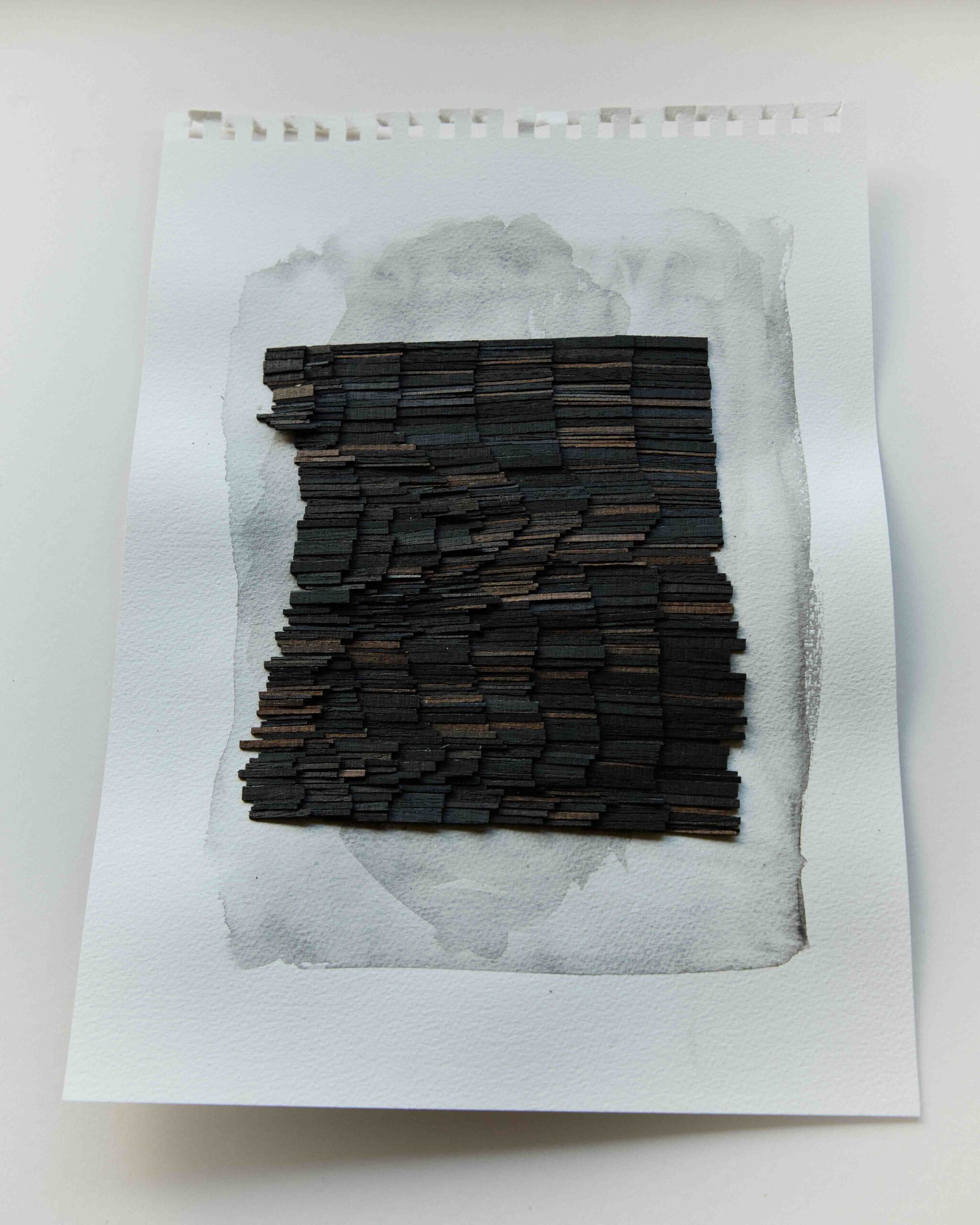
“Not a potter, or a carver, or a weaver,” Stutchbury transforms wood into delicately hewn tiles—sun-stained, time-marked fragments that act as records of their environment—which he arranges into compositions of colour and texture, intuitively revealing more or less colour and figure. Attentive to their inner stories, he recalls cutting into holly for the first time and discovering it was “like ivory,” and later uncovering bog oak turned black through the reaction of tannins with alkaline water. Arriving upon these “perfect timbers,” as well as fallen and forgotten wood, he allows the material to guide the process—embracing, albeit not without resistance, the notion that wood has a mind of its own: “it splits, it seasons irregularly, it tends to shrink more across the grain than with the grain.” It is within this fallibility, compounded by his own wandering concentration and human error, that he locates beauty, positioning himself less as an author than an editor.
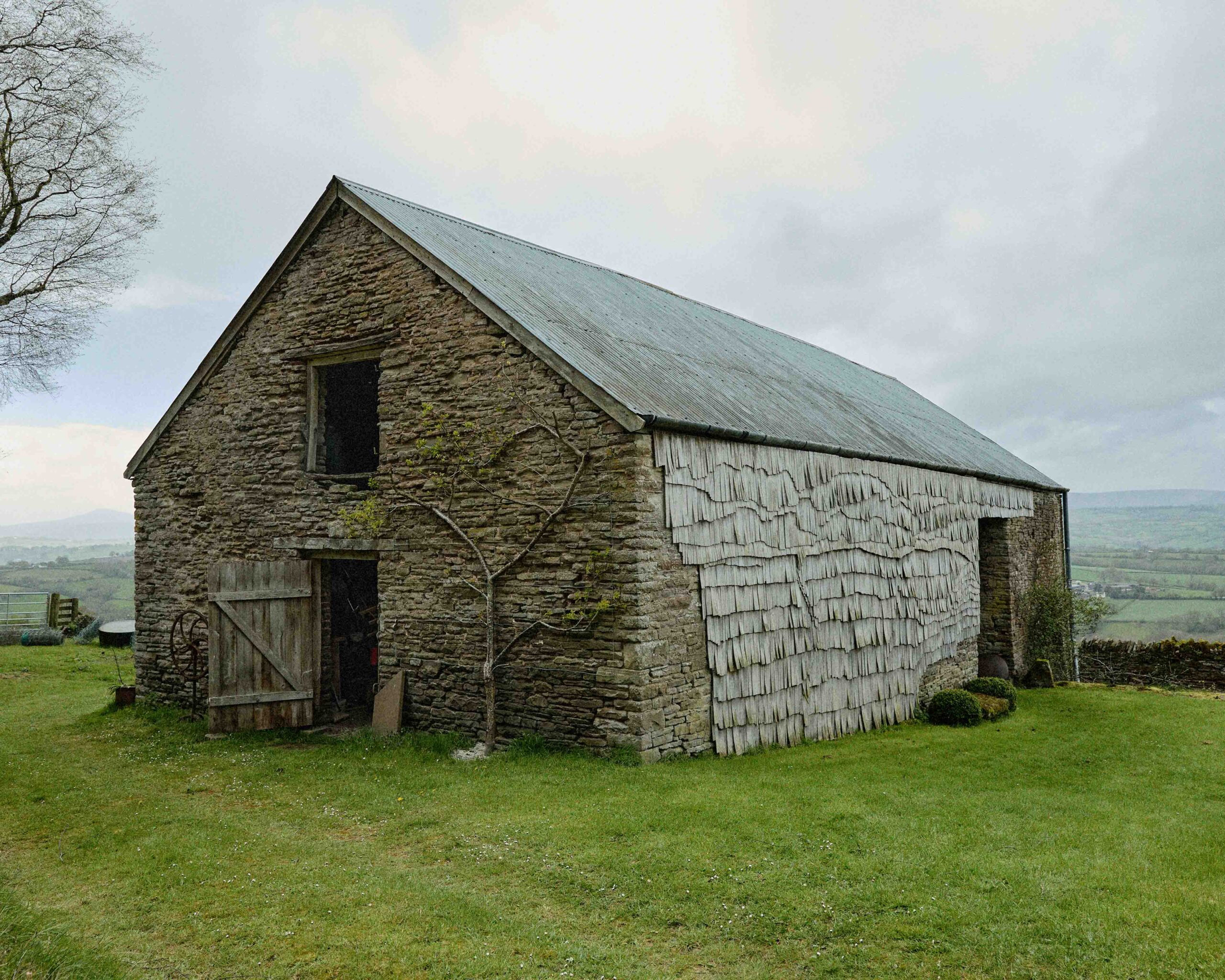
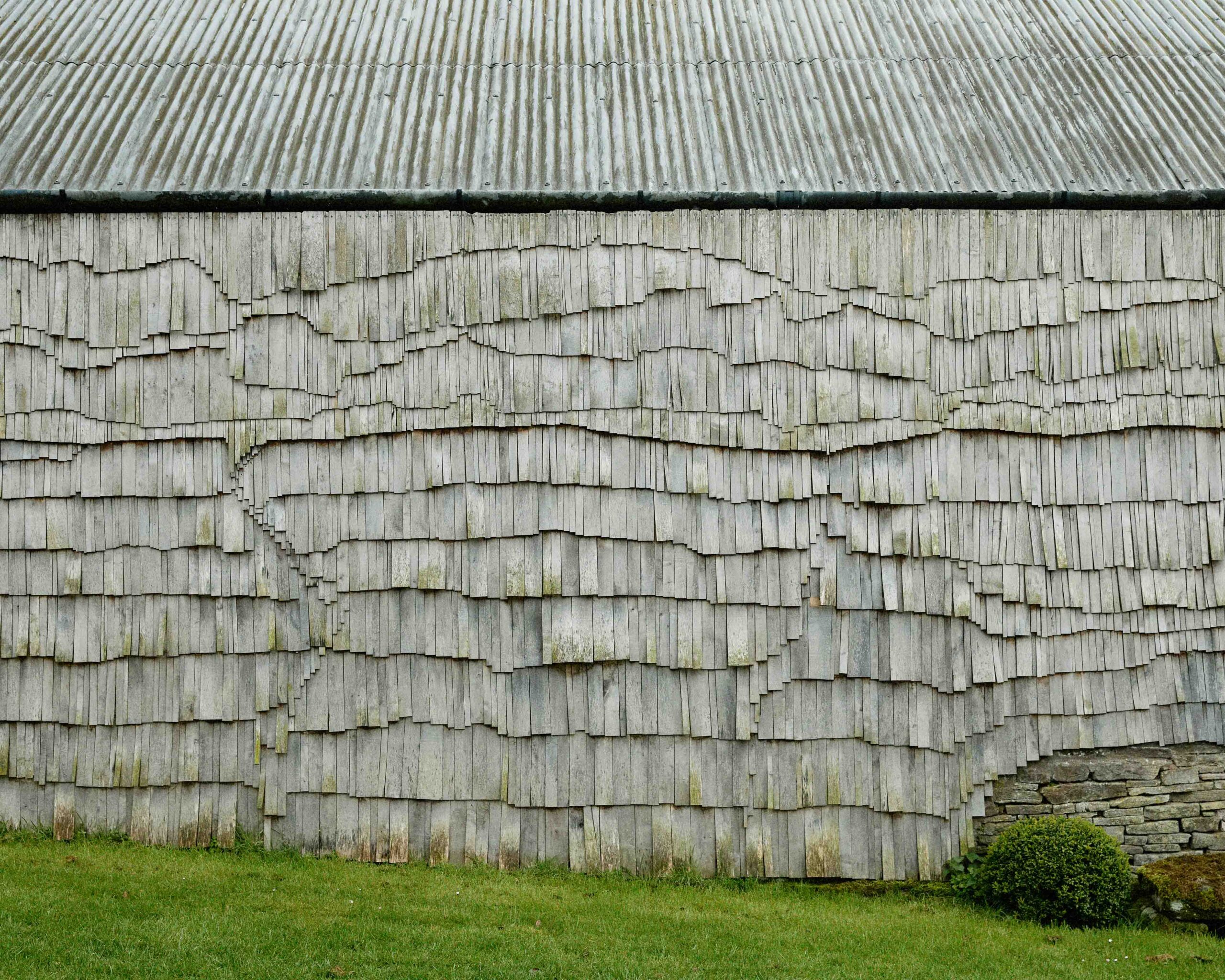
This humility sits in quiet tension with Stutchbury’s growing international recognition. In 2018, he was named as a finalist of the prestigious Loewe Craft Prize, and he is now represented by Sarah Myerscough Gallery, with whom he has presented work at major international fairs including Design Miami, PAD and TEFAF. These opportunities have led to increasingly ambitious commissions. He recounts a charming story about a client who booked a room at the Aman Hotel on Fifth Avenue in New York City simply to view one of his triptychs—an encounter that later resulted in an architectural commission on the coast of Quebec, Canada, where Stutchbury spent six weeks cladding an entire elevation in northern white cedar tiles. Closer to home, in Monmouthshire, Wales, he restored the facade of a seventeenth-century barn using the same meticulous technique. In both cases, the works engage strikingly with light, taking on a gleaming, almost metallic quality. “The silvering is one of the things I love,” he notes. “The greys, the blues, and the blacks reflect the sky, particularly when the sun is shining.”
This spring, Stutchbury participates in a group show at The Schoolhouse, Sarah Myerscough Gallery’s new space in Mayfair, London. Titled Threads (28 March–16 May 2026), the exhibition foregrounds material- and process-led practices, with a particular emphasis on the ancient art of weaving. Within this context, Stutchbury’s contribution, Shore Road (2025), draws out parallels between his layered compositions and the logic of the loom. A large-scale hanging composed of salvaged western red cedar shingles sourced and shipped from Maine, United States, the work is made of tiles skinned to their uppermost millimetre and a half and mounted on cotton twill cloth, retaining a surprising softness.
Looking ahead, Stutchbury is also preparing for a solo show with Sarah Myerscough in 2027. Responding to The Schoolhouse’s architecture, he proposes his most ambitious gallery intervention yet: a replica wall clad in wood shingles, shaped by exposure and time. Already installed outdoors in the Welsh landscape, facing the Black Mountains, the piece has been left to weather for two years before being brought inside. “I like the idea,” he says in closing, “of bringing this thing in from the cold.”
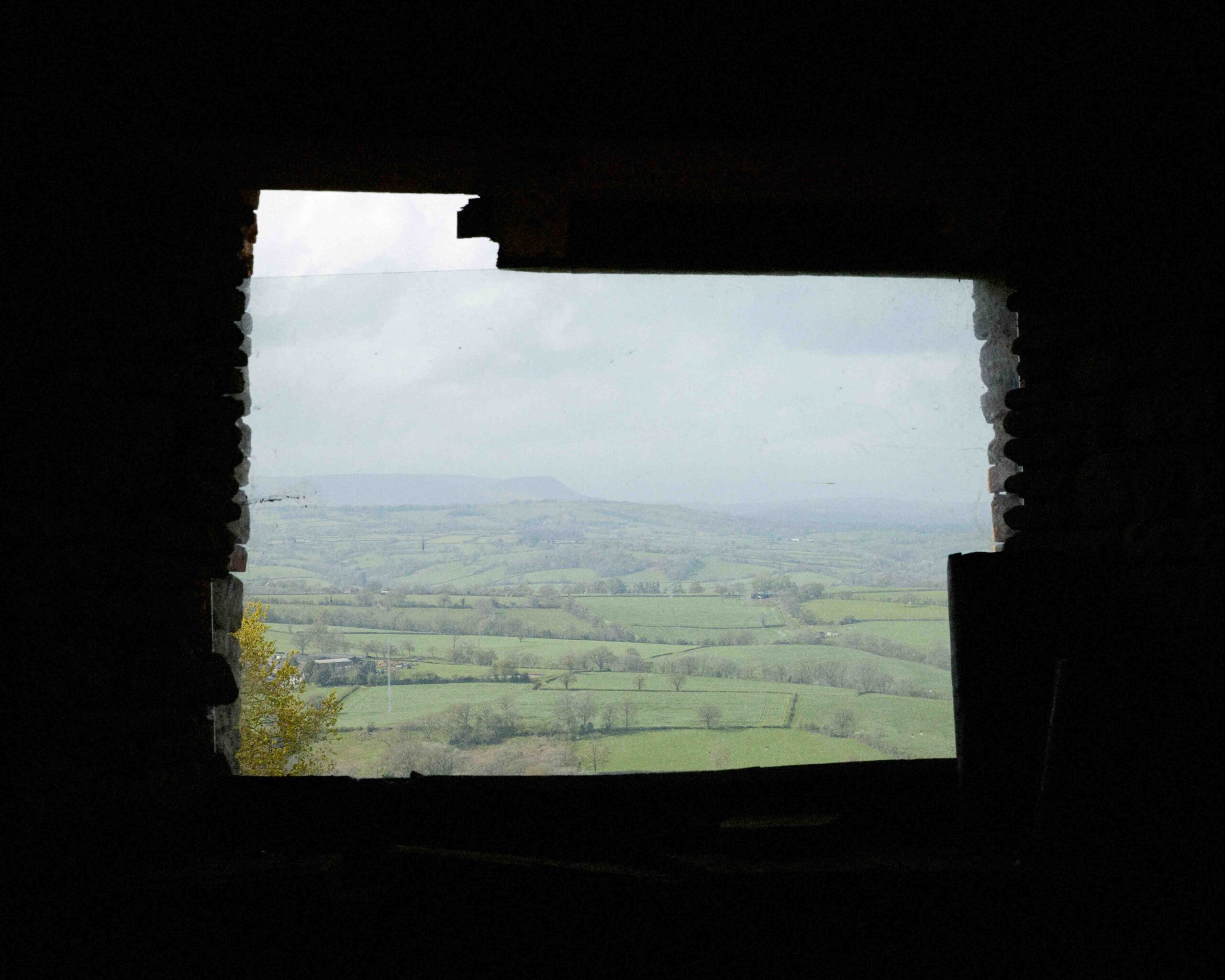
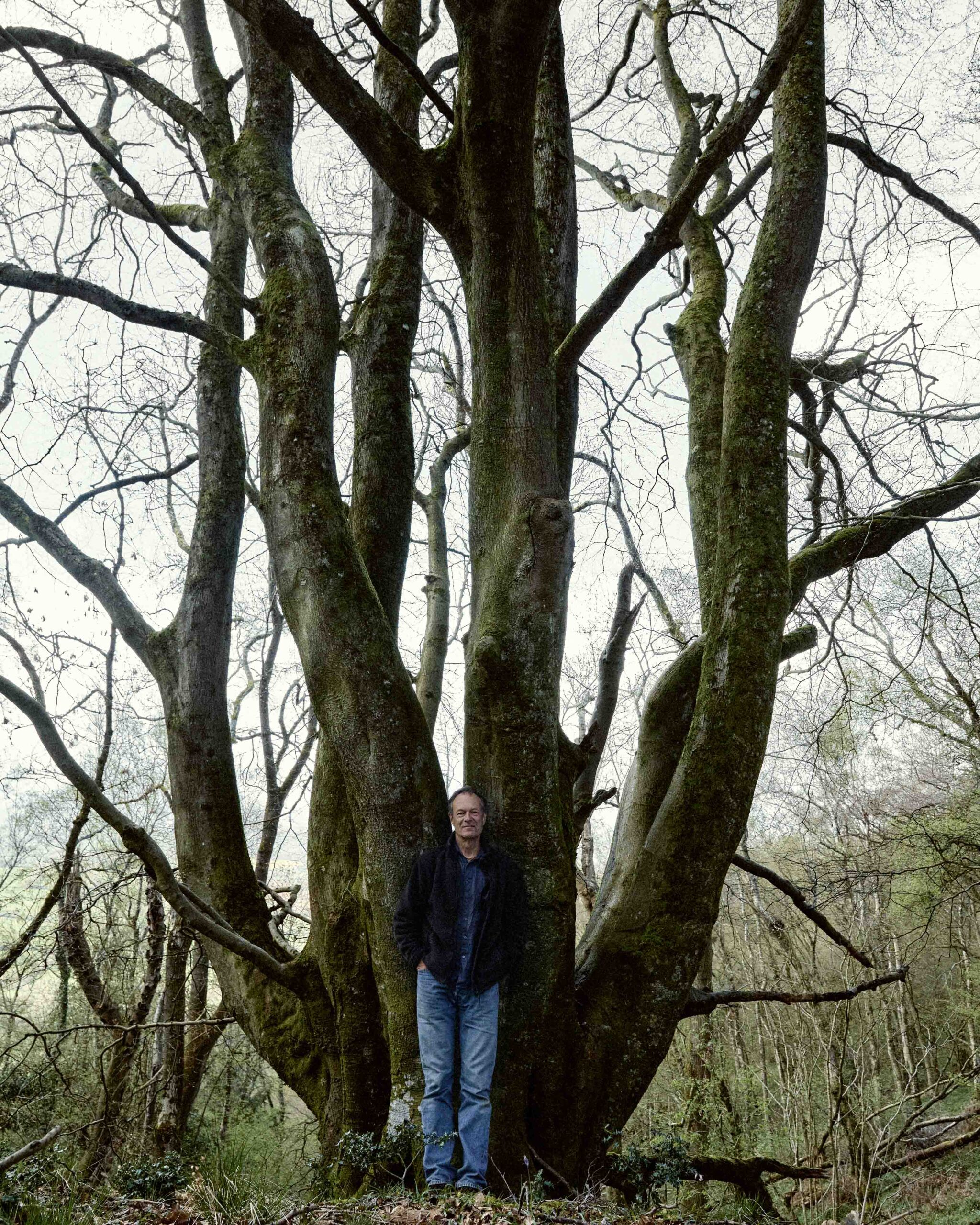
My childhood was between London and the Downs in Sussex. Oddly, the thing that comes to mind is that where I was brought up was very barren downland quite close to the coast, with fierce prevailing winds and salt air. The iconic image, for me, is the struggling hawthorns—the battle with the wind…—often completely on their own in the middle of a field… It was more like scrubland where I was, because trees found it very hard to grow. I feel like they were heroic: heroic [in] managing to survive.
I mean, wood is a miraculous material. It grows this amazing, beautiful, structural material with just sun, water and air, and it’s still one of the most high-performing materials that we have. We have found no artificial substitute for the structural properties of wood. We still use it in building for its resilience versus its weight.
I suppose it was [on] one of these bits of scrubland—16 or 17 years ago—[that] I found this piece of holly, cut it open, and discovered it was like ivory. It was very dense and had this beautiful colour. I think that was the first time that I really felt like there was an inner story to these trees. So, holly I love because it’s very close-grained; it holds detail very well, and there are these very subtle differences in grain and shade. I like restricting my palette, and wood offers that to me. All I do is edit. I curate what I have in front of me and I use that to guide me—whether the texture, the strength of the timber, or the colour.
I went to the London College of Furniture, and then I went to work for these furniture designers in Sussex. It was very early on that I was machining these beautiful boards of oak, cherry and teak, and just thinking, “Urgh!” Wood is so beautiful, and there I was fashioning it into geometric shapes. It had to conform to function, which was a massive distraction, and then, not only did it have to conform to the design we imposed on it, [but] we finished it to the highest quality and polished it, which creates another barrier to really engaging with it. So, very early on, I felt like it would be nice to be able to get the timber, machine it, and then decide what to do with it… And I think I did do that a bit. I would get a really beautiful piece of timber and then decide what to do with it, but it was always in the context of creating something functional…
It took me a long time to extract myself from furniture. The late 1980s was a great time to be in that business, and I really enjoyed learning and mastering the craft—the satisfaction of making things well—but I had to take a break… I went back to university and did a 3D course… I came out of that making these little miniature realities, and then one day I was going home and [lying in the neighbour’s front garden were] these roofing battens. (The neighbours house was getting re-roofed, and they were going to replace [them] because the roof had been leaking.) They had these beautiful colours—they were stained, and they’d caught the sun—so I asked if I could take them and I made my first picture. It was very straightforward; it was just a composition of colour. I did as little as I could. I mean, obviously [I cut them into tiles]. That was probably some sort of cross fertilisation [with my miniatures]. I was imagining little roof tiles, I suppose, but also the way that it created a physical relief…
I started this studio with some friends of mine, and I stood there one day and realised I had to justify this space or get a proper job so there was a mercenary element to it [as well], where I thought: “I need to make money.” The other struggle with furniture was the pricing. It’s so hard to get a reasonable price for handmade furniture—for the work that goes into it. Hanging things on the wall just immediately goes into a different price bracket… The other thing I was very conscious of was that I wanted to go low tech. I wanted to reduce the equipment and tools that I needed. [After] 20 to 25 years of electric planers and massive dimension saws, and cutting MDF, and extraction, I just wanted to [scale] it all down. Now, I need very little to do what I do. I just have a bandsaw and loads of hand tools…
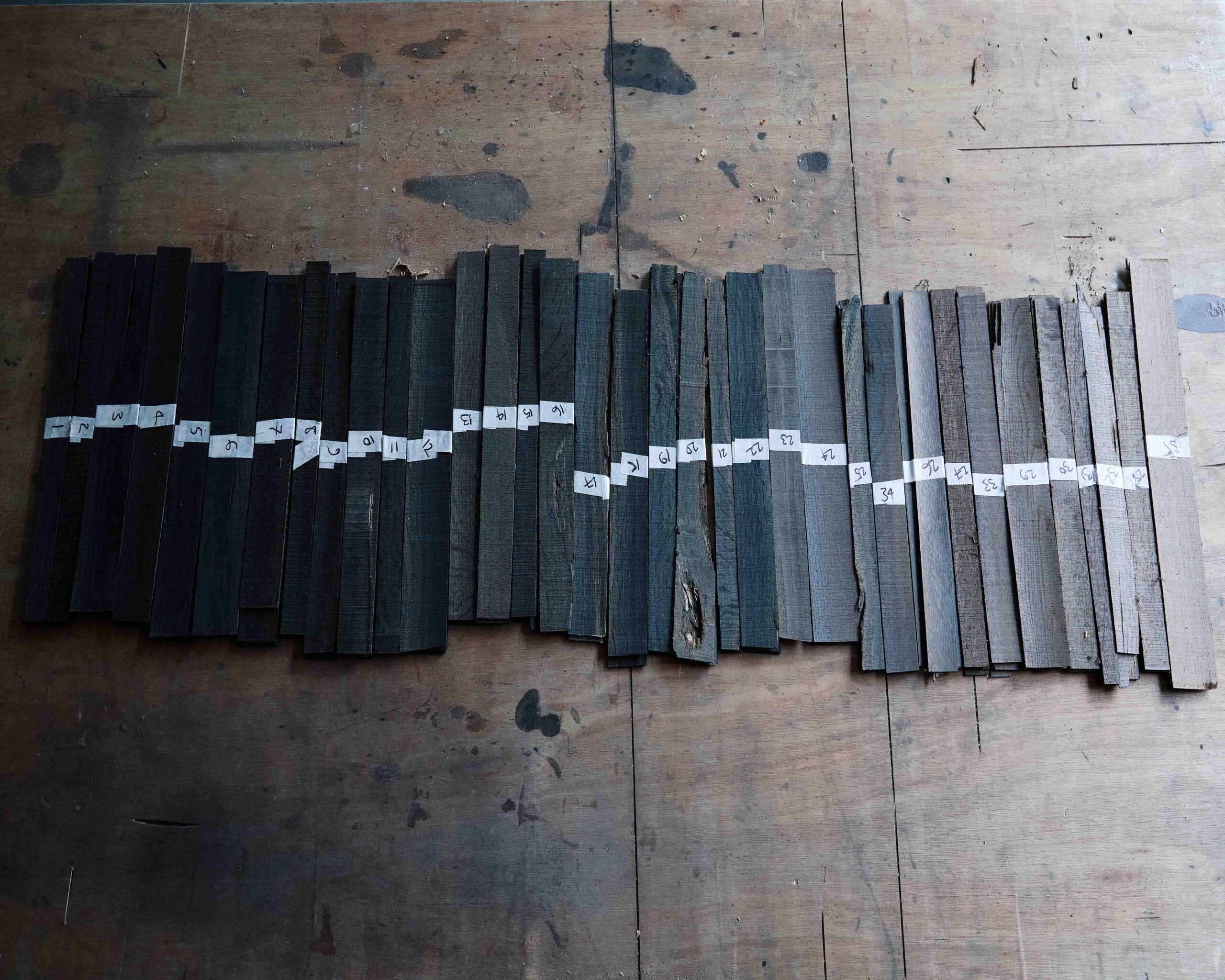
There are two different things that I’m looking for with weathered timber. With those roofing battens I was skinning them and using the exposed surface as the picture—so, colour and texture. It [was] the same with the gates, fence posts, and floorboards. I am looking for those kinds of signs of time, really. I love the way timber absorbs its environment. It’s recording history; that goes for my freshly cut timber as well…
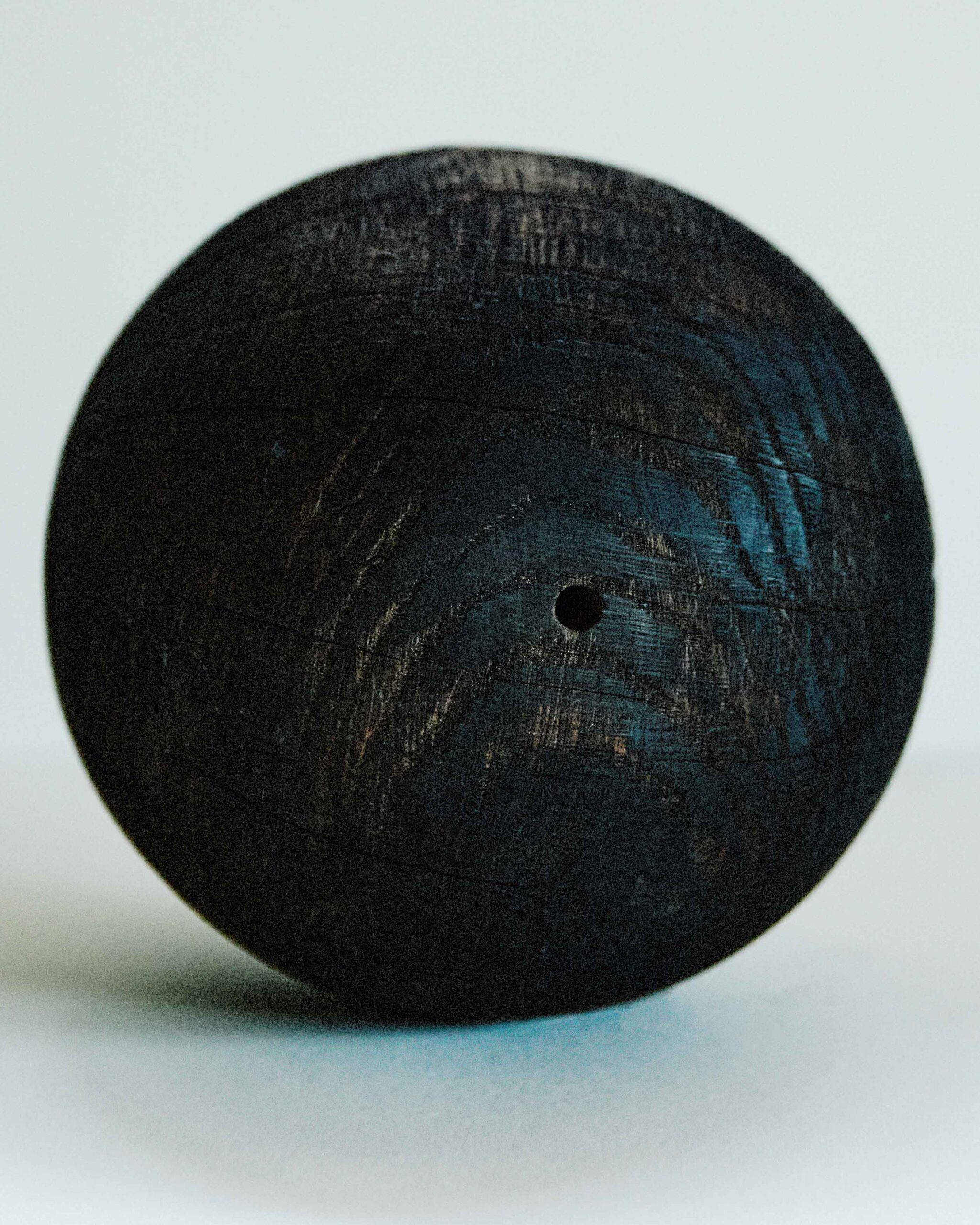
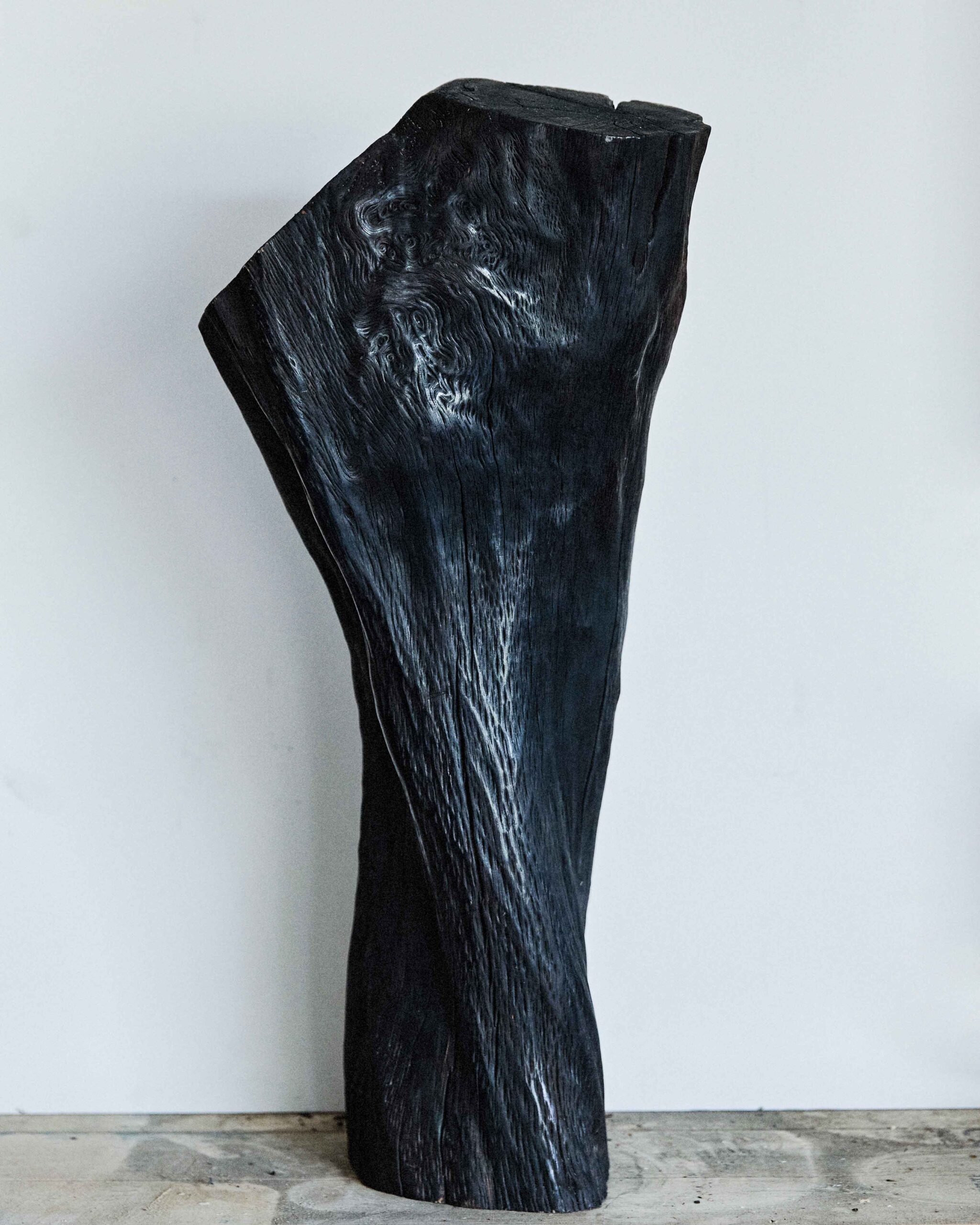
With the holly and the bog oak, I’ve sort of arrived upon these perfect timbers. When I find a piece of holly, it is also recording its environment—whether it’s rotting or whether it’s been growing on a hill. It’s fascinating the way that it records dry summers and wet summers through the annual rings. If it’s been a dry summer, the annual rings are much closer together… Bog oak is just extraordinary stuff. I first found a log in a barn; I cut it open, and it was black. [Then] I found this big root in the estate yard of a National Trust house. I wondered what it was, and I asked the estate office if I could take it… This oak had been felled in the mid-1700s, and it had just been lying across the stream to form a dam. In those 250 years, it had gone black through a reaction of the tannins in the oak with the alkaline water—this kind of miraculous transformation—and so I [became] obsessed with bog oak. I have now found a dealer in Kent who is also obsessed with it, and goes up to East Anglia and hauls them out of dykes and canals. I come and choose the bits that he can’t use for instrument and furniture making…
I am constantly on the lookout: tips, skips. I mean, when I used to do the school run, I’d see interesting things in a skip and I’d pull over. My youngest daughter was sick of sitting next to huge joists and things that I had hauled out of skips and pulled into the back of the car. [Both laugh]. I am constantly on the lookout for stuff that’s been thrown away. I mean, that’s not the major motivation. It’s not that it’s been discarded; it’s just wanting to preserve that history, in a way.
Well, it depends. I mean, I’ve just made a very big hanging for [Threads (2026)] at Sarah Myerscough [Gallery]… I had a job in America last year and a lot of the architecture there is these wooden structures and wooden shingle facades. I salvaged a lot of the western red cedar shingles—they were 80 to 90 years old—which I then shipped back here. I’ve kind of skinned them; I’ve chopped them up into much smaller bits, and then I’ve taken the uppermost millimetre and a half and made tiles, [creating] this big hanging [with] masses of different colours and textures. When you get that variety of colour and texture, there’s very little you have to do in a way. It’s just editing… So that’s one way I work, [where] the tiles are almost like my paint.
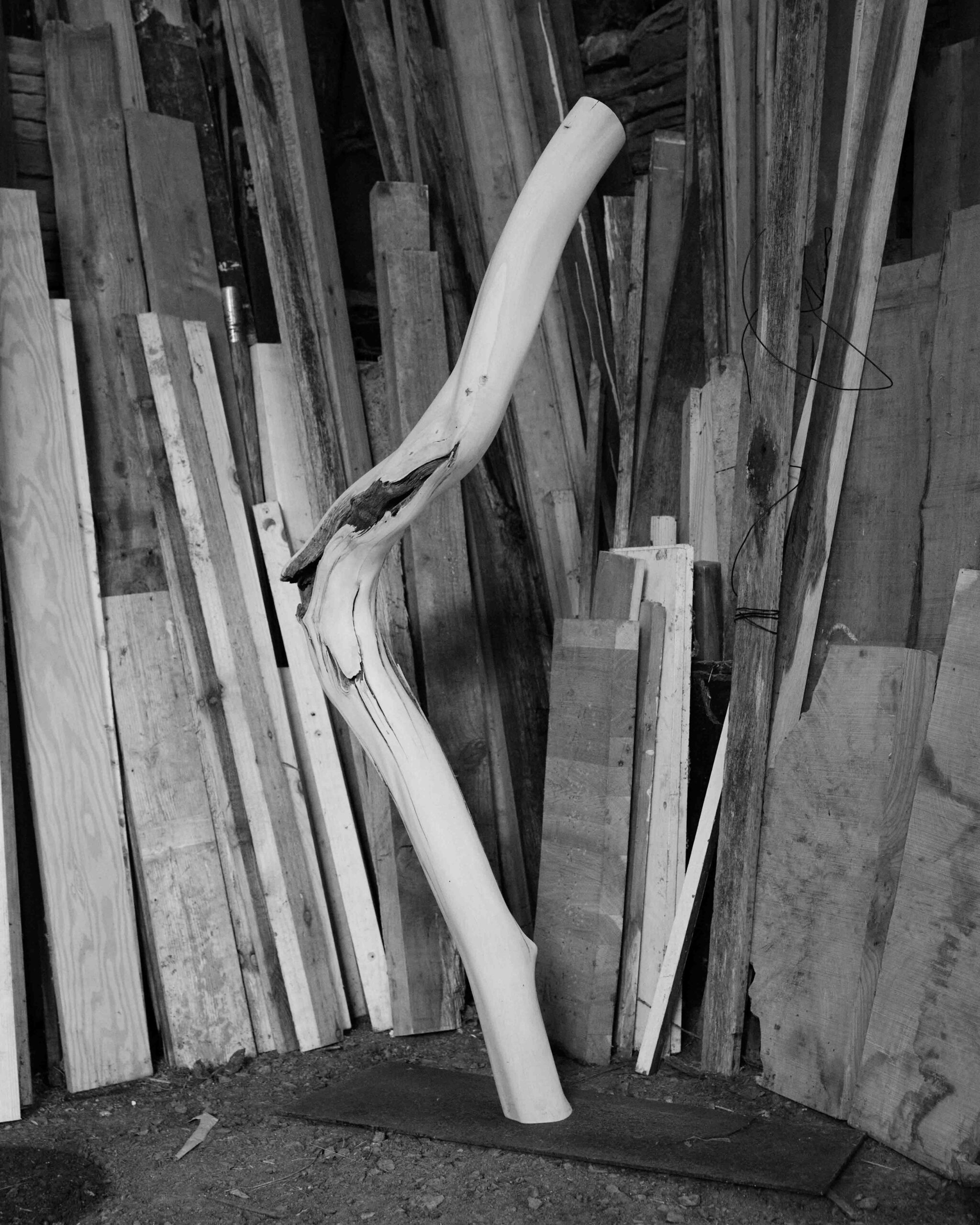
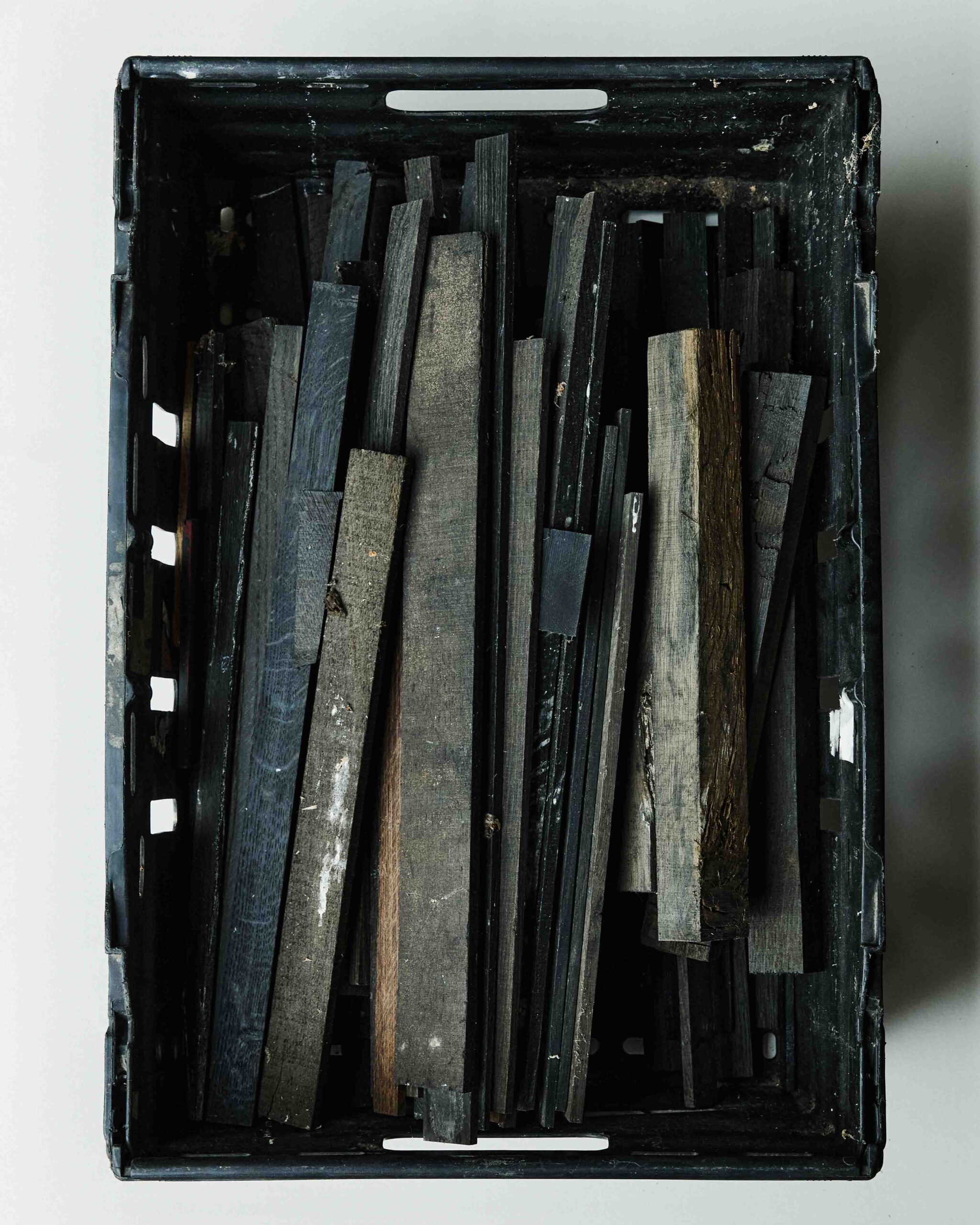
When I’m using holly, I go into the woods and I cut branches off, or pick branches up off the floor, and cut them very coarsely with my bandsaw. I let them dry and season for anything between three and six months, and then I cut them a little bit smaller, splitting the logs and letting them dry again. When they’re properly dry, I cut these veneers with my bandsaw and strip them to width, then cut them again to width using this very fine Japanese saw I have. It’s a long process… When you have a log in front of you, and there’s different ways you can cut [it] to show more figure or more colour, there are decisions being made all the time. It’s part of the reason why I have to do everything myself, because I don’t trust anyone else to do it properly. [Both laugh]. The size of the tiles—their width, length, and thickness—are all important, because it makes the character of the piece. If they’re very narrow, it makes it look much more delicate, but it also means I can draw lines that meander much more freely than if they’re wide tiles. There’s a language I have developed, and am still developing…
I mean, the key for me is to let it lead me. That’s so hard sometimes. I’m making a piece at the moment where I had a very clear idea of what I wanted to do, and it’s just gone in a completely different direction. [Laughs]. I’m trying to get it back to what I wanted, and [it’s just not happening]. It’s really hard to repeat things…, but also the process—which I try [to] keep as intuitive as possible—just [isn’t working] out how I wanted it to, or it’s not at the moment, and I don’t see any way of getting it back to what I wanted.
Sometimes, there are bits of a piece I have made that I really like and I’d like to explore further, so I make that the central motif of another piece—and it doesn’t work out. That’s partly the method and the technique. I find I get myself into trouble, and then I have to get out of it. That’s actually when the most interesting things happen… I have to keep on remembering that. You want to master it, but actually, you’ve just got to try and go with it… Wood has a mind of its own, and it’s got an incredible force as well… You impose a geometry, a design on something, and then wood just corrupts it: it splits, it seasons irregularly, it tends to shrink more across the grain than with the grain… I really like that point where you really just have to let go and let it do its thing. It’s totally unpredictable… So, that’s the nature of the material. And then there’s also my concentration—I just sort of wander.
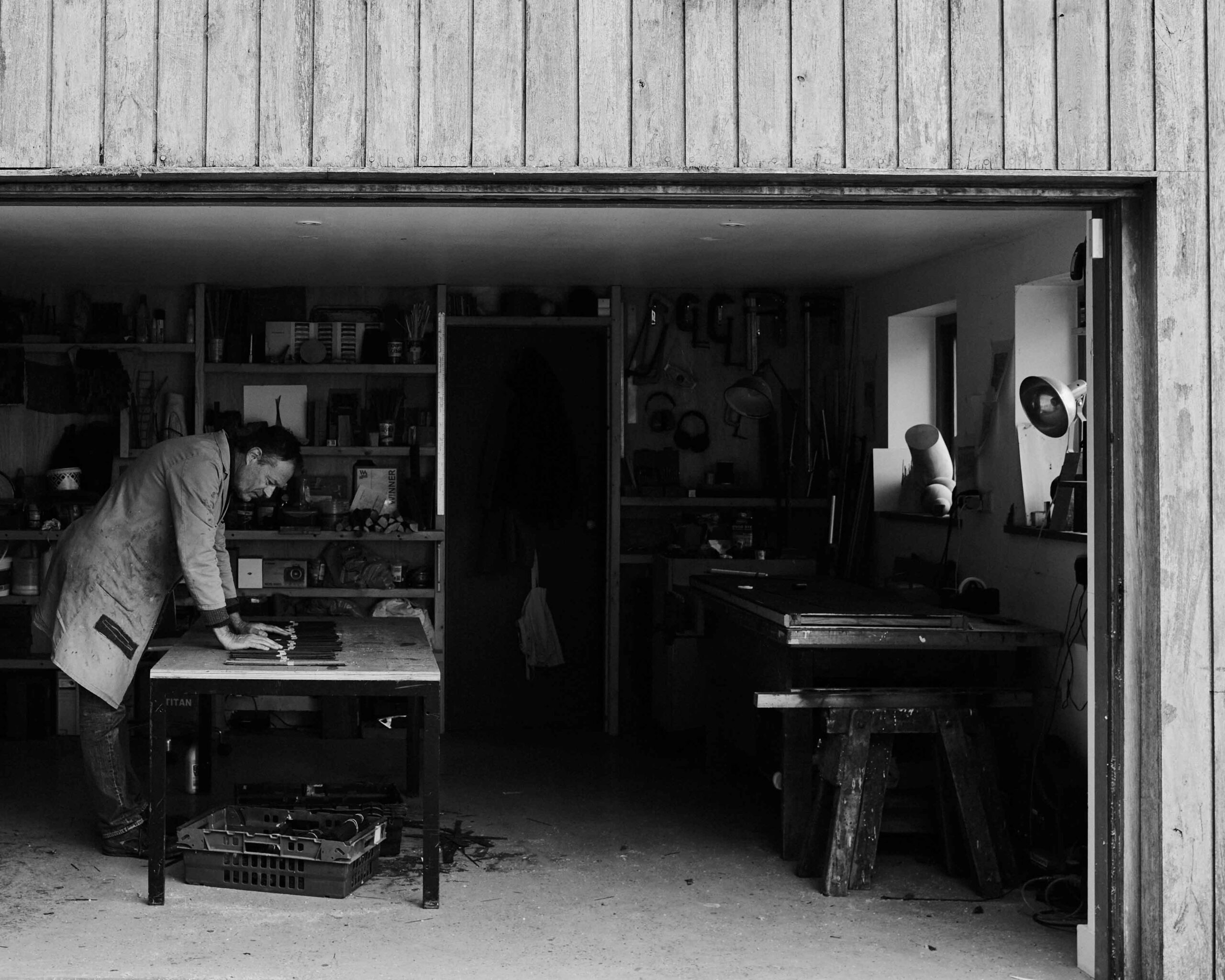
[Laughs]. My work gives the impression of being very peaceful and meditative, but actually, a lot of the time it’s quite stressful… It’s very dependent on my mood. When I’m anxious, I tend to be much more fierce about trying to impose an order, and when I’m feeling more relaxed, I don’t think about it nearly so much, and it just does its own thing. Both work…
It’s really hard to work intensively like this. You have to have breaks because it’s such a small world that you are working on, [and you] have to get away from it. It’s more frustrating than it is [enjoyable], because I feel like it’s a failing, in a way—but I also know that some of the most interesting things happen by accident… You can be trying to impose a line, and then there’s an error and then you magnify that error. Weirdly, one’s eyes are drawn to that imperfection. Particularly in this digital world, that’s the human touch—so I try to celebrate it…
It was a lovely time. It is as close to the Oscars as you get in the craft world. They really looked after us. It really felt like they cared, actually. It wasn’t just good for their optics. The Loewe Craft Foundation really thought about it thoroughly; [it was so intentional]. As makers, we all work in isolation, so to have [all been brought together from all over the world and put up in a hotel]—that was really, really lovely.
It’s odd. With what I do—I’m not a potter, or a carver, or a weaver—it’s quite hard to contextualise my work, and so it’s hard to compare.
Yes, and so I’ve always sort of felt that I don’t belong to a craft tradition. The other thing that I notice is that I’m sort of anti-technique now… I mean, it’s nice to have skills under your belt, but I don’t want to display them necessarily because I feel like it’s a barrier… I’ve kind of deconstructed all that. What I do isn’t particularly skillful—it’s a language… so it’s hard to feel part of something else, in a funny kind of way. I think most makers probably feel the same. I can’t sort of sit and chat about lathes and chisels, and things like that. [Both laugh].
In terms of how it has affected my practice since, it’s been hugely useful in terms of my exposure. Loewe created this online platform called The Room, which looks lovely. I’ve got work from that and I’ve given talks, but it hasn’t [affected] what I do, if you see what I mean.
Well, the great thing about having a gallery is that they’re the front line, [so] the gallery deals with all of that…! Through Sarah, I make pieces, they take them off and send them. I very rarely know who they go to. I know roughly, sometimes, where they go, but I’m just sort of busy making… Obviously, it’s exposed my work internationally… Again, it’s a bit like the Loewe [Craft] Prize. I don’t feel like it’s exposed me to the client base. That’s Sarah’s job! [Both laugh].
But I do have clients of my own, and I love the whole process of working [with them from] beginning to end. It’s great to meet clients, hang the work, and see where it is. Often, I never see these pieces in their final context, in their resting places.
That was this wonderful woman who found my work on the Loewe platform. [She] just emailled me—she was so lovely—and she said, “Your work has just kind of smacked me right between the eyes. I’ve got to see your work…!” She was in New York and I said, “Well, I’ve just been in a fair in New York and that’s over now, but I have got a piece in the Aman Hotel on Fifth Avenue.” (I don’t know if you know the Aman Hotels, but… I think it’s the most expensive hotel in the world.) So [she] and her husband went into the hotel and asked to have a look at my piece, and they didn’t let them go any further because they didn’t have a room. So they came back, booked a room, and stayed the night so that they could see this triptych that I had made for this hotel. Then they came over here, to London, and we met. They said that they were building this house on the coast [in Quebec] and they wanted me to do one elevation, so I went over there. The whole house was being shingled with these white cedar shingles, and they left one elevation for me to do. I spent six weeks out there last summer. It was a lovely job. The scaffold was still up when I had to go, but I’m going to go back next year and see how it’s doing, with all that coastal weather it’s been getting.
I know—they were the absolute dream clients. They just let me do whatever I wanted. I mean, the architects were very slightly conservative… There were windows on the ground floor that they had to get rid of, so I could do my thing. They weren’t entirely happy. They said, “You’ve got to keep within this certain curtilage,” so I couldn’t go over the whole elevation—but they were very accommodating, considering the compromise they had to make… It was a dream job; it really was.
I’m loving the way it’s just getting better and better. It’s turning down, it’s becoming the same colour as the stone around it, and there’s moss growing on [the bottom of the tiles]. It really feels like it’s been there for a long time. It’s been three years now, but it’s become integral to the building. It’s all lovely shades of grey and green. Wood is just so good [at] camouflaging itself. It’s absorbed this incredibly wet climate, and it’s adapted…
The silvering is one of the things I love, because it does become reflective. The greys, the blues, and the blacks reflect the sky, particularly when the sun is shining. It’s better than I hoped it would be, because it’s getting this moss now.
The timber itself is oak from the surrounding woodland. Oak is pretty well the only durable, homegrown, domestic timber that you can use for external cladding; you could use chestnut as well. In the woods just up the hill, big branches of a very old oak had fallen, so I used those. That was lovely, because there were no road miles involved. I milled all the oak myself, slowly seasoning it. This is a really good example, actually, of how the nature of my stock material influenced the end result. I used a lot of branches—and branches have a lot of sap, which you can’t use, and not so much heartwood. I was having to squeeze out every bit of oak that I could, and so a lot of the tiles are very narrow because that’s all I could get out of the branch. That’s why I could draw these lines. The tiles were so narrow that it almost wasn’t stepped, and that was just me trying to get every bit of sound timber out of what I had. I was determined to use this oak that had just fallen…
Exactly—that’s the ideal: for the piece to be shown in the location [where] the timber was found. I have managed that a few times… Very early on, I contributed to an exhibition in Rochester, Kent. I went to see the gallery and then, on my way back home, I found these wonderful joists in a skip. I made a piece from these joists that I had found just around the corner from the gallery. That was perfect.
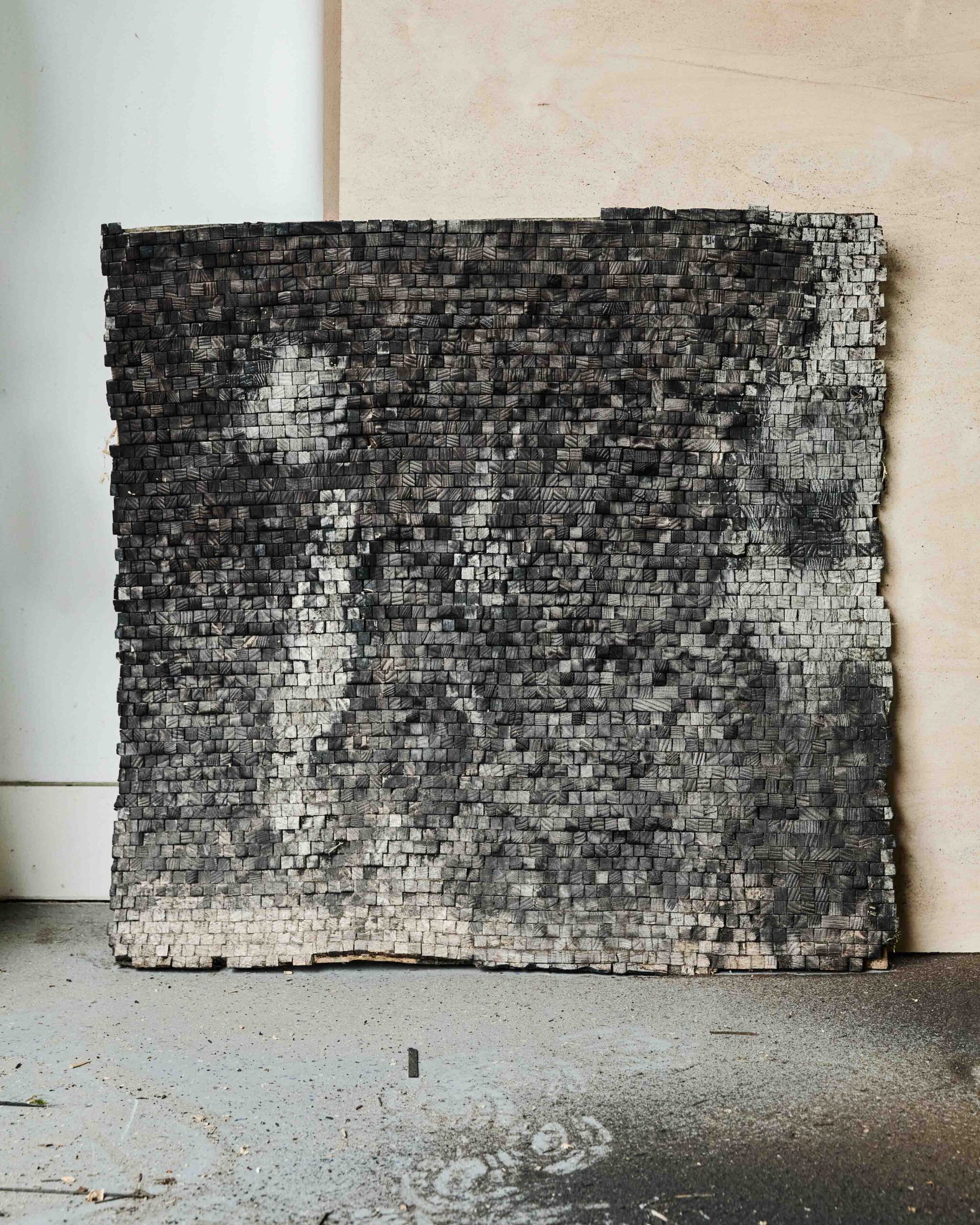
People have regularly mentioned to me that they are reminded of textile design with my work, and I think there are parallels with the techniques, method, and tessellating nature of what I do. It is building up layers, almost like on a loom.
Particularly with [the] hangings, I made the discovery that I could hang my tiles on cloth. It’s amazingly strong, but it moves like material—it sort of billows and sways. The other nice thing about it is that I can lay the tiles, but when I hang the piece, it takes on a completely different nature and different things become prominent. It’s completely out of my control… I’ve always worked with rigid substrates, and with material it just completely changes everything. You can manipulate it to a certain extent, but I rather like the way it takes on its own shape.
No, I first started doing it about three or four years ago. I made a screen, which was a large piece of cloth draped over a frame made from gate posts, and then I forgot about it for a bit… Actually, just going back to your question about how these international fairs have affected my work, the great thing about these hangings is that I can roll them up, [which makes carriage and freight much easier]. I made a piece in holly for Hong Kong last year, which was 4.5 metres wide or something, and it just rolled up and went into a crate that size. [Gestures]. I mean, it was long, but I like that it transports well.
I’m having a solo show with Sarah [Myerscough] next year. [The gallery building] is this old schoolhouse in Mayfair. It’s a very big building, and the downstairs space… must be at least seven metres high or something. You walk in, and there’s this wall that’s a kind of floating wall—it’s six metres by six metres. I’ve made a replica wall, which I’ve clad in western red cedar shingles, and put it in a field in Wales facing the Black Mountains… I’m going to demount it and install it in Sarah’s gallery in exactly the same format. It will have had two years of Welsh weather. It’s going to be quite a presence, I think… I’m just interested to see how this wall’s going to look. I like the idea of bringing this thing in from the cold.