Behind Dennis Vanderbroeck, the whitewashed plaster of an improvised theatre cubicle is taped over with scribbled production schedules from an unfamiliar rehearsal. The 36-year-old Dutch scenographer cuts an unassuming figure for someone whose sets have been not just seen, but inhabited, by millions. His hair is dark and clipped, his shirt plain and well-fitted, and his expressive, theatrical cadence punctuated by long, deadpan pauses as he turns away in profile, thinking. For someone whose career is defined by monolithic environments, he seems entirely comfortable operating out of a borrowed box.
I’ll find out later there’s more than meets the eye, but it’s a fitting setting for an artist whose dialogue with space is his visual signature. Emerging from the conceptual vanguard of Dutch performance art—an education indebted more to Marina Abramović’s environmental confrontations than classic playwriting—Vanderbroeck spent the last decade dismantling the perimeter between fine art, European theatre, and high-fashion spectacle; even turning the performance on himself by putting his own body on display in a red-light window for his 2016 project, Dennis For Sale.
Studio Dennis Vanderbroeck’s portfolio oscillates effortlessly between sublime and playful: from the recent hyper-pop stagecraft of Rosalía’s Lux (2026) that reads more like a dream than a concert, to Issey Miyake’s peeling white capsule punctuated by the kinetic force of dancers (2026), to the Battlefield of Dreams (2025) stages that fill their actors with orange, embryonic goo. With the installations living for little longer than a stubborn mayfly, Vanderbroeck’s structures are by nature ephemeral: blocks of saturated colour, scaffolding and flurries of motion that invite the audience to step inside a structure of pure joy.
In recent years, Vanderbroeck’s gaze has turned inward, provoked by the slow dissolution of his father to early-onset Alzheimer’s. That loss triggered an obsession with the clinical architecture of memory, and culminated in A Masterpiece (2023), a raw solo performance that saw the designer return to his art-school roots and put his body under the lights. As Vanderbroeck explains, space is a fragile psychological contract negotiated with the viewer in real time. It’s also a drug that you can’t shake once you’ve finally seen the shared madness of turning your mind into a living space.
Here, Vanderbroeck speaks on his roots, the candid art of building a perfect walk-in wardrobe, and the elusive redemption of returning to a difficult work twice.
Oh, God! [Laughs.] No, no, no. I wish. Sometimes, I wish. I’m 36 now—and honestly, I like getting older.
I studied performance art at one of the most famous theatre schools in the Netherlands. My focus was performance art direction, conceptualising a piece and then performing it yourself. I never did Chekhov or Shakespeare. It wasn’t traditional theatre at all. That’s something very specific to the Netherlands: this avant‑garde way of producing and thinking about theatre. My education was closer to Marina Abramović—performing in unexpected spaces, treating the environment as part of the work.
In my third year, we all had to do an internship. I ended up at a Danish fashion designer’s. I was his first intern, [where I] designed his catwalk installation.
That’s true! And the cute thing is, about a year ago, someone sent me a letter in a bottle asking to work with us. She said, “I read that interview—now it’s your turn.”
Yes. I once walked into Rem Koolhaas’ office with my portfolio—even though I was still a theatre student, which made no sense to them. I still reach out in ways that belong to my universe. I want the first contact to already feel like an entry point into the world I’m trying to build. That first reach-out made me realise something: this is the same as what I was doing at school. The context changes, the audience changes, but the act of creating is somehow similar.
Physical space is the bottom line of everything.
We’ve had conversations about film production design, about set design for fashion campaigns, and every time I get close to it, I feel myself pulling back. Even if the project is great or the collaboration is exciting, I know it’s not how my head works. I’m not immediately interested. There are so many people who are geniuses at 2D spaces—film, photography, screens—but my thing is the physical presence.
Exactly. It’s always about the relationship between whatever is on display—a performer, an object, a moment—and the viewer. There’s always a dialogue. That’s the crucial element. And once I understood that, I found a huge freedom. It means I can also work on something social, something not directly tied to art or fashion.
My father passed away last winter; he lived in a facility for people with [early onset] Alzheimer’s. I became fascinated by the space he lived in with his peers. I even contacted the government organisation that runs those facilities, just to see if I could contribute something. There are still so many levels to explore within physical space. That’s the glue. All we have is physical space.
Definitely. Everything I do—and now everything we do as a studio—starts from having studied performance. I know what it’s like to stand on a stage and be looked at. And I can put myself in the audience’s perspective just as easily. The dialogue is inside me, while I’m thinking about space.
What I find magical is this unwritten agreement: you sit somewhere and decide to believe in what I’m showing you. There’s this thin, almost transparent layer that connects everything in the present moment. It invites the viewer to be aware that this is an artificial reality—and that there’s beauty in agreeing to use your imagination.
Yes. But we’re now in a phase where I’m interested in quoting myself. We reused a scenography from 2019 and reinterpreted it for a concert [with] Rosalía, and I thought, “This is so interesting—these things can come back. Why do I have to constantly generate something new that’s as genius as the previous thing?” Then we did Diesel, with that huge inflatable, and two years later it came back in a different form.
In this world, these things are being described as sustainable. But for me, it’s conceptual. It’s this idea of referring to yourself, and the idea that everything is already there. That’s the beauty of [it]—that everything is a response to the echoes of things that [have] already happened.
We’ve [had] eight years now [as a] studio, and we’ve started to [build] a body of work that you can look back at. In the first five years, it was just survival. We wanted to generate more work by doing good work first. And now it’s cool to have the privilege of having more of an overview, a perspective, on what’s been made.
I mean, that’s why I’m in the game. That’s the most magical moment. I love, love, love it. That’s always the apotheosis of what we do: the moment [when] we first step into what we’ve been working on for a long period of time, when it becomes reality. When you work with people—from the ateliers who are thinking with us to [those who are thinking] how we can make [something], how we can sample this and sample that—and then you enter [into the work], that’s the drug basically. That’s the adrenaline, the whole apotheosis of your process. You get this incredible release once it’s being used.
Yes, and that’s horrendous and beautiful at the same time. You don’t have control over it anymore, but then it also starts to breathe and live.
I’m an extreme control freak. I’ll plan, I’ll think it over, I’ll make sure I’m as prepared as I can be in order to let it go at the right moment. I’ve also really learned to trust the people [I] work with—trust the performers, the lighting designers, the models, the artists, the people who make it [feel] alive and make it their own. In the end, my job is only to facilitate somebody else or something else. That’s the beauty.
Actually, I consider design as a tool to start communication. We start the dialogue—first with the client, or the performers, or the director, and then eventually with an audience. My job is collaborating. That’s my day-to-day job. The design behind a computer is actually the most boring part because it’s passive, whereas everything I do is extremely active, extremely in contact with people [and] space…
Yes, yes, yes. And it’s beautiful that we’re now at this point—that the way I work is an internal collaboration that lets you collaborate with the world.
I grew up in a very rural, soulless place. And of course, growing up as a queer kid, that search for community was special for me. I got so lucky with two parents who supported me in everything. It made that journey less difficult than it could have been.
For me, there was before theatre school and after theatre school. I always had this annoying, very fixed mindset about what I wanted to do. [Before theatre school], I was in a state of pause. I had to wait it out, I had to sit through a year and a half of high school before the transition to theatre school was possible. Then my life could start.
That one’s really interesting, because that piece exists outside my normal practice. It was such a personal project—it was about my father being ill, being in the process of dying.
It almost felt like a project outside myself, because I just had to do it. I’m extremely proud of it for very private reasons, because of the relationship I got to establish with my father. But it’s also a project I don’t want to look back on, in a weird way. It’s the most dear project I’ve ever done. But, artistically or professionally, I’m not satisfied with it. There’s a friction I can’t resolve.
No, no. It was with a theatre company, but I’d say it was very autonomous and there was a strict framework of money that didn’t materialise to produce it fully. I made an agreement with myself that if I ever make autonomous work, it needs to match my framework. It’s not always about money; it’s also about where you perform something. I played it in very small places. It’s funny because it was autonomous, but it almost felt like it was commissioned, like I had to do this and that for it to be valued. It’s a process I’m still thinking about…
Yes, exactly. Every time people bring it up, I tend to avoid it for some reason…
Definitely, but I also like that I’ve done it. This sounds stupid, but I felt very proud because, when I started out, the idea was always to mix commissioned work with autonomous work—but that’s super difficult once you’re in the system and the pace of being a studio, being a company. I was proud that I built in the time to do something like that while the studio kept going. I took that space for myself to figure it out and attempt it. But I’d like the redemption of doing it again, and I will. For sure, I will.
Exactly, I know. I’m only 22. [Both laugh.] I mean, I don’t even think that’s physically possible.
Oh, babe. So many, God. When I see pictures from even half a year ago, I’m like, “What the fuck was I thinking?” But it’s part of it, and it’s the beauty. Thank God you evolve as a person. And again, sorry for breaking it [to you], I’m not 22 anymore—so I like this idea of aging, how far I can push it. Sometimes, I resent it, but yes, it’s love, isn’t it? My husband thinks I’m crazy sometimes, [but] the room in our house that’s my closet is my sanctuary.
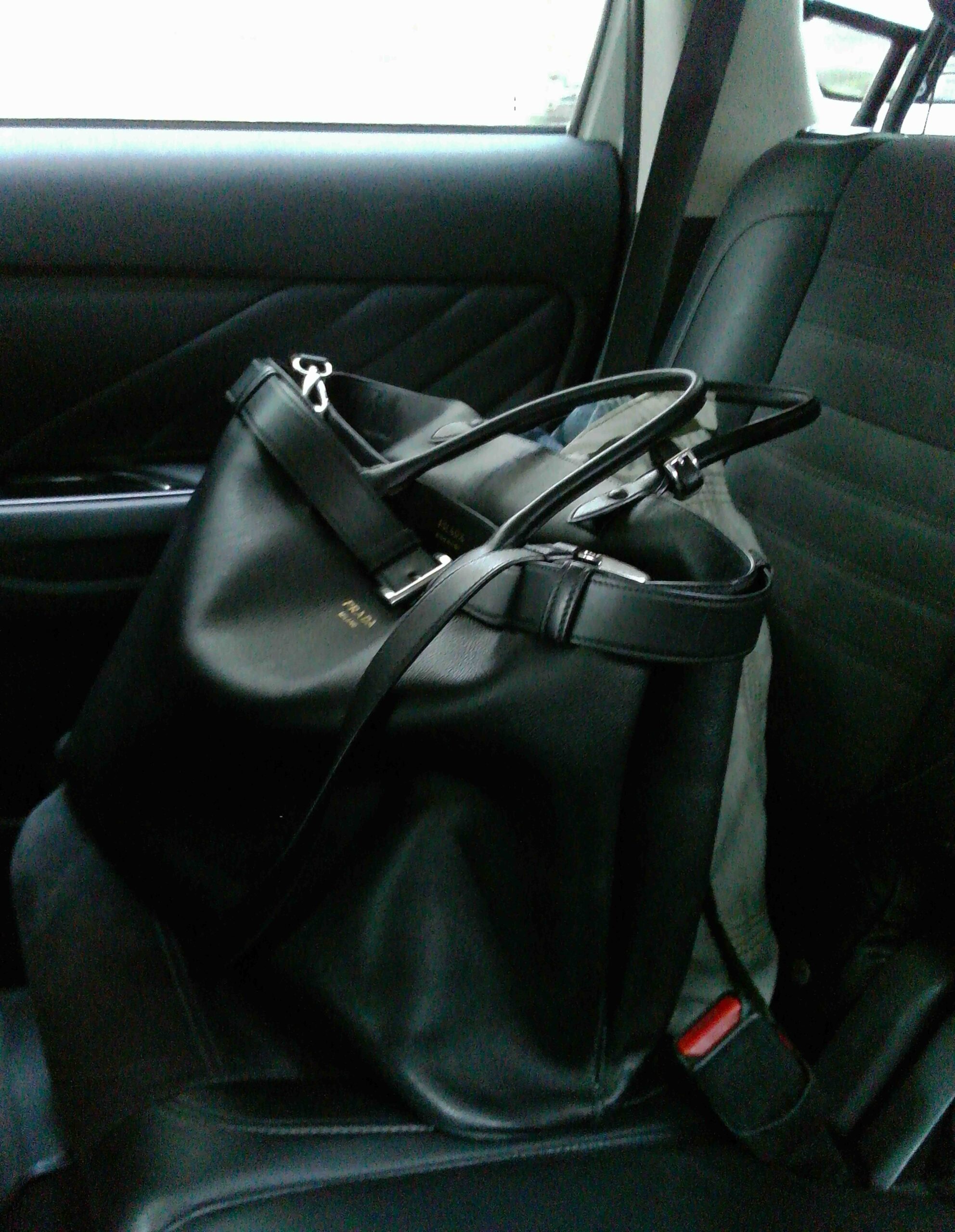
Yes, and on a Sunday I can walk around and do bits and bobs—“Oh yeah, this is where we hang things,” or “This is going to the archive.” I like being surrounded by memories, by things… like the first pair of Prada shoes I bought in 2012. I’d never throw them away, because they’re linked to me living in London. They’re a moment. That’s what I love about [them].
A lot of people who come into our house for the first time are shocked, because it’s extremely relaxed, extremely cosy, extremely “non‑designy.” I hate saying it, but at home it’s very scrappy, and it’s the same with my garments. I have specific vintage furniture, but not as a show‑off. I’ve collected it along the way, or it’s memorabilia from travelling. It’s an aesthetic that’s specific to me and my husband. It’s something we’ve built together, and it reflects who we are and how our relationship is. The last thing we bought was this hideous little painting of a rose at a flea market in France. It’s extremely kitsch, but gorgeous. We were like, “Yes, we need it.” We also have a weird obsession with dogs. We had a dog who passed away, so now we have this huge Italian ceramic greyhound, and friends keep giving us little dog statues or figurines. It’s those weird, super‑specific things that make up how we collect art. For each other’s birthday, we give a piece of art—it can be the rose, it can be something from one of our best friends… And we have one Hockney that I absolutely love. It’s very random.
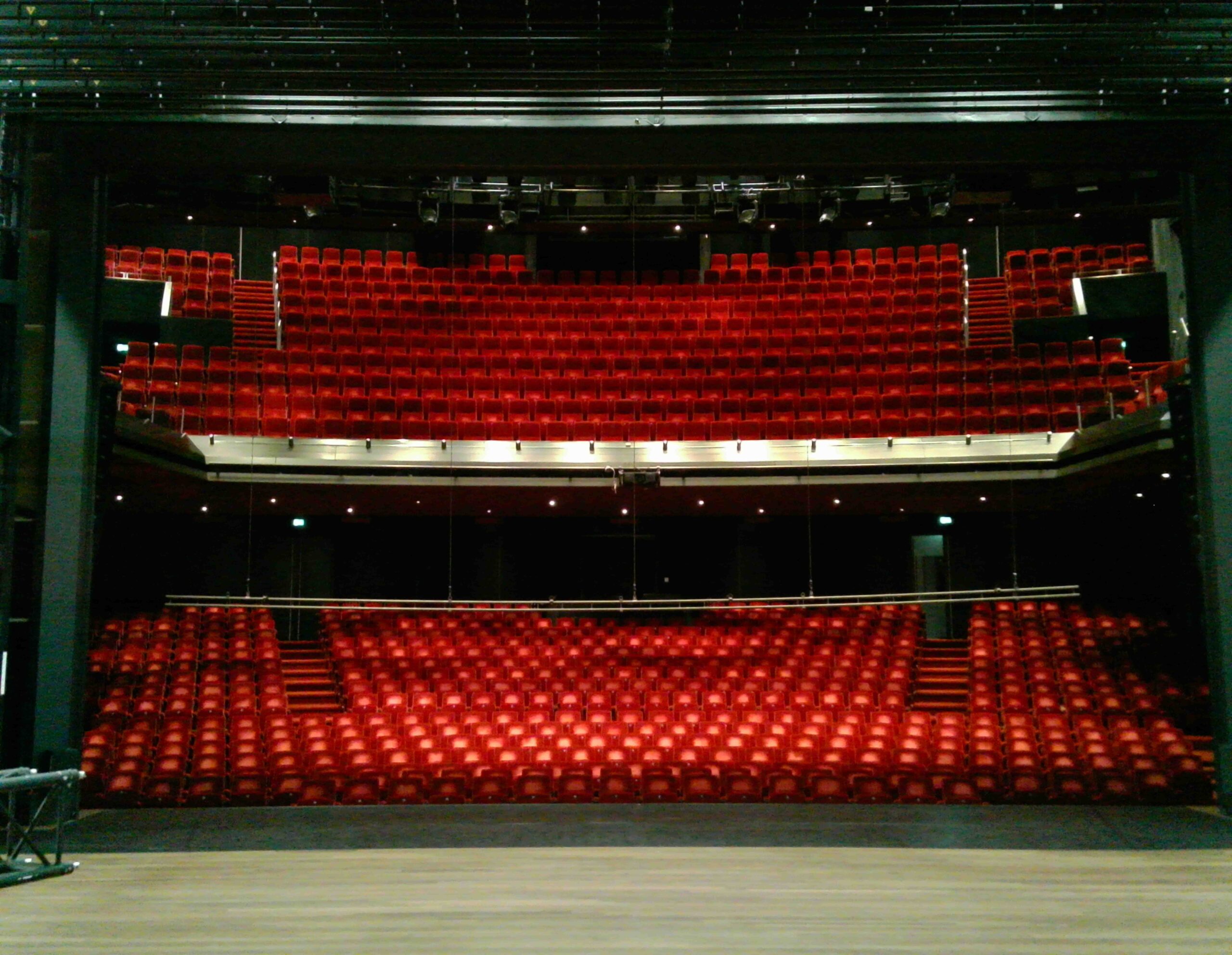
[Laughs.] This is not my office space! I’m in a theatre, and it’s really not so nice. I’m between different meetings for a theatre production about my father, so this is literally just a cubicle I found. No, no, no, no, no. The studio is way cosier.
Yes, it’s nice. And there are all of these [turns to show a board behind him] I don’t know what these are. Snippets from somebody else, I guess, another show.And that’s nice too. That’s a community, in another way.