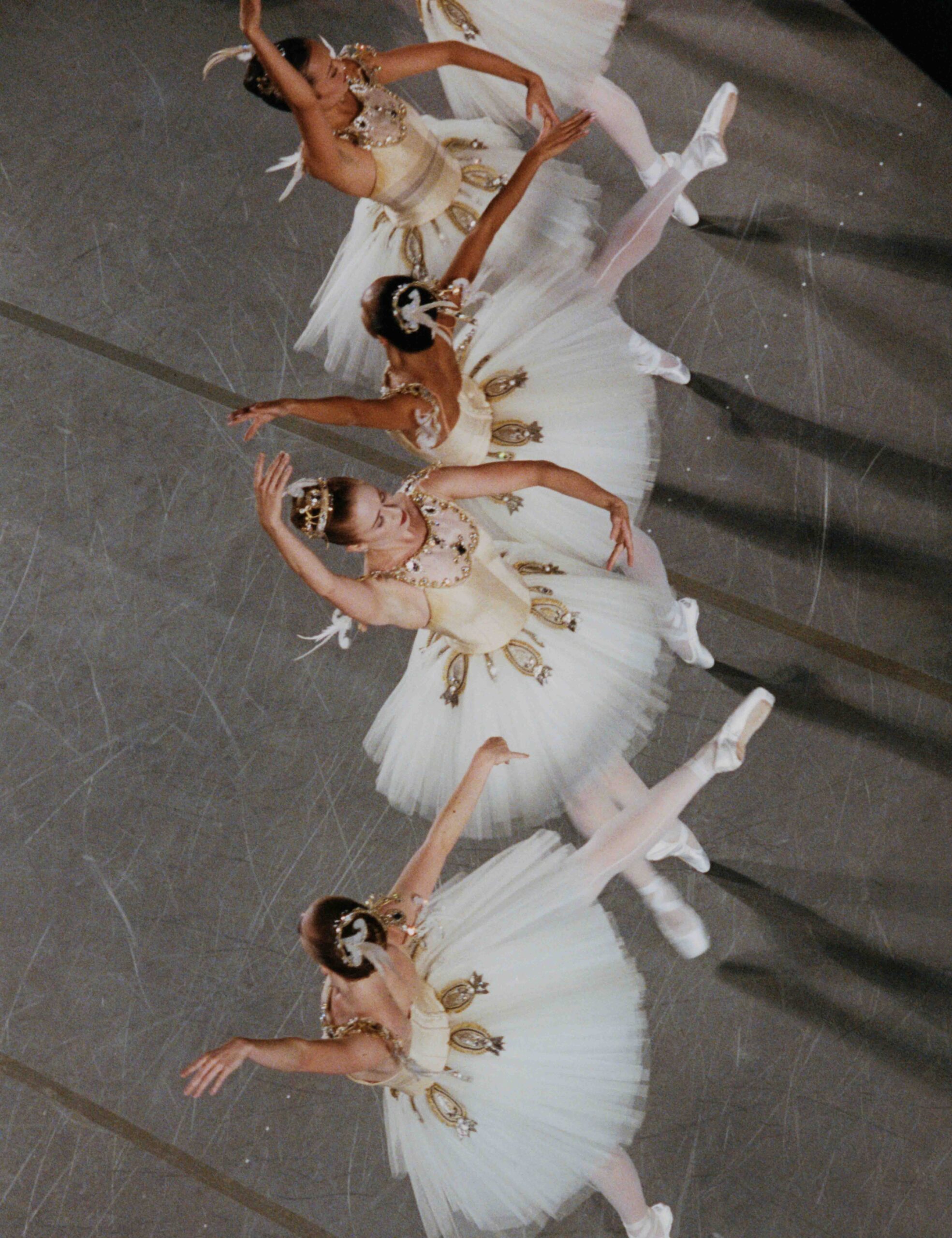
The curtain goes up, and the audience gasps.
From the corps de ballet and principal dancers to its breathtaking costumes and majestic sets, the audience’s collective intake of breath is the only natural response to the grand opulence of the New York City Ballet. As its founding Artistic Director, George Balanchine, once said: “The choreographer and the dancer must remember that they reach the audience through the eye. It’s the illusion created which convinces the audience.” [1]
The son of a composer, Balanchine began studying the piano at the age of five before attending the Imperial School of Ballet in Saint Petersburg. He later joined the Mariinsky Theatre Ballet Company as a member of the corps de ballet and attended the Petrograd Conservatory of Music, where he continued to study piano and composition, harmony and counterpoint. This dual education enabled him to develop what would later become an unparalleled understanding of both movement and musicality. In 1924, at the age of 20, Balanchine defected from the Soviet Union to the West, where he was invited to join Sergei Diaghilev’s Ballets Russes in Monte Carlo, then Paris. Although initially engaged as a dancer, after Diaghilev watched Balanchine’s restaging of the company’s Stravinsky ballet Le Chant de Rossignol (1920), he also engaged him as a choreographer. A knee injury, which placed limitations on his dancing, would soon set him on the course to becoming one of the twentieth century’s most celebrated choreographers. Serving as a ballet master with Ballets Russes until the company was dissolved following Diaghilev’s death in 1929, Balanchine spent the next years on projects all over Europe before returning to Paris to form his own company in 1933. That same year, he was introduced to American art connoisseur, impresario and writer Lincoln Kirstein through a mutual friend in London. Kirstein, who had aspirations of establishing a ballet school that would train American dancers under the guidance of the world’s greatest ballet masters, invited Balanchine to move to the United States.
Accepting the invitation, Balanchine moved to New York City, where he and Kirstein established the School of American Ballet in 1934; the American Ballet, a touring company of dancers from the school, in 1935; and the American Ballet Caravan (formerly Ballet Caravan), a small offshoot of the touring company, in 1936. While the intervening years saw ballet companies created and dissolved, programmes abandoned amidst disagreements, and performances temporarily interrupted by war, “the unflagging devotion of these two men in the face of apparently overwhelming odds… was finally able to draw New York City Ballet out of the fire.” [2] In 1946, after the end of World War II, Kirstein and Balanchine formed the Ballet Society, performing newly choreographed works—such as The Four Temperaments (1946), and Stravinsky’s Renard (1947) and Orpheus (1948)—to subscription-only audiences. As a member of the Ballet Society’s subscribing audience, Morton Baum, the Chairman of the City Center Finance Committee, was so impressed by the programme that he initiated the negotiations which led to the company’s invitation to join the City Center Municipal Complex in 1948. It was here that the company took on the name by which it is now known: the “New York City Ballet.”
From 1948 until his death in 1983, Balanchine served as the company’s Artistic Director, choreographing the majority of the company’s productions, often alongside Jerome Robbins, who served as Assistant Artistic Director. This extensive repertoire includes works such as Bouree Fantasque (1949), Agon (1957), Episodes (1959), Movements for Piano and Orchestra and Bugaku (both 1963), and Don Quixote and Harlequinade (both 1965), amongst many others. Breaking from the prevailing Romantic traditions of the Russian and European ballet, Balanchine pioneered a distinctly American neoclassical style, increasingly stripping away narrative and plot to accentuate movement, musicality, and the beauty of the human body in dynamic motion. This culminated in Jewels (1967), the first full-length plotless ballet choreographed by Balanchine.
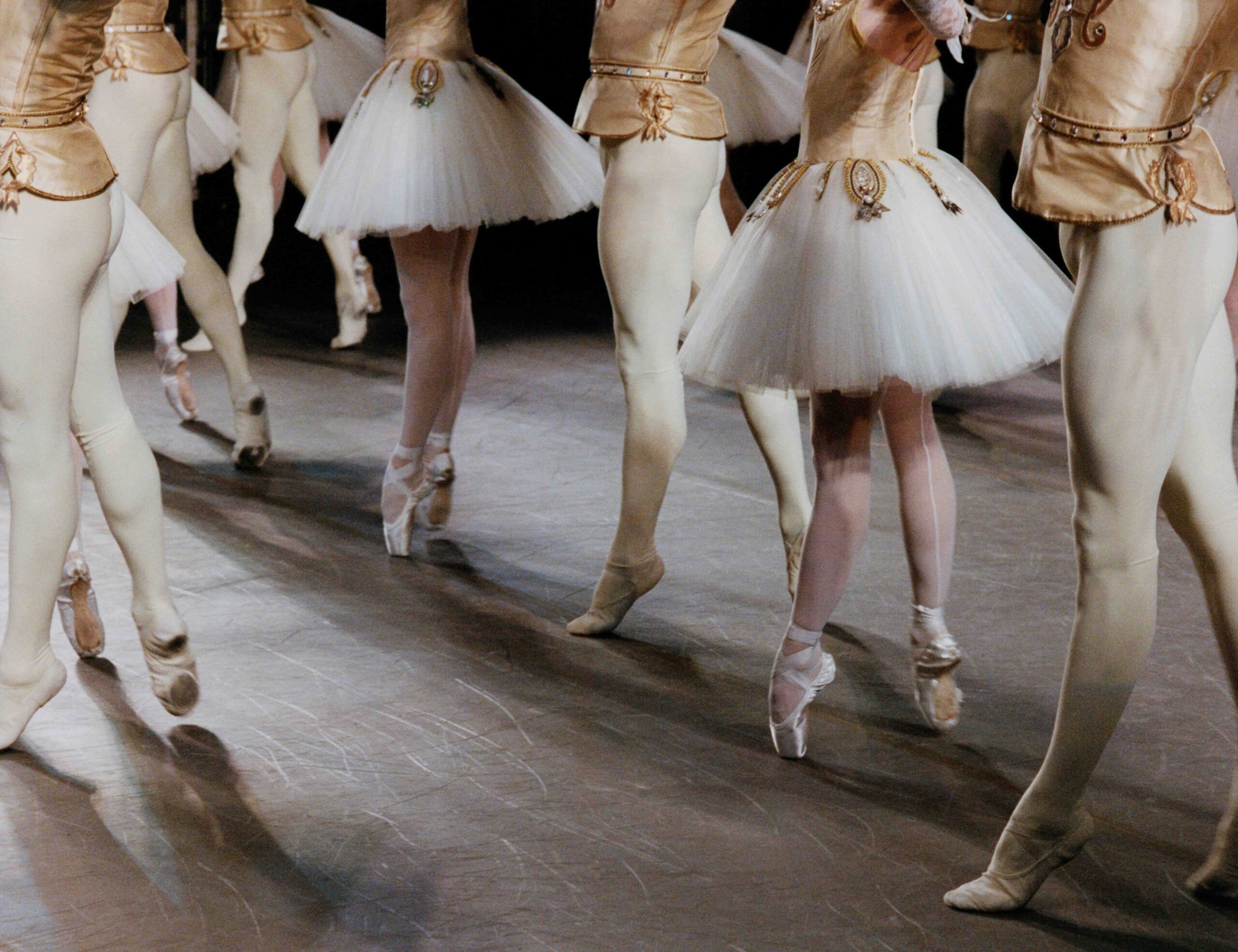
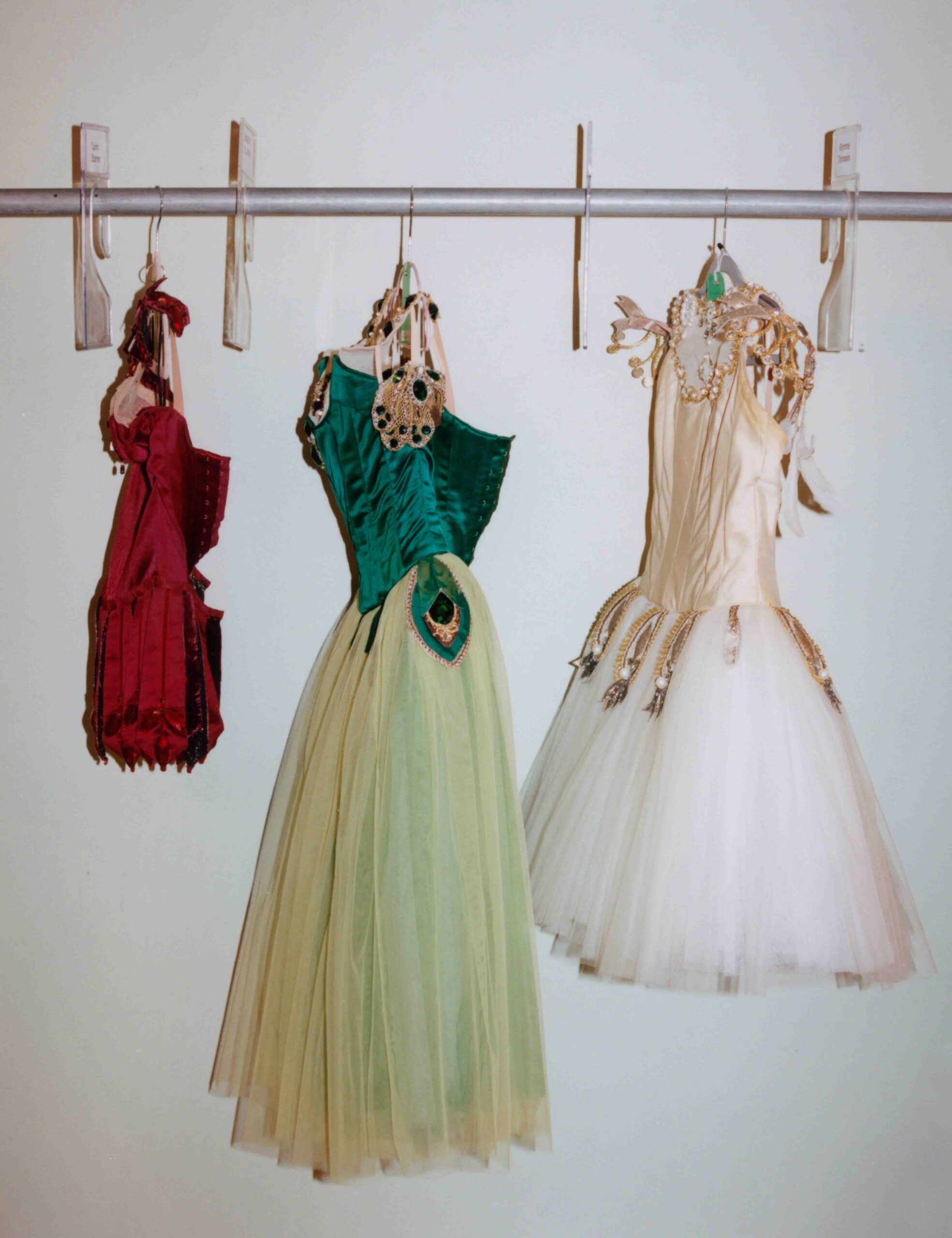
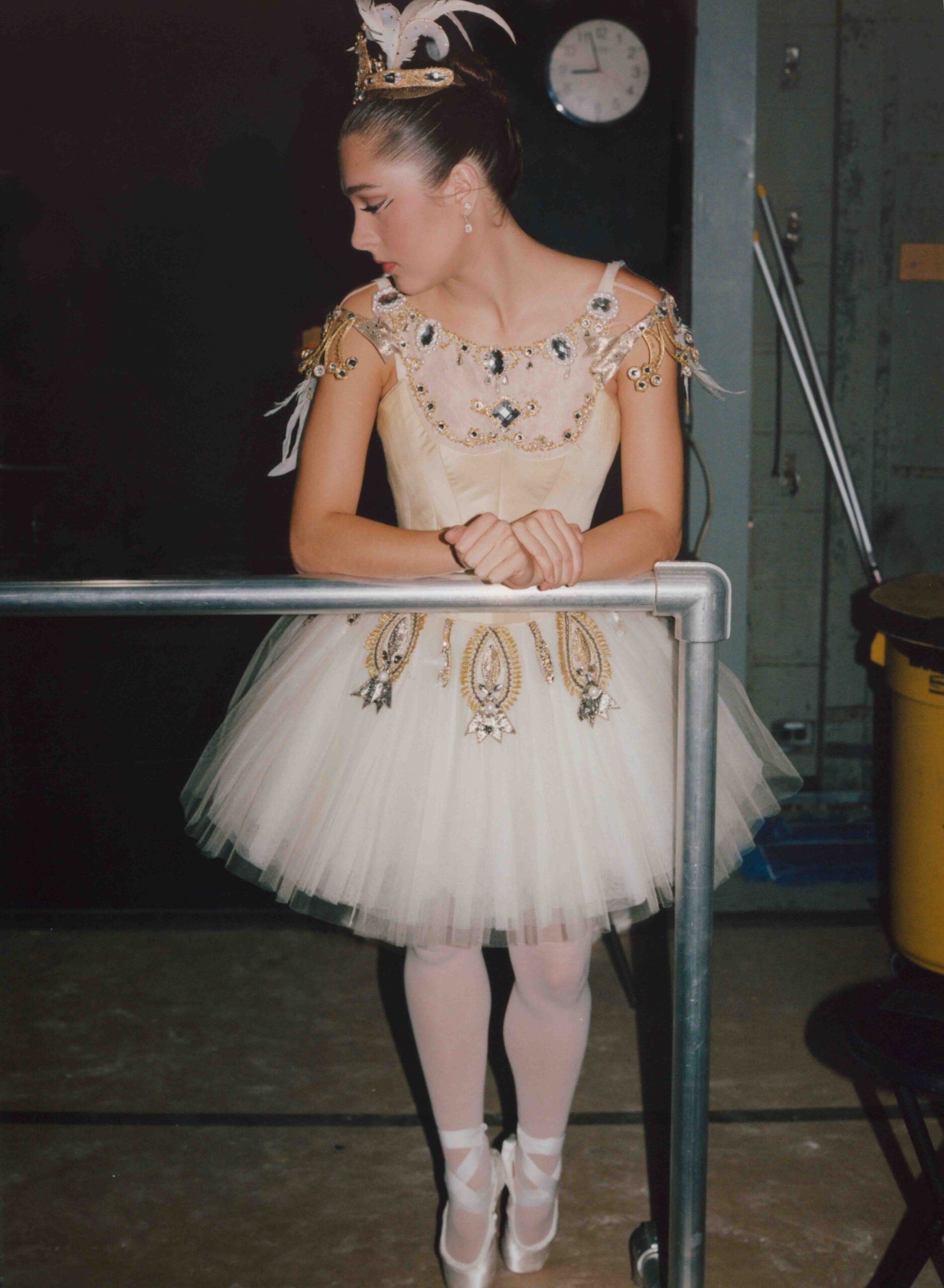
Adapted, in part, from Balanchine’s earlier work Le Palais de Cristal (1947) at the Paris Opera and inspired by a visit with the renowned jewellery designer Claude Arpels of Van Cleef & Arpels, Jewels was conceived as three distinct acts. Having considered Pearls and Sapphires, Balanchine settled on Emeralds, Rubies and Diamonds. Each of these acts distilled the essence of its jewel into an opulent display of atmosphere, colour and movement, while also showcasing a distinct composer and stylistic heritage: set to Gabriel Fauré’s Pelléas et Mélisande (1898) and Shylock (1889), Emeralds evokes the elegance of French Romanticism; set to Igor Stravinsky’s Capriccio for Piano and Orchestra (1929), Rubies captures the boldness and sharp wit of American neoclassicism; and set to Tschaicovsky’s Symphony No. 3 in D major, Op. 29 (1875), Diamonds draws on the formality and grandeur of the Russian Imperial ballet. Since Balanchine believed that the ballet should reach its audience “through the eye,” the three acts were also embodied by exquisitely-crafted costumes, whose colour and embellishments “under [Barbara] Karinska’s direction, came so close to the quality of real stones (which were of course too heavy for the dancers to wear).” [3] Giving form to these precious stones, their colourful and embellished bodices were paired with a long, romantic tutu that falls below the knee in Emeralds; a short skirt that “audibly” swishes, particularly during the parts of the musical score marked as “Rumba” or “shake,” in Rubies; and a classic white tutu with a cascading headpiece, to which the dancer gestures throughout the choreography, in Diamonds.
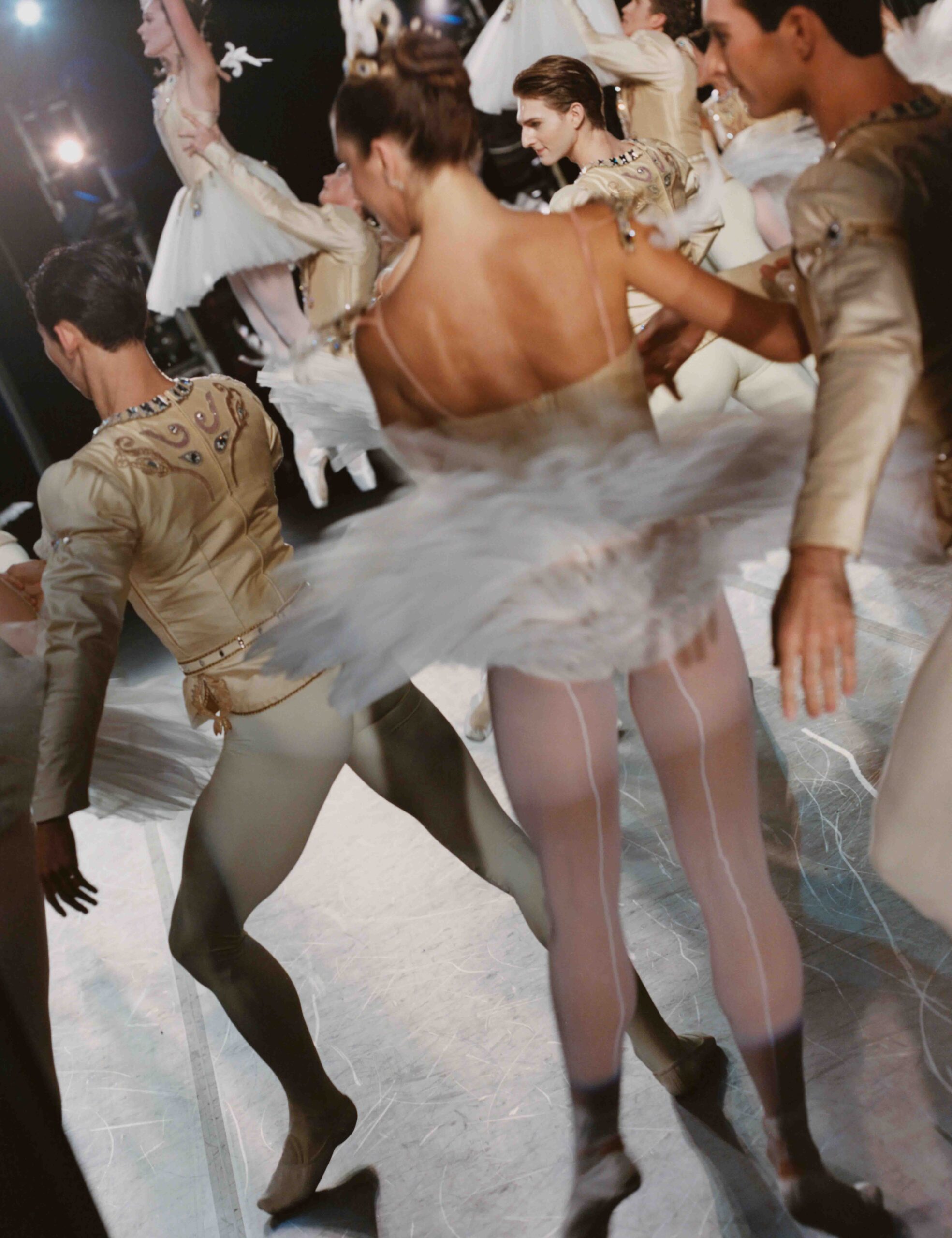
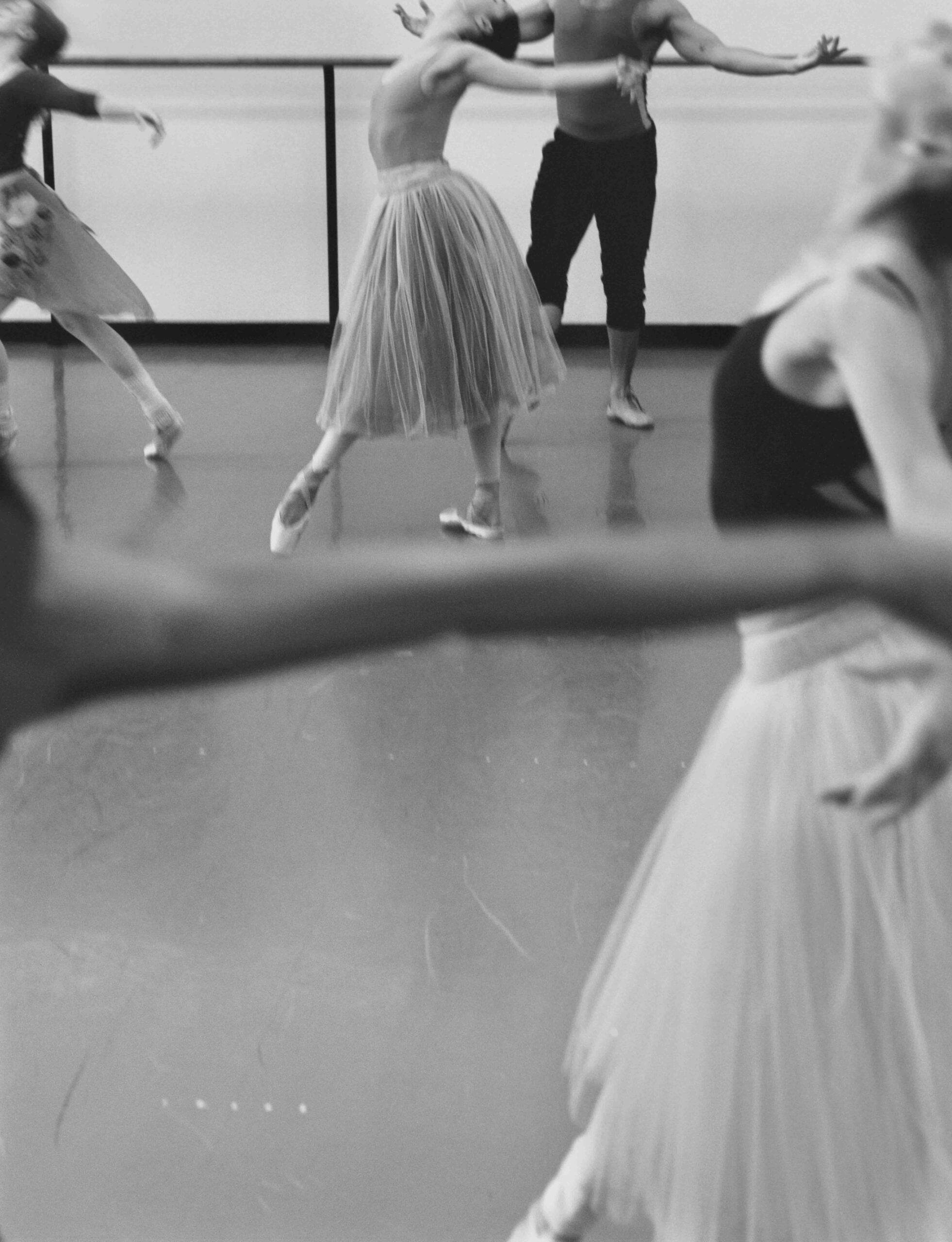
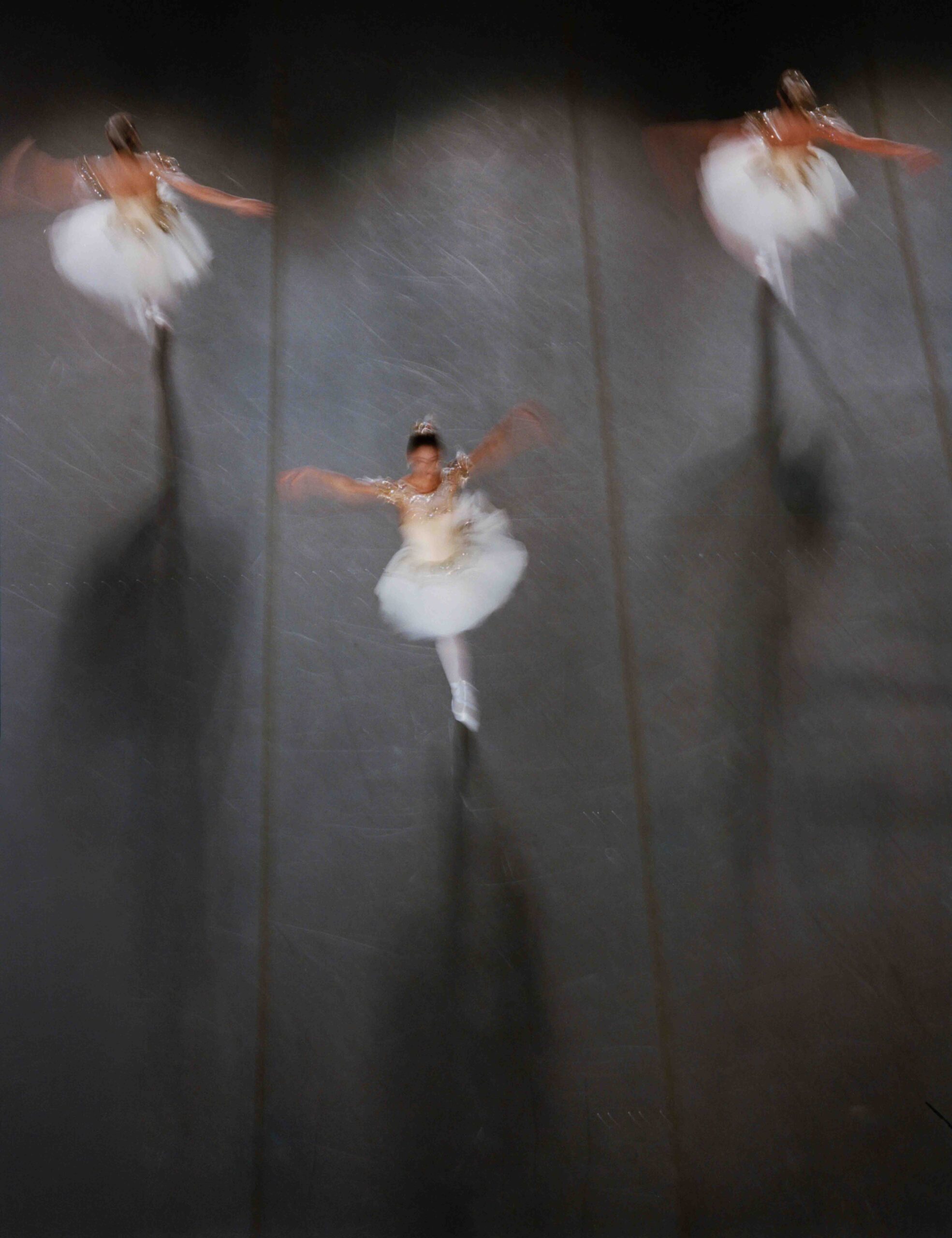
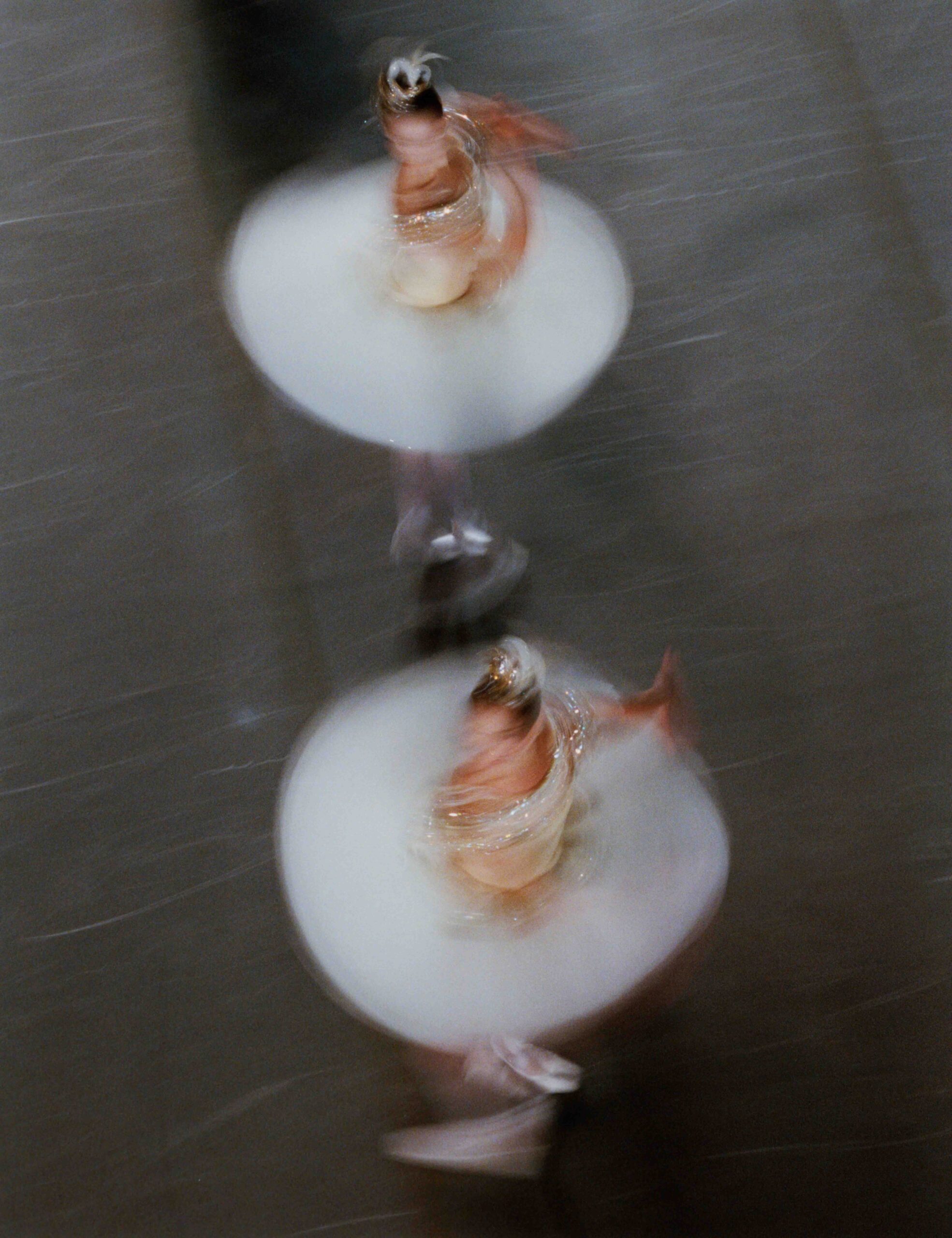
First premiered by the New York City Ballet in April 1967, Jewels returned to the David H. Koch Theater (formerly the New York State Theater) at the Lincoln Center in New York City, for the company’s Fall 2026 season. Designed by Philip Johnson and John Burgee as a grand “jewellery box,” the shimmer of the theatre’s proscenium-style auditorium, with its 18-karat gold leaf ceiling, two-tonne globe chandelier, and five ascending ring balconies, provides a fitting setting for the jewel-inspired ballet. It is here, across both rehearsals and onstage performances, that Jack Bool captures corps de ballet and principal dancers in dizzying photographs. Suspended in glittering, twirling motion, amidst this opulent display the dancers reveal an extraordinary feat of physical exertion. In the lead-up to the production, I spoke with principal dancers Mira Nadon, Emma Van Eyck, and Unity Phelan about the demands of performing in such a physically exhilarating ballet. For Nadon, who danced the principal role in Emeralds, the challenge is in making the intricate physicality appear effortless. “There is very intricate partnering, and you want it to all look very seamless, [but] you also want to have the freedom to really let yourself go.” For Van Eyck, who danced the principal role in Rubies, it is in the stamina it takes to maintain this illusion. “There’s moments when you’re gasping for air on the side, but you’re still watching people continue the energy of the ballet. You’re taking turns so no one has to bear the brunt of just how athletic it is.” And for Phelan, who danced the principal role in Diamonds, this culminates in a moment of total surrender to the performance. “There is just an outpouring of everything you have left, every ounce of energy.”
As Balanchine once said, “What are you saving for—for another time? There are no other times. There is only now. Right now.” [4] Only then can the curtain come down, and the audience exhale.
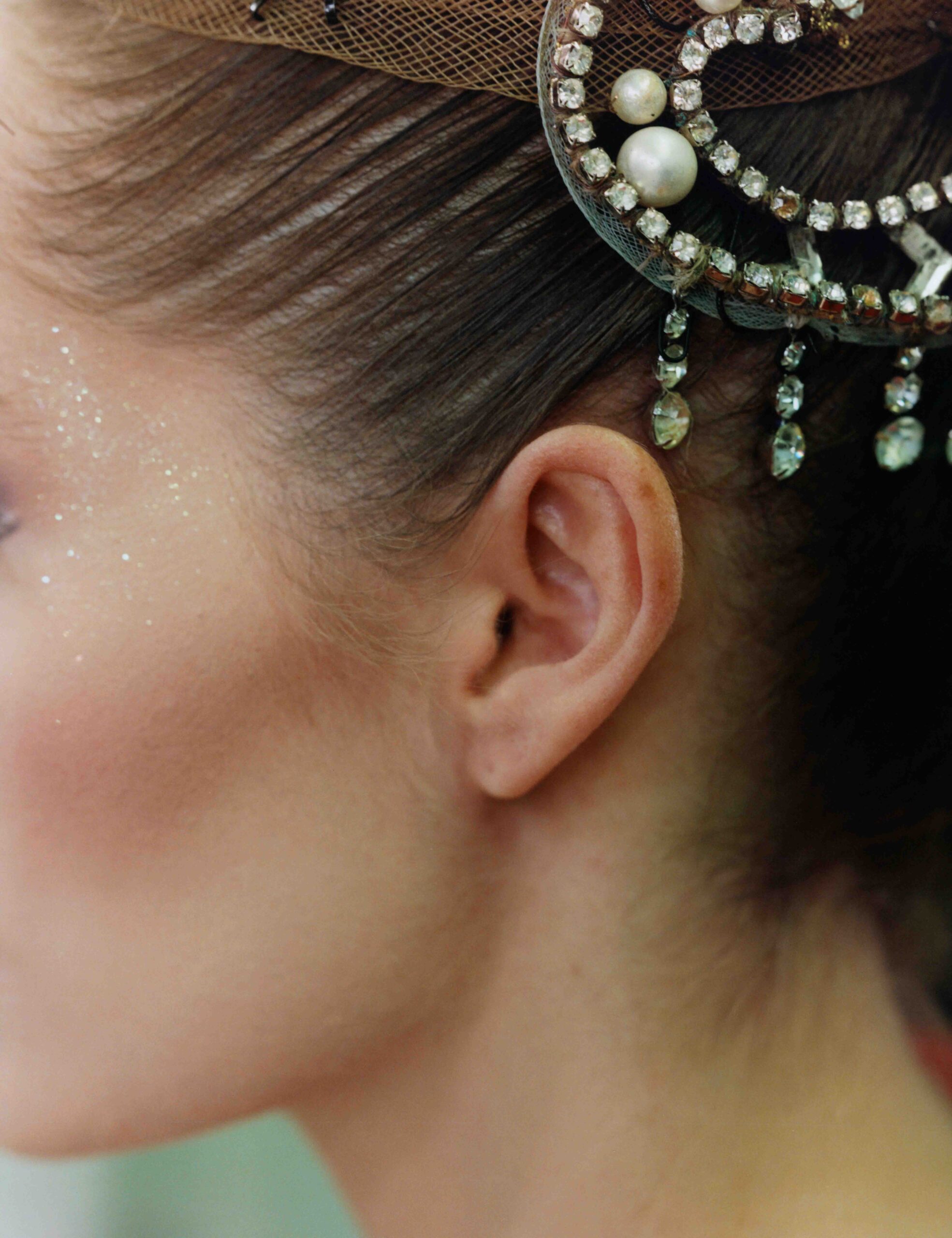
We always have our set costumes, but we usually get to choose which earrings we wear. The way I incorporate jewellery into my performances is I like to wear specific earrings for specific ballets. When I debuted Diamonds in New York, I got a pair of earrings that I thought matched the costume well and made it feel like it was tying everything together. So, I like to intentionally choose my earrings for each role to be the perfect finishing touch.
When I was little, my parents got me the Mariinsky Theatre production of Jewels for Christmas. Each of us would get to pick one DVD to bring on family vacation, when we would go upstate or something, and I remember I would always bring that. My siblings were like “Ugh!”, but I just loved watching Jewels. I didn’t know the choreography, but I would dance to it at night. I loved watching it; I loved everything about the long tutus [in Emeralds], the tiny skirts in Rubies, and then the Imperial gorgeousness of Diamonds. From a young age I was exposed to that, even before I knew who George Balanchine was or what New York City Ballet was. Balanchine did such a beautiful job of capturing an essence, and that is what is so beautiful about Jewels—each section has its own essence.
Emeralds is very lyrical, romantic, beautiful… It came at a point in my career where I think I was wanting to work on softer things. The first part I danced in Jewels was Rubies—which is much more jazzy, in your face, a little bolder—and I feel like that was a lot of the roles that I was doing. I never really anticipated getting to dance Emeralds, so I was really excited when I got called to do it because it’s really encouraged me to explore a different, softer side to my dancing. It really brings out the understated beauty and elegance of the movements. You’re really trying not to do anything over the top, you’re really trying to let the beautiful steps and movements speak for themselves.
Diamonds is very grand and very regal. The first time I did it I was almost overwhelmed by the music and how incredible it sounded, beaming up from the orchestra pit to the stage. I was taken aback by the way it sounded. Diamonds is Balanchine’s nod to classicism, and to Imperial Russia and his upbringing there, but with its own twist. Diamonds has its own understated quirks, but with grandeur and importance…
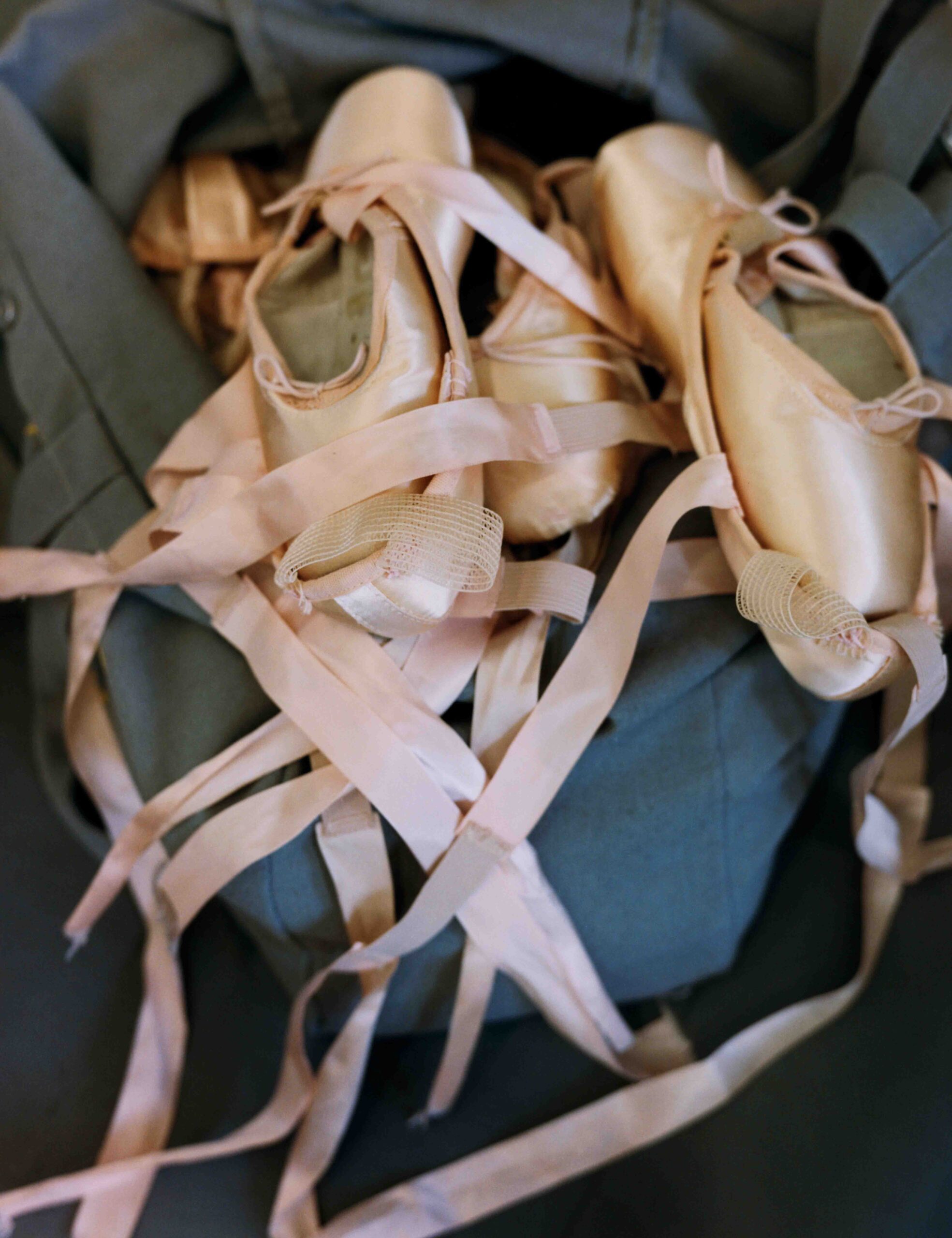
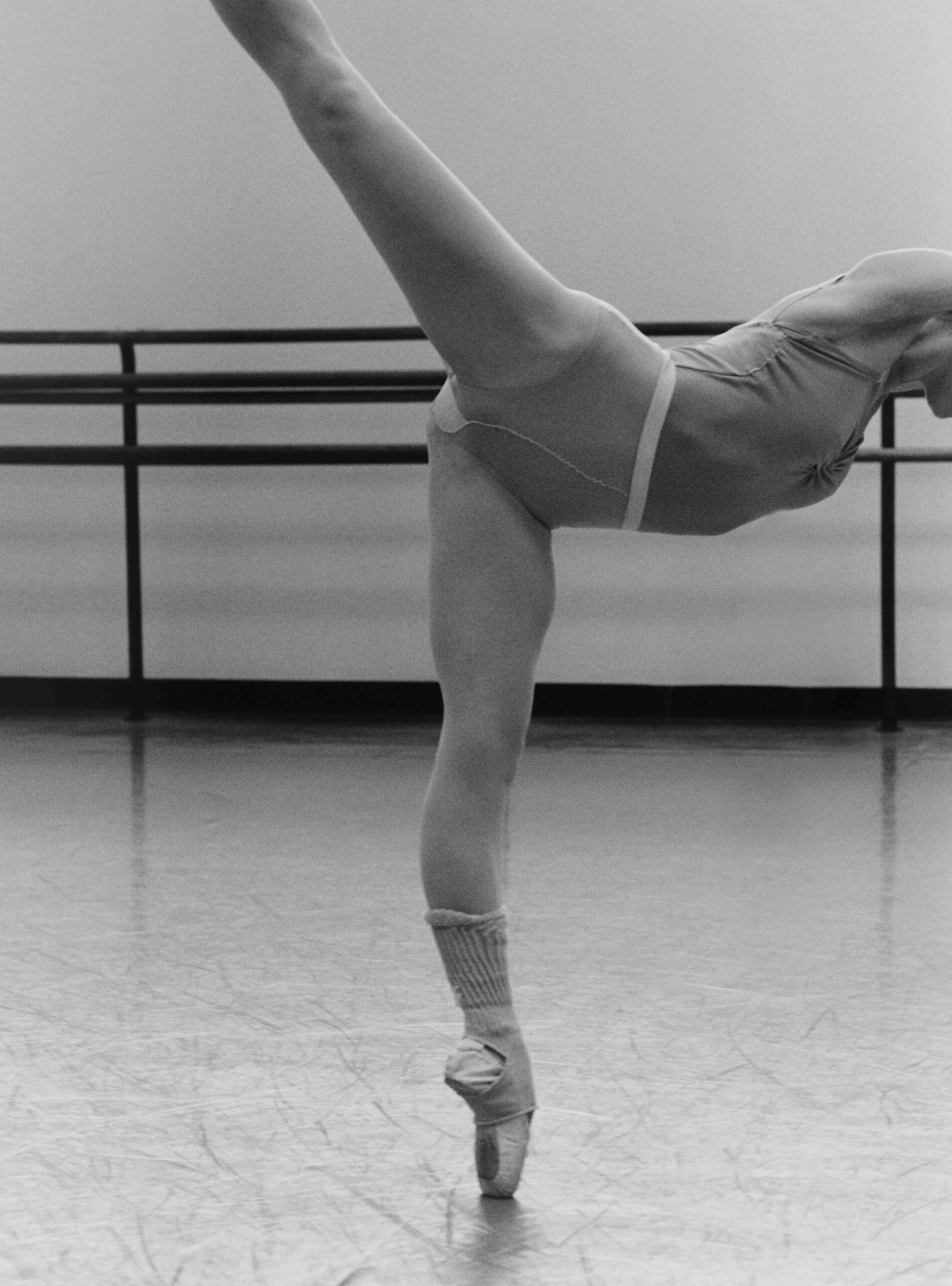
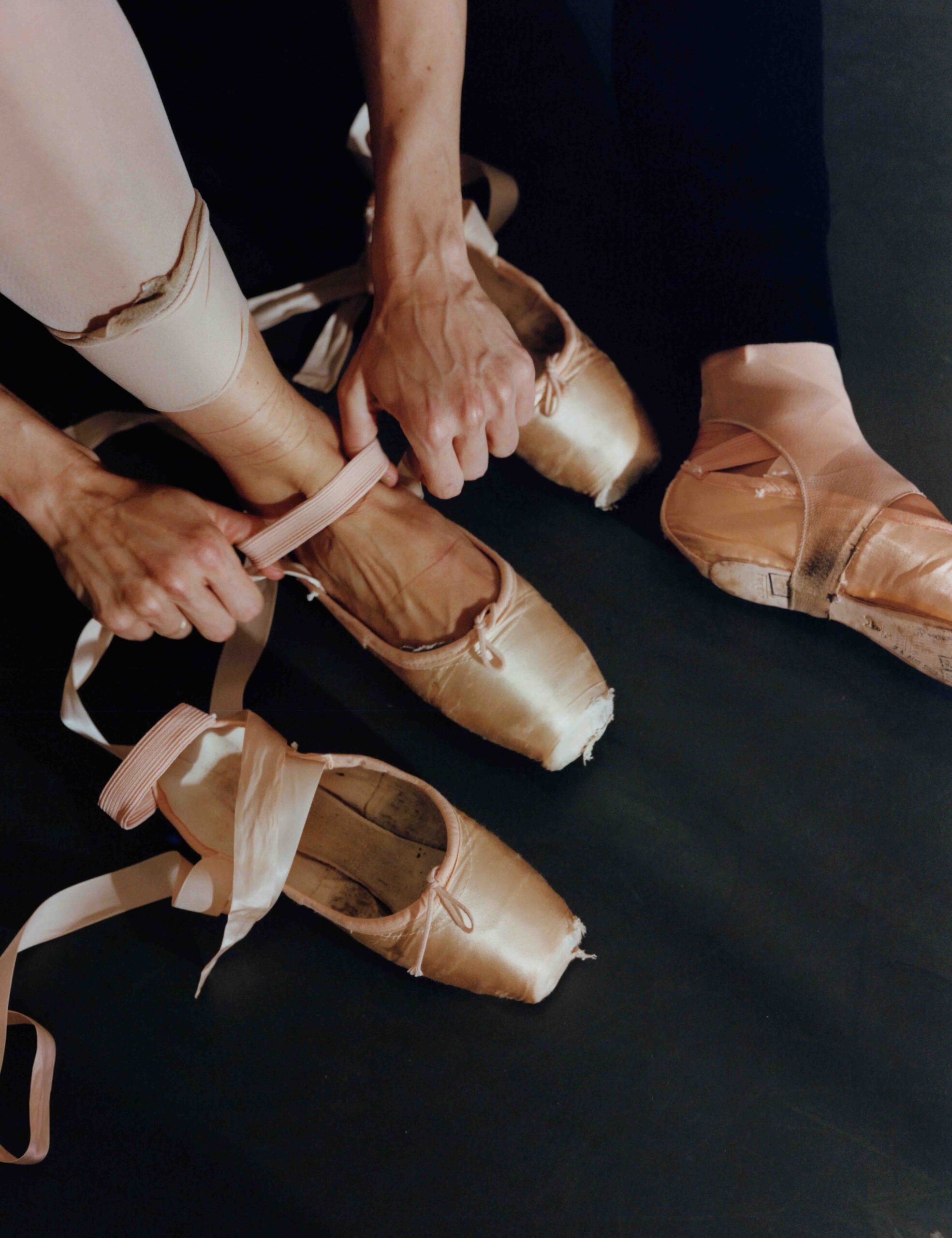
The costumes for Jewels are some of my favourite costumes from all the ballets we do—they’re so beautiful. Each of the three ballets has a similar bodice, where you have these really beautiful jewels up by the collarbone in your corresponding colour. And then [each of] the ballets has a different skirt, which also responds to the mood of each piece. Emeralds has a long romantic tutu, which goes down past your knee and adds that beautiful flowiness to your movement; Rubies has a short little skirt that kind of swishes around when you move; and then Diamonds is a more classic tutu. So, the costumes also really help to enhance the differences between the three [acts].
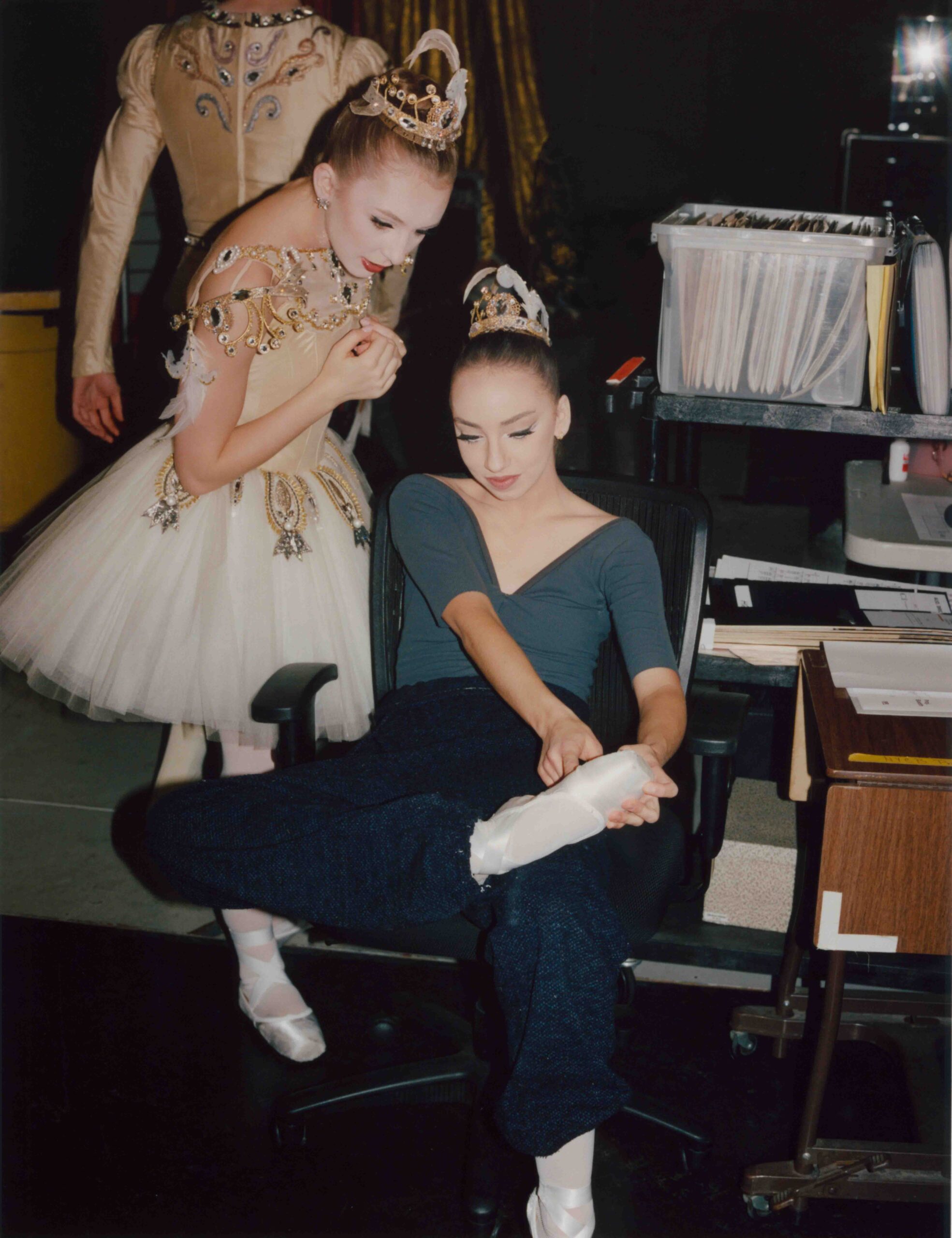
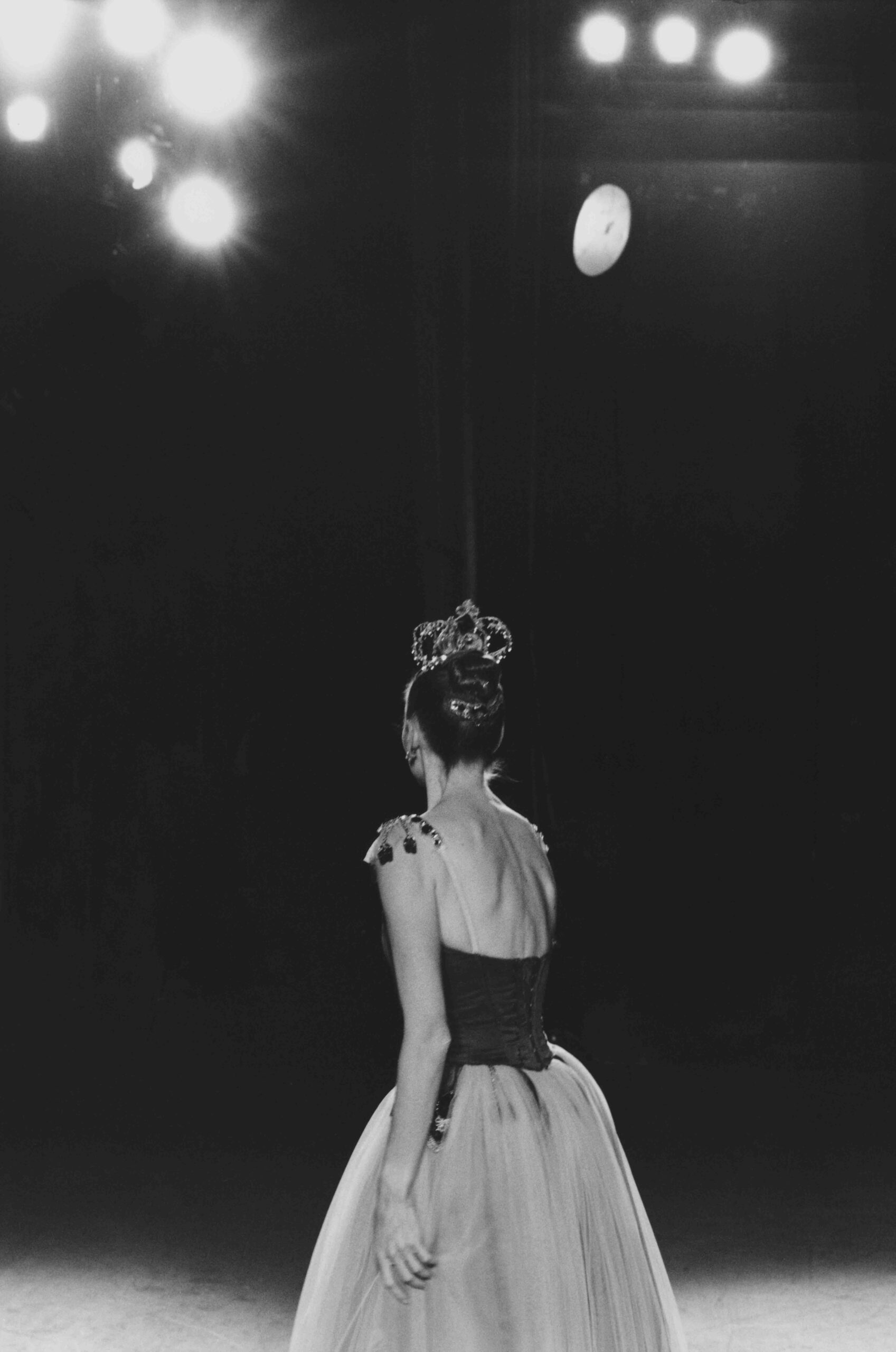
For Diamonds, the costume is incredible. It’s this beautiful tutu with the most bejewelled top you could ever imagine. But, for me, the thing that makes me feel a little more in character is the headpiece. The headpiece is this crown, and then down the back of your head there’s diamonds. In the ballet, we do a lot of motioning to the back of our head—showing off the back—and so, when I put that headpiece on, I’m like, “Okay, this is happening. I’m doing this.” Even just thinking about it, my shoulders drop a little bit, my neck gets a little longer. It’s such a gorgeous headpiece.
I mean, the music is so beautiful. I’ve been talking to my partner who I’ve been dancing this ballet with, Gilbert Bolden [III]. He was saying the other day that he has been listening to the music on his way to work, and [how] even just from the music you can feel that atmosphere. It’s [a] very delicate, almost whimsical feeling. I definitely try to think about that sort of French chic elegance. You’re not trying too hard, everything is understated but beautiful. I try not to have any harsh edges when I’m dancing the piece.
Rubies does feel very bold and American and jazzy. There are so many nuanced accents. Because it’s Stravinsky, [and because of the complexity of the score], there are always new things to pull out of the movement. I think Stravinsky’s music can, at times, be very difficult to count. Sometimes, we do metrics of straight eights or sixes, and Rubies seems to jump around many different counts. There are certain ballets that we do where you are really having to focus because the counts are very different. With Stravinsky, you really have to spend time getting to know the music. So much of what you initially hear does not translate to the steps, because you’re counting a three, a four, and a 10. It takes a little bit more effort, but once you have it, it’s very satisfying. Now that I’ve done it so many times, I don’t even think about it… Each time feels very different. It’s an exploration of movement and musicality. Every time I hear different things, I choose to accent different things. Sometimes I look back and go, “Oh, that was a choice, maybe I could try something new this time.” Again, it depends on tempo, it depends on your partner. There are many different factors, but the music will tell you what to do—even if it isn’t the same thing every time. [In today’s day and age, everything is so manicured. I think the thing with Rubies is you can’t control it… I’d like to say there’s beauty in the chaos, and I hope the audience have an exciting time witnessing it, because it’s certainly an exciting time for us.]
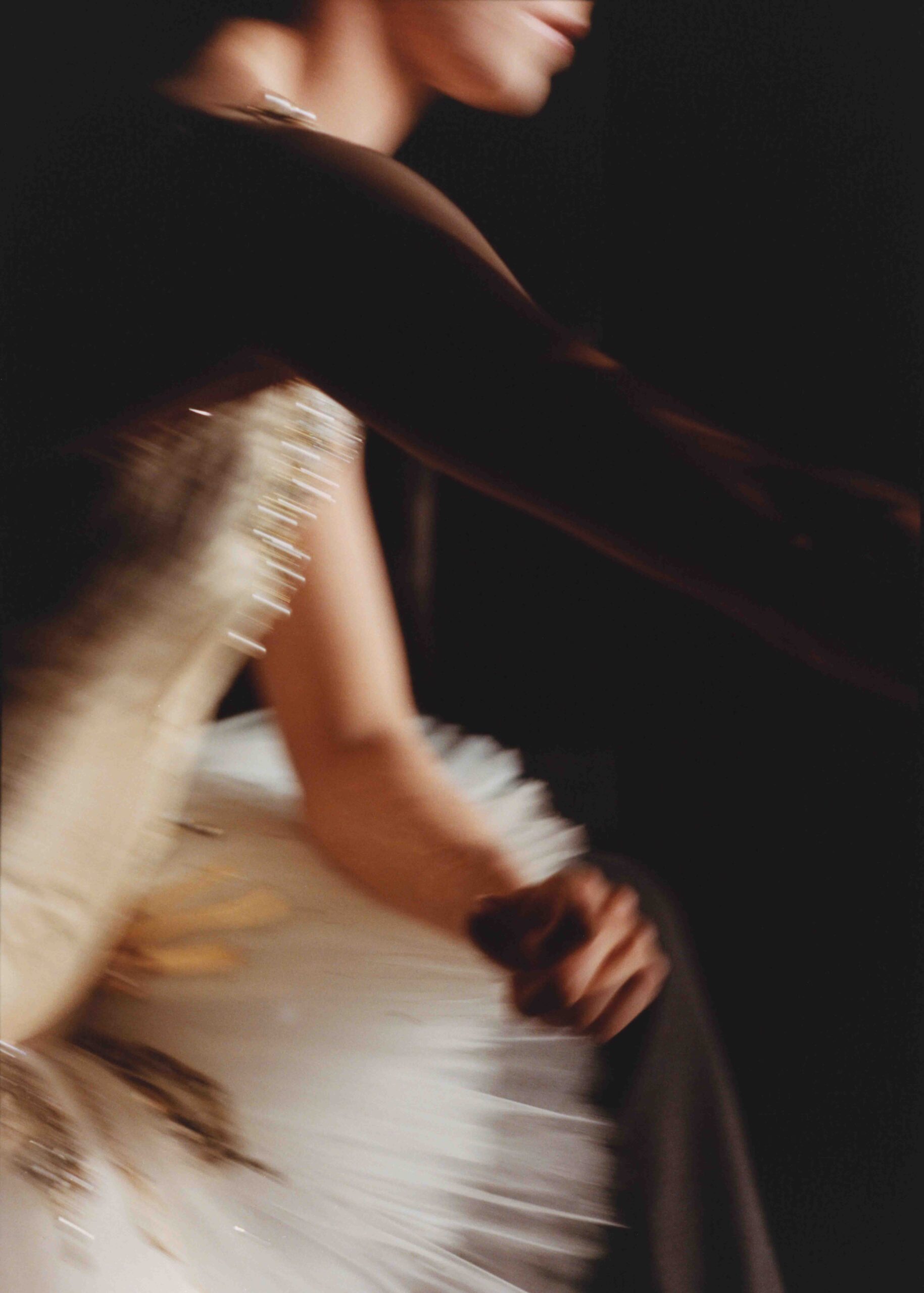
I dance classical ballet, but I also do a lot of the quirkier, more contemporary neoclassical works as well. So, for me, Diamonds is a lesson in classical ballet. It’s back to basics, back to the way I was trained, and back to finding the perfect line and trying to achieve that as much as possible. It’s always a good challenge to let go of all the mannerisms and more contemporary things that I am working on (sometimes in the same day), and really dive into pure ballet. Nothing gets flipped upside down or turned on its head in Diamonds. I always have a lot of fun in the rehearsals, because you know what you’re supposed to do but it’s nice to have someone say, “Think about that knee, think about this, why don’t you try to hold onto that a little bit longer, extend this…” It’s a [return] to the purest, most classical version of yourself as a ballerina.
In a way, at [the] New York City Ballet that’s almost more comfortable for us than the full-lengths that have a clear narrative, because we’re so often doing these non-narrative Balanchine works. For me, there’s no specific story, but—I feel like you can see it depicted so clearly in Jewels—each ballet has its own world that you’re living in. Even though there’s not a narrative, not a story, you can feel what the world is, and how you should be dancing in this world, how you should be looking at your partner in this world… They all bring out a different quality in your dancing, all three of them have such a different approach.
With narrative ballets, there’s a little bit less personal freedom. You can tell the story the way you want to tell it and dive into the character in different ways, but with something like this you can really make it your own. What I love about Balanchine’s plotless ballets is that you can do them so differently. Everyone has their own way of doing it, [and] within that there is so much personal freedom and expression. Diamonds is a ballet that I yearned after for so many years. I really wanted to take my stab at it, I really wanted to try it on. Every time I do it, I’m a different person. I’ve grown so much, in my own way, so it always shifts and changes. I think that’s what I really love about returning to Diamonds this time. I’m a different person than I was the last time I did it, and I have a new sense of maturity and understanding, so I’m very excited to do it with this new perspective.
The role I’m dancing was created on Violette Verdy, who was a French dancer. She really brought so much of herself and her own perfume to the role. I feel like she was known for being a dancer [who] you could really see her personality through her dancing. She was so playful, and you could just see how much she was enjoying doing all the steps. She was able to do them all in a really individual way, where she could take the smallest step and make it look really special. That’s something I try to think about, especially when I’m doing the solo that was created on her. It has this tiny, small footwork and these beautiful port des bras. So, I try to think about making each little movement as special as possible, and then also trying to keep the playfulness and bring some of my personality to the role. I think I dance it in a very different way than she did—we’re very different dancers—but it really needs that naturalness and authenticity from within.
This is honestly such a lively debate in so many dance circles. We find videos, we find archives, because we so aspire to capture the original essence of when [a ballet] was made. I try to watch as many videos as I can, even silent films… I actually had the honour of being coached by Patricia McBride when I debuted [Rubies]. What’s interesting is she would often change what she said day to day. She would give me so much freedom where she’d say, “Oh for a couple of years I looked this way, and then I changed it to look this way.” It changed so much, even in her own time. In the original, there’s a whole sequence coming from the diagonal… and I asked her about it and she said, “Oh, we changed that pretty early on. Balanchine changed his mind.” So often, you’d hear stories about how Balanchine would adapt it to his dancer. There’s some tricky turns in this one section, and she said, “Oh, it’s only that way because this one dancer’s foot was hurting, so he said, ‘Change it.’” I think that is so special. But it’s interesting now, because Balanchine is not here to vet the decisions that the individual artists make. It’s a fine line, which I’m still trying to navigate. How much do you try to insert yourself, while still respecting the tradition of the original pieces? I think it was very comforting to have Patricia McBride there, because she would talk about all her different partners and also how, as she got older in her career, that would influence certain things, like where to push more, where to pull back more, where to elongate.
Rubies is very tricky, because it is a lot about style and taste—and it can go in a lot of different directions… People have so many opinions about it. People probably have opinions about my performance. It creates the most opinions, I would say. It’s very difficult. You want to stay true, but it’s 2026. Some things that were chugs, we make them jumps. Sometimes the fifth, or the turn, or the higher passé, the technique has progressed so much. But that freedom is also super important to embody… Some things that [Edward Villella and Patricia McBride did at the time] were very new, but they really embraced that and they were really fearless. Sometimes, when we do a show, we’ll even say, “That was a very ‘Eddie and Patty’ show.” I think that’s a quality of Rubies, specifically. You can’t second guess yourself, you can’t be timid. You make a decision and you stand by it, and your partner meets you where you’re at. It’s about the dialogue.
I’ve worked on Diamonds with different ballerinas and coaches, and from Suzanne I think there’s the sense of freedom that she [found] in Diamonds. She never did the same thing twice. Something I love that she said about Diamonds, though, is: “You can’t try to out Tchaikovsky, Tchaikovsky.” You can’t try to do more than the music, because the music is already doing the most. The way that she approached it was so grand and important, so I take that with me. But there’s little things that I do, which I’m sure are very different from what she did in her time and that I’ve taken from other ballerinas that have coached me. I’m sure with other ballerinas I’ve seen dance it, I’ve also been like, “Oh I like that, I think I’m going to put that into my arsenal.” The plotless ballet Balanchine created allows for this mixing of different ideas, and all of those ideas come together to create your own version, which I think is really nice.
It’s nice. It does feel like a very communal ballet. I have my partner, Gilbert. He’s someone that I’ve danced many ballets with. He’s one of my favourite people to dance with, and one of my good friends, so it’s always special to get to dance with him. I feel like I can completely trust him. There is very intricate partnering, and you want it to all look very seamless and flowy, but then you also want to have the freedom to really let yourself go and bend as far as you can, and not have to worry about that. I really loved getting to work on this with Gilbert—and it’s his debut, which is very exciting. By the time we get to the end of the ballet, we actually end with a group section for all of the principals in the ballet. We have our pas de deuxs, our solos, and then we end the ballet by all coming together. There’s a really beautiful section where we’re all just walking together, but in all these beautiful patterns, like a gemstone, all the diagonals and criss-crossing. It’s really nice to end the ballet that way, to be able to look at all the other dancers and feel the moment all together.
Each time is very special. The first time I debuted this, my partner was Giovanni Ferlen and Christina Clarke was my Tall Girl. All of us had never done it [before]. It was a whole new cast and it was for one of our anniversary seasons: the 75th Anniversary. It was very special knowing that we were continuing the legacy, but also looking around and going, “I can’t believe we’re trusted with this ballet!”… This was our chance, and there was a lot of camaraderie. But it’s also interesting [getting] to do this with Anthony Huxley [now]. He’s done this for years, and even he has had his journey with this ballet. He said it took him a while to feel comfortable with it in the beginning—and, even now, he still makes choices or he sometimes sees a choice that someone else made and says, “Oh, I’m going to try that.” Hearing how someone so experienced and so gifted in the role is still having a different journey every time, it’s anything but stagnant.
I’m excited to dance it with the corps de ballet. They are very powerful as well. They start in a semi circle, with the Tall Girl in the centre. The curtain goes up and the audience just gasps… I [love] seeing how much fun they’re having. There are moments when we’re pushing, they’re really tearing it up on the stage, and then vice versa. There’s moments when you’re gasping for air on the side, but you’re still watching people continue the energy of the ballet. You’re taking turns so no one has to bear the brunt of just how athletic it is… From beginning to end, it’s such high energy, and so, when we all perform it together, every part of it is very crucial to making it the masterpiece that it is. I think it’s really special [for] all the dancers who get to experience it.
I’m actually dancing, this time, with [Owen Flacka], who is making [his] debut. He is a young dancer within the company, who I have enjoyed dancing with in other ballets. It’s kind of fun being the more senior dancer in the room, the one who has done this role before, especially with someone who has never done it before… He wants it to be as excellent as possible, as all of us do. He is being very supportive and very giving of himself… The partnership between us is really special. In the pas de deux, and in the scherzo section (where we dance separately), we’re both dancing the whole time and there’s a real sense of equality and respect between the two of us. In the last movement, when the ballet is almost over, I try to watch him as much as possible… It’s such a difficult ballet that, once it comes to its culmination, there is just an outpouring of everything you have left, every ounce of energy, and so much joy… I’m excited for him to experience it for the first time. I hope to make him a little less nervous and to lighten it for him, so that he’s not as nervous as I was, but I think it’s going to be very special to share his first performance of Diamonds with him. I don’t know what number this is for me, but it’s not my first.
Emeralds is the first ballet in the trio, and I think it perfectly sets the stage. The curtain goes up and it usually feels like there’s this little sigh or intake of breath from the audience, because it’s this beautiful tableau of the corps de ballet and the principals, these gorgeous costumes [and] the beautiful sets. And then you get to Rubies, and Rubies just feels a complete 180 from Emeralds. It’s still classical ballet, but it’s turned up a notch. It’s a little jazzier, a little sassier, which I think is really fun. You get to really play with that sassy, teasing energy. Rubies is a favourite for everyone in the ballet—for the corps, for the principals—it’s just really fun to do. And then you get to Diamonds, which is the pinnacle of grand classical ballet. You have the Tchaikovsky score, which is some of my favourite music ever, and this incredible finale with all of the dancers doing the same steps at the end of the ballet. The whole stage is filled with dancers in unison. I feel so lucky that I’ve gotten to be involved in all of the ballets. This round, I’m dancing Diamonds and Emeralds, and I have danced Rubies for many seasons. I guess I miss doing Rubies, but I’ve done it a lot so I’m happy that I was able to dance Emeralds this season. I feel like Jewels is one of my favourite ballets and I think—speaking for everyone in the company—we all really love it, so we’re excited to dance it.
I danced Emeralds when I was very young in the company. It’s still one of my favourite ballets. It’s so magical. I haven’t danced Rubies with New York City Ballet, but I’ve danced it outside the company… where I have performed the pas de deux. And I’ve danced Diamonds. They’re all so different, they’re such different beasts… I think the three together all complement each other so nicely. You get the French Romanticism of Fauré’s music in Emeralds. It’s like wafting perfume. I think [it’s] so glamorous. Rubies is so sharp and angular and funky and quirky and exciting. And then Diamonds gets to be both the glamour [of Emeralds] and the sharpness and excitement of Rubies. They culminate in Diamonds, as this expression of ballet at its finest, at its most classical and giving and full.
I think all three of them just build to this most beautiful evening of dance. I always recommend people to come and see Jewels if they haven’t seen ballet before, because it’s one of the most perfect evenings of dance you can [imagine]. But I think, of the three, personally I love dancing Diamonds, because you feel so fulfilled at the end of that show. You feel like you have given every ounce of everything you’ve got…. Diamonds has the biggest cast, so you’re on stage with a lot of people, sharing the music and feeling the energy of the different dancers around you. It’s really special. Every time I dance Diamonds, I have a “pinch me” moment where I’m in disbelief that I get to do this as my job; it’s everything I could have possibly ever dreamed of.