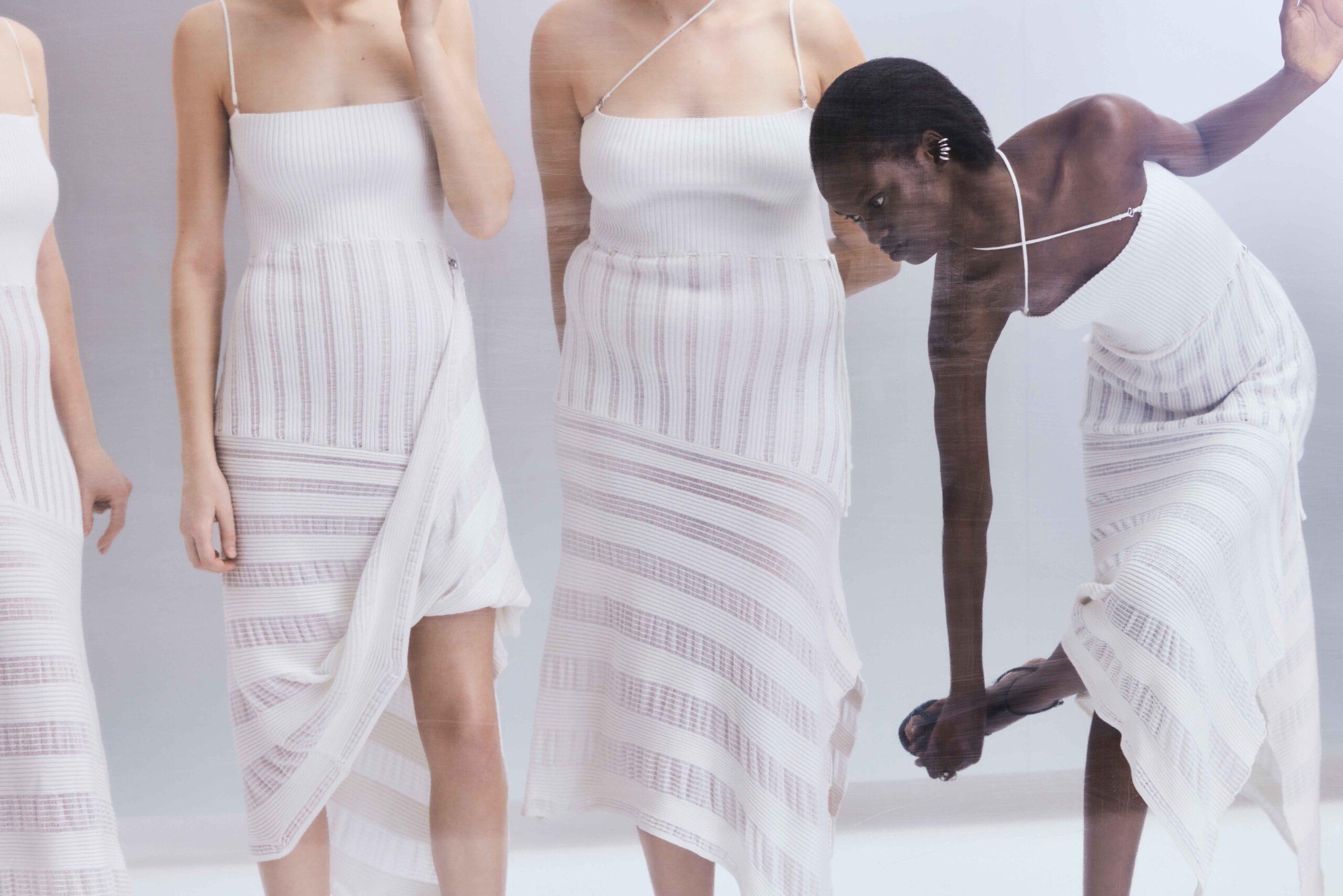
“Sculpting around curves, folds, softness and strength, rather than trying to correct or disguise them.” It is with this uncompromising ethos that Karoline Vitto unveils her latest collection at London Fashion Week, supported by the British Fashion Council’s NEWGEN initiative — the prestigious emerging-talent programme that has helped shape the careers of Jonathan Anderson, Kim Jones, Lee Alexander McQueen, Martine Rose, and Simone Rocha — in principal partnership with Pull&Bear.
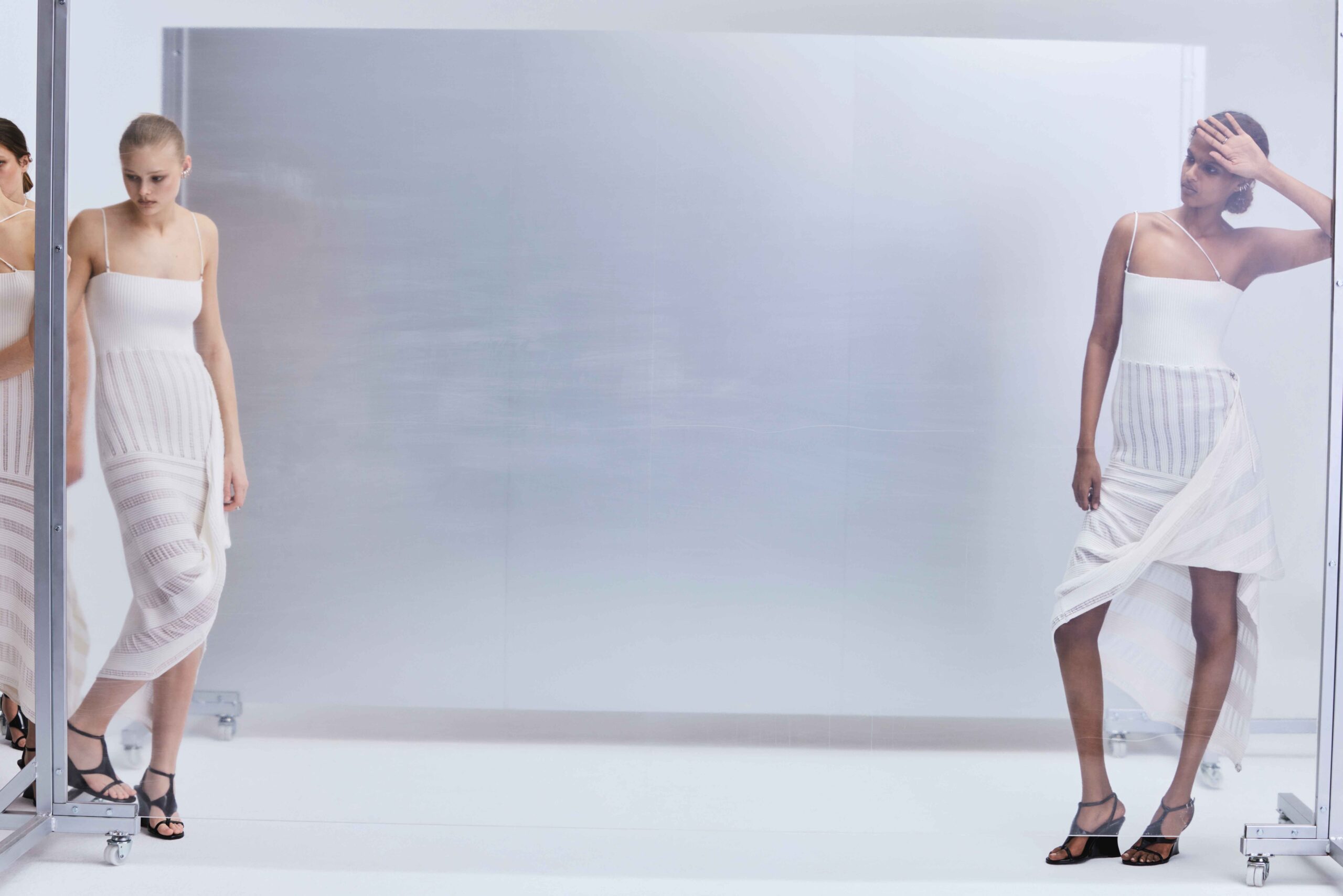
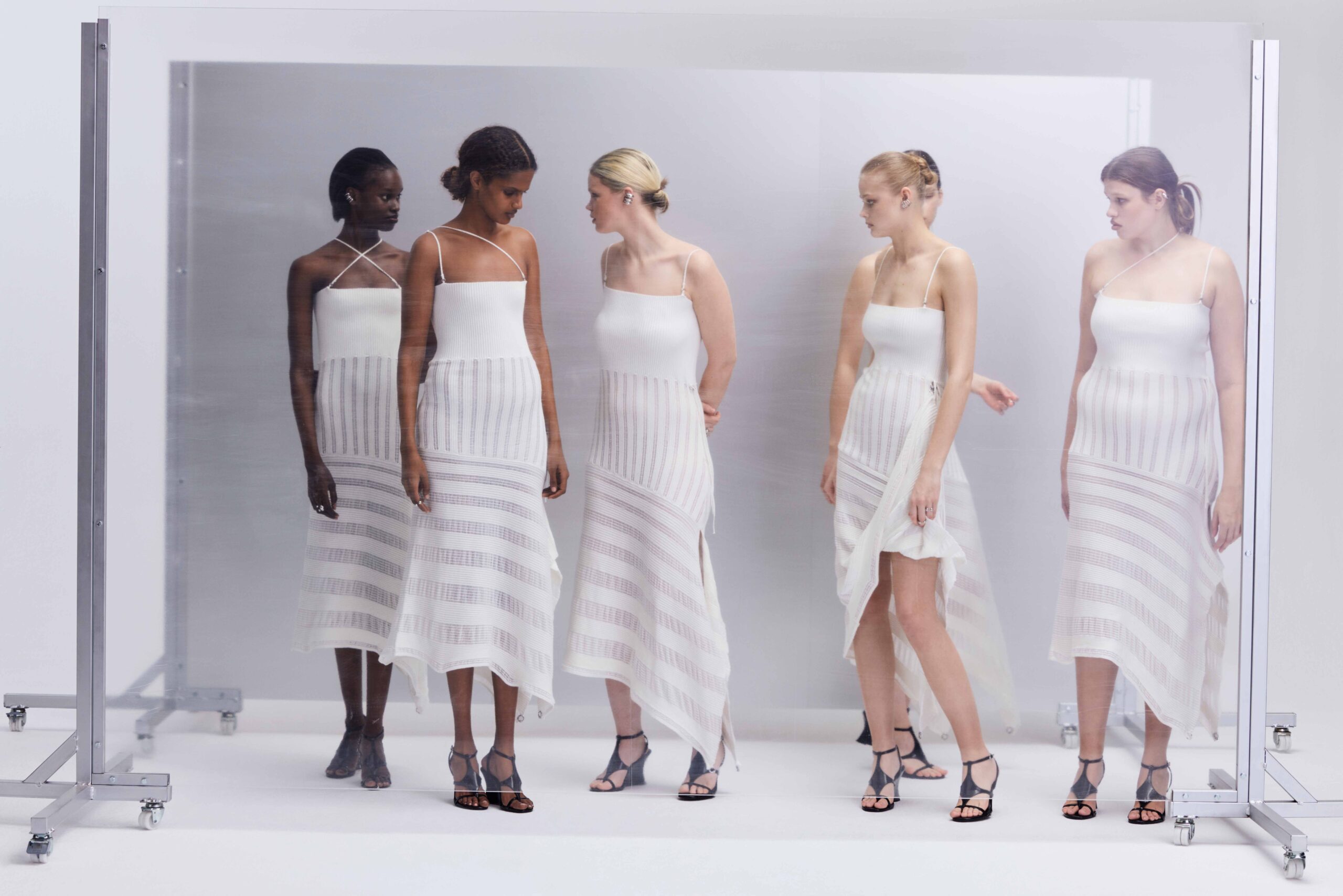
Celebrated for her contemporary and nuanced approach to femininity, the Brazilian-born, London-based designer has cultivated a practice that places the body firmly at its centre. Grounded in a deep understanding of curve and mid-size bodies — and in a long overdue responsibility to design for them with integrity — through this collection, Vitto redefines the language of contemporary femininity on an international stage.
Predominantly womenswear, with two unisex looks, Vitto presents pieces that honour rather than constrain the natural beauty and plurality of the female form. Metal — cold, elegant and rigid — is set against fabrics that are soft, tactile and warm, establishing a dialogue between harmony and tension, softness and strength. Fluid draping and strategic ruching accentuate the body’s voluptuous contours, while metallic applications draw the eye to the sensuality of the back, décolletage and neckline.
This interplay unfolds across categories, materials and details. Denim is articulated in two distinct propositions: one defined by a overtly feminine sensibility, the other rooted in a raw, urban aesthetic. Knitwear, conceived as a versatile micro-capsule, foregrounds interaction with the body, deepening the dialogue between softness and strength. Custom hardware, logo buttons, and assertive prints reinforce cohesion and continuity, while metalicised fabrics evoke the allure and possibility of the city after dark.
Throughout, functionality converges with formal expression through adjustable systems — including zips that allow for shifts in fit and styling — introducing a tangible sense of personal agency. Pieces move with the body and across occasions, underscoring Vitto’s enduring focus on adaptability, comfort, and precision of fit. A single piece transforms from an asymmetric midi dress into a strapless top or a body-contouring skirt, its drape, straps and volume reconfigured by the wearer. The final silhouette is not imposed but negotiated — shaped in dialogue with the body itself.
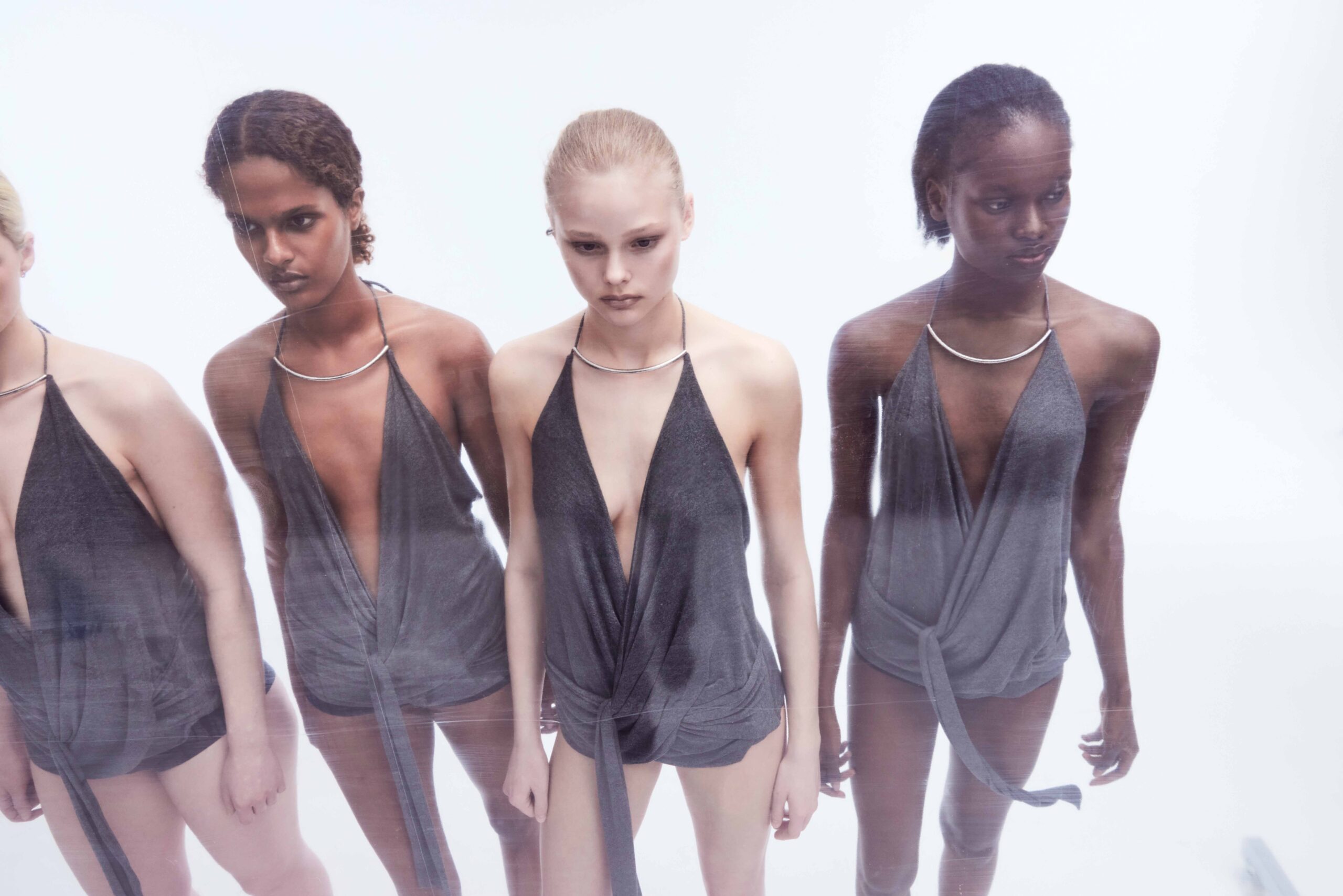
“What I want to communicate is presence, that feeling of taking up space comfortably, unapologetically. There’s strength in softness, and I’m always trying to show that through construction and fit,” Vitto explains. Developed in close collaboration with Pull&Bear, the collection extends this message to a wider audience while preserving the designer’s distinctive visual language. “I was pleasantly surprised by how open and collaborative the process was. There was a real willingness to listen and to understand my point of view as an independent designer,” she reflects. “The process was very collaborative and fast-paced, which was exciting in a different way from my main line. I loved translating my language — draping, cut-outs, tension — into something that could reach a much wider audience… The fittings were definitely the most exciting stage, seeing how ideas evolved and adapted through scale and teamwork.”
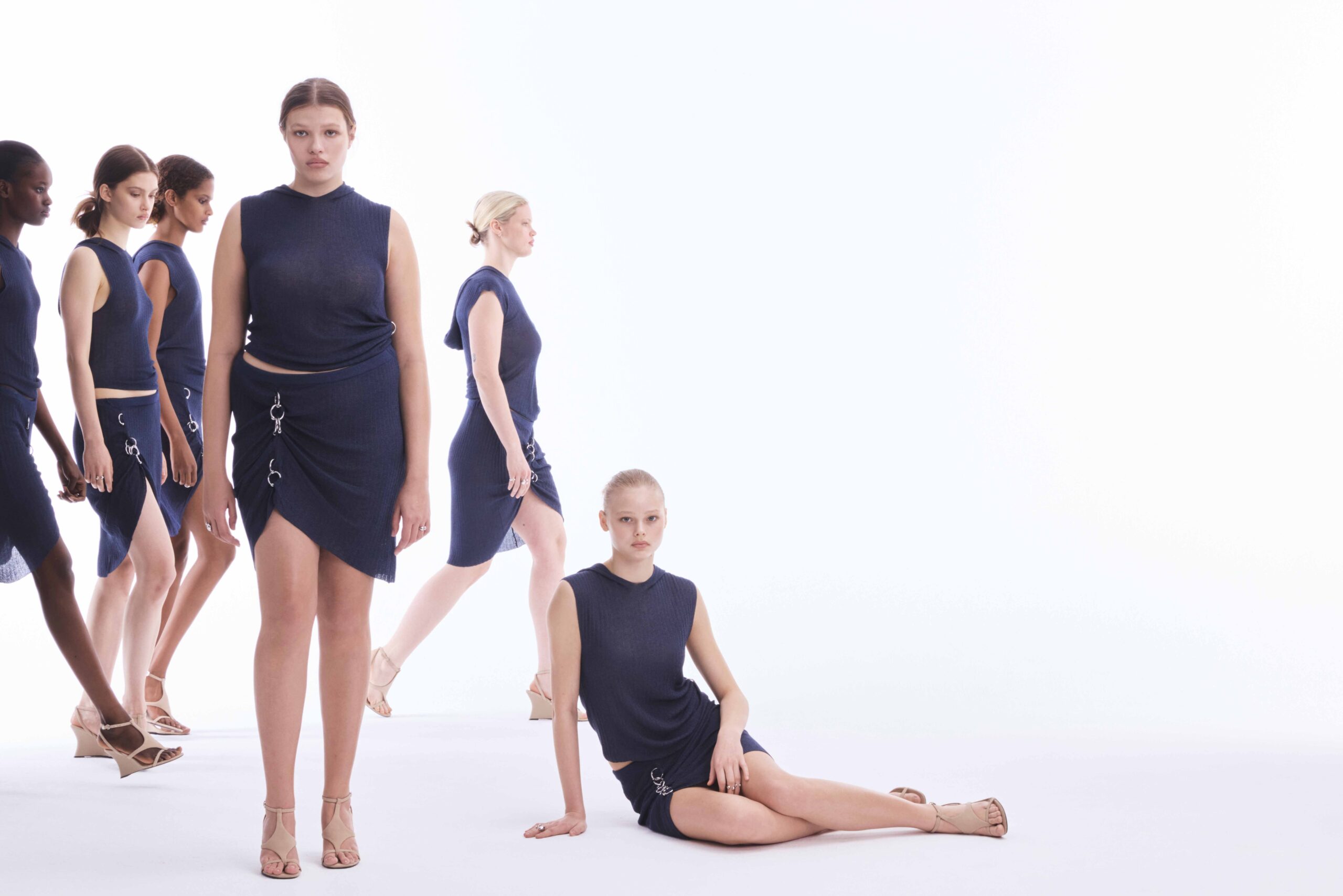
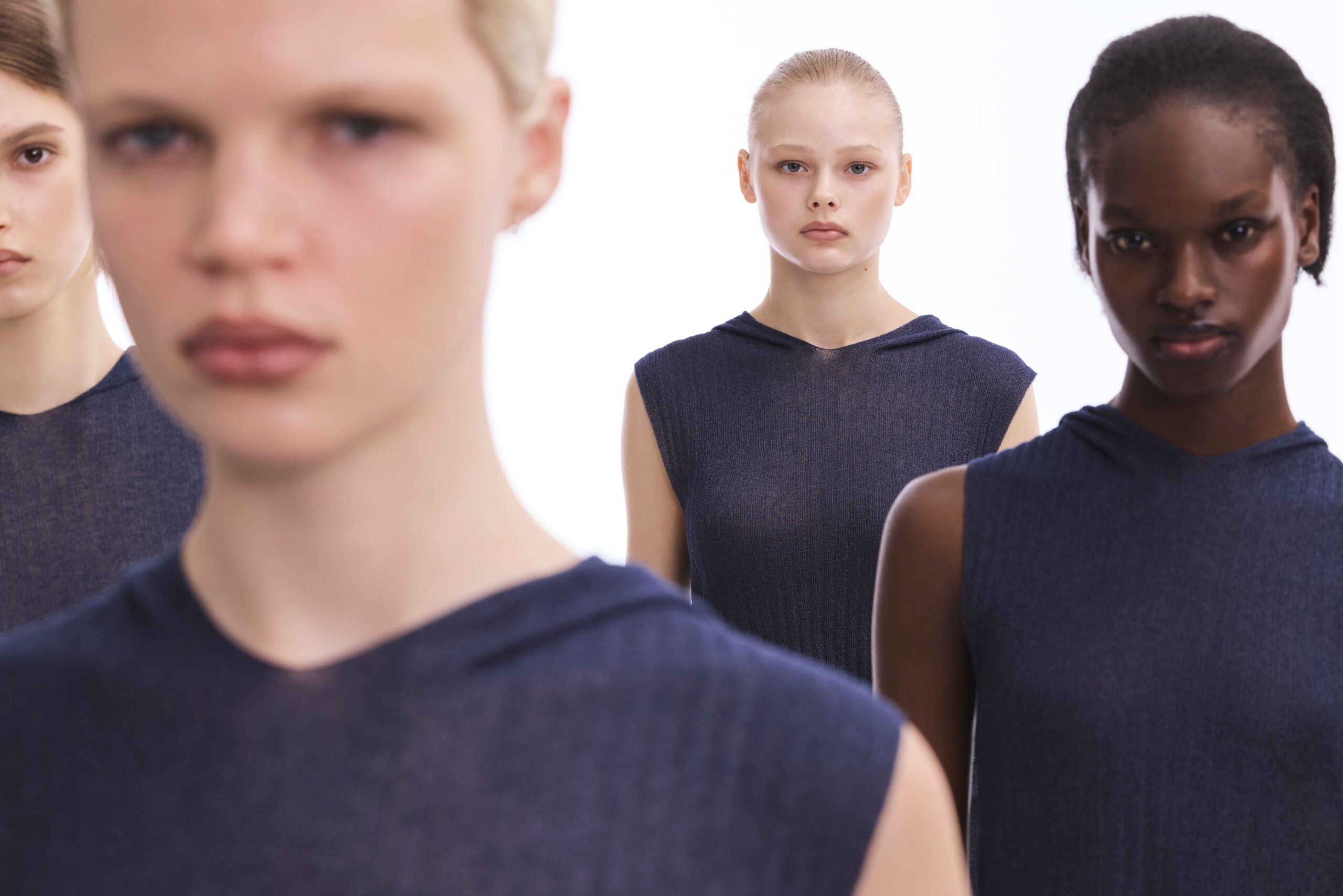
Championing community and connection, the collaboration consolidates both the British Fashion Council’s and Pull&Bear’s commitment to supporting a new generation of designers who are expanding the parameters of contemporary fashion through honest, deeply personal perspectives. This vision finds its visual counterpart in the collection’s campaign, created in collaboration with Catalan-born artist and photographer Carlota Guerrero. Known for her intimate portrayals of women, Guerrero captures a diverse cast whose presence reflects the designer’s values of authenticity and natural beauty. Moving beyond normative representations of femininity, the imagery is rooted in intimacy, self-possession, and feminine strength — a fitting conclusion to a collection that, above all, insists on the power of the body taking up space.