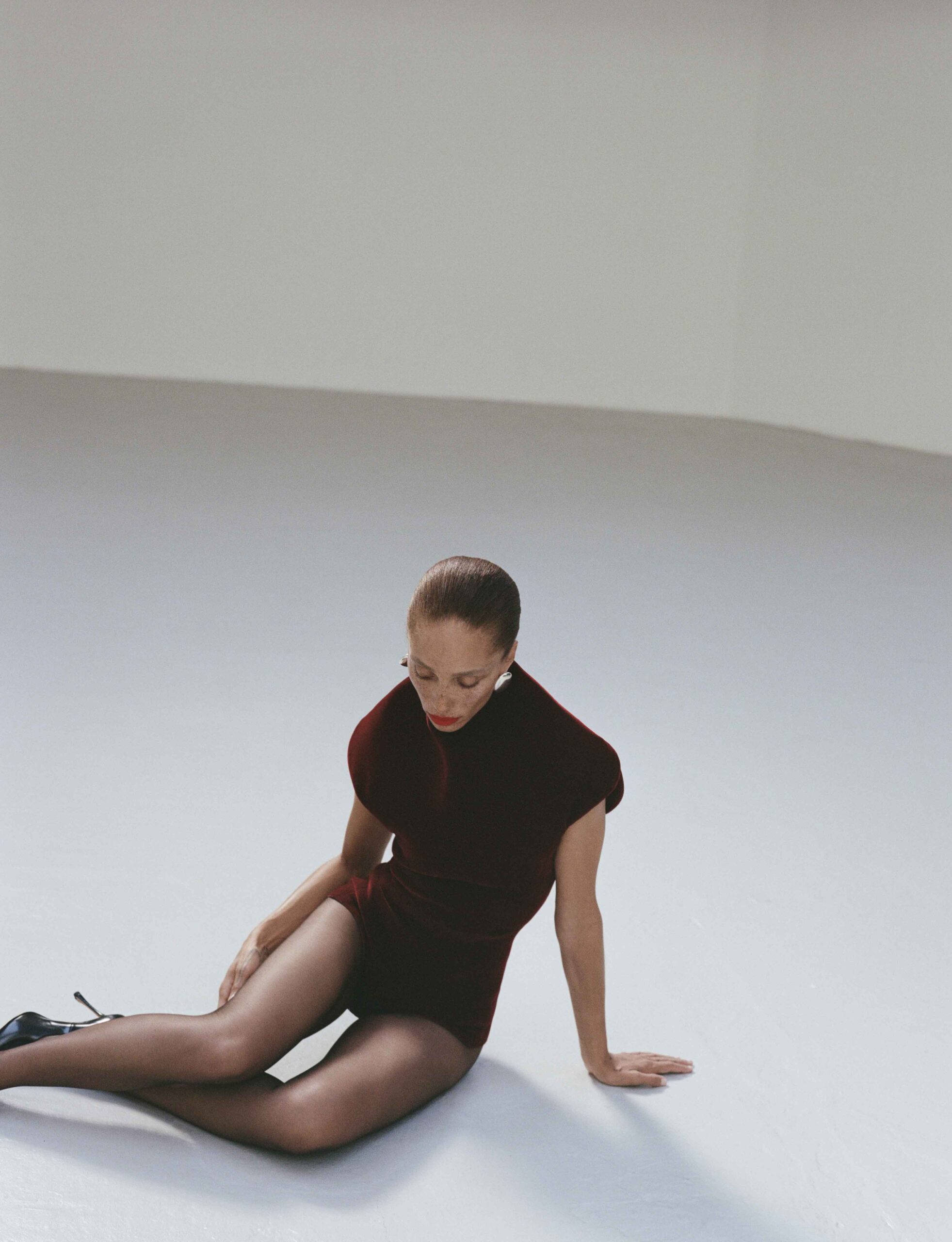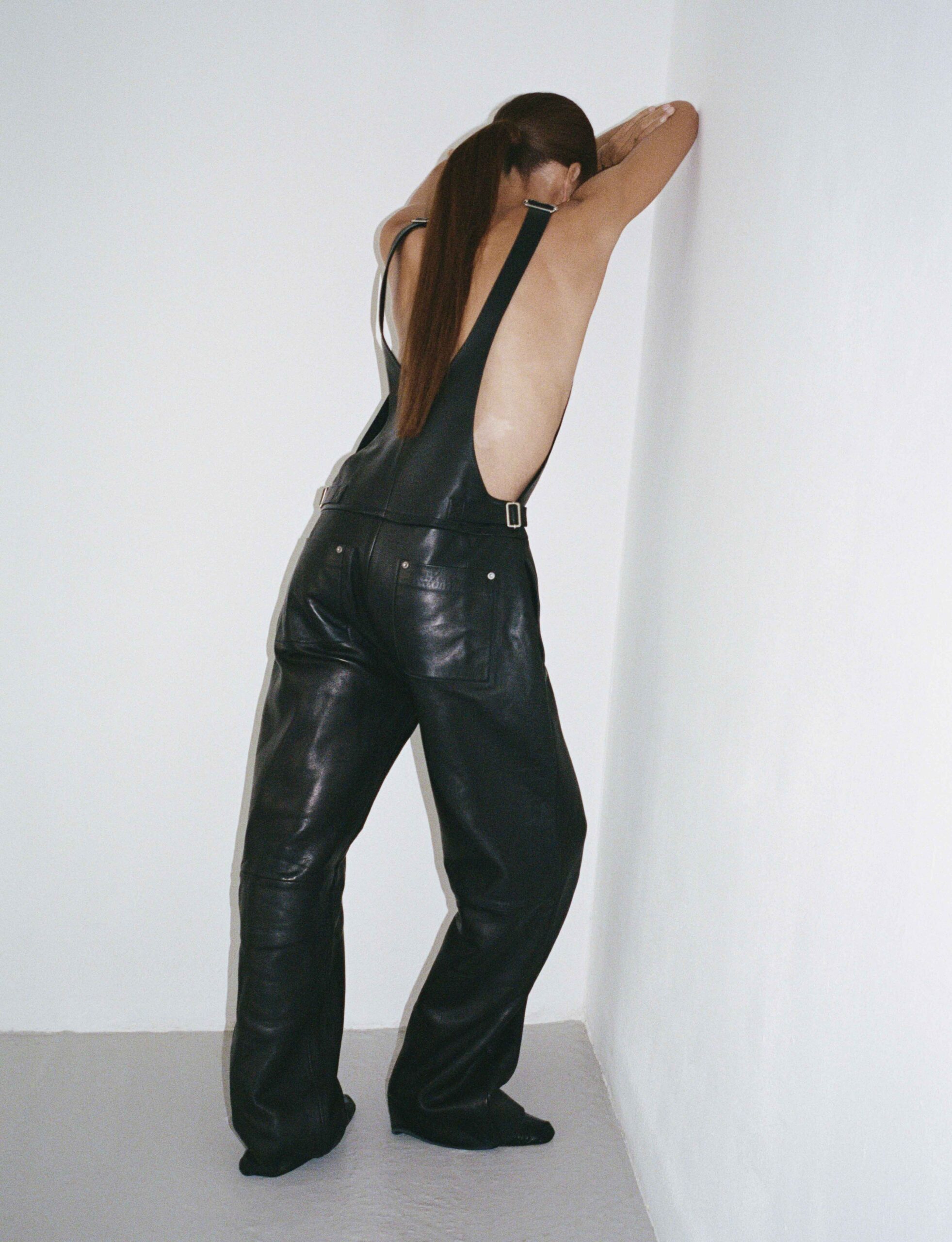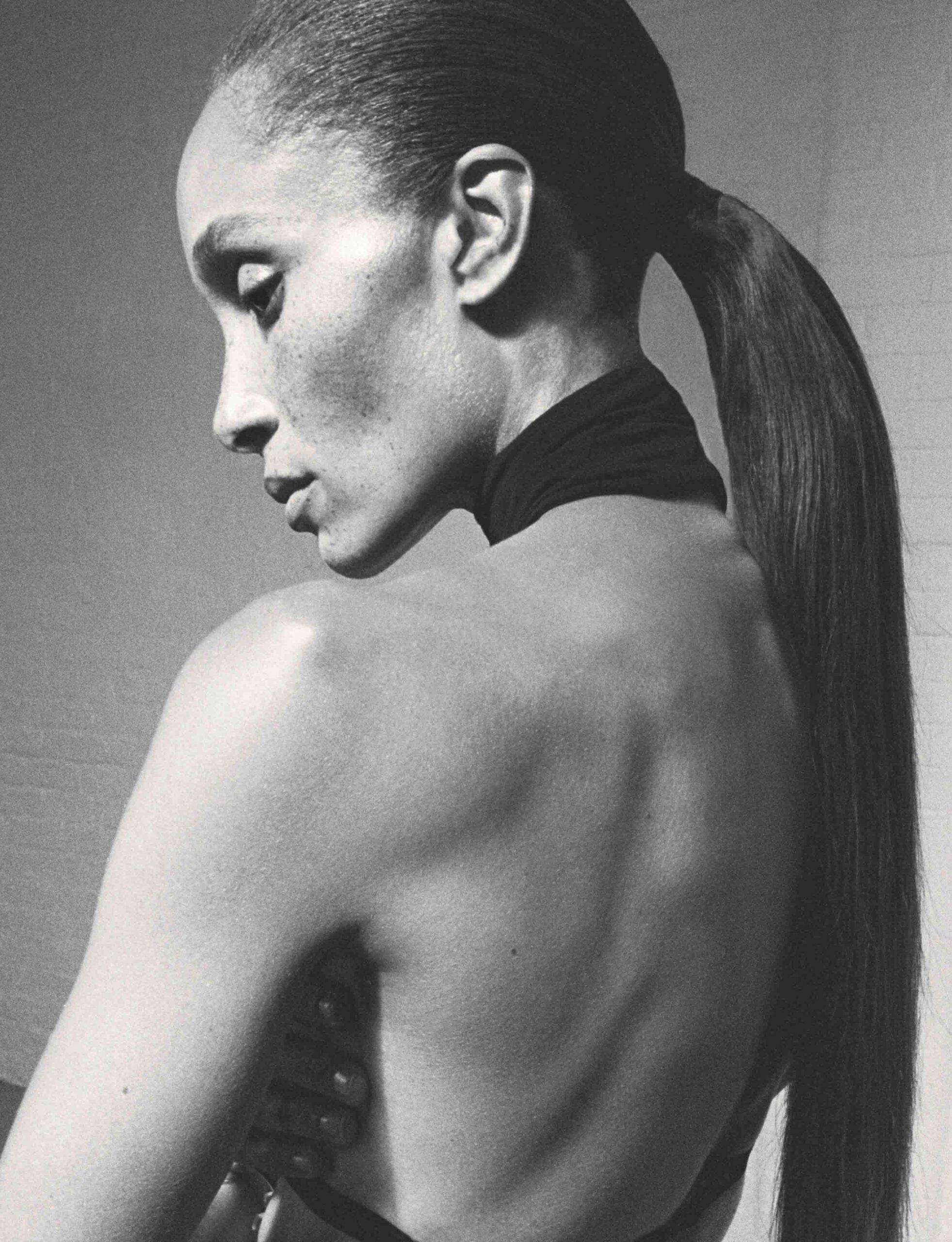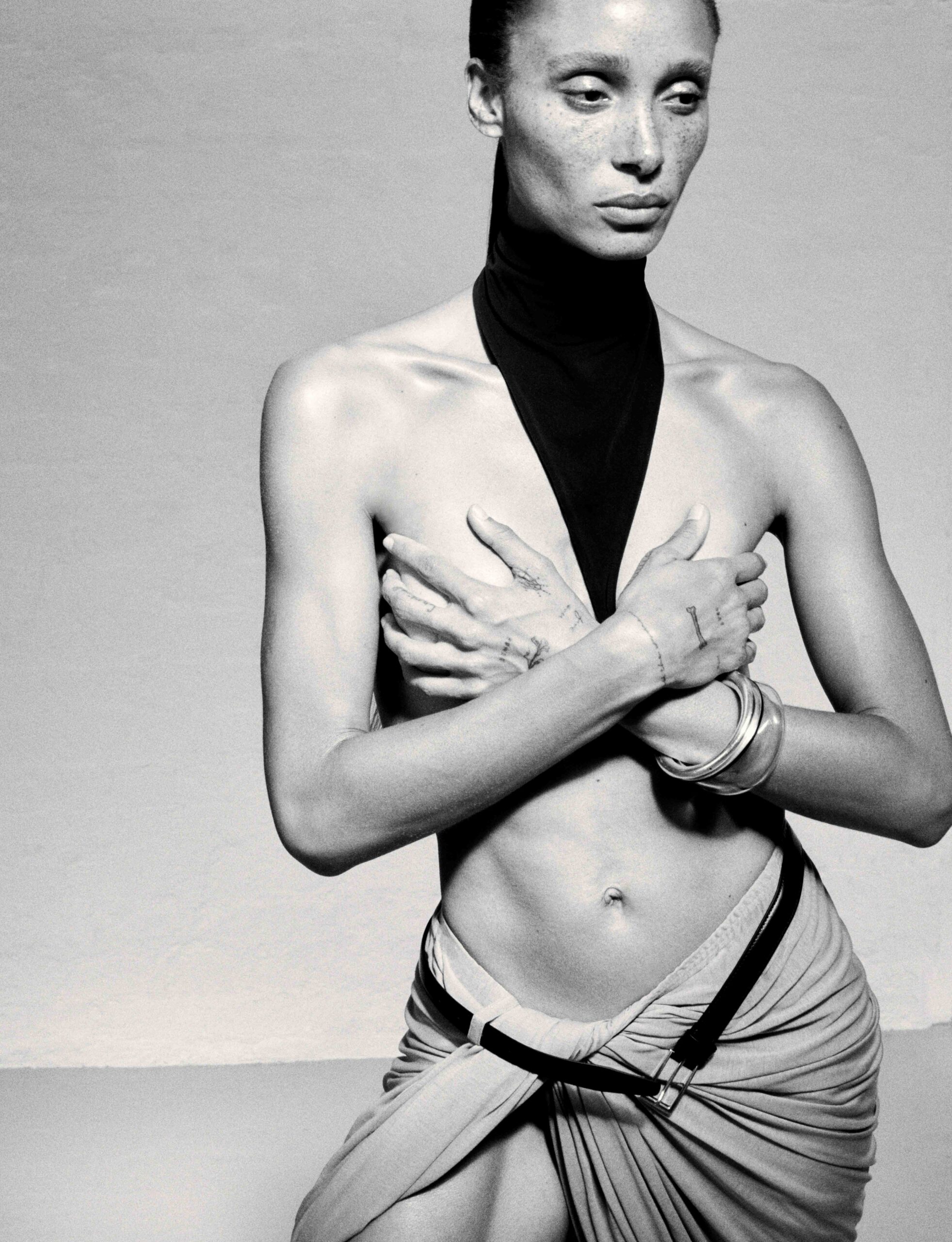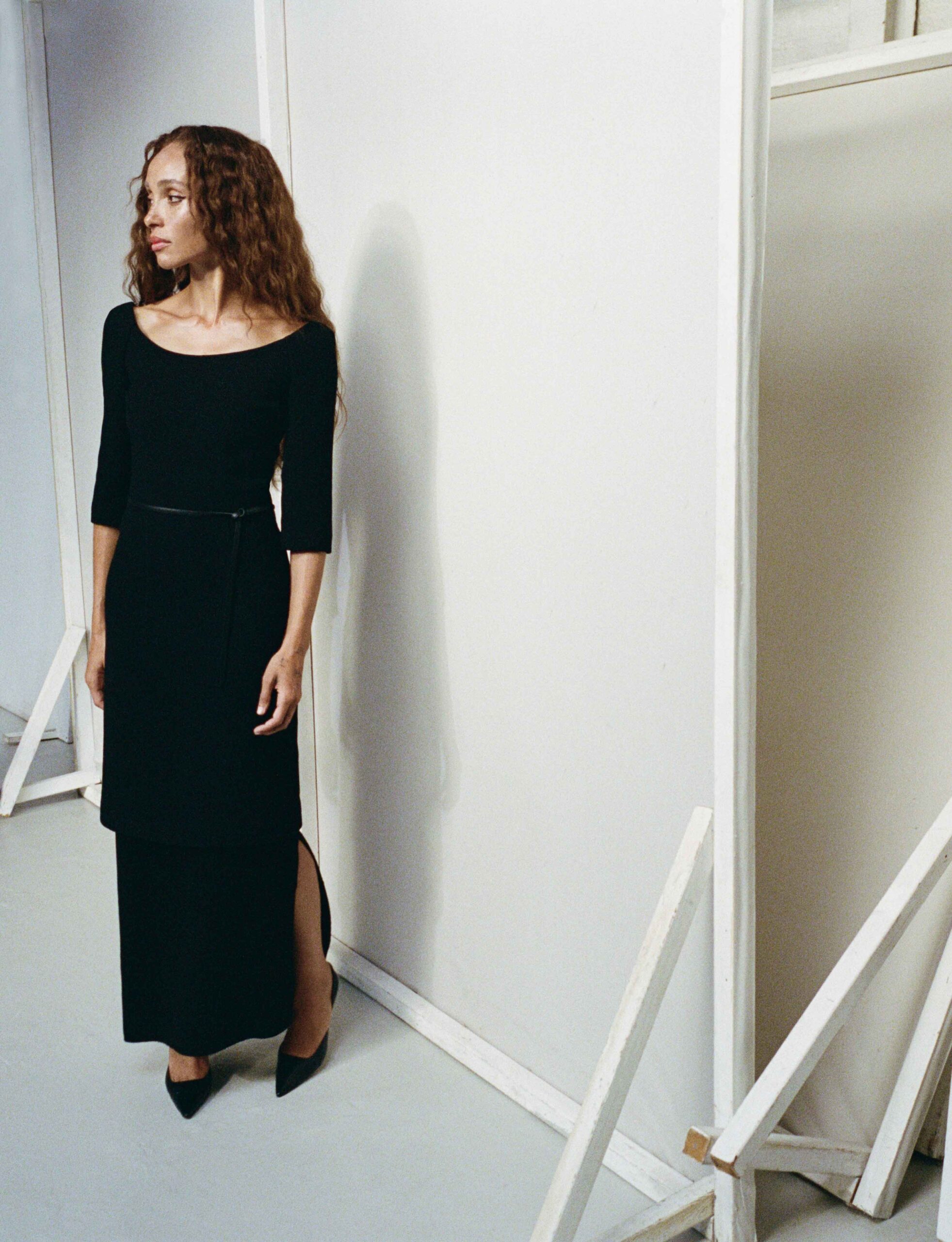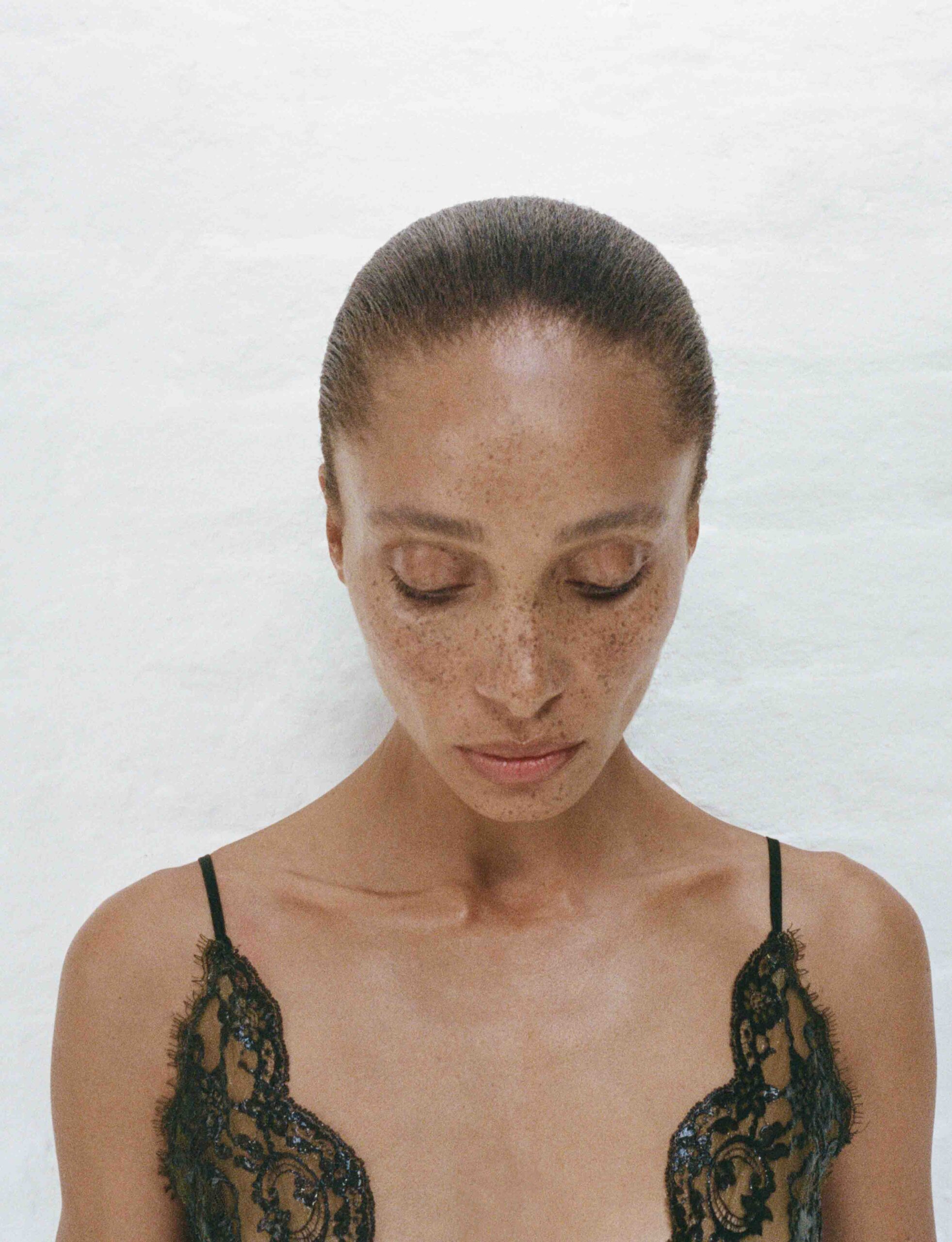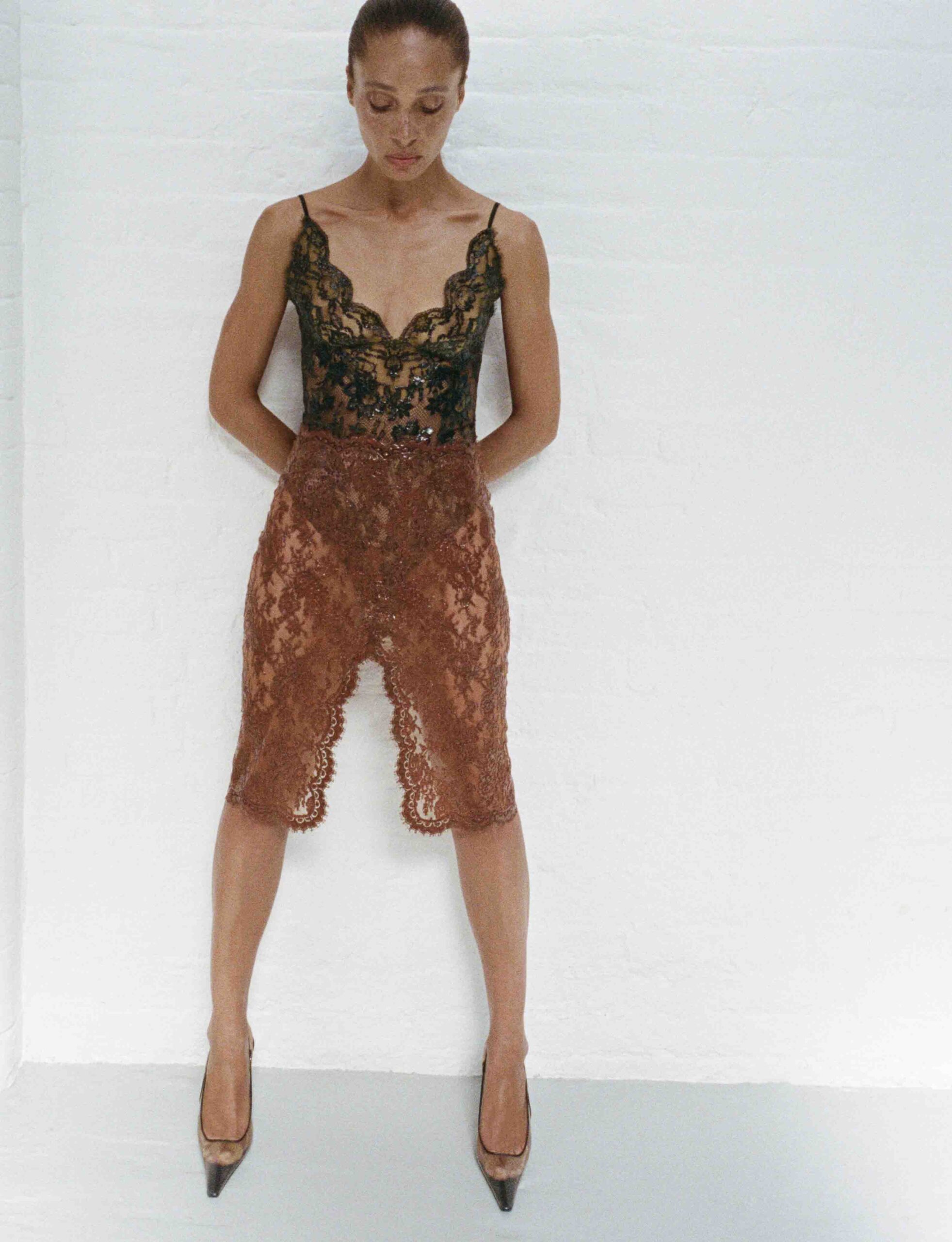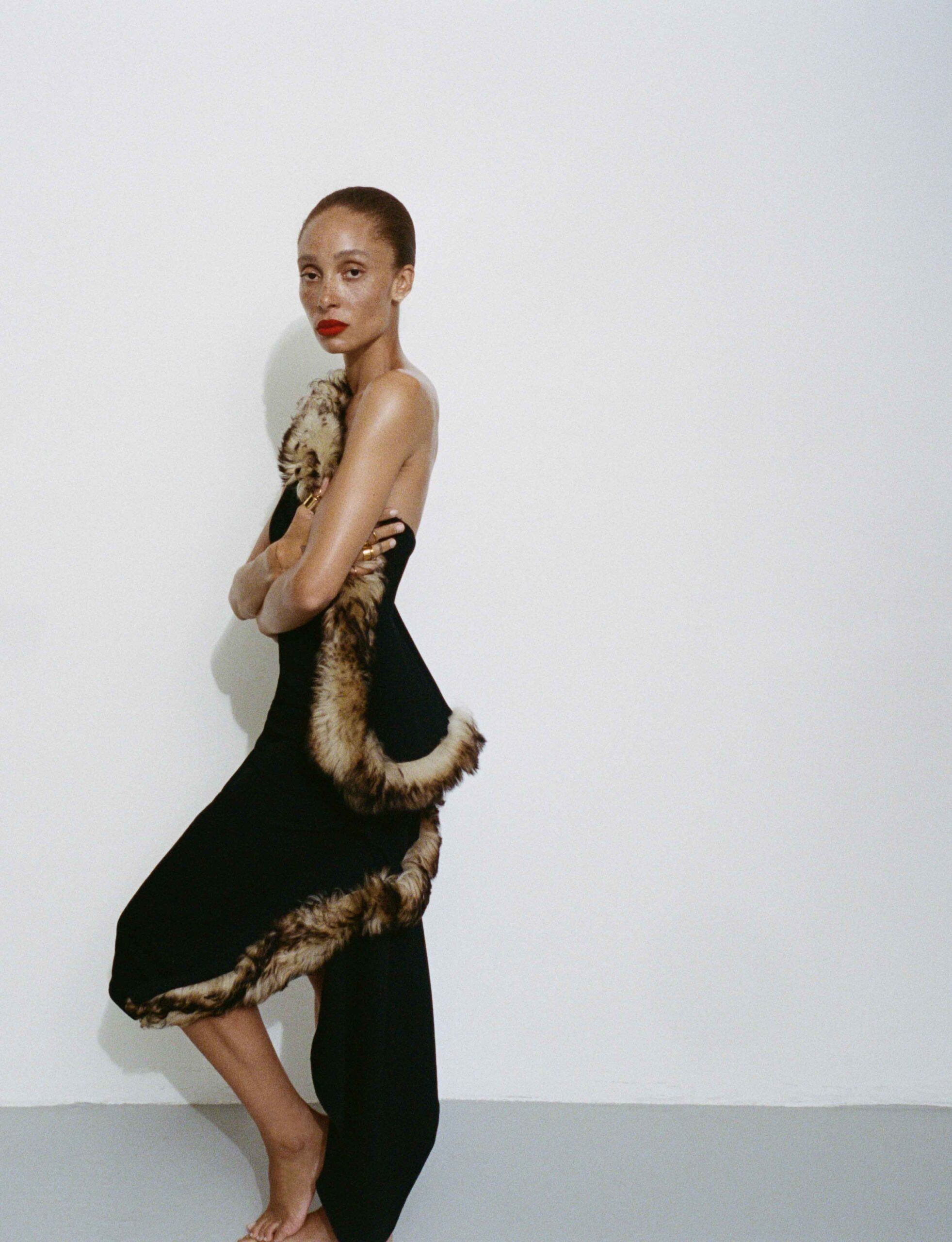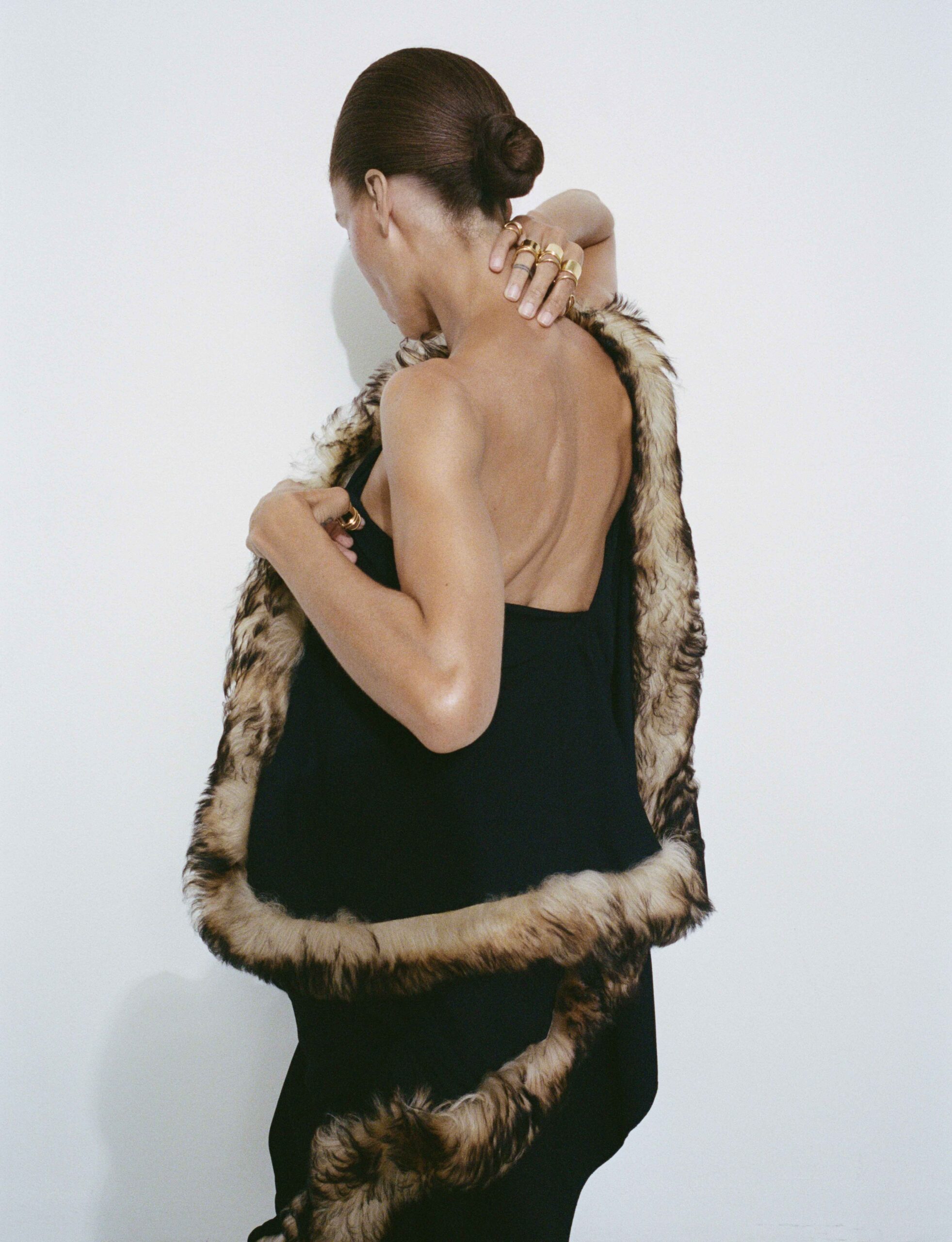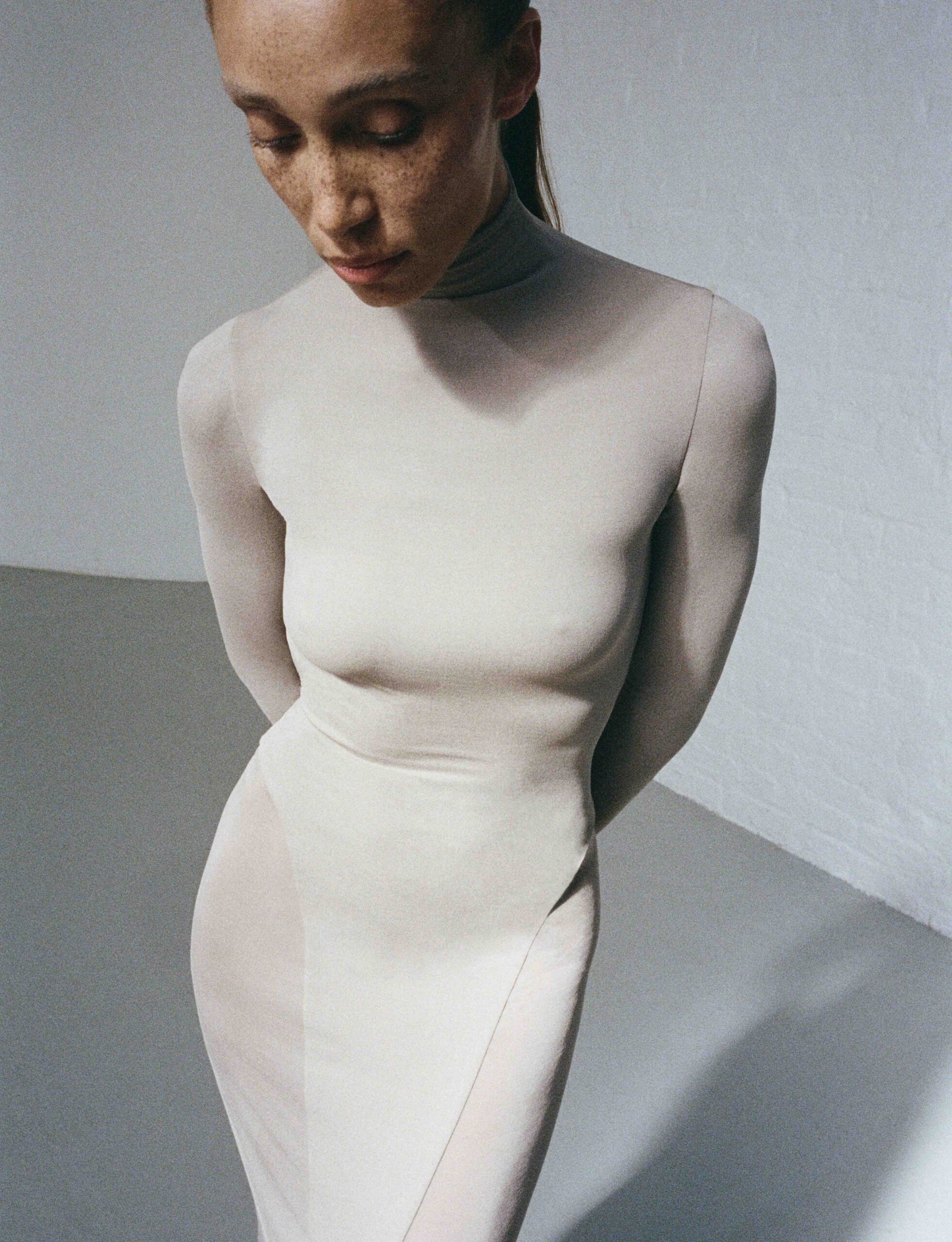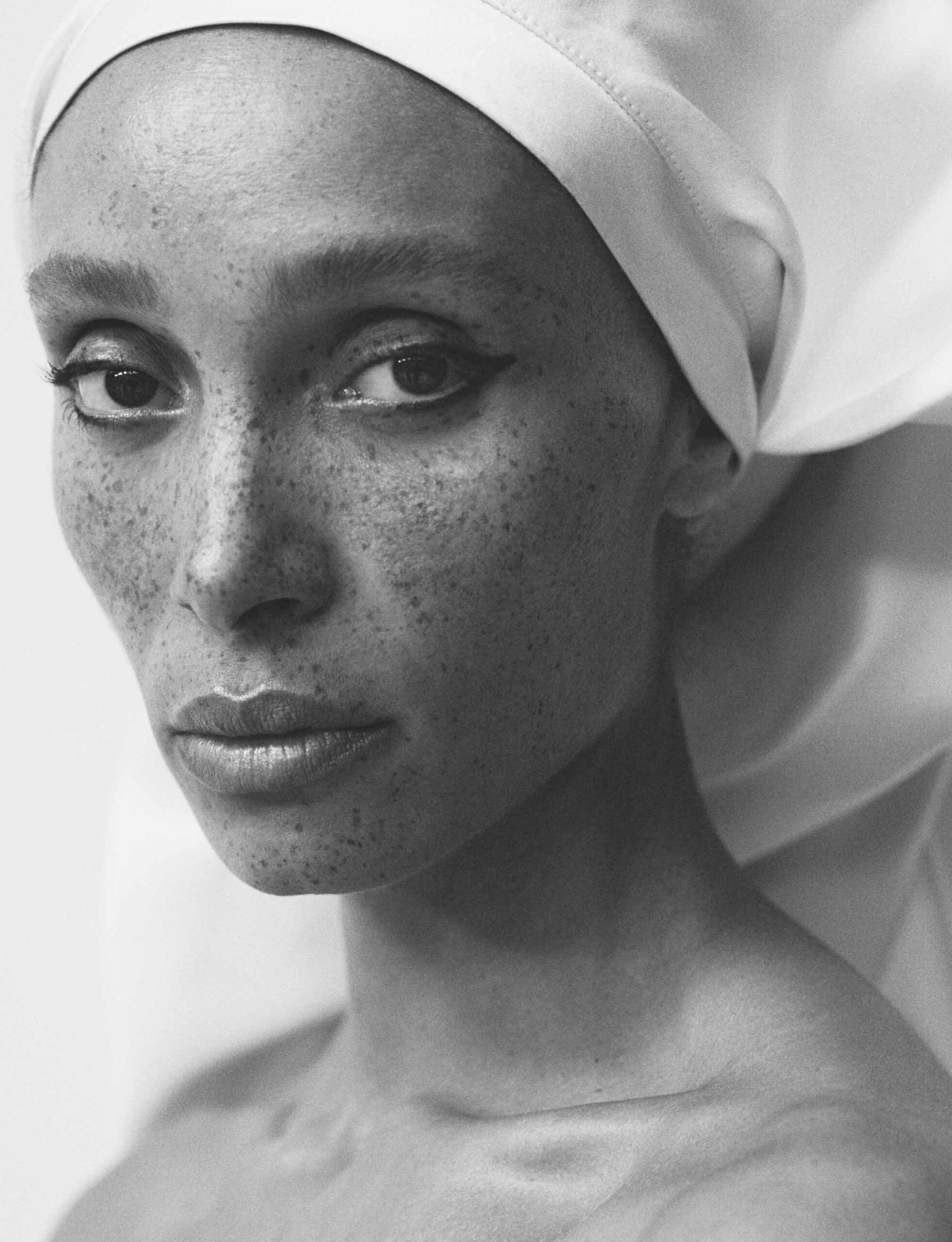
The twilight of the millennial generation catapulted a new class of individuals onto the scene, changing what it meant to be at work. The word “multihyphenate” became a marker of one’s ability to play as many characters as on the stage, with a distinct “hyphen-shaped” intermission between each individual expression.
Looking back on more than a decade-long career, British model-advocate-actor-et al Adwoa Aboah is all too familiar with navigating the many identities that can coexist within a single person. From the runway to the screen, from public conversation to the more intimate work of self-discovery and motherhood, her life and career have never been defined by a singular discipline or role. Instead, they have been shaped by the intersections between them—each pursuit informing, challenging and expanding the next.
What makes Aboah’s journey particularly compelling is not simply her ability to occupy multiple spaces, but her willingness to question the expectations that come with occupying them. In an era where professional identity is increasingly fluid and almost entirely self-reflexive, she represents a generation less concerned with fitting neatly into a predetermined mould and more interested in creating room for contradiction, reinvention and evolution.
The hyphen, then, becomes more than a punctuation mark. It is a space for possibility. A reminder that one need not abandon one identity in order to embrace another, nor arrive at a definitive version of oneself to be considered accomplished. Through her work, Aboah offers a compelling portrait of what it means to build a career—and, more importantly, a sense of self—on one’s own terms.
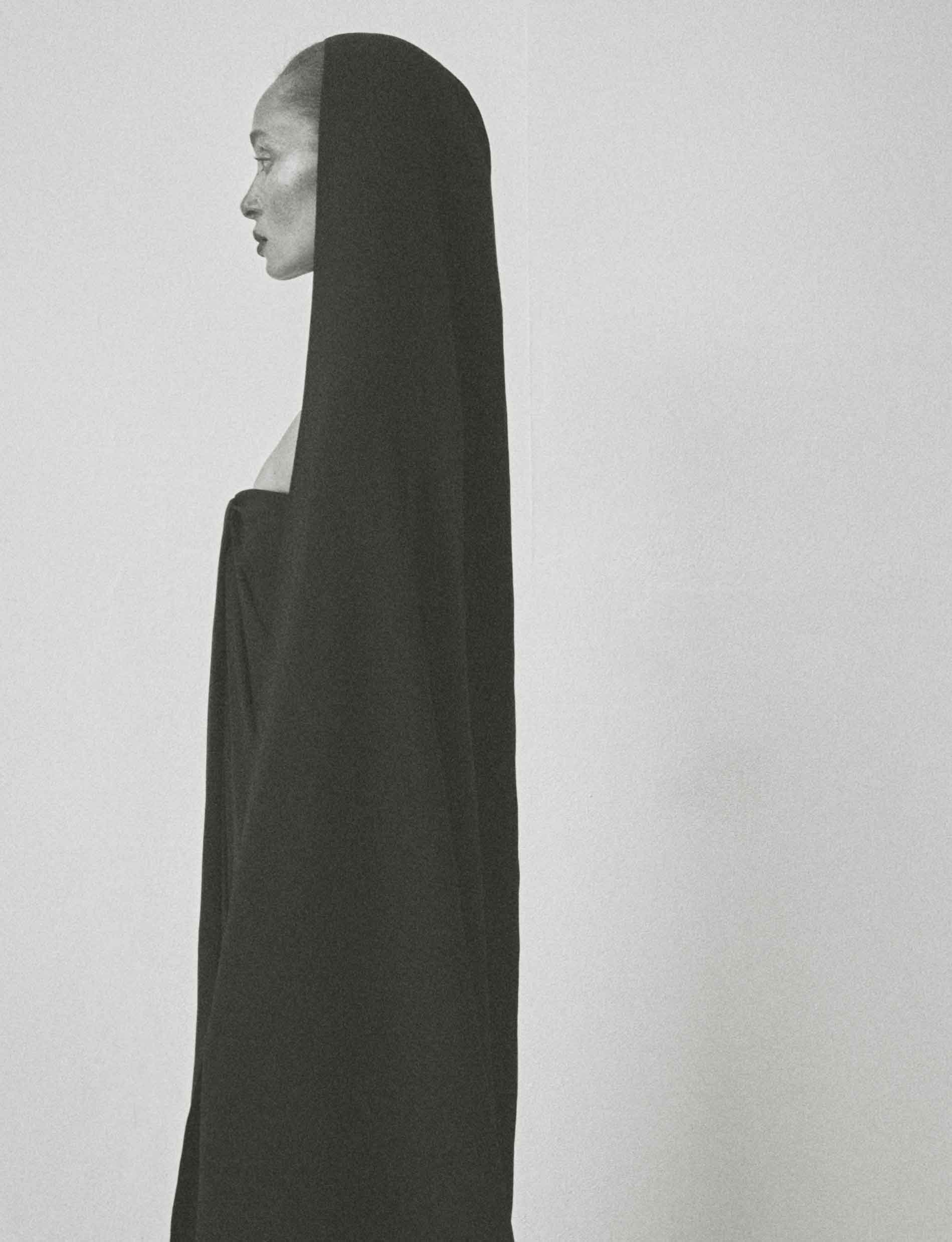
In conversation with her sister and confidant, artist Kesewa Aboah, Adwoa reflects on the pleasure of evolution, the privilege of experience, and the beauty of returning to familiar spaces after a pause—an intermission—with renewed perspective: “Every time I step back in, it just gets better and better. Maybe that’s what people say about age.”

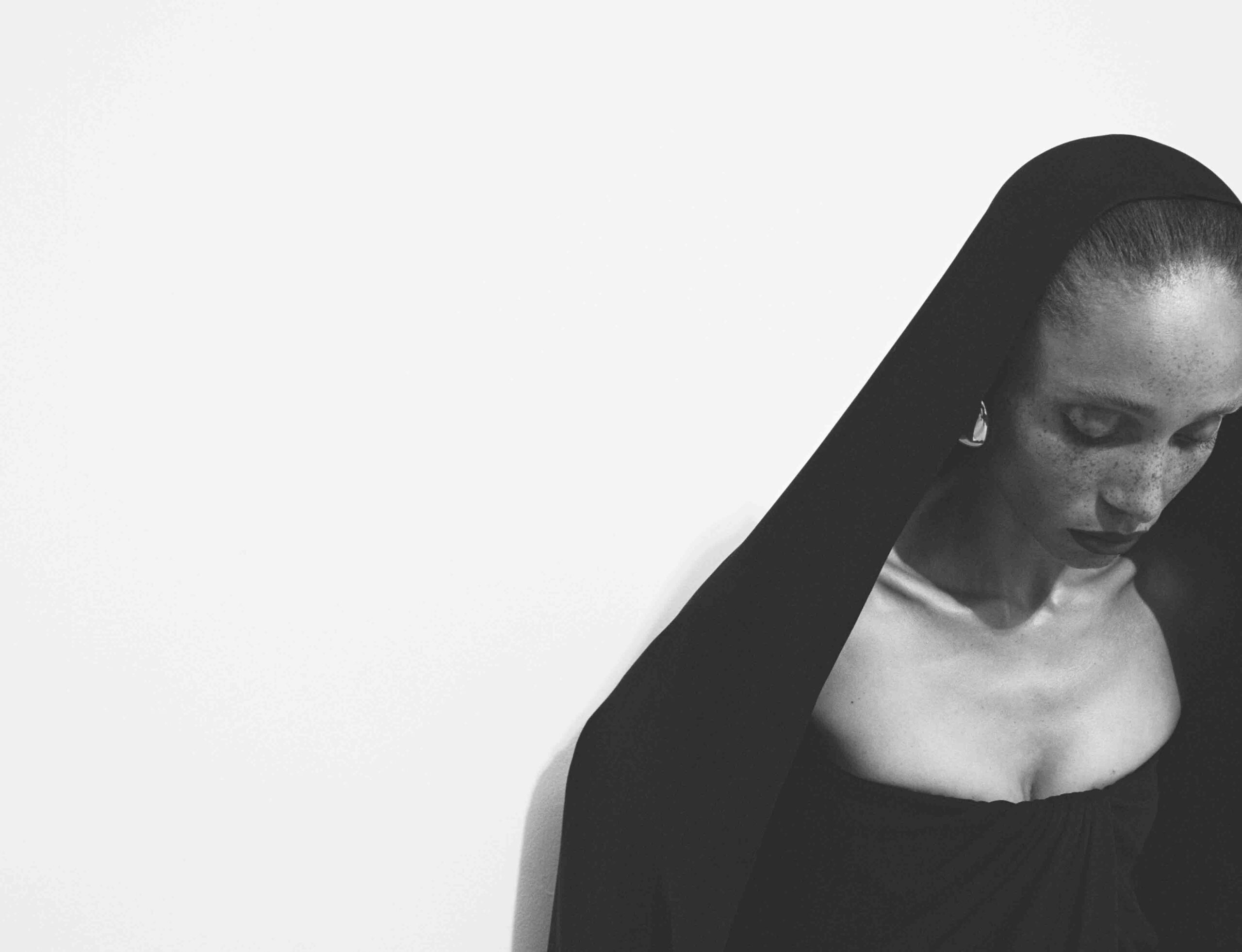
Kessy, are you going to ask me? Should we just get into it?
I mean, obviously the pauses. That’s what I immediately think of [when I think of] intermission… But I like what you were saying about moving between worlds. That’s something that we both do, and I think people do more than ever now. I don’t think people stay in their lanes, and I appreciate that.
Yeah, I do like it. But then you speak to certain people, like art director friends of ours or creative director friends of ours, who have been in the game for so long, and they’re like, “Now anyone can become a creative director because they’ve got a Pinterest board.” I think there’s a confidence that comes with being able to try out different things, and thinking you can try out different things—which I appreciate. What youth culture is bringing to my attention, is that you don’t actually have to pick one thing. Sometimes I do wish I did just have one thing, but it would be hard for me because my interests just aren’t as linear as that, and I feel like I’m just curious and ambitious and want to try things. But I do find it harder than ever, because I think the juggle is overwhelming—but also I’m finding more than ever that my kind of worlds don’t align. Like, I was able to kind of make them run side by side kind of smoothly—
Yeah, and they just don’t. I feel fractured, [now] more than ever, because the world feels quite fractured and I’ve always felt, especially with my advocacy work and being a model, they are sort of—
Yeah, incongruous. And such parallel ends of the spectrum, in regards to the messaging and what they’re doing for people in general. I felt like maybe it [used to be] easier, because mental health was more trendy? I don’t know. [Now it feels like] I’m just shouting from the roof tops about the same things that I did back in the day.
Yeah, I’m always going to care about it—and it’s not trend-related either. I think this goes back to having lots of different facets to one’s self. I didn’t choose to become an advocate. I didn’t choose to start Gurls Talk in order to have a flourishing career. I needed to care about something. Gurls Talk came first and I was lucky enough that my career thrived because of it… I didn’t think it would bring me covers of Vogue magazine, or whatever it might be. I didn’t know it would lead to the kind of successful things that I’ve had in my life because of it. Whereas, I don’t know if that’s how people think [today]. Is everything premeditated? Is it done in a more materialistic way? Like, an influencer starts a new brand and the brand is to obviously build their profile larger? I don’t know. Has it got that kind of guerilla-style, grassroots, unconscious freedom to it that I feel like I had when I started Gurls Talk? I don’t know.
10 years. Over 10 years.
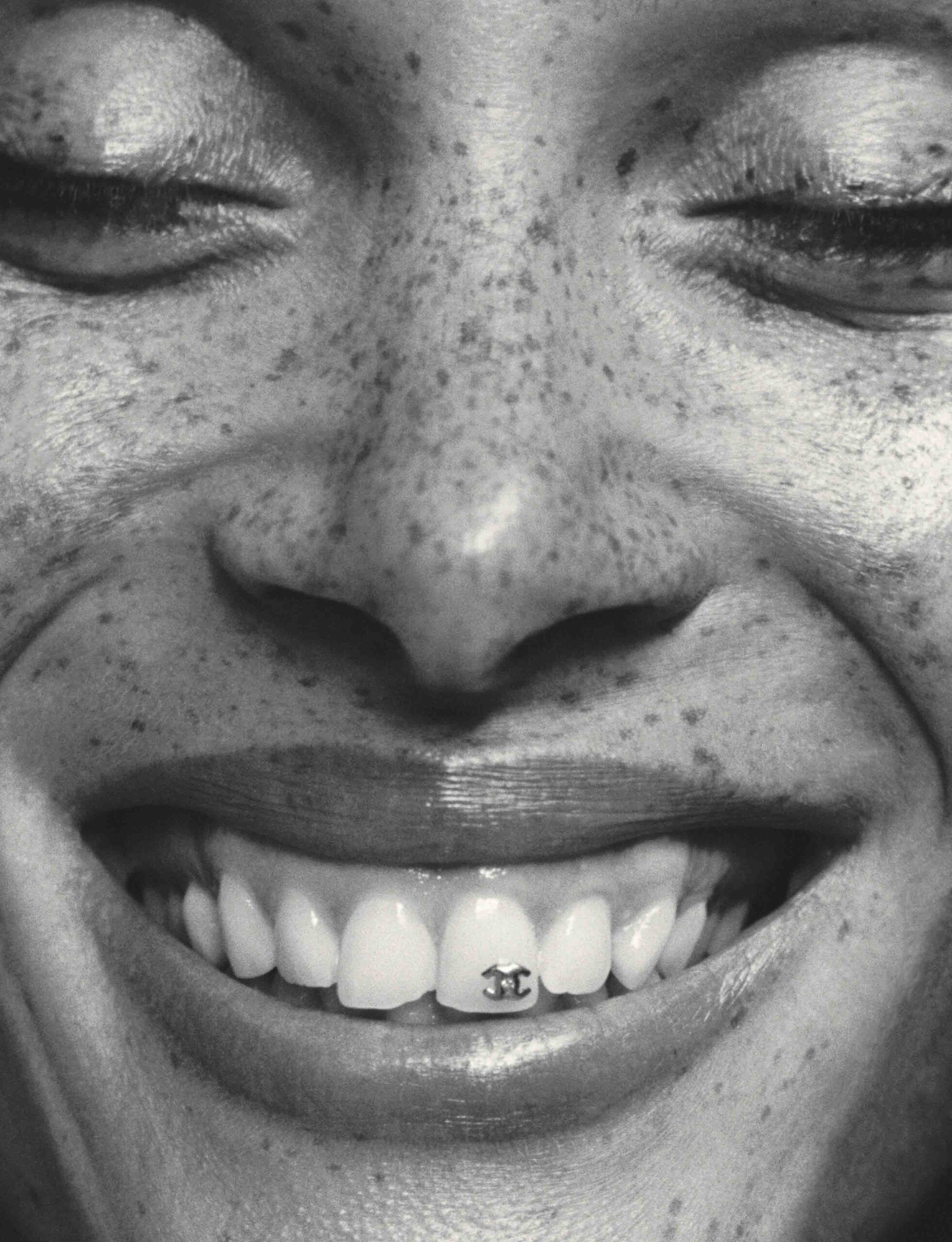
Oh, 100%. It’s perseverance. I always say, and this is completely meaningless, but it’s like toothgems! I’ve had a toothgem for so long and they became incredibly trendy. I’m not saying I started the trend by any means, but I remember it becoming incredibly trendy and I was like, “Fuck, I can’t believe I now have a toothgem and the whole world also has a toothgem.” I was like, “I’m just going to persevere through it. I’m going to persevere through the trend, and people will fall off and be less interested, and at age 70 I’ll still have one and then I’ll show everyone that I wasn’t interested in it because it was a trend, but it was something that I actually love. It was an authentic choice.” And maybe that’s what it is, you know, and maybe this is just a completely stupid metaphor, but how can you persevere through trends and stay true to yourself?
I know. I know.
Pride
—Argos, and fucking Target.
What does Justin Bieber always say? What’s he always standing on? You know…
When he had that video? You know what I’m talking about.
Justin Bieber said he’s standing on… he’s standing on business! Justin Bieber’s standing on business, and I actually think Tim’s standing on business. It’s like people who say it with their chest. It’s authority. I mean, the Justin Bieber one… it’s the end of the day. I was just thinking about someone just standing full throttle for something they believe in, and Justin Bieber came to mind.
Yeah yeah. That’s what came to mind.
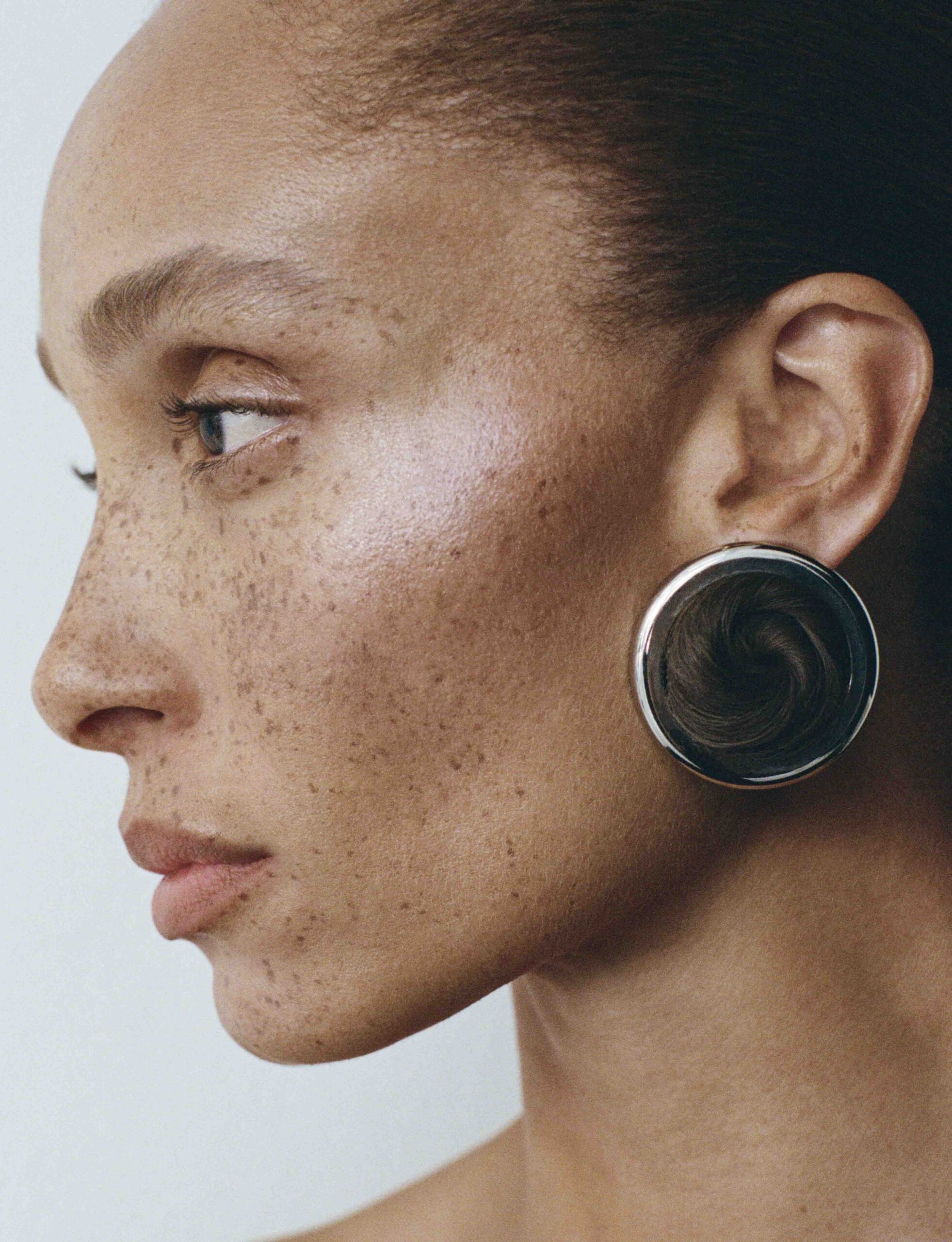

I mean, it’s different when it’s your family, but I think it’s the way I approach all people around me in my inner circle, especially my working one. And Kessy, although you’re family and best friend, you also feel like a kind of confidant in every facet of my life. To have someone around you know what you’re capable of before you even know it is just the greatest gift. When Kessy and I discuss things, whether Kessy needs my opinion for art or I need her opinion on something else, there’s no opinion I trust more, because I know that we have synergy. I know there’s also a kind of freedom to the way we discuss things with one another, where there can be critique and there can be opinion without it immediately feeling like someone doesn’t like something or someone doesn’t support someone or someone doesn’t respect someone. There’s an ability we both have where we [can] have discourse with one another and we’re able to detach in a very healthy way. Like I can critique Kesewa’s work in a way that doesn’t make her feel like she’s a piece of shit and not doing things right. It’s a conversation, and I think we both allow it in different areas of our work.
—I completely forgot that I was a casting director once.
I kind of think—and I don’t know if this is the easiest way to do one’s career, because sometimes one has to just kind of mould and be a lot more malleable—but I do think in every moment and every pause, in every intermission in my life, the throughline has been self expression and self. Whether it be casting or Gurls Talk, I do feel there’s a stamp of myself in all of those things. I don’t look back on moments in my life and feel embarrassed or cringed out—
Or lost in something or [that] I wasn’t doing something that wasn’t true or authentic. It might not feel true now, but I think even looking back on how my style has changed I don’t feel cringed out. I just know that that felt necessary at that time. It felt necessary to dress like I was coming out of Burning Man for a sec. It felt like that’s how I wanted to express myself. I don’t know. Sorry, that was just a thought, but you carry on.
Yeah
It’s so nice to hear that, because when you grow up you… well, you don’t know about yourself. It’s trial and error isn’t it. I look at Shy and I can see her personality brewing, and I just hope she never… It’s so horrible that one spends their teens and 20s hating parts of themselves and resenting parts of themselves, and then actually, as you get older, you embrace them and you celebrate them, because it’s literally why—
Yeah, as cheesy as that. Why you are who you are, but also why you’re able to do the things that you’re able to do. Like I’m just a bit of a heavier person, a deeper, heavier person, and this is something that I really hated growing up, but I wouldn’t be able to do the charity work that I do if I didn’t have that empathy.
Yeah, how did the first pieces start?
That’s crazy. I think it’s in you. When I was doing my Ted Talk, I, no joke, went to the attic and I literally was looking through. I just remember writing something about it, like manifesting it. The kind of beginnings of this make-believe Ted Talk that I would one day do if all my dreams and hopes came true. I went up and, I’m not joking, that’s what it was. That was the Ted Talk. I had broken it down and I knew what I was going to talk about, and I wasn’t even conscious of it when I did it. But that morning, the day I did the Ted Talk, I literally went upstairs and I found it and it was all fucking broken down—what I wanted to talk about, without even knowing. There was also a kind of throughline, of having a child and what that meant, but—
Experience was always going to be the root of what I was going to talk about—lived experience. How did I know that 10 years ago?
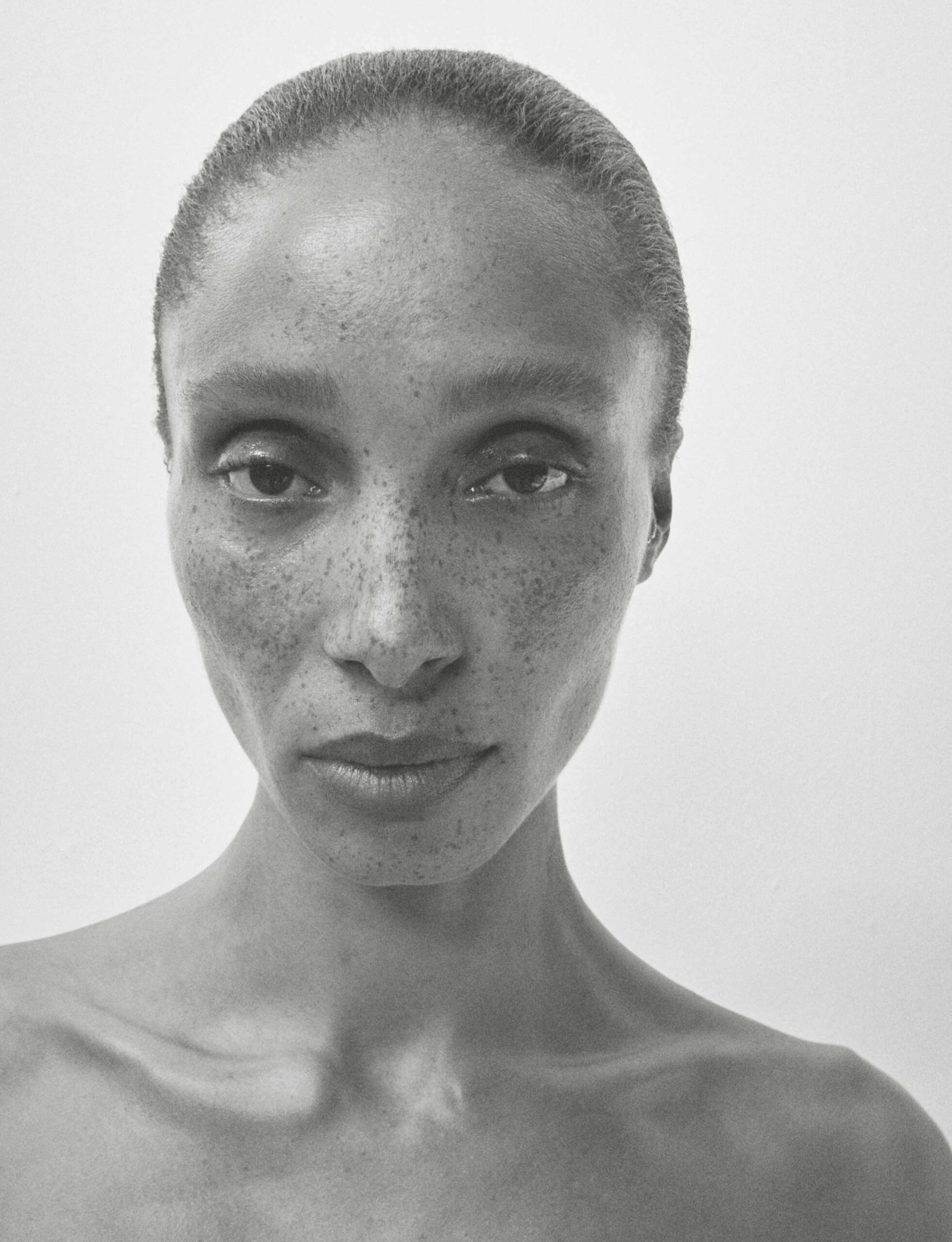
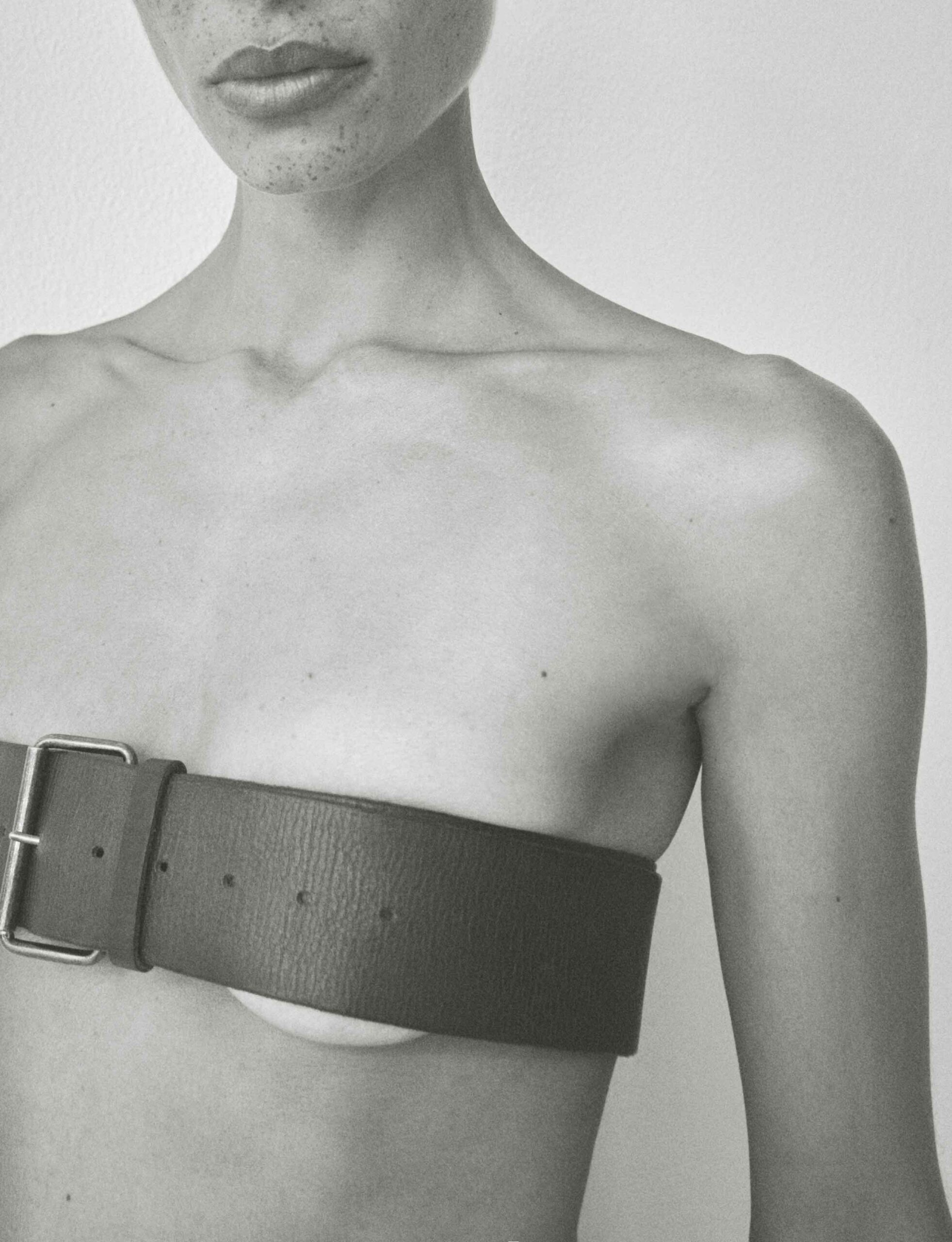

I mean the title of my Ted Talk is “Lived Experiences: The Root of All Knowledge,” so you know that’s what I think, but yeah. Kessy, you go first.
Yeah, you came! What are you talking about?
Yeah, that’s like storytelling! I think it was [Janaya “Future” Khan] who said this at a Gurls Talk event, but it’s this idea that one shouldn’t tell their story as they are living it and experiencing it.
[We] do make so many absolutes. [We] make so many blanket statements… I look back on some of the things that I used to say when I first started Gurls Talk and I think there is a kind of ignorance to those blanket statements. I didn’t really know what I was saying. I was so deep in it. I was newly sober, and so fresh and vulnerable and I was just word-vomiting. I didn’t really appreciate the kind of responsibility that one must take when sharing their story. It’s not about trauma dumping. I don’t have any regrets, but I would do it differently. And I do advocate for it. I just didn’t know I was word-vomiting, because I was—
Yeah, I felt all those things… It felt so necessary at that time to share, because I’d never shared before. I’d never really been very honest about my thoughts and feelings, and about who I really was. So I was just like, “Oh my gosh, someone’s asked me how I am and they really want to know. They want to know who I am, so I’m going to tell them. But [your] perspective shifts. I made so many absolutes when I was at the beginning of Gurls Talk—about who I was and what I stood for. And things have evolved. It’s like what happened when COVID hit and I thought I’d hit the jackpot in regards to self preservation and who I was and what brought me joy. Then I was like, “Oh my God, I couldn’t be further away from that.” It was an identity shift. Then bring on being a mother! Another identity shift. It’s like you said: there’s this throughline of self, but these two sides running in and out of each other all the time. I think you’ve just got to be ready for it. I don’t make absolute blanket statements about being a mother, because I don’t fucking know. I’m in it. I’m in the depths of it right now. I know bits and pieces, but I’m not about being a spokesperson or being all-knowing on topics I choose to talk about.
Yeah! Maybe you just need to.
But that’s that experience. It’s the experience that solidifies the knowing. That’s what grounds it. You can say all the things and you can spit this narrative, but I think you’re so right, there is something quite beautiful about it. Like when you talk to young people and they’re so opinionated and you’re like, “Yeah, all these things make sense until you’re actually in it.” But then you suddenly realise, when you have a child—you know, I’ve preached talking to your children about this and creating spaces like this and making sure you’re there. I’ve preached all of this stuff and now I actually have to put it into practice. It’s so mad. I really stand by everything that I’ve done with Gurls Talk and all the people I’ve had the great privilege of speaking to, but there’s something very different [between] discourse and actually experiencing things. Who knows what will happen. Shy will inevitably go through things that are completely out of my control and how will I—
How will I naturally react? Will I be able to practice the things I’ve preached for so long? I mean, I hope so, but I don’t know. It’s just very interesting. It’s like my sobriety has changed so much over the years. I think about the situations I would throw myself into in order to promote this facade that I was still fun, and this and that. It feels so different. I’m kind of jumping from topic to topic, by the way.
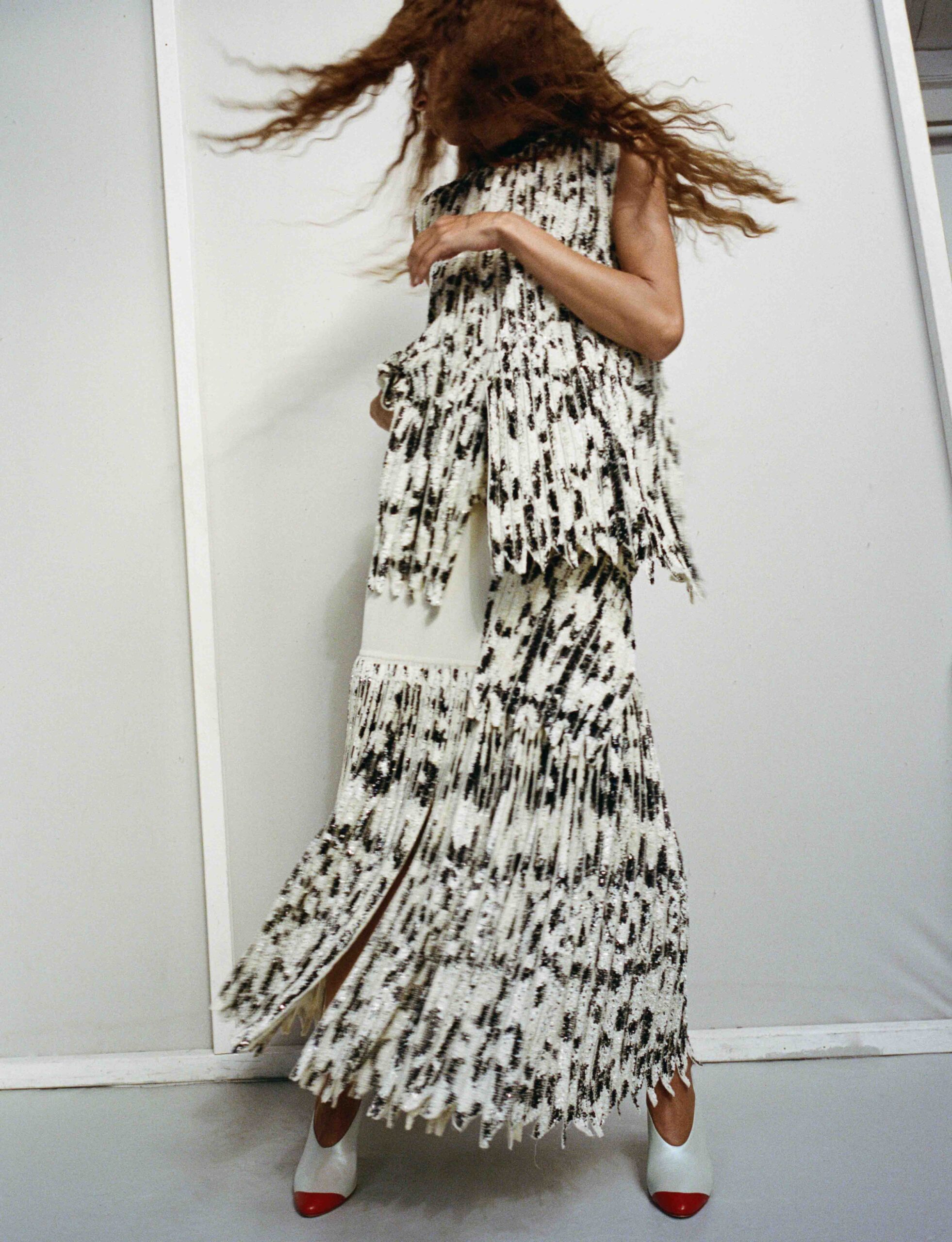
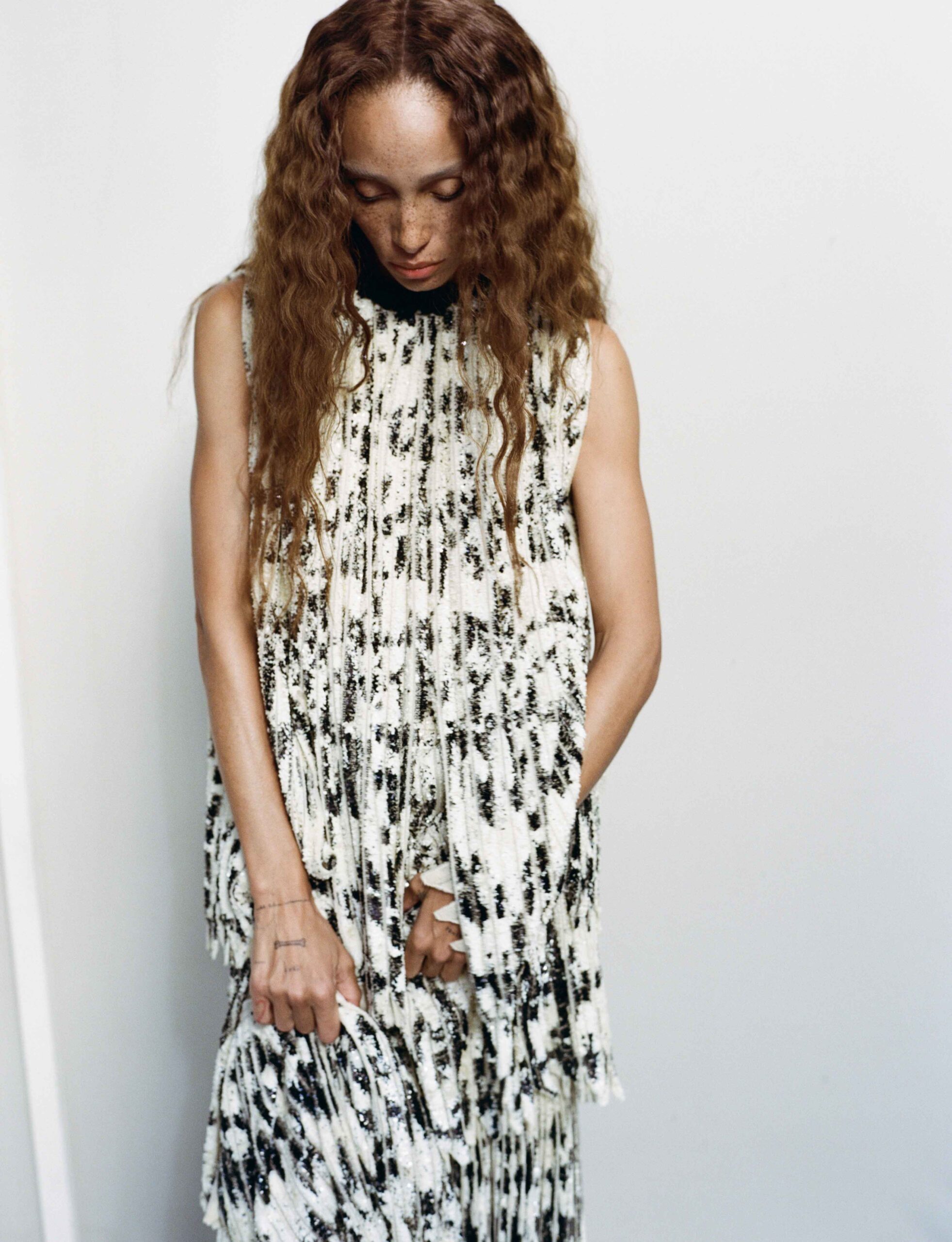
I think it’s almost my biggest priority. And not to just sort of say truisms and naff sentences that we’ve heard a million times over, but it is all just really fast, isn’t it? The world, different jobs, life, family. And, to be able to be creative, to be able to have conversations and talk about your interests, to even have [the] energy for your friends and your family, I think you have to take a lot of time for yourself [to] sharpen the axe. Look after yourself, read some books, take some stock, and then pop out and be a really large expression of yourself. I just think it’s really important to take time for yourself, especially off the back of a couple of different art shows. And so now I’m doing a spring cleaning and going to a couple of different art shows and doing some reading and also just taking a minute to not think so much and do a bit of the house keeping and stupid shit. That enables you, when it’s time to go, to really really go. I think taking stock and having a moment to oneself is a really important part of my life and occurs probably, really paramountly, once a year in the winter. Adwoa?
We’re quite big on pausing.
I think our jobs and our lives have natural pauses. When I say “our” I mean us, not everyone. The jobs that we do, our jobs are quite project-based. They all link up but Gurls Talk, there’ll be something they’re working on for months and then it comes to fruition and then maybe there’s a natural pause with that. Then with fashion, you have the fashion weeks but there’s moments in fashion when everyone takes a beat, like August or whatever. Actually, it’s kind of less so like that—
I was about to say, you were working all throughout August. But I think, more so than the fact we take these pauses, when there is a natural pause in mine or Adwoa’s career, if we’re just talking work-wise, or a moment when we need to just take ourselves out, we just make sure that we do that.
I also think you really learn through trial and error. When you go and do something when you’re feeling a bit angsty and weird,actually that is all reflected back on you. You really learn that it’s best, in those times in your life when you’re a bit fucking drained and don’t have much to give, to do the more nurturing stuff, so that then you can go out and be—I wouldn’t even say be your best self, I think just be yourself. When you’re really tired, overworked, oversocialised, and don’t know which way is up or down, there’s nothing worse.
When one thinks about intermission in the theatrical sense, after an intermission there is always another part of the performance. What’s on the other side for you?
I love what you’ve just said. I hadn’t even thought about it like that, but I think that’s perfect.