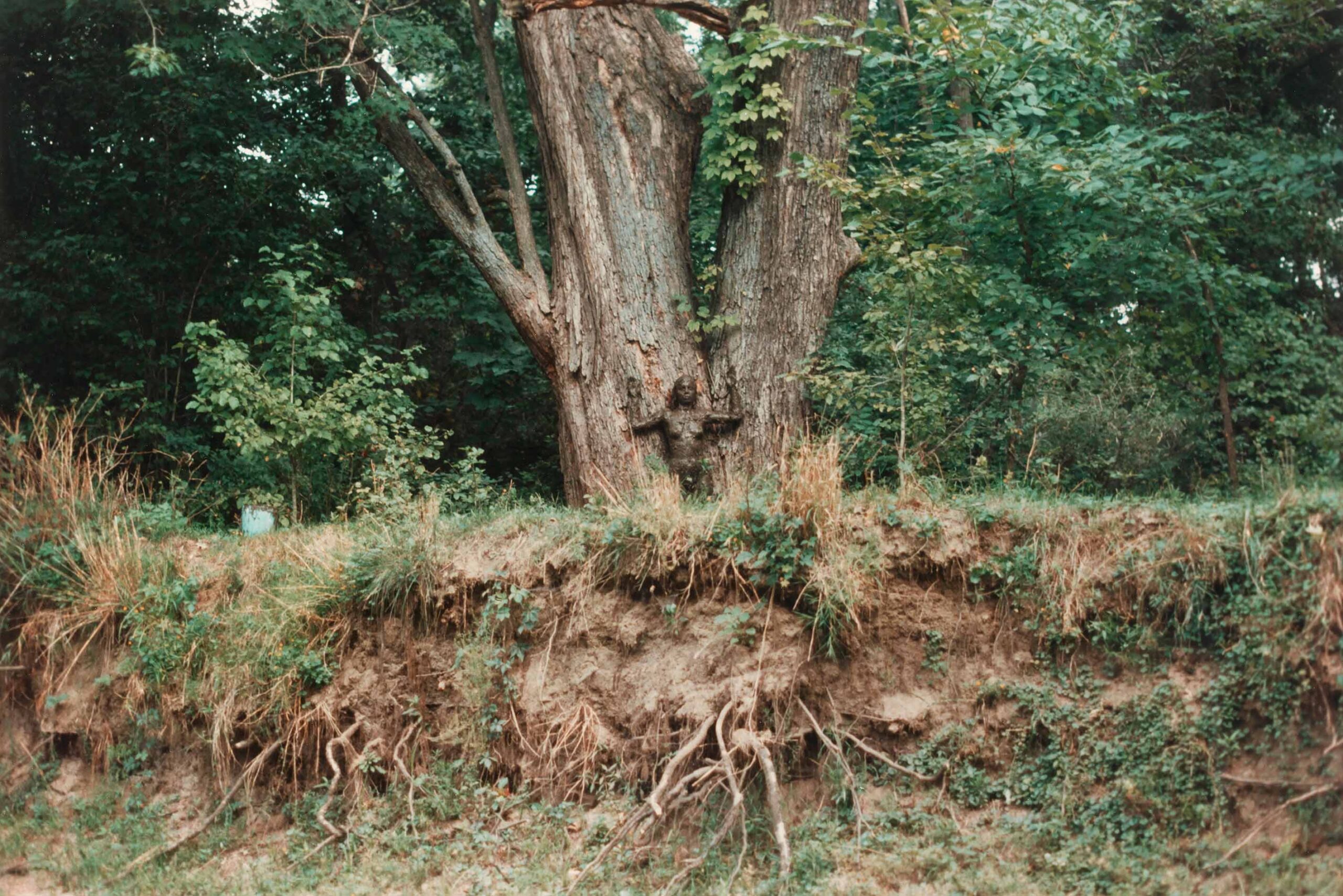
In Árbol de la Vida (1976)—–Tree of Life—the artist Ana Mendieta (1948–1985) is photographed standing against a tree and covered in mud. One of Mendieta’s most recognisable works, her naked body appears to merge with the trunk of the tree, disappearing into the natural environment.
Unlike many of her peers associated with the Land Art movement, Mendieta’s early works (1973–1975)—which she called performances and actions, or even sculptures—were confined to the size of the body; she described monumental earthworks—like those by Robert Smithson, whose legacy is also discussed in this issue of Present Space—as brutalising nature. By contrast, Mendieta’s practice explored the connection between the natural environment and the female form, often mediated through the merging and melding of her body into her surroundings, which she more often removed from the work.
Born in Cuba, Mendieta emigrated to the United States in 1961, in the aftermath of the Cuban revolution two years prior. Through the Operation Pedro Pan programme—a partnership between the United States and the Catholic Church in Miami that saw 14,000 children relocated from Cuba—Mendieta and her sister, Raquelín, arrived in Iowa. Throughout her early adolescence, Mendieta was moved between orphanages and foster homes, and was, for a while, separated from her sister. The experience of leaving behind her family and her homeland—she would not return to Cuba again until the early 1980s—would have a profound and lasting impact on Mendieta, becoming a guiding force in her work as an artist. Through this work, she explored themes of displacement, identity and belonging, articulated through the iconography of religion, ritual, nature, and the female form.
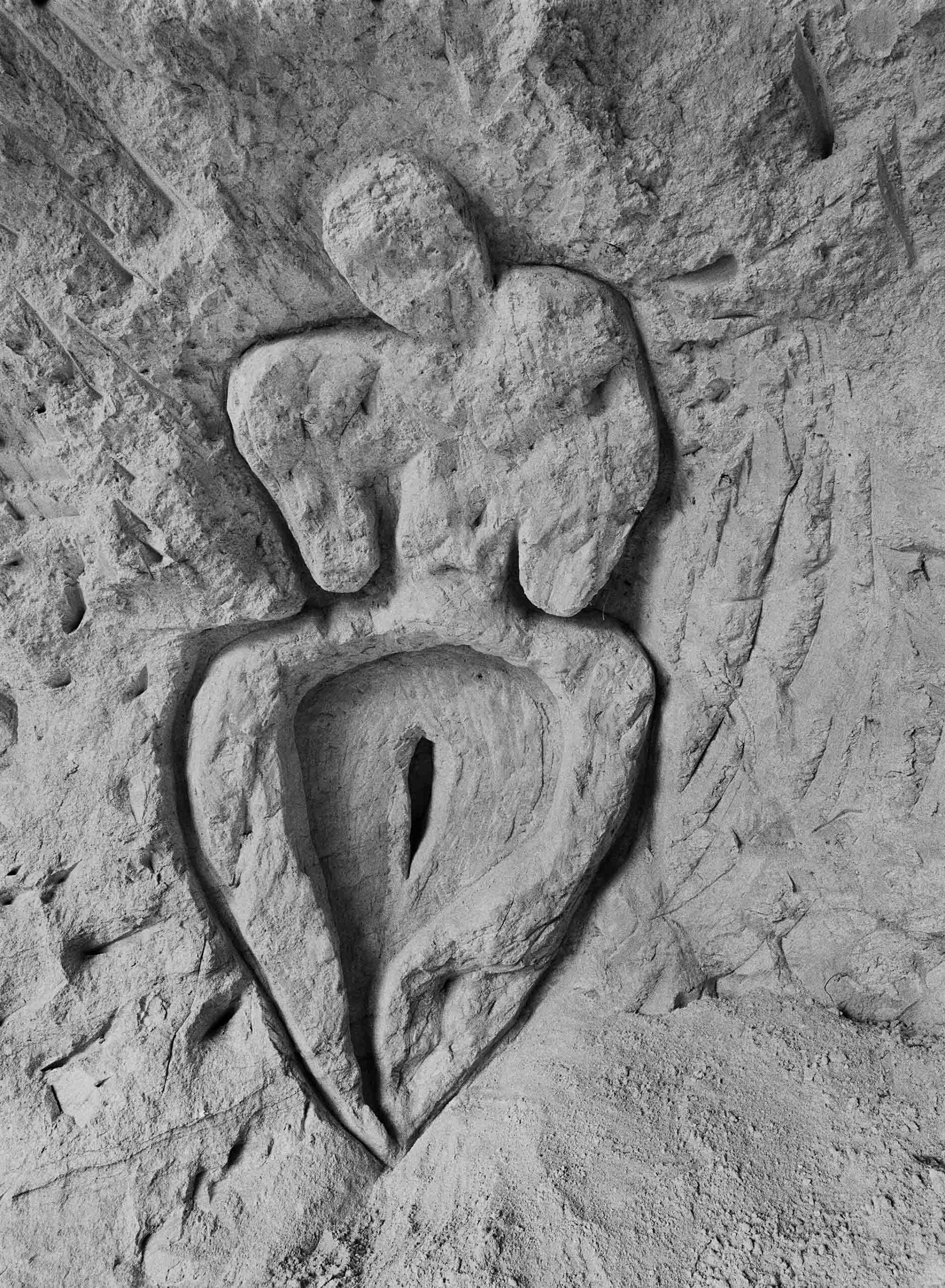
Between 1973 and 1980, Mendieta produced the Silueta Series, a body of more than 100 works made in Mexico Iowa and other locations. In these pieces, she visited secluded sites where she carved or traced her silhouette into the earth, using natural materials—including earth, leaves, flowers, stones, sand, water—to define and outline her silhouette within the landscape. She referred to these site-specific interventions as “earth-body” works, evoking the return of the female body to nature. In her own words, Mendieta described the Silueta Series as a way for her to “join with the earth, to return to her womb.”[1] In doing so, she drew upon her own experiences of displacement: the series, and the ritual processes that it involved, becoming a means of reclaiming a sense of belonging. As the artist Nancy Spero wrote of Mendieta’s work, the Silueta Series was not a way of “[rampaging] the earth to control or dominate or to create grandiose monuments of power and authority. She sought intimate, recessed spaces, protective habitats signalling a temporary respite of comfort and meditation.”[2]
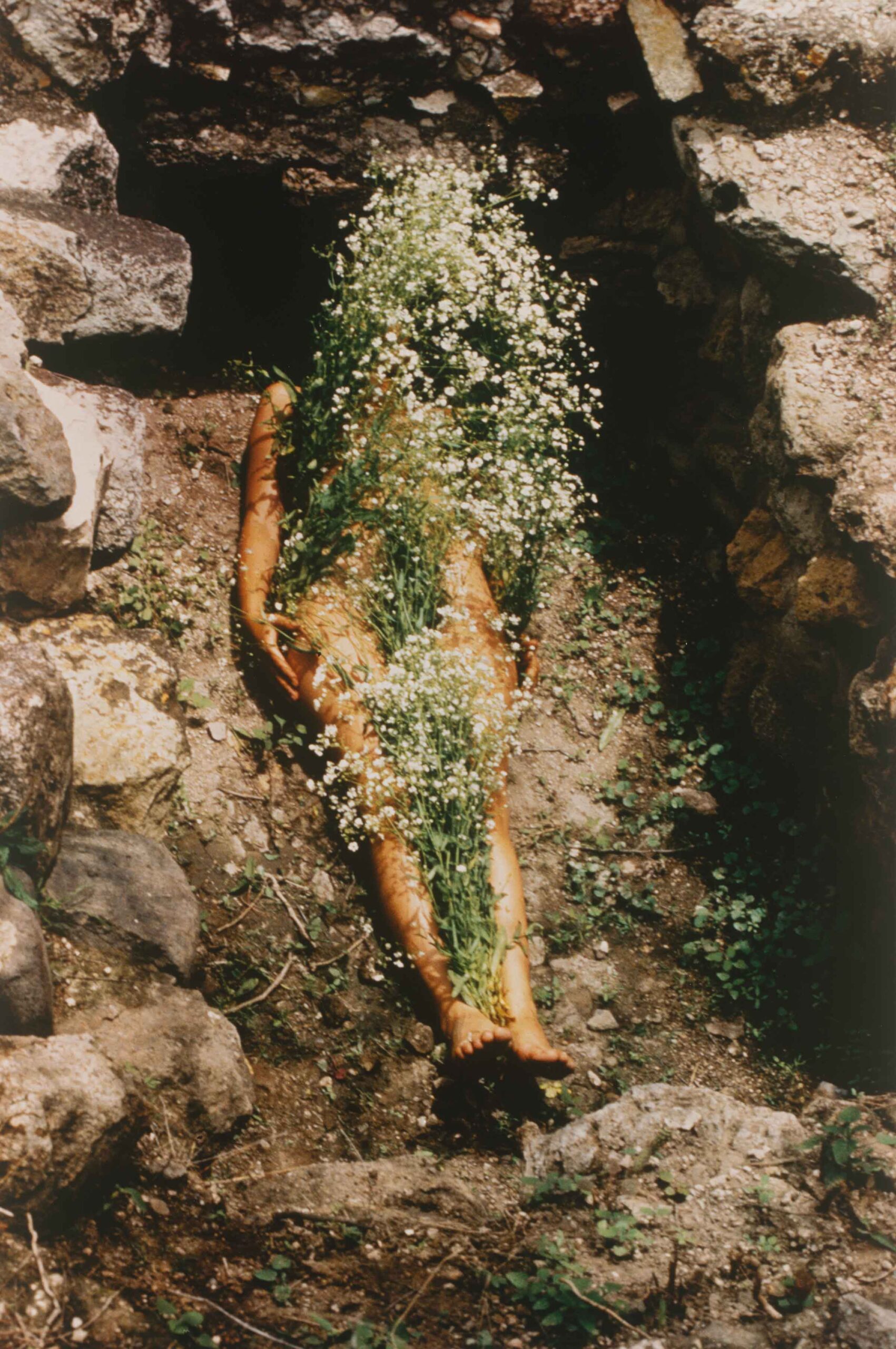
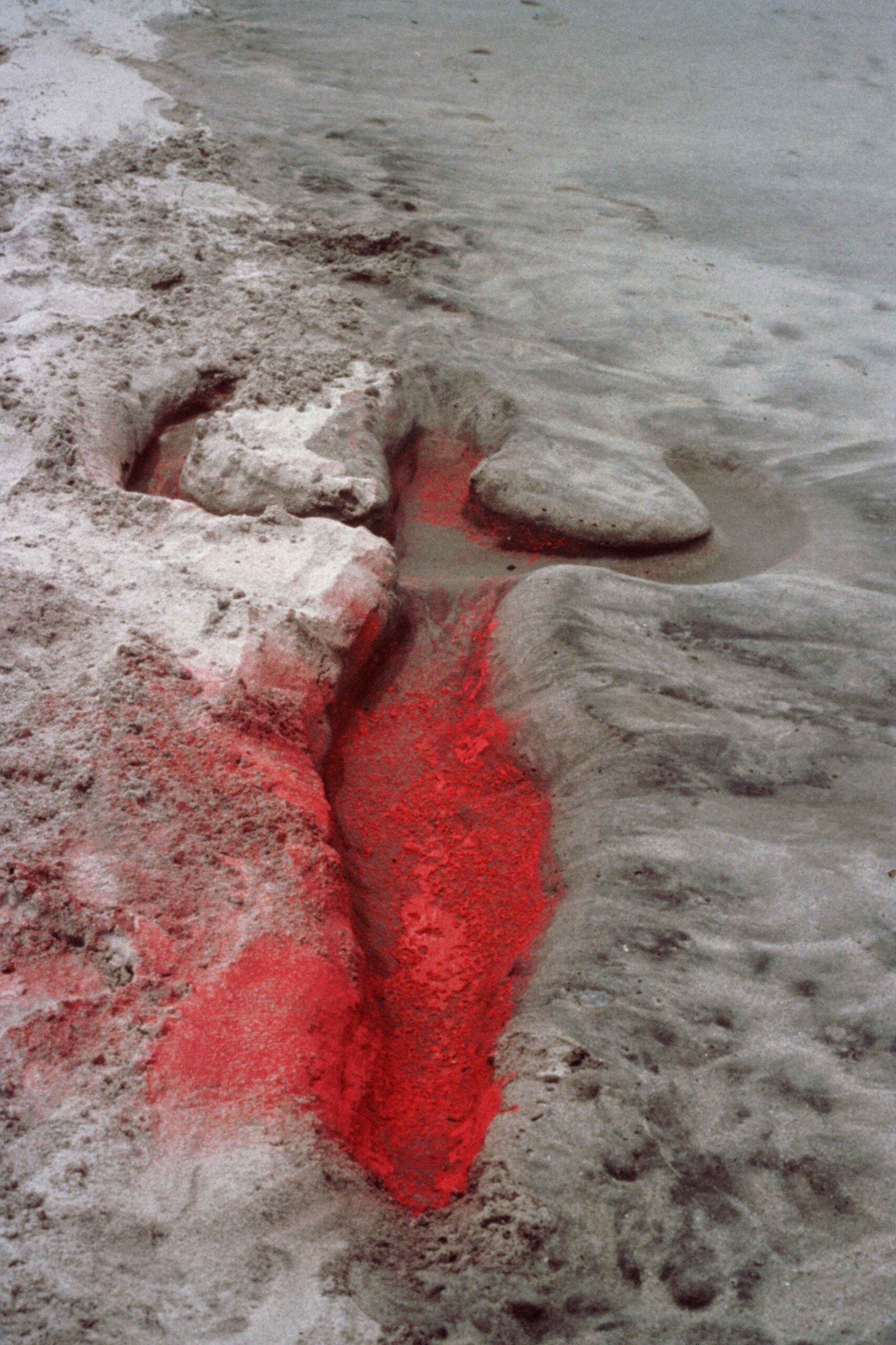
The Silueta Series—like many of Mendieta’s works—was ephemeral. As such, Mendieta used photography and film to document her interventions in nature, providing a lasting record of her site-specific “earth-body” works. In 1973, she created Imágen de Yágul—the first artwork in the Silueta Series—in Oaxaca, Mexico. In this piece, her naked body is photographed covered with white flowers, almost disappearing into the earth beneath her. In another work, created three years later in 1976, she dug the shape of a silhouette into the sand at the edge of the shore in La Ventosa, filling the hole with tempera. Photographs document the silhouette gradually washing away with the tide. In other works from the series, the process of erosion is more direct and forceful: in Anima, Silueta de Cohetes (1976), she created a monumental female effigy out of cane and fireworks; in Untitled: Silueta Series (1977) she etched a silueta into a fallen tree, its outline laced with gunpowder and set alight, leaving the charred traces of its former state; and in Untitled: Silueta Series (1978) she ignited a silueta, engulfing it in flames. In each case, she used film to capture these fleeting works before they disappeared. Returning to Nancy Spero’s writing on the Silueta Series, she described Mendieta’s practice as “an intense, unified oeuvre, encompassing the ‘violent’ [sic] fire pieces and the quietly lyrical works in which she lay on the ground covered with leaves or flowers, observing the transmutation of matter and spirit that marks the rites of nature and of nature’s reclamation.”[3]
This “intense, unified oeuvre” will be the subject of an extensive exhibition at the Tate Modern in London, opening in July 2026. Bringing together many of Mendieta’s most well-known works alongside her paintings and drawings, the exhibition will restage important sculptural pieces—some presented in the United Kingdom for the first time—and include newly remastered filmworks.
The exhibition at the Tate Modern presents the opportunity to see Mendieta’s work anew. In the works engagement with processes of erosion, it will foreground a vision of life on Earth defined by rebirth, regeneration and renewal.