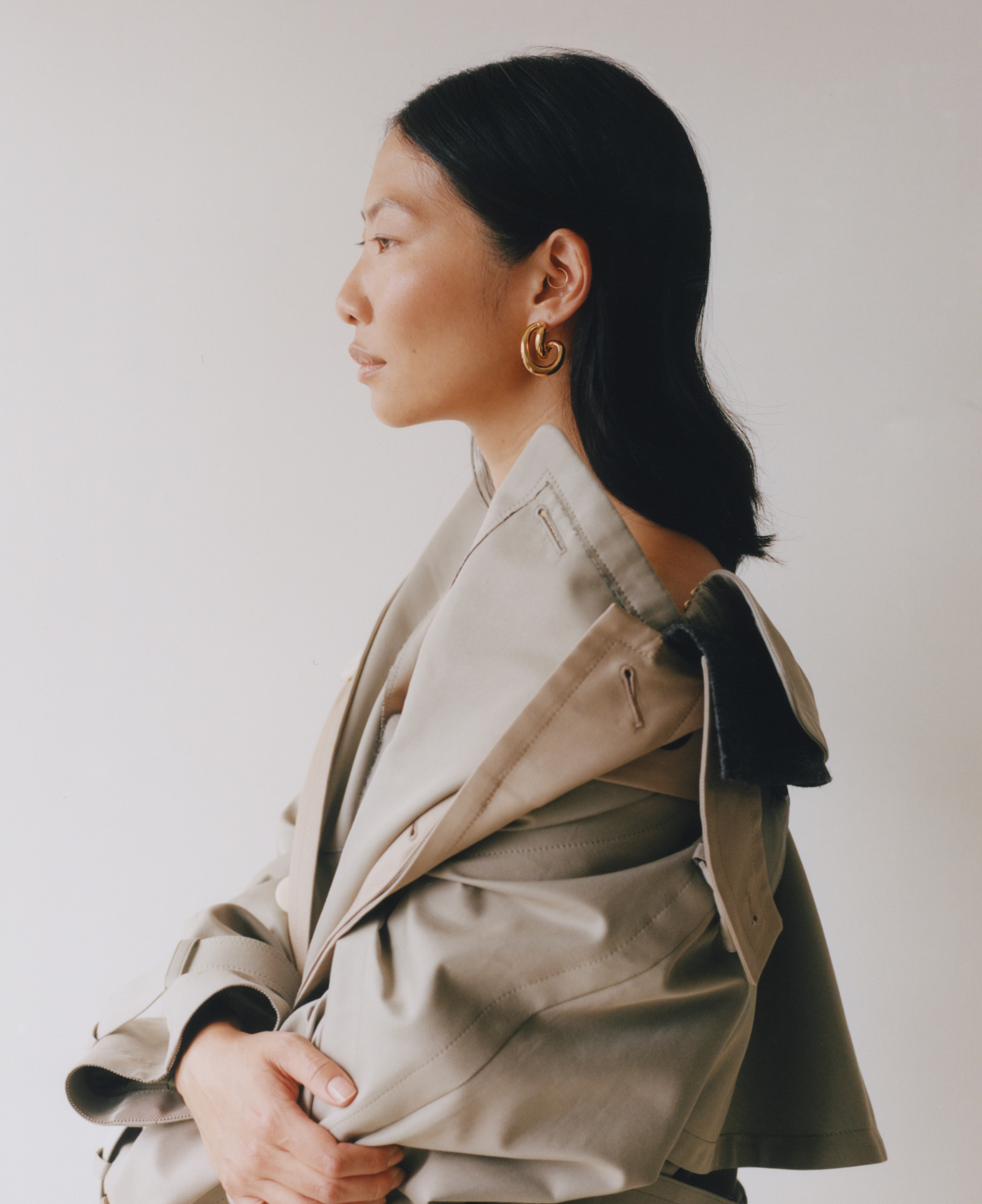
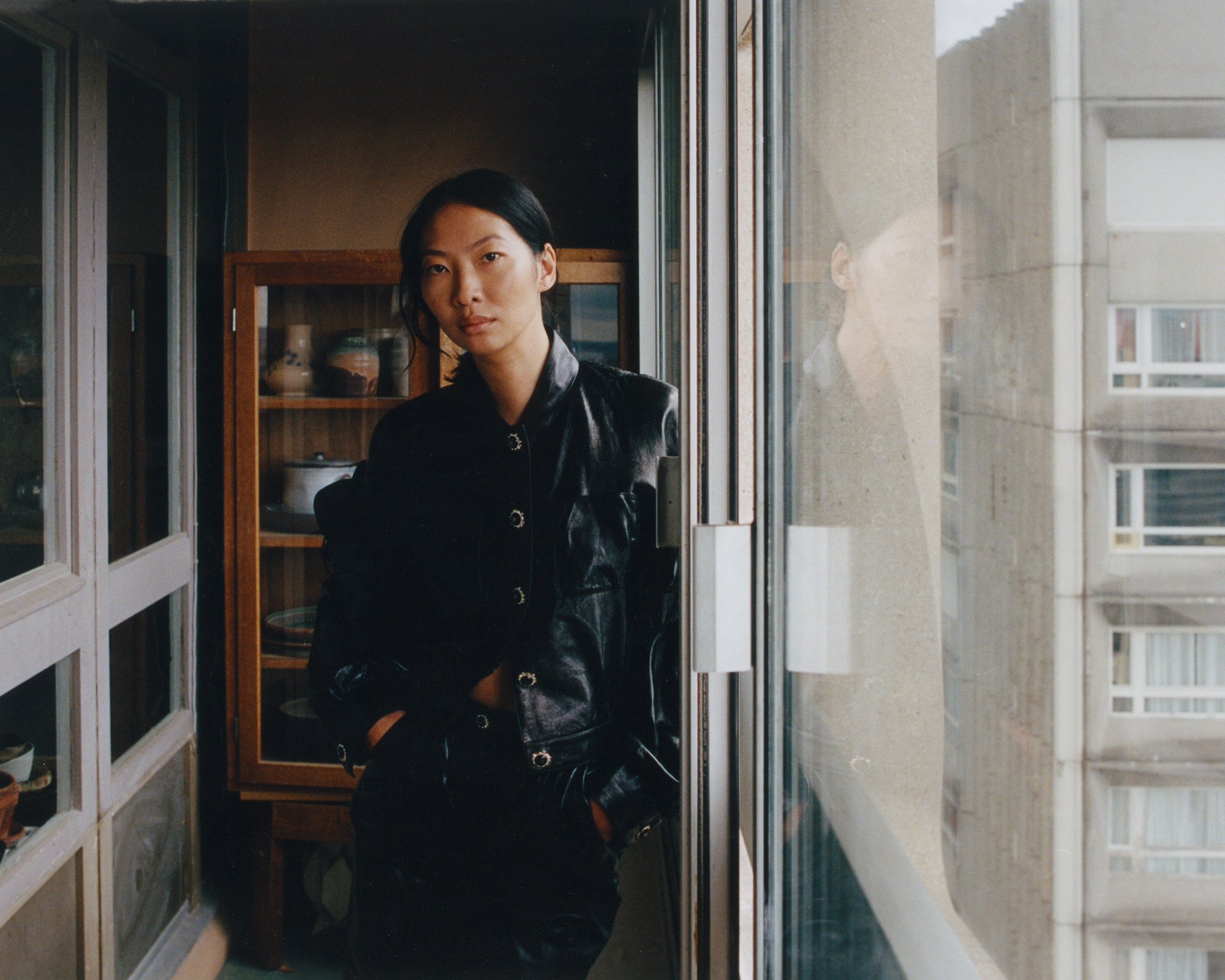
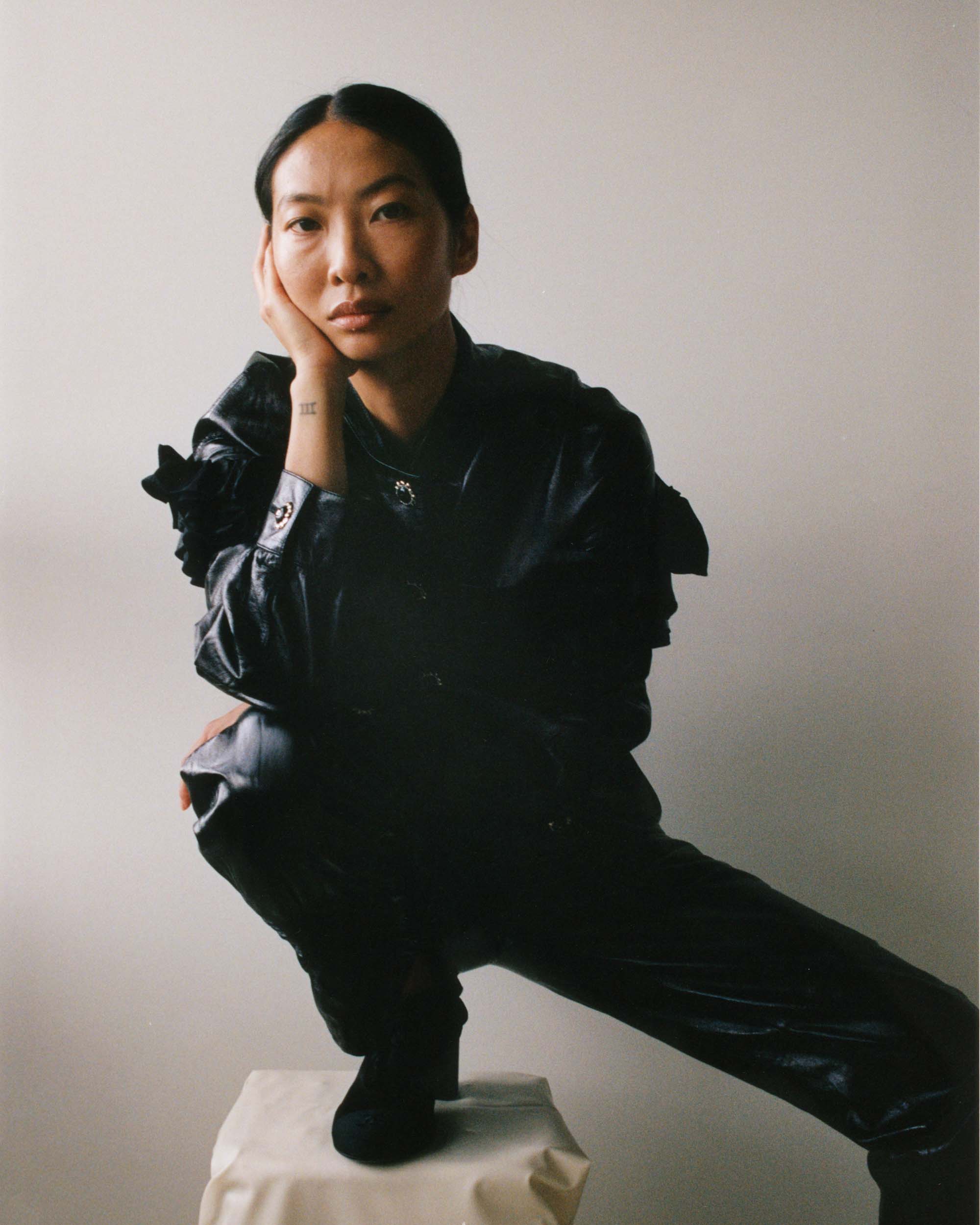
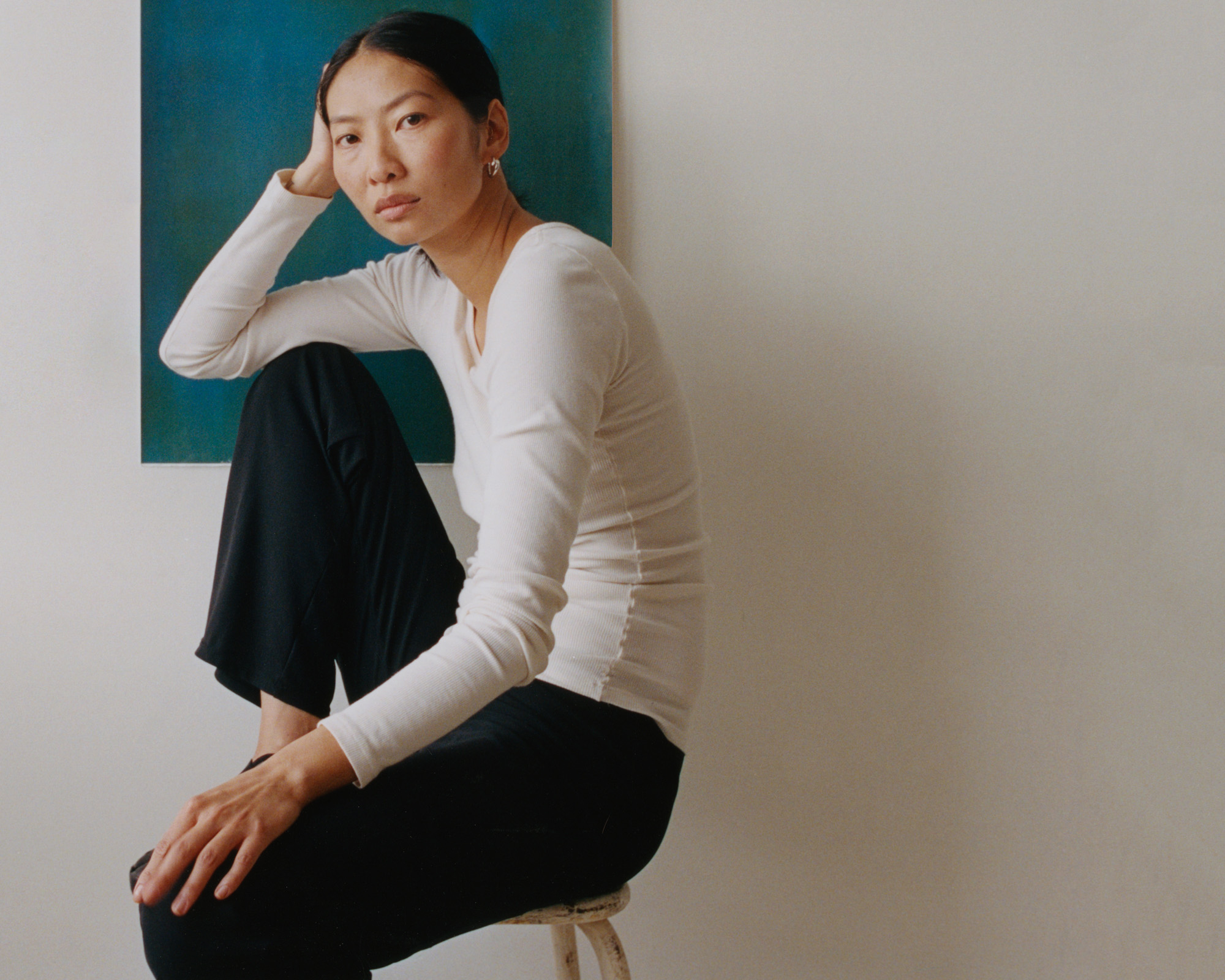
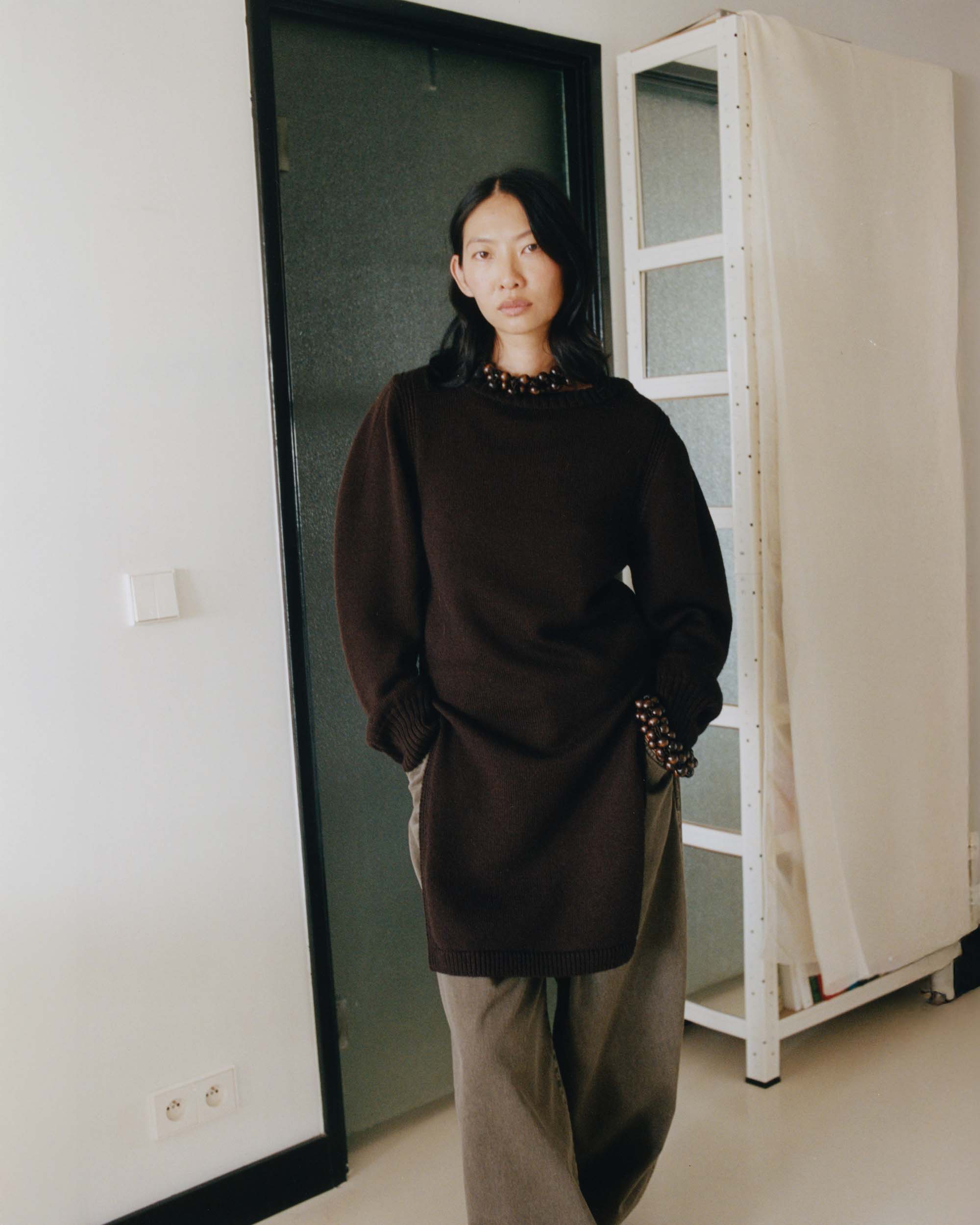
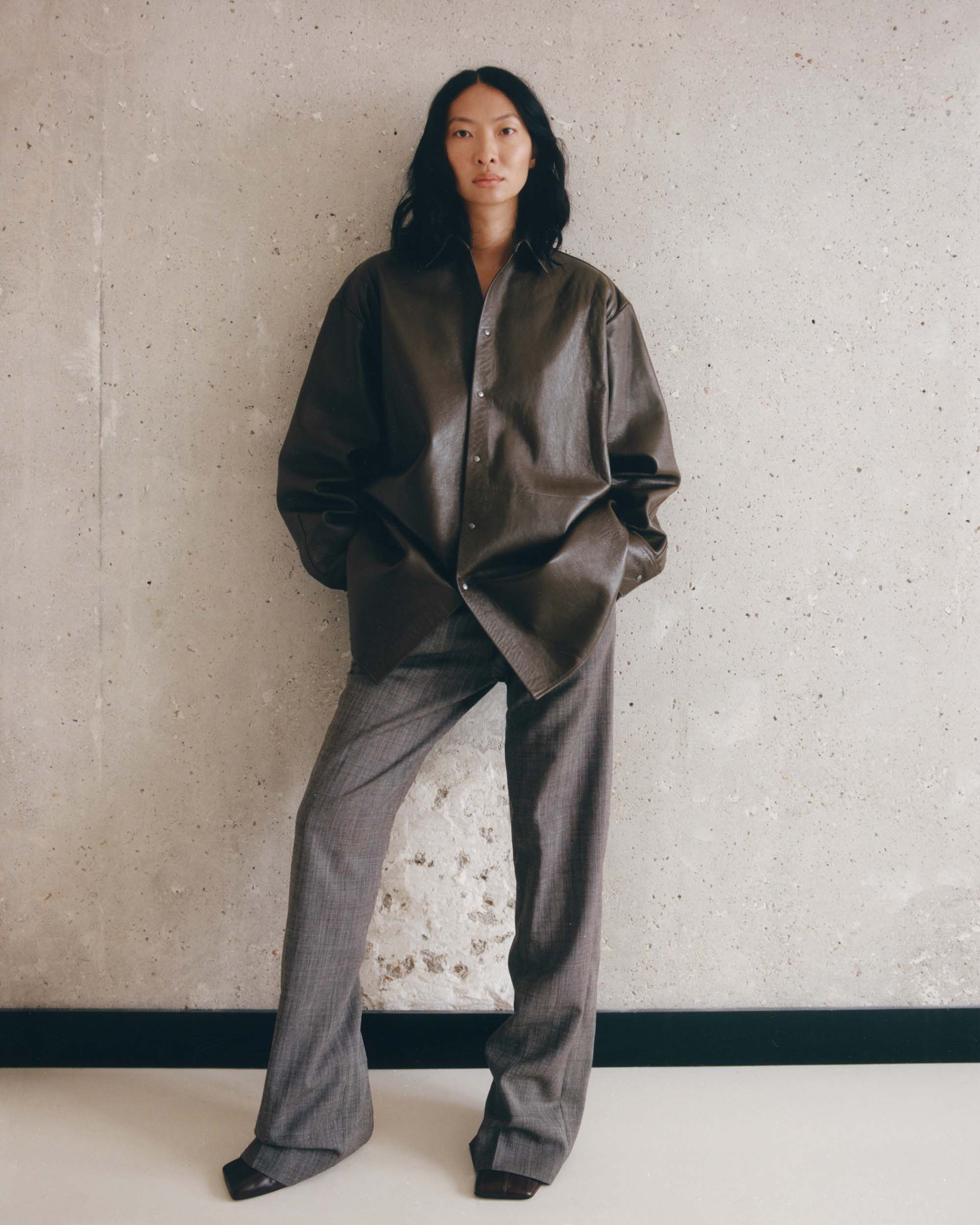
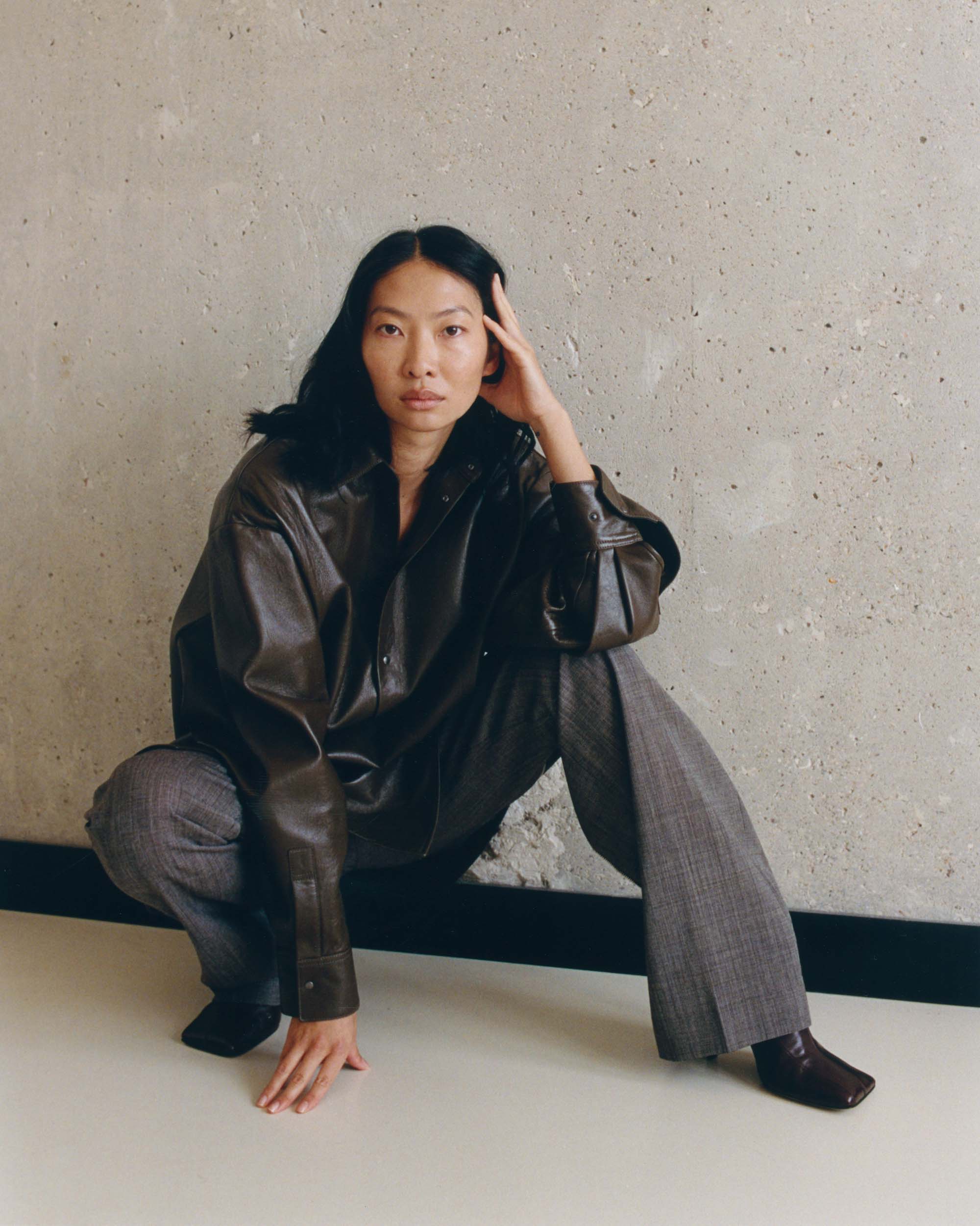
Playfully making reference to the common misconception that they are filmmakers of works “that people like to frame as movies about silence,” Belgian film director Leonardo Van Dijl interviews Chinese-American writer, director, and mentor of the 2025 Tribeca Chanel Women’s Filmmaker Programme Constance Tsang.
Asking an idiosyncratic and thoughtful line of questioning, from listening to music while writing to red flags in sound design and favourite compliments in filmmaking, Van Dijl’s dry humour is met by Tsang’s infectious laughter and expressive hand gestures, perfectly embodying her sentiment that film should be a “sensorial, full-body, experience.” The pair, each with a 2024 feature film to their name, also discuss their respective projects: Van Dijl’s Julie Keeps Quiet and Tsang’s Blue Sun Palace.
Premiered at Cannes Film Festival and winner of the Prix French Touch du Jury, Blue Sun Palace (2024) marks Tsang’s debut feature. Following a series of short films, Blue Sun Palace signals her arrival as a confident and singular filmmaker. Set within a Chinese immigrant community in Queens, New York, the story serves as an ode to Tsang’s Chinese parents, who moved to New York in the 1980s. Taking four years to write, and only 18 days to shoot on Kodak 16mm film, rather than an autobiography, the film explores Tsang’s own understanding of her parents’ experience. Recalling how her mother was “surprised” by how well she felt her daughter seemed to have understood her experience, Tsang laughs. “I think she thinks that I pay attention to her.”
Together with exquisite performances by Ke-Xi Wu, Kang-sheng Lee and Haipeng Xu, the Blue Sun Palace’s aesthetic restraint is further elevated by Tsang’s distinctly diegetic approach. “I never want to have music be the driver of emotion in a film,” explores Tsang. Far from “silent,” throughout the film there is a near constant din or hum of everyday life: the sucking of chicken from the bone, lips meeting in a kiss, mops gliding across the wet floor, the ding of a cash register, the swish of banknotes being counted, the drone of traffic, the honk of horns, the flick of a lighter, the clatter of a step ladder, the rip of heavy-duty tape, and the drip, drip, drip of a water leak… Enlisting sound designers Eric Hoffman and Geoff Strasser, through this liminal symphony the audience becomes attuned to both the reassuring and disruptive sounds that shape both the film’s world and its characters.
“For Blue Sun [Palace], I think I was worried that it wouldn’t be palatable. Maybe I won’t do this in my next film, but I felt like I needed a score to amplify it a little bit,” muses Tsang. “How, then, does the score become part of something that is real?… Whenever you have a score, you know, then, that the film has a layer of artificiality… It’s this dilemma that I have,” she adds. Composed by Sami Jano, the film’s score somehow finds the perfect threshold between presence and absence, transparency and visibility. As if translucent, it is just subtle enough that the minutiae of everyday life can still be heard, albeit softened, beneath it.
[Laughs]. I don’t play music. I work in complete silence. I’m not the kind of writer that can work well in a cafe or somewhere like that. I get distracted very easily, so I need complete silence. What about you?
Right.
I also do this thing sometimes where I play the same song over and over again, but I’m not writing. I’m kind of in that period where I don’t want to write. I’m procrastinating and so I find music related to moving image. It’s usually kind of similar to you, it’s one song played 20 times. [Laughs].
In the rhythm.
[Laughs]. You suspected?
I think it depends on a couple of different things. I think sound, for me, first and foremost, has to be related to the environment. For Blue Sun [Palace] (2024), we didn’t shoot with a lot of exteriors. What was really important was that we understood sonically where we were, because we weren’t able to do that immediately visually. So I think, yes, sound is tied to environment first. Sometimes, when I get deeper into the whole sound mixing and the work related to character, it becomes a little bit more atmospheric and a little bit more psychological. I think that film, and the way that the characters move within film, has to be tied to the situations that we put them in. I think, for me, that is why I need to understand the diegetic landscape and what that means, to watch something without visuals and understand it just by hearing.
It’s my absolute favourite part. I would say that editing feels—not necessarily traumatic, but it sort of reinforces the film that you have made, and the lacks and of course the successes of where you are in life. The editing is a mirror of that, but I think when you get to the sound editing part you are kind of done with the hard work and you just get to play, you get to build. It’s like the texture, the embellishment. It’s equally important but it’s fun, it’s really fun.
I think, [with] both our films, we don’t really use score that much, so the music—whether or not we choose to use music—and what that means also becomes a whole other discussion, and I think that’s where it gets really interesting.
Exactly.
I mean, absolutely! Amy, in the film, experiences insomnia so what I chose to do, and what made sense with where we were shooting, was a water leak. We worked it into the plotline and it works on multiple levels. The water leaking is something that, yes, kept her up, but it’s also something that could be imaginary, it’s also something that could be related to her guilt. So that, for me, is something that on a story level made sense, but also on a character level made sense. I like when sounds are able to do that, when they are able to amplify the story and amplify the character. It was fun to shoot a water leak.
[The water leak] I had already heard, because we needed to shoot scenes. I think water, for me, was tied to Amy as a being. There were these water themes that I saw as related to her character, so I needed something that would be a visual example of her.
I never want to have music be the driver of emotion in a film, and that is very important to me. As a filmmaker, and [with] how I see music, I always want to be as minimal as possible… At times, even for Blue Sun [Palace], I think I was worried that it wouldn’t be palatable. Maybe I won’t do this in my next film, but I felt like I needed a score to amplify it a little bit, to make the film a little bit louder because it was so quiet. I don’t know if that will be how I process other films, but I used [sound] as a sort of motif that combined all three character arcs. The score was a sort of unifying ribbon, and I imagined it to be that. Something that was transparent, but also visible at the same time. I mean, we have talked about this before, the use of a motif, a thematic motif, and how that can, again, contribute to the story but also push the character into a different space as a marker. I feel like that’s really interesting, when the score and the sound are used as something that is more liminal.
It does make sense. I guess, my hesitation with using music sometimes is that I want to, and I like to, work in naturalism, in realism. How, then, does the score become part of something that is real? Whenever you have a score, you know then that the film has a layer of artificiality—which isn’t necessarily a bad thing, but [it] just kind of takes away from the universe that we are creating. So it’s this dilemma that I have, whether or not to root something in the reality that we have created or whether it is something that is more expressionistic.
Yes, sort of like a contrast. Everytime I think about an excellent use of “score,” I always think about Michael Haneke’s Funny Games (1997). How that opening scene has this kind of roar that is so shocking to me. I like the idea of disruption and contrast, which is something that I didn’t use in this film. [Laughs]. But I would also say that, for how I approach film, and maybe similar to how you approached it in Julie [Keeps Quiet], I thought about Millenium Mambo (2001) and the score that [Lim] Giong did. I thought about how there’s this overall sheen, this overall touch that goes throughout the movie. I wanted something like that. Again, we talk about [sound] being visible. There’s almost a layer of a haunting. The music feels like an extension of this haunting, and I like that. I think that’s very interesting.
Great sound design in a movie, oo oo oo that’s a good one. I mean, are we talking about music or diegetic sounds?
I feel like it’s so cliche, but whenever I think about sound design in film, I think of Tchaikovsky’s film, because it uses natural sounds so well. Again, I think you can sort of see what I like, but I like when the sounds are rooted in space. I really, really like that. But of course it goes without saying, the movies that I grew up watching—I grew up watching horror films, all the [Stanley] Kubrick films are so spectacular to me and they’re always so bold. With any David Lynch film, the distortion of sound and the score. All of that is always so resonant in how you take a film that is as written, and then move it into space that is completely full bodied. You experience it through your body. I think a lot about those kinds of films.
Yes. Something I’m looking for in the edit now, and I don’t know how you feel, when you know a film is done you just feel it. I think that has to do with the experience of how sound can carry emotions. The internal body sounds that we are able to experience, that ebb and flow of how we attach ourselves to the film. When I know a film is done, I feel a sort of relief almost. I think that is all through sound, and how you are saying we cut to that sound.
I mean, this is answering an earlier question that you had, but I really don’t like when the sound or the score is telling me what the scene is about. I really, really don’t like that, because then it’s basically telling me it assumes an unintelligent audience and I think we need to give more credit to the people watching our movies. What about you?
What is that?
[Laughs] I think a red flag in sound design, for me, is the whole car accident. But I also don’t like in movies when a character is listening to other people in conversations and they sort of go into their own world. Like there is this sort of sound bubble around them. I really, really hate that. I think it’s a little lazy. That’s honestly how I feel, it’s a little bit lazy.
We rushed, but because the film doesn’t have too many shots we were able to create the edit quite quickly and then, with some of the rough cuts, I handed it over to my sound designer, Geoff [Strasser], and we basically started working on and planning what the sound design sonic structure would be like. And I think, I mean, I can’t not think about that last question about the sound design red flags, but I’m curious to know, when you are working with sound, what is your goal?
[Laughs].
Yes, it is the last rescue. That’s a really great way of putting it.
I think any time I approach sound in a film, I always have this goal of “the sound will save us.” I think that is something to live and die by. But I think I always also want to not do the conventional thing with sound. How can we push the film forward and put it into a space that is more about invention, rather than relying on convention? And I constantly think about that. Not just with sound, but overall how we try to make movies.
Yes.
Yes, exactly. And I feel like, I mean, I would like to think that we are making films that can end up in a theatre because then people get to have an experience that is tied to the theatre-going experience. That sort of sensorial, full body experience. I think that’s one of the markers for me, when you and I are approaching these editing choices, right, how do you create the sensorial aspect of it that you don’t get in the living room? Not to say that we’re making Transformers or something like that, but it’s another element, another sort of layer.
Exactly, exactly!
Who did I make the movie for? So, I have a friend visiting right now and she always reminds me to make a movie with one person in mind, because that sort of targets specifically, and I think I had always made this movie for my parents, always. And I think that’s okay. I don’t think we should make movies for everyone, but I think knowing exactly who that movie can be viewed by and understood by, that’s kind of enough for me.
[Laughs]. So she came with a few of her friends, who are all sort of… first generation immigrants in New York, and she was just so surprised by how well she felt I understood her and the community. I think she thinks that I pay attention to her. I think she thinks that I don’t pay attention to the world that she lives in. I think she was more surprised than anything.
I think the sort of transition to making this film, and in comparison to all the sort of shitty short films I had made before, I had this period in my life where I had separated from my ex-husband. It was sort of like my identity had changed, and what I was afraid of saying in the past I felt free. Of course I think therapy helps, when we’re talking about being free to communicate how we are feeling. That was a really big change for me, being able to externalise the internal. I don’t know, you kind of go through so much when you make a first feature that I think whatever you go through or experiencing before will sort of indicate the path and the road that your film takes.
Always.
Oh wow, that’s a very good one Leo. [Laughs]. I mean, I guess I can start off by saying, the question that I had going into Blue Sun, [was] what happens when we reach a sort of horizon? And it is a question that I don’t think I can ever answer, because it seems like any time you reach a sort of horizon, there is a sort of new horizon that is in front of you, and I think that is okay. What I have learnt to come to terms with, is that it is okay when we get to that new point. The thing that I always struggle with and is a part of the films that I am interested in making is this question of how are we able to really become present in the space that we are in, how are we able to become present with the people that are around or that have really left a mark on us? You know, I’m trying. I feel like everyday I’m trying to be in that space, but I don’t think there are ever really answers to that. It’s more this kind of a flux in how we are being, which is a horrifying aspect of how we live life, I guess, Leo.
[Laughs]. It would be a cheaper exercise.
What is my favourite scene? I think my favourite scene is when Amy returns back to the massage parlour, it’s like an entire sequence, and she’s at the door and through the glass we see her enter and it’s the sound of the buzzing from the surveillance cameras. Then, when we enter, the score becomes really present and I think for that moment I really enjoyed, again, her returning to this place that she had no interest in coming back to but the sort of emotions that take over for her and the way that Ke-Xi [Wu] was acting in it. It became this sort of perfect combination of the thing that we do not know how to say, but that is present in front of us. That was a really special moment for me, because I understood finally what that felt like–verbalising the invisible. So, I love that entire sequence.
What is the most beautiful compliment I have received about the movie?
I love when people understand it as a ghost story. I think that’s something that is really fundamental to the film, for it to be understood in this way, because it is–it is a ghost story. I think it was [producer] Christian Petzel that said this, but every love story is a ghost story and I think that’s very true, so that is my favourite compliment.