For more than four decades, Spanish artist Cristina Iglesias has used sculptural forms to expand our conception of the natural world. Using an array of materials—bronze, steel, glass and water—the artist creates site-specific and temporary installations that explore the natural realm, and its geological forms and processes over time. Primarily based in Madrid, the artist speaks to Present Space from her studio in Mallorca, Spain. “It’s a smaller studio than my main studio,” she says. “It’s where I draw, study and read at certain times of the year—it’s very quiet.” By contrast, a recurring aspect of Iglesias’ work is sound, which the artist uses to explore the ability of our senses to conjure up memories of the past, whether lived or understood through our exposure to natural forces.
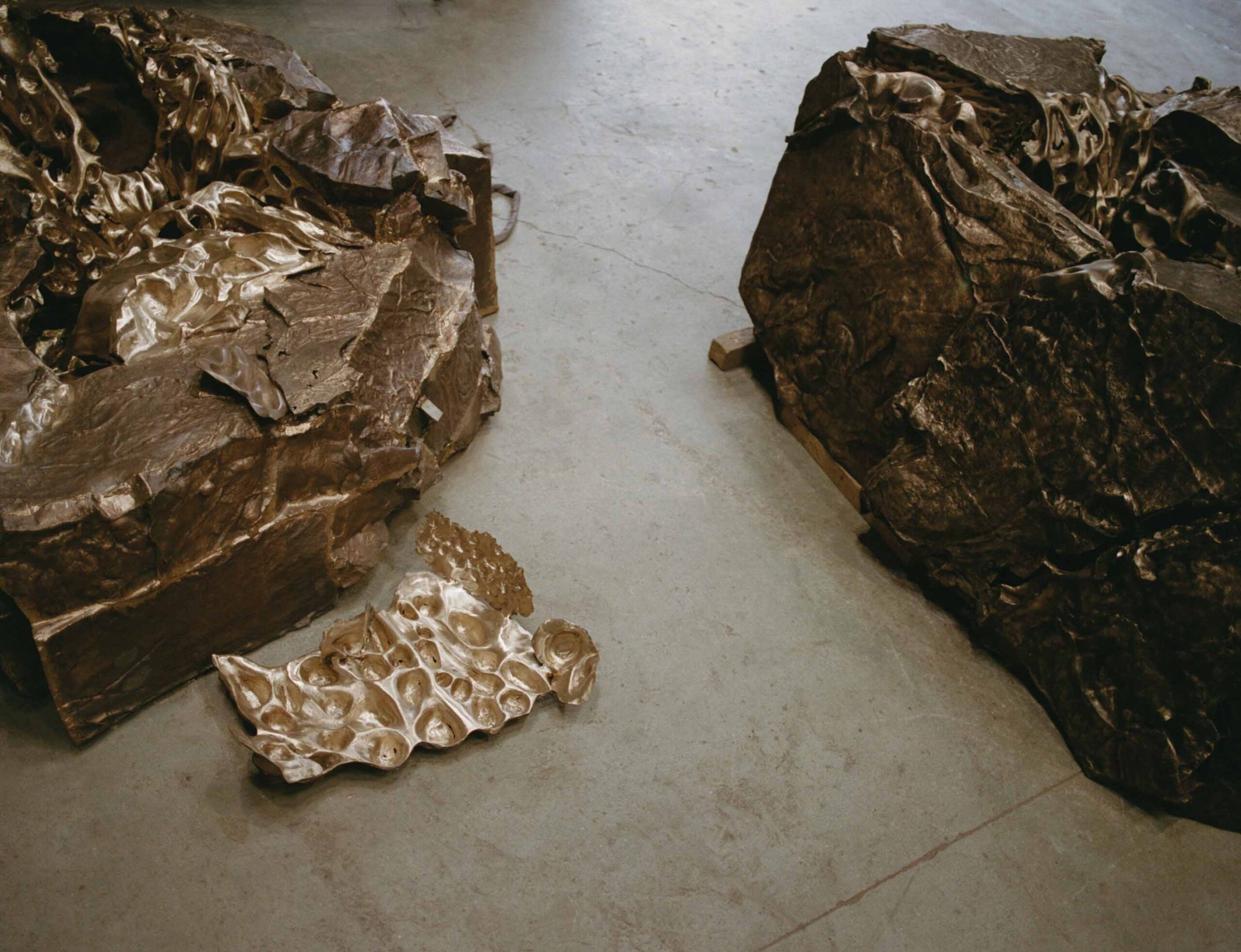
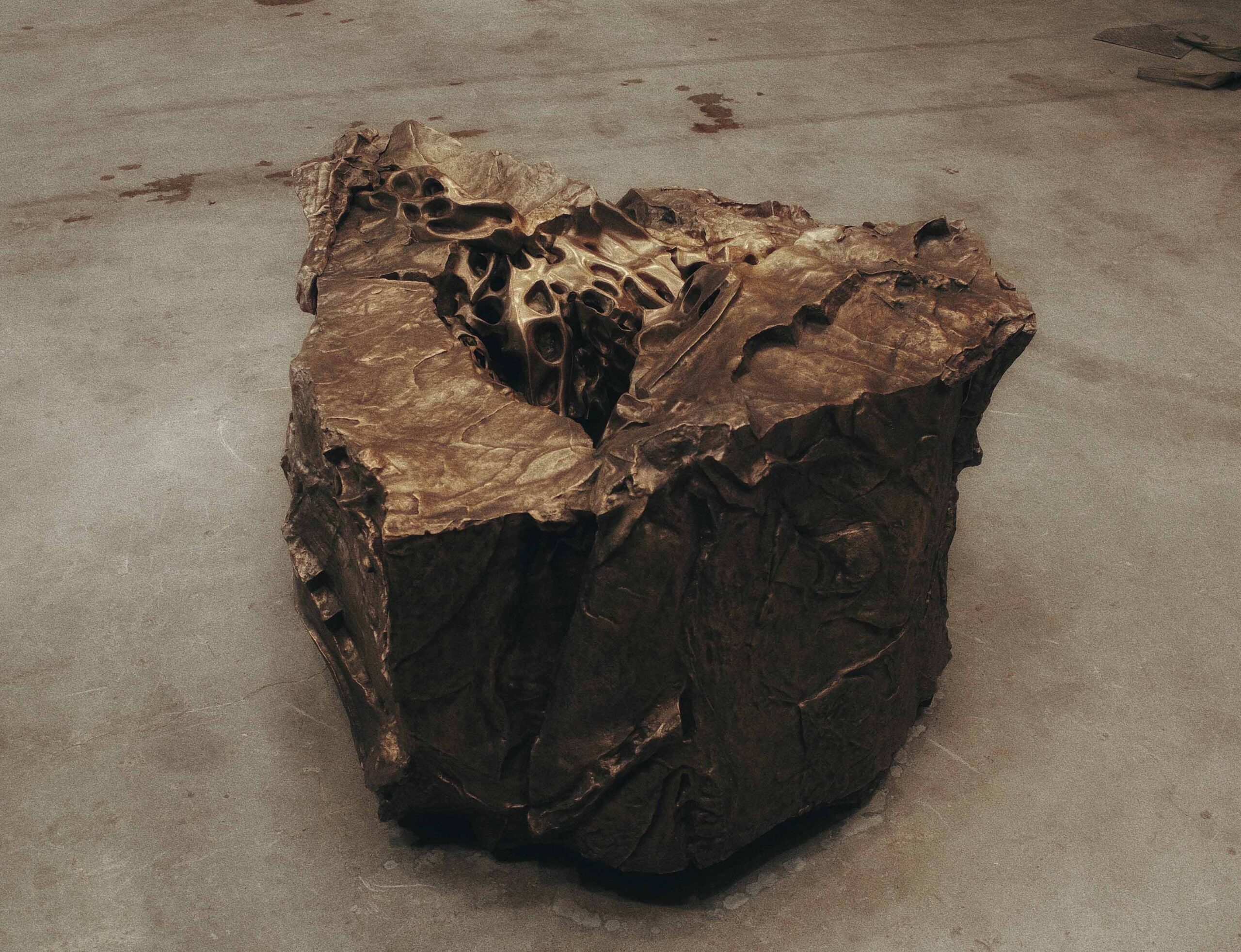
This autumn marks Iglesias’ first exhibition with Hauser & Wirth in London, England, following an announcement earlier this year that the artist had joined the gallery’s roster. Titled The Shore (2025), the exhibition features three new works from the ongoing Lunar Meteorite (Littoral) series. Iglesias explains that a littoral zone is where “land and water interact… a tidal zone that plays a crucial role in coastal and aquatic ecosystems.” Cast in bronze, with hidden hydraulic mechanisms, water ebbs and flows through the sculptural forms of the works—a clear reference to how the coastline has been shaped and carved over millennia. As the title of the ongoing series suggests, there is also something less earthbound at play, with Iglesias exploring the idea that the rock-like forms of her work “could also come from another planet, from outer space, metaphorically speaking.”
The Shore’s melding of the natural world and the otherworldly reflects Iglesias’ longstanding approach, bringing together a range of materials to explore concepts such as the layering of time. The intention, Iglesias explains, is to encourage the viewer to “look closer and slower.” The artist often uses water to convey these ideas through the visual effects that stem from its contact with the sculptural material of her work: “The patina that changes with time is a sign of life that is provoked by the water.” For Iglesias, the act of watching the movement of water creates an intimacy with her work, shaping our perception of what we see. “Overall, my aim is to create a dialogue that encourages viewers to reflect on the relationship between nature and time, and our role in preserving the environment.”
Sound, such as the burbling of water, is also instrumental in achieving this aim. As the artist explains, sound can provoke memories that encourage the viewer—or listener—to engage with the passing of time. Through her work, Iglesias situates our immediate conception of time within the slow-moving time of the natural world. And it is not just the sound of water burbling and gurgling that Iglesias is drawn to; other sounds also deepen the artist’s work. For example, when a work is placed outside, whether in nature or in an urban space, water attracts birds, insects and other wildlife that reinforce the presence of the environment around us.
As well as exploring the ecology of the natural world, other concepts that underpin Iglesias’ work focus on the collective experience of the urban environment. Alongside The Shore, Iglesias has devised large-scale permanent installations for public spaces in cities around the world. In 2014, for example, the artist created three sculptural works located across Toledo, Spain, and in partnership with the London-based organisation Artangel. Titled Tres Aguas (2014), the works use water to tease out the city’s cultural and religious history—in particular, the centuries-long coexistence of Muslim, Jewish and Christian communities in the city. As the architectural historian Beatriz Colomina has written of Tres Aguas, “Water is what they shared.” [1] This notion of water as a shared resource is reinforced by the installation of a large pool in Toledo’s Town Square for Tres Aguas, which works to create a space of gathering and reflection that is layered and enriched by the city’s history.
Iglesias’ work has the effect of quietly disrupting our conception of the modern world. In 2017, the artist worked with architecture firm Foster + Partners to create Forgotten Streams (2017)—three sculptural pools located outside the London headquarters of media and financial data conglomerate Bloomberg. The installation makes reference to the “lost” rivers buried underneath the changing cityscape over the centuries. In contrast to the sheen of the City of London, with its glass and steel, Iglesias uses bronze bas reliefs taken from nature to evoke the sinewy forms of an ancient riverbed.
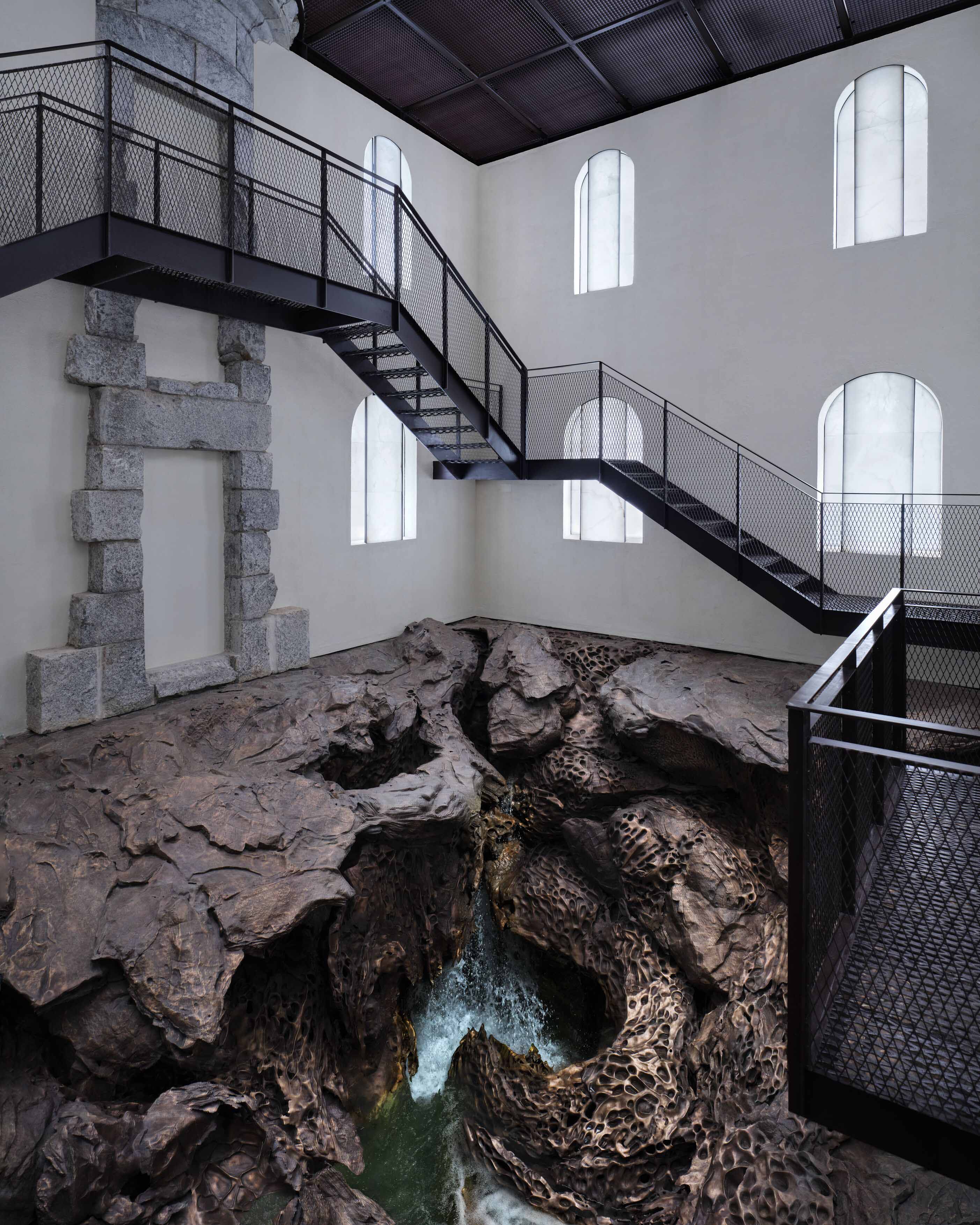
While her work is often site-specific, the themes that Iglesias explores can also be universal in nature. For Hondalea (2021), Iglesias transformed the interior of an excavated lighthouse on Santa Clara Island in San Sebastian, Spain. Inside, the artist created a large sculptural void below a viewing platform. At intervals, the cavernous bronze-cast space fills with water that recalls the crashing and surging of waves against the coastline. Ahead of the opening of The Shore in London, Iglesias discusses how the sound of the water against the bronze pool can also have the effect of triggering personal memories for the viewer of the ocean across time and space. In this way, Iglesias invites us to consider our role within an expansive ecosystem—one that extends far beyond the walls of the gallery.
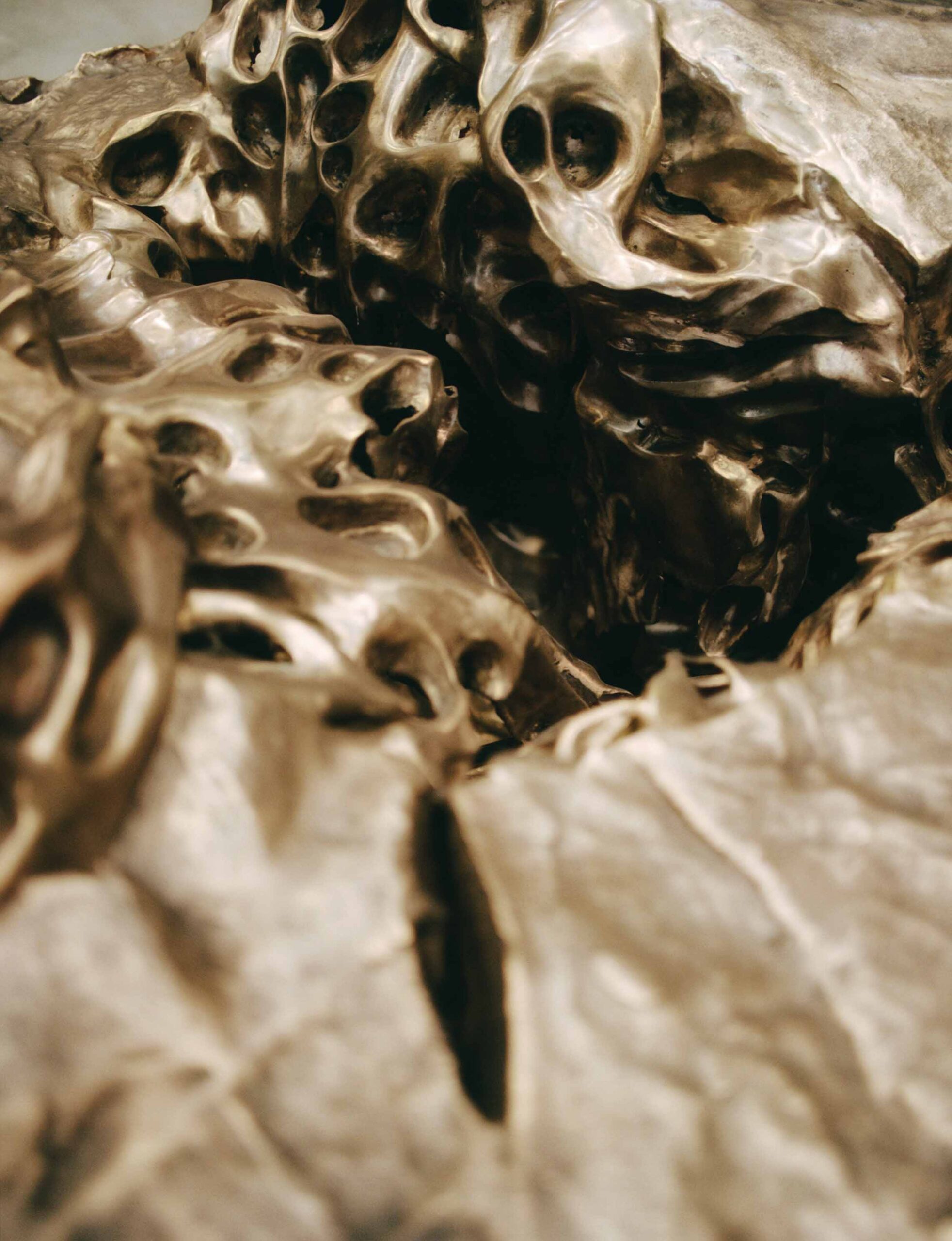
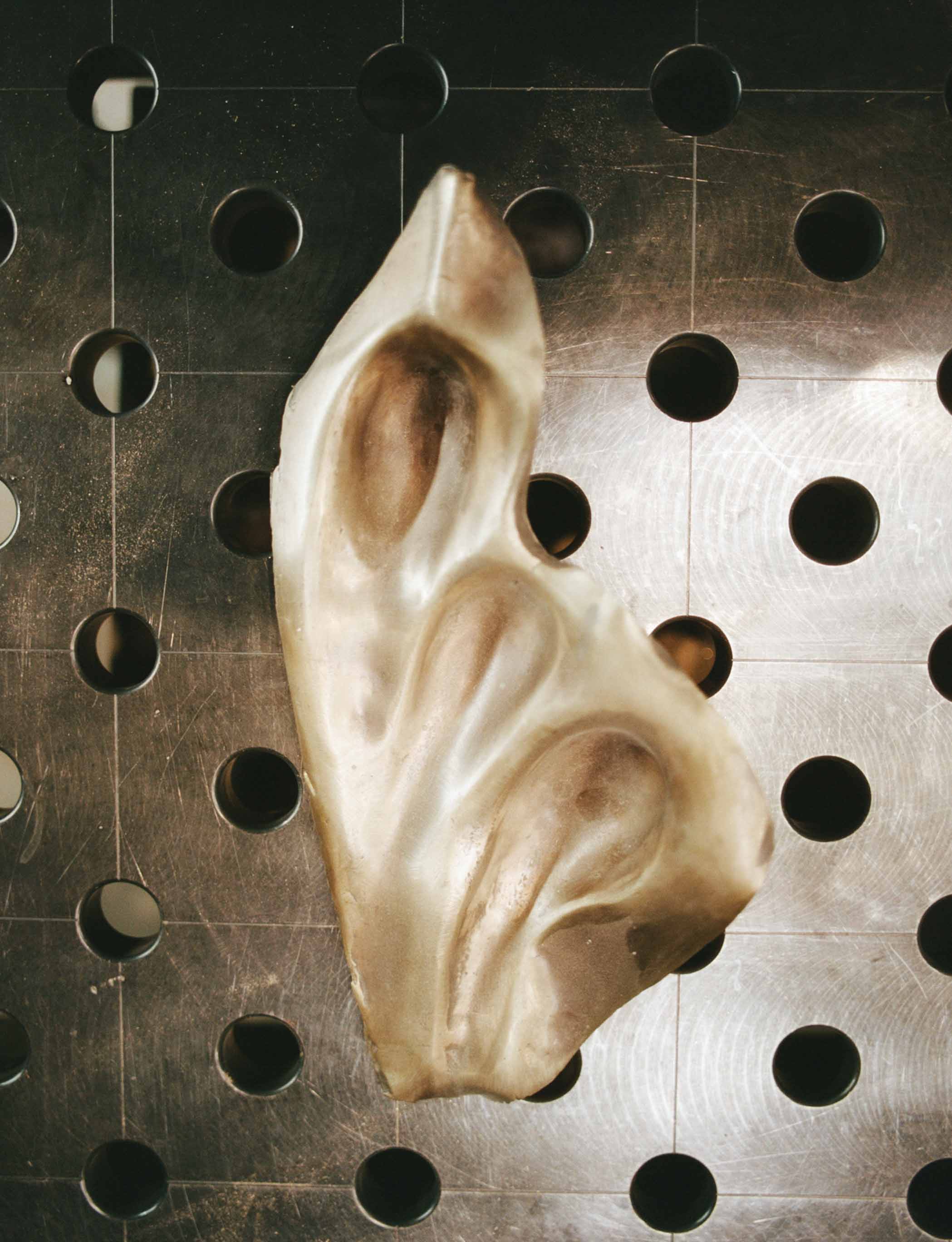
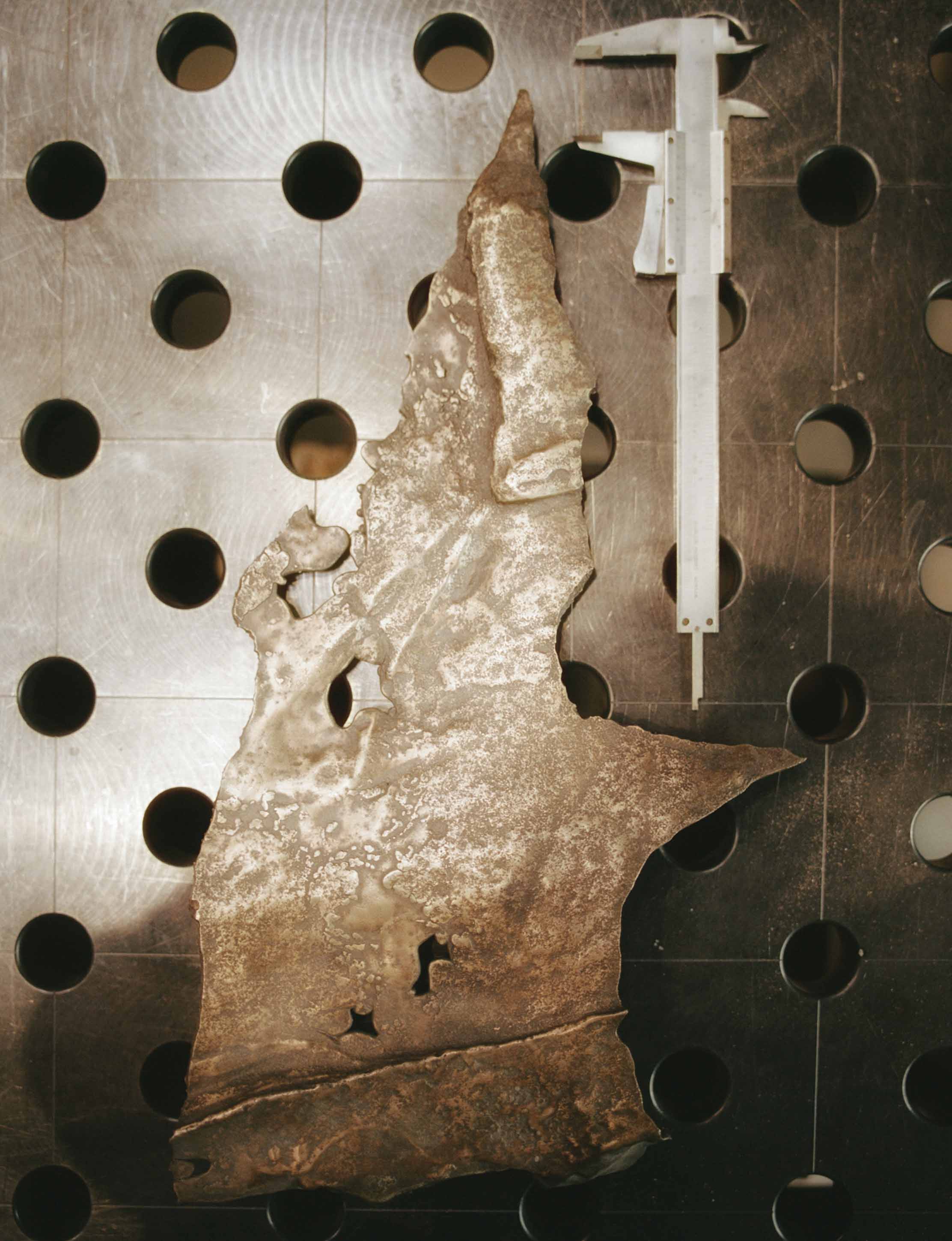
The sound of nature affects us in different ways and helps us dream of another place. I believe that sound moves you. It allows you to leave the present and [let’s] you flow with it. I believe, sometimes, sound can make us hear what we don’t see, and the other way around. There’s this capacity our memory has to interpret the visual and to connect the visual with sound. Water, because it’s a fluid, is a material that allows you to work with time, and in certain contexts, to interrupt the flow of the city—[for example], in works like Tres Aguas (2014) in Toledo or Forgotten Streams (2017) outside the Bloomberg headquarters in London. Even with the Wells, they can be in different spaces, indoors or outdoors, but the sound of water encourages you to slow down, and once it traps you, you follow the sound. You wait to see or hear if something will happen again. Even the sound of silence, when [the] water disappears, is important. You can orchestrate that, to a certain extent, to create these experiences.
My work is always about abstract and universal issues, even when the pieces are sensitive to the spaces that they occupy. When a piece is permanent, the specificity of that space plays a big role, but issues related to the consciousness or the importance of nature are universal. In a public realm, of course, sociopolitical factors create context. I’m interested in creating spaces where people can gather with others or be alone, to have an experience that affects their senses and provides space for reflection; creating the time to look and listen is instrumental to this.
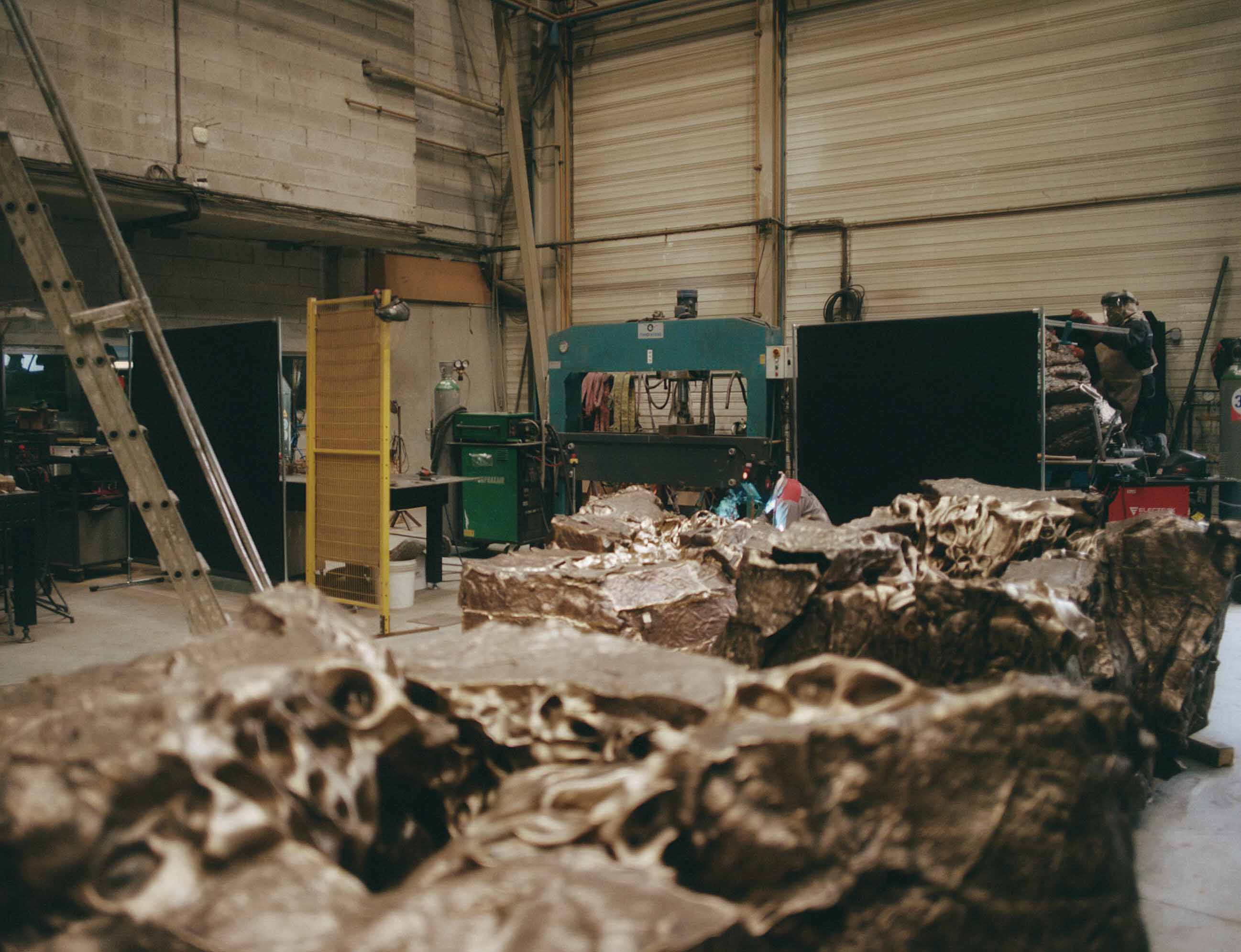
The mechanical side of it creates the illusion. The sculptural form contains a water container, pumps and a timer that controls everything, such as the sound. I create a closed circuit that repeats in different ways through a remote system. It is quite simple. Though, in bigger pieces, it is more complicated—in terms of where the water comes from and with what intensity it comes out. It is important to add that I collaborate with engineers to make this possible. How you bring that all together creates the illusion that the viewer [then] connects with real memories.
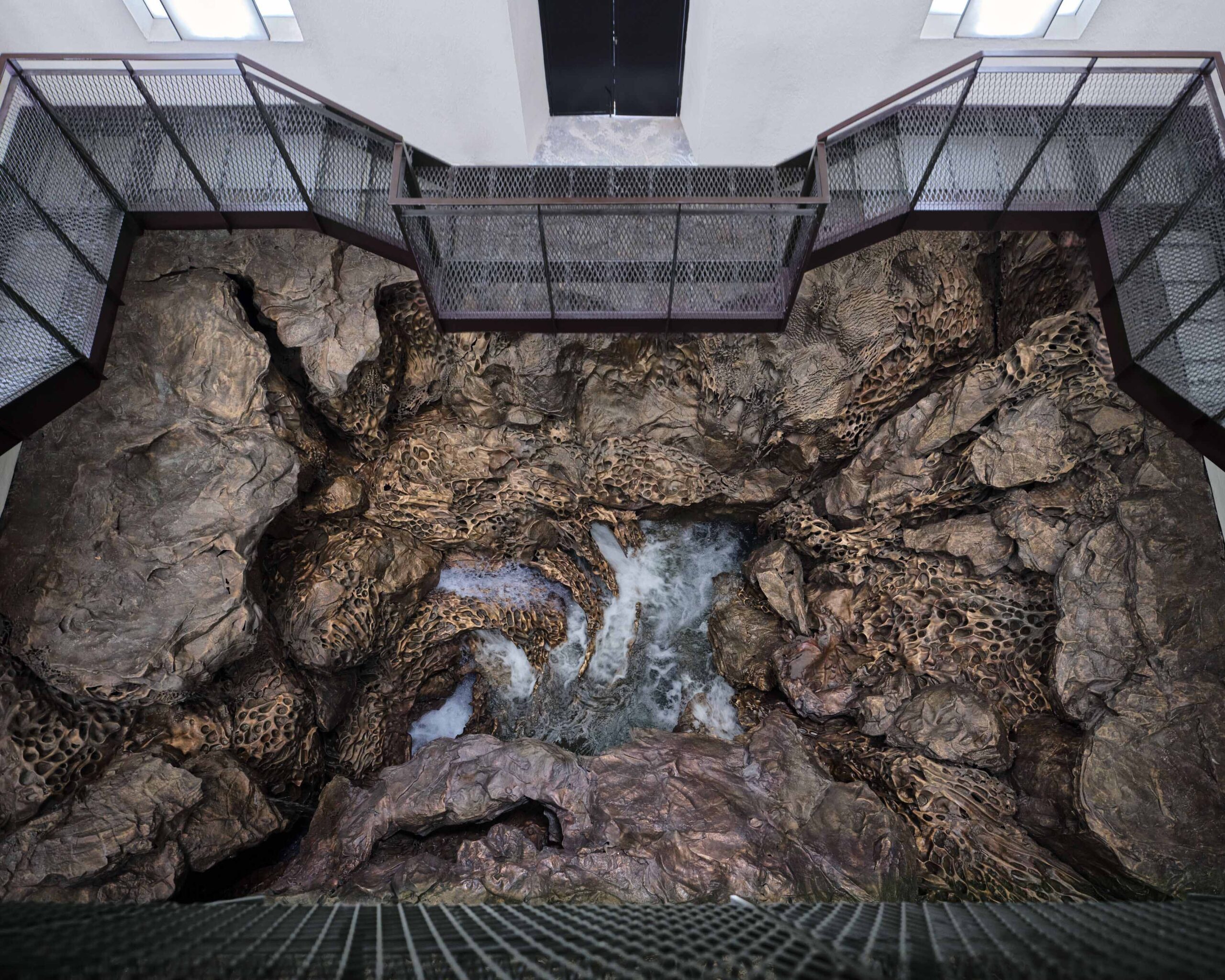
I think many of my pieces, like the Wells, deal with that in different ways, creating this illusion of a deeper and surprising space within them. Another example is Hondalea (2021), which is inside a lighthouse on an island in San Sebastian that we reconstructed and created a fictional space inside. Every 15 minutes there is a sequence of waves that crash against the sides of a bronze cave that goes down five metres from street level when you enter. This bronze cave is modelled using imprints of rocks from the coast nearby in the Basque Country, where Hondalea is based, and where I come from. Sound is a very important aspect of the whole work and also the journey to it; you have to take a boat there—listening to the real sound of the ocean, arriving at and entering the lighthouse, the surprise at how this sound creates an atmosphere that is affected by your experience of the real coast.
In a city, you constantly hear the sound of people, but [my work] can create an intimacy in the middle of a situation that is very active. I think, overall, my aim is to create a dialogue that encourages viewers to reflect on the relationship between nature and our role in preserving the environment. In some pieces, this is more obvious than in others. But I also reflect on other issues that can be part of the context of where they are installed—when you are exploring a social context, the main issue is to create a gathering place, a place for people to meet friends, but also to meet strangers or to be alone.
It’s spatial, but it’s also experiential—how each of us experience the work. The viewer finishes or completes the piece. It feeds into your subconscious. I did a temporary piece in Madison Square Park in New York called Landscape and Memory (2022), [which had] five fragmented underground bronze bas reliefs that were separated by grass with water running through each of them. Like Forgotten Streams in London, it referenced a river that once ran under Manhattan, under all the buildings that have been built over time, and so it had become fragmented. The viewer completed the piece, following the fountain with the grass growing in between; people would lay on the grass listening to the sound of the water.