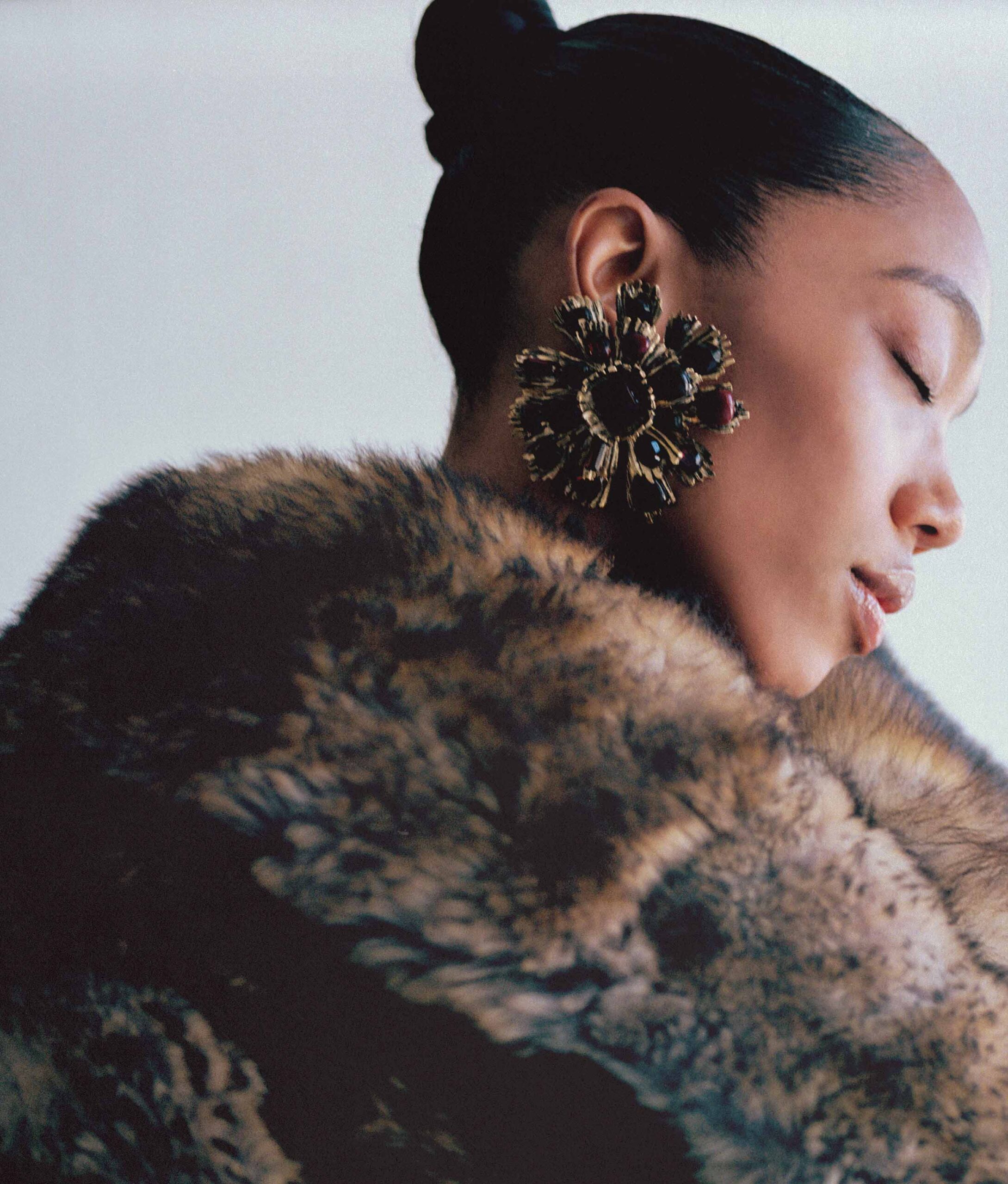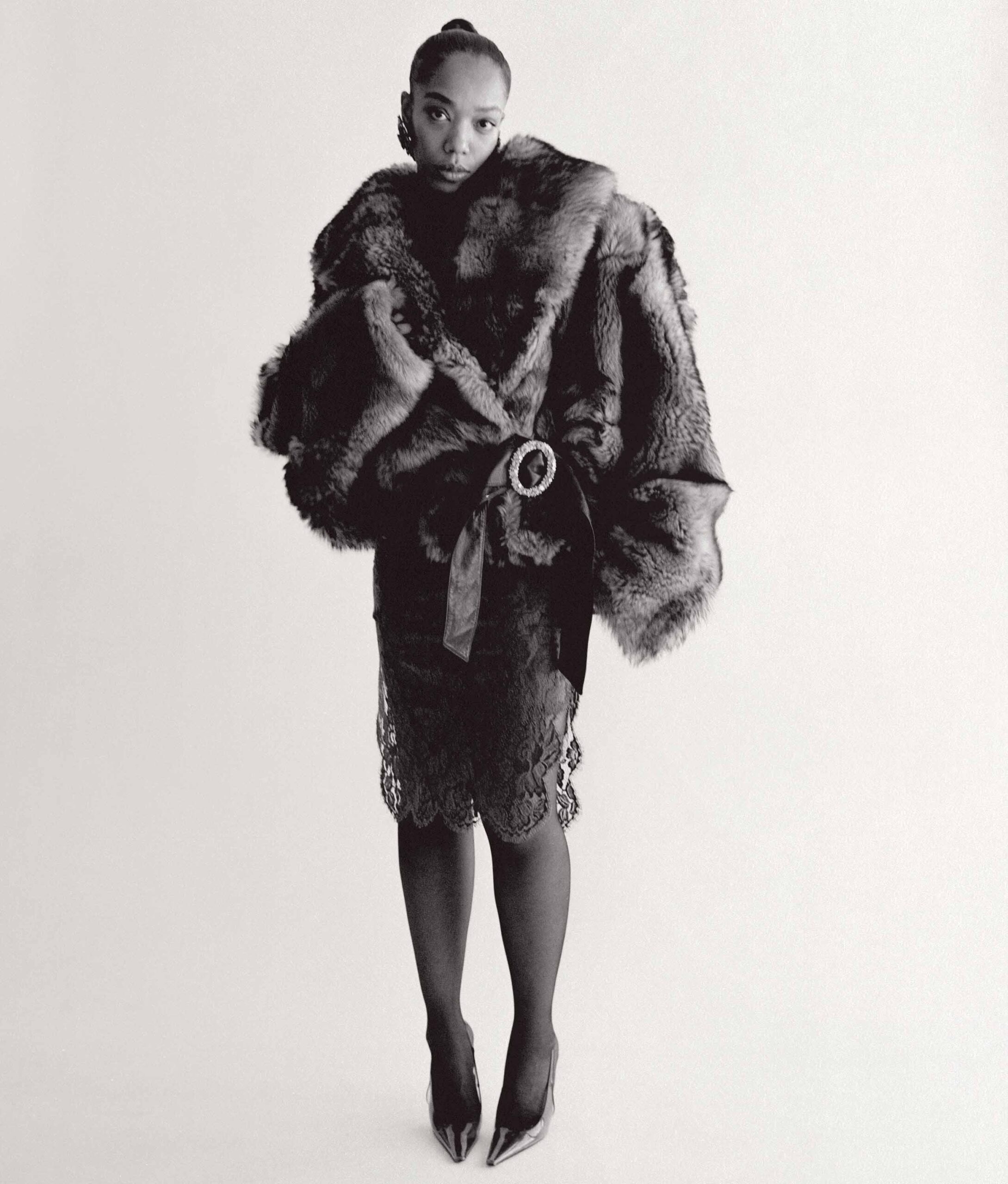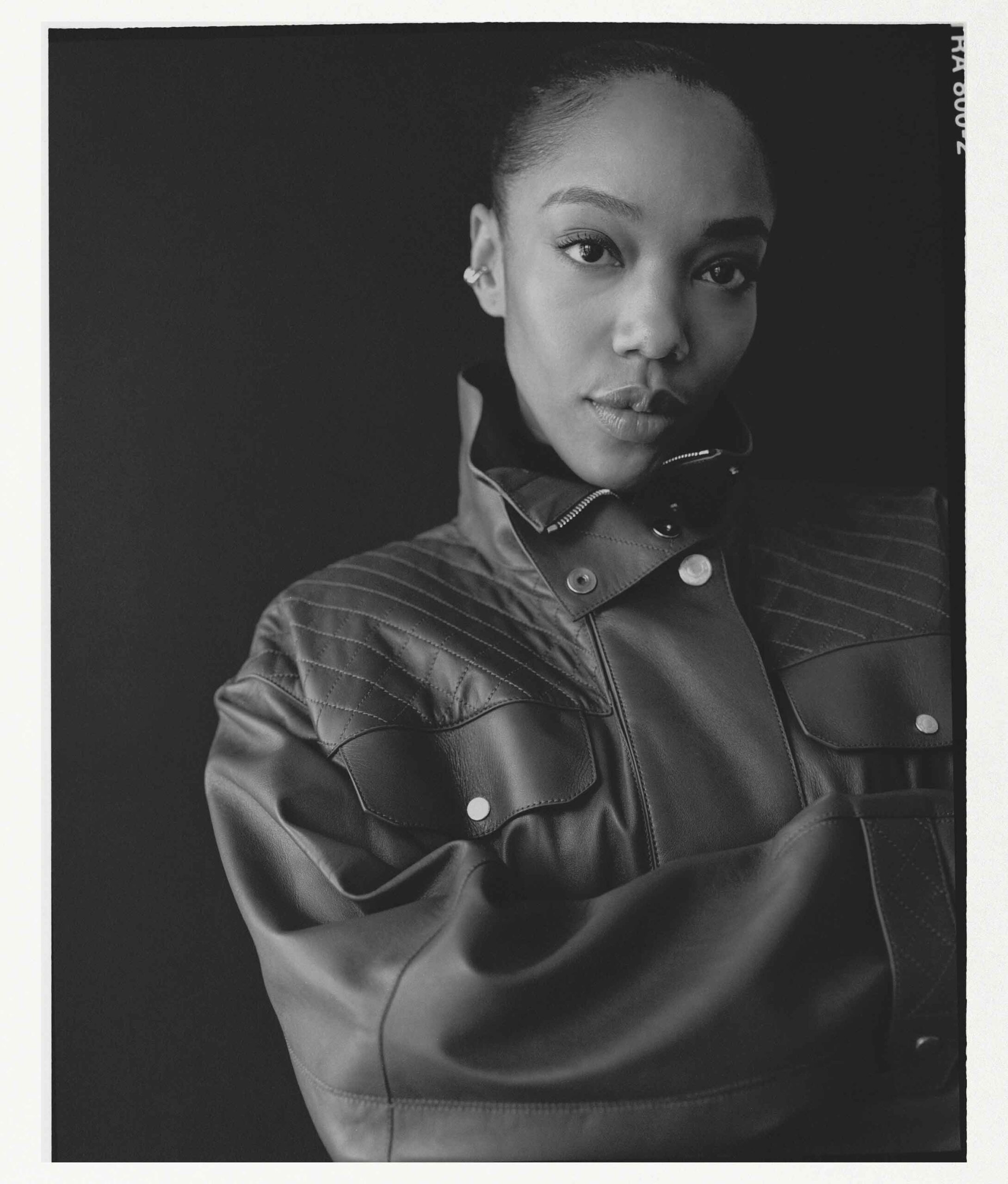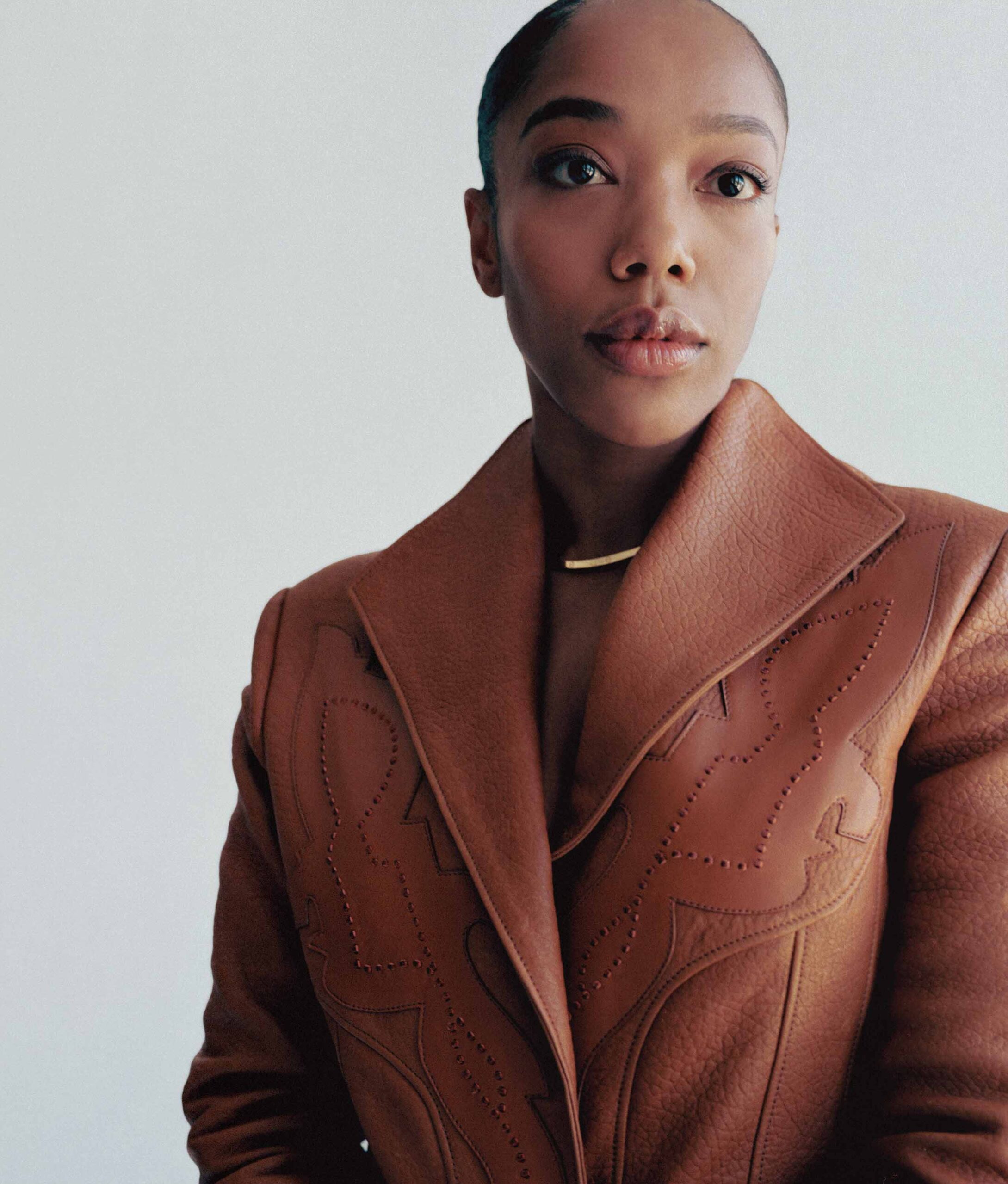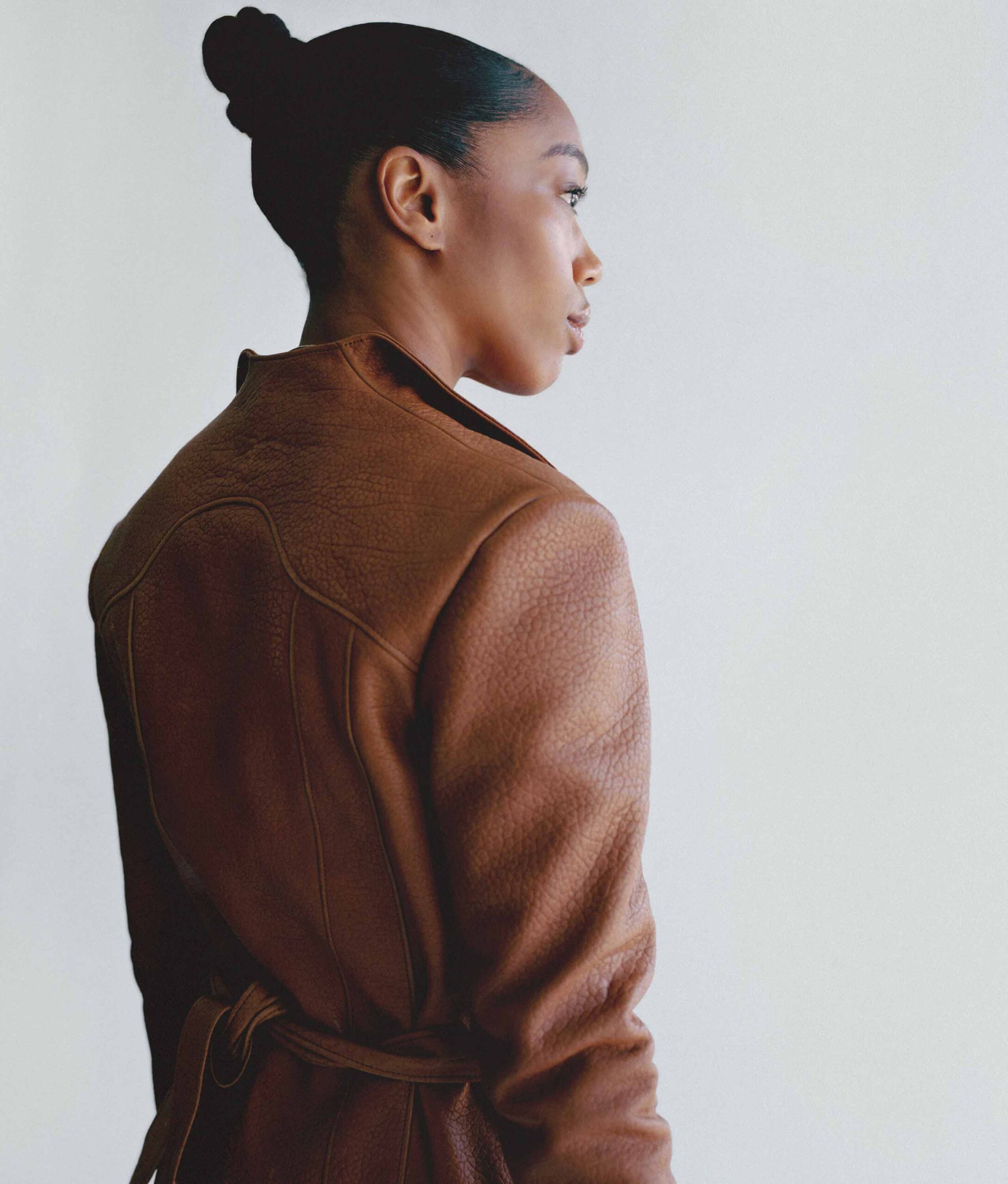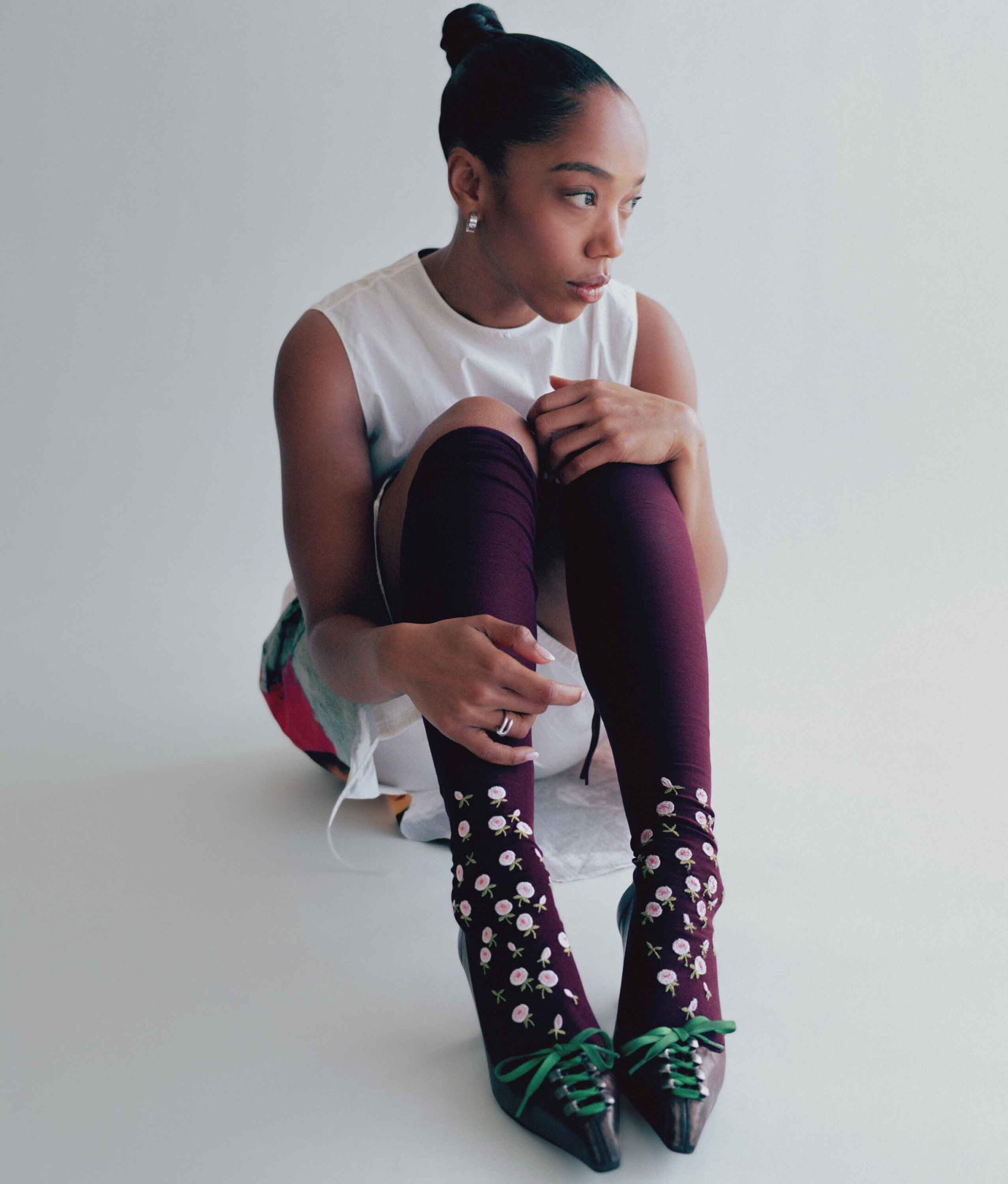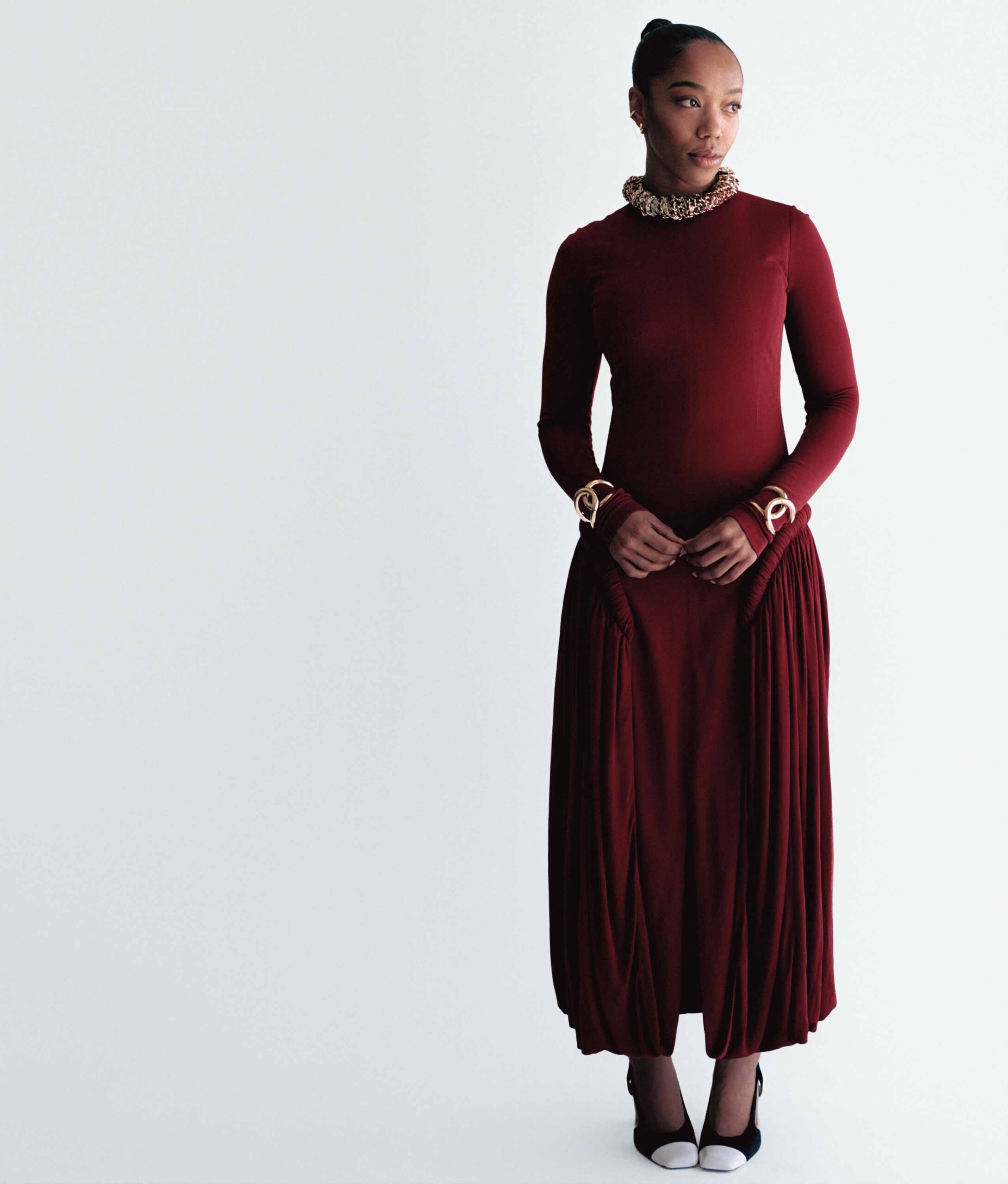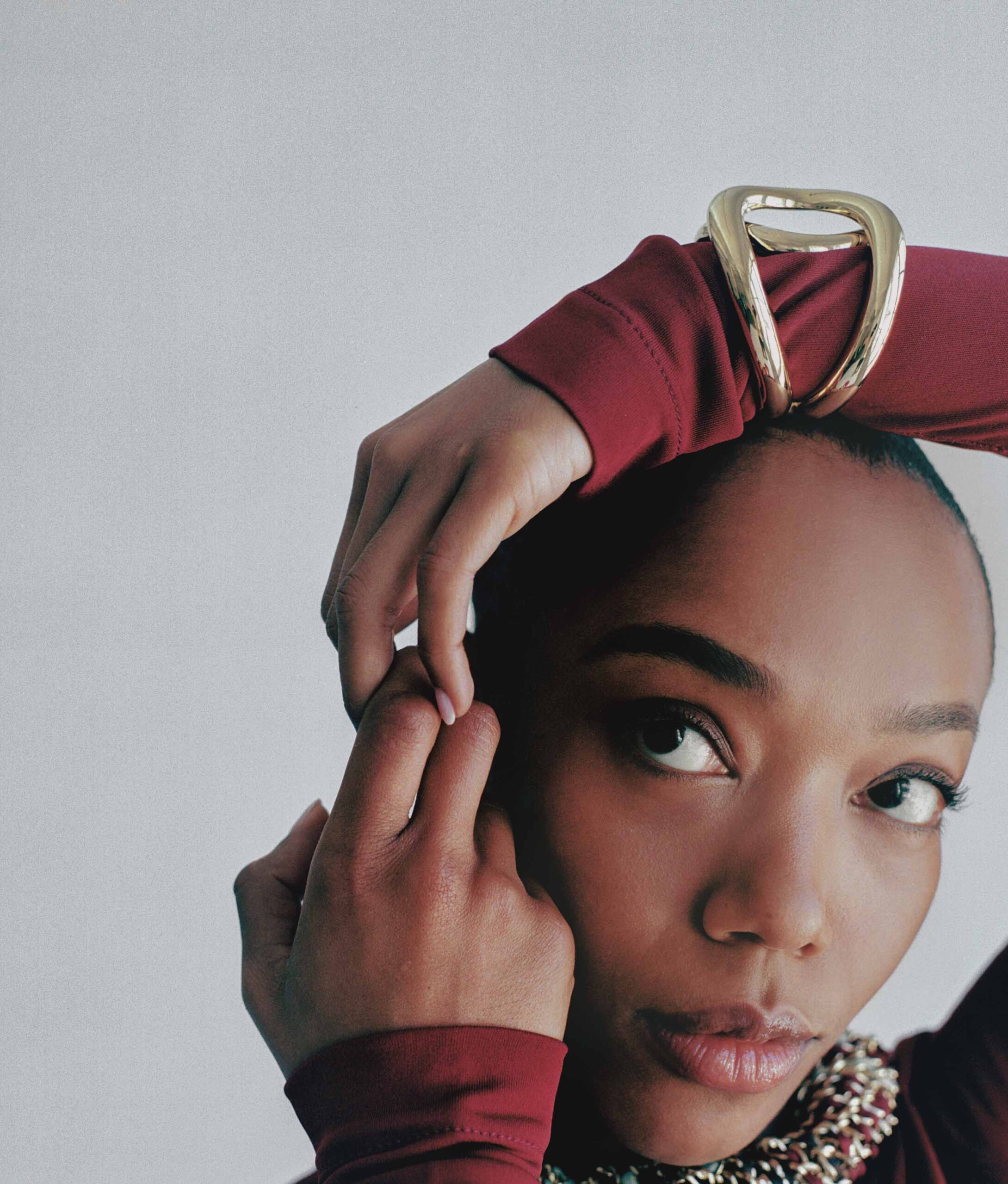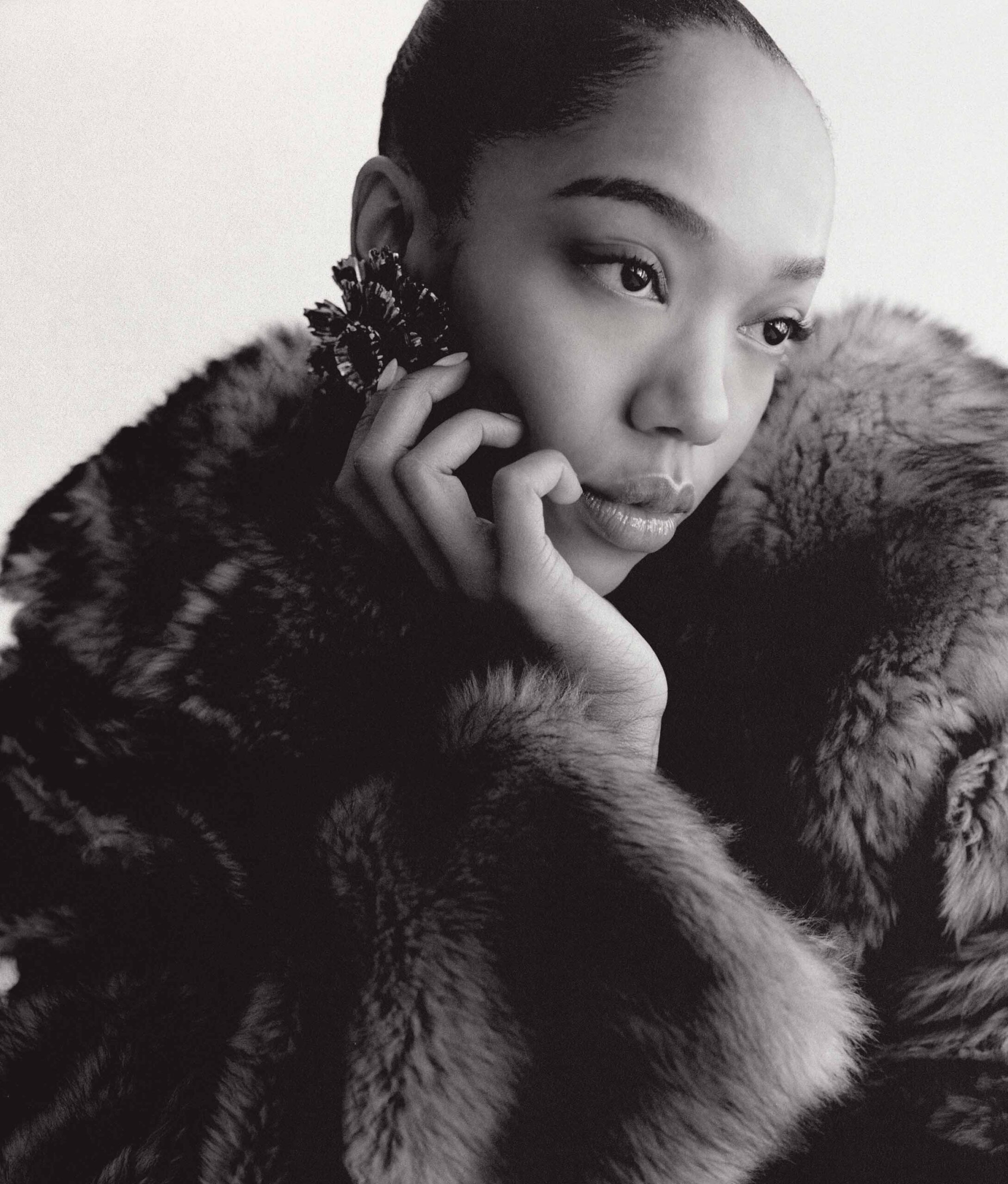
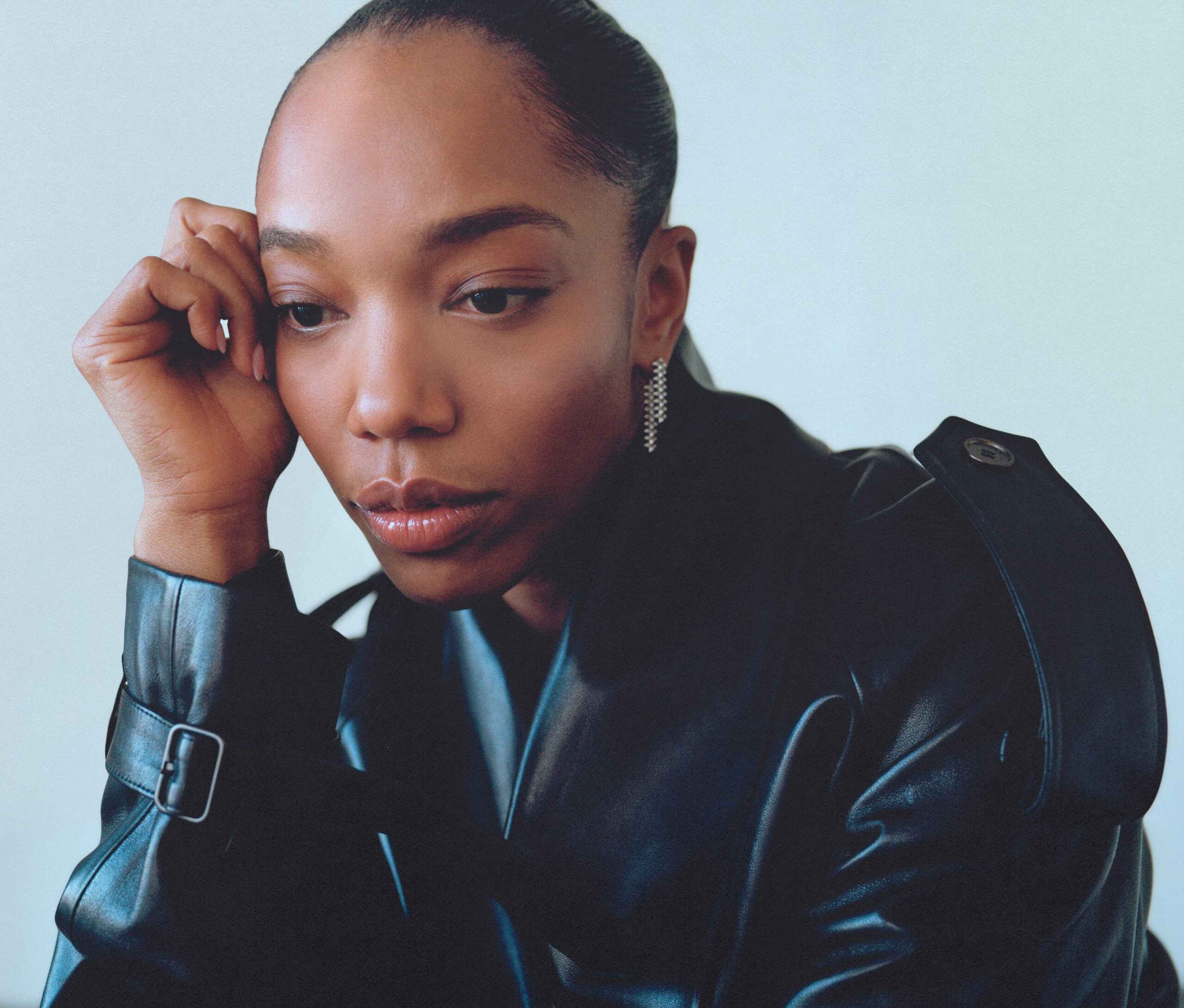
Naomi Ackie appears to have the best of all worlds, enviably chameleonic in her navigation across a broad spectrum of dramatic worlds. This is perhaps because she has never appeared to shy away from risk. “I came into the business feeling like there was nothing to lose and all to gain”, she says, as she recalls transitioning from the halls of the Royal Central School of Speech and Drama and into the professional world.
Whether bringing to life beloved DC characters, inhabiting the weird and wonderful world of Boots Riley, diving into the psyche of one of the world’s most beloved singers, or challenging the sadistic appetites of billionaires, there is a commonality across all of her roles: an unmistakable curiosity in the way humanity materialises in her characters’ choices. Dancing delicately between a meticulous excavation for truth and an unquenchable desire for play, her characters are dense with intrigue. From the dark comedy series The End of the F***ing World (2017–19), to Star Wars: Episode XI (2019), to Kasi Lemmons’ I Wanna Dance With Somebody (2022), to Zoë Kravitz’s Blink Twice (2024), to Eva Victor’s devastatingly tender Sorry Baby and Bong Joon Ho’s Mickey 17 (both 2025), to James Watkins’ Clayface and Boot’s Riley’s I Love Boosters (both 2026), Ackie has populated our screens with characters that bring with them a world of nuance, complications and challenges. Her performances seek less to appeal to audience expectations than they do to draw the viewer in with each expression—all while affording herself freedom and spontaneity in the process. “I am what I am, and I get to be as complex or as simple as I want,” she affirms.
No matter the undertaking, Ackie appears to sidestep the confinement of convention, leaving herself ample room to make the sorts of choices that liberate her on her own terms and allow her characters to exist with a generosity that can only come from a reckless adoration of the craft in its purest form.
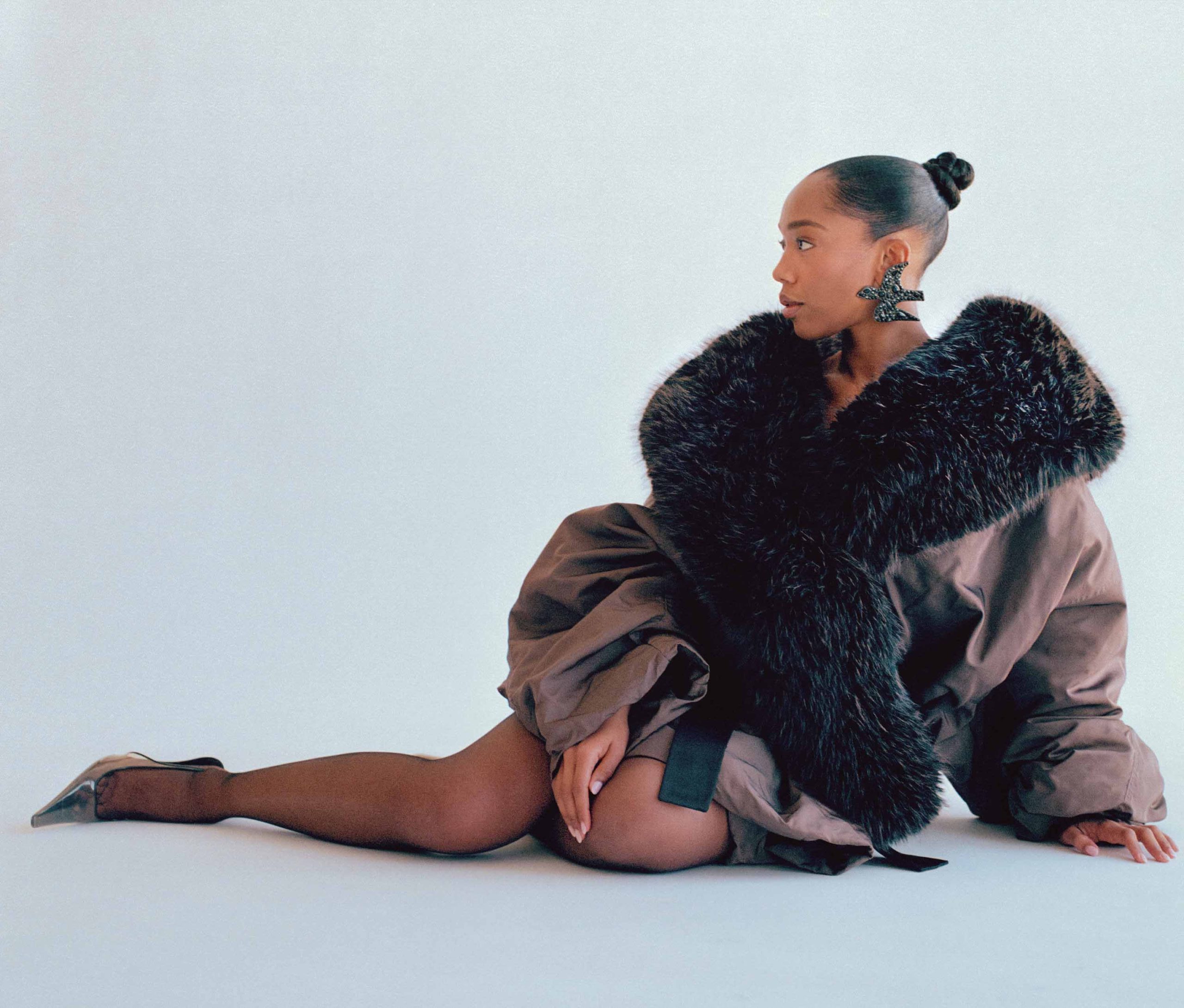
You know what? It’s so funny, because I do feel slightly reckless. I came into the business feeling like there was nothing to lose and all to gain. I came from drama school, which was great for teaching discipline, but I wasn’t necessarily given the same advantages, I would say. At the time, I remember not being able to play a lead in a play until my third year. I came from a space where I knew I had something, but I was and am really aware that opportunities won’t present themselves as often, even for something as low-stakes as an end-of-term performance. So, I guess, I came into it thinking that if that is the case, then I’m going to do whatever the fuck I want, and do it as best I can.
Race does play a huge part in this. Especially as a young Black woman, I would receive subtle messages that I was expected to be in a box. So I was always looking for subversion in work, looking for ways to prove that I was more than people maybe initially thought. Which, actually, is interesting, because that stems from seeking outside validation [that] then becomes a whole other thing you have to work your way out of as you get older. Now, there’s nothing to prove. I am what I am, and I get to be as complex or as simple as I want. But at the time, that was my goal: freedom—mainly freedom of choice, freedom of finances as well. To be able to make those choices and not have to be okay with the expectations of others, and to do what I see my peers doing—which is having the freedom to be whoever they want to be. I feel that’s happening more and more as I get older, but it has taken a second.
Yes! I say that, and my favourite thing is to play supporting characters. There’s just naturally a lot of freedom in not having to bear the weight of driving the story. I kind of want to be a character actor, if I’m not already. I think it’s really cool to be able to disappear. So even though I wasn’t given main parts, and sometimes play lead roles now and sometimes don’t, I’ve always found that what is more interesting is how you can fit into a story and how you can make that as seamless for an audience as possible, creating a tone for the story as a team [that] allows them to lose themselves. It feels like a cool puzzle to me.
It was a bit of a whirlwind. What I love about filmmakers like Boots is that they create such a specific world, in a way that makes your job really easy. There’s so much going on in that film that the characters can really live in their own right. When I read the script, I understood it and didn’t understand it at the same time. But there was a trust there, because he’s so smart and imaginative and expressive that it actually freed me up a lot. I think the biggest challenge that I had was that I was amongst comedic giants. Keke Palmer is one of the funniest people on and off set, and all I wanted to do was to be able to support her shine in this and really stay true to what my character’s function was in the story. So it was this really beautiful negotiation that wasn’t difficult, because Boots is the biggest collaborator. He’s huge on letting the actors explore and do their thing, and he kind of joyfully watched us figure out what we wanted to do, because in his world, there are no rules; he had set them all up already. It was just about us adding a little flair to these characters so people cared about them, and about the issues within the story. Reading the script was such a wild ride, and filming was exactly the same. It was chaotic as hell. Half the time, it was like herding cats, because we all got on so well; we just would not stop talking. But that helped create the vibe, and I think the film has a warmth to it and a strong sense of sisterhood, which then leads to this idea of global community and what we can do collectively to get things to a more balanced place. So, I don’t know. It was a really chaotically fun, wild experience that I can’t say I’ve had before and probably won’t have again, unless I work with Boots again.
Realistically, I’m a jobbing actor. I’m still in a space where I need to work and need to audition. My strongest priority is that the story makes sense and the character is something I feel like I can realistically portray while expanding on things I already know, which is why I like doing different stuff. I feel like it stretches me a bit more, so I can be better. With scheduling, there are people I know who are booked up for the next like… three years, and that’s not my reality. My reality is that I’ve done three projects in a row over the past year, but now I don’t have any projects. I’m kind of chilling for the time being. I think the joy right now is that I have enough space, so I really get to pick. If it doesn’t feel right, I don’t have the pressure where I feel I really need a job and just end up taking anything. That typically happens at the beginning of your career, but I think I was lucky that the things I would have taken anyway happened to be really special pieces of work. But yes, my main priorities are: who is the filmmaker, what’s the message, what is the goal of the film, and can I sense that goal from the script? With Clayface, it fed two parts of me. I love doing big studio work, and I love doing indie work. This felt like something in between. I love genre-led pieces, and this was that—despite being in a well-known universe. So it felt right, and so did the character. It scratched a lot of itches. As much as I try to orchestrate, there’s a lot of this that’s about luck and opportunity, and having the discernment to know what’s right and what makes sense. My team [is] also great. They know what my goals are, and we have similar tastes. They’re always keeping an eye out for what things would speak to me, and they know me so well now that they’re hardly ever wrong. Sometimes—or most of the time—I’m wrong.
Yes, it’s a real teamwork thing. Everyone’s goals are different. Some people want to just continue working, which is an amazing goal. There are others who want to cherry-pick, which is also a great goal. For me, it’s a mixture of the two. I love working, but I also love not working.
A prime example is Whitney. When they brought Whitney to me, I was like, “There’s no way.” Even auditioning, they had to talk me through it on the phone.
I think the reason I do it so much is that they’re such fun sets to be on. There’s something quite absurdist about it, being able to express fear. The thing is, we all feel fear of irrational and very rational things, but tend not to share it on a personal, public level. There’s something really lovely about getting to express the full extent of a fear that, for me, is really quite freeing. My respect for horror started when I watched Get Out (2017). I had always been really scared of horror before, and didn’t know it could be scary and also talk about abstract subject matter. But after that, my favourite film for a really long time was The Babadook (2014). It’s a stunning horror film about depression and grief. I started looking at these horror films as an allegory, or as an example of something deeper. The scares are the scares, but it’s tapping into very primal emotion that can’t always necessarily be explored in a drama or a romantic comedy, and it can open up a lot of storytelling, while talking about things that are very real and current. I really enjoy that, because I love story analysis when it comes to the world that we live in, with these very out-there plots. I am naturally quite an anxious human being and have a lot of fears, so it feels right to be in that space. I feel like I’ve got an endless well of fear that I could serve up on a platter for it! I’ve got a film coming out next year, I think. It’s called They Follow. The story is about an entity that follows people who have had sex. It is terrifying and bleak. It’s also really sad, and captures something in my imagination that I really enjoy watching and being a part of.
I guess my intentions were about really being in the moment, being present. The script was so beautiful, and it called for a performance from both of us. Eva was amazing at bringing that out in me. It felt really real, and warm and gentle. It was basically us creating that space between ourselves and the crew, and holding onto that so nothing felt too pushed, nothing felt too intense, in a beautiful way. These incredibly awful things happen, but there are these quiet moments and I think the film is essentially about honouring the quiet moments. So that was the intention with that. It was a really lovely space to be in to create a piece of work. The film inhabits that energy, and I think when people watch it, they feel that intention.
Now? No. When I did Star Wars (2019), there was definitely some of that. I had seen what Kelly Marie Tran, who is an incredible actress, had to deal with from a racial aspect from some of the fans. They were really cruel to her in a way that showed me that, when people are really passionate, some of that passion can be turned on you. Star Wars was also the first big job I had ever done, and I was generally overwhelmed in life. With Clayface, I looked at it as fun. Look, I can only do what I can do, you know? I’m luckily past the phase where I feel that fear. If you like it, amazing! But I am so proud of it. Anything I do I’m very proud of, because it’s a marker of where I’ve come from. It’s never going to be perfect. It is what it is, but here is the offering. If people don’t like it, that’s okay too. People are allowed to not like things, and more so if that turned into something more about me, I’m secure enough to be able to take that on the chin. The internet is not a real place. It’s not real. People really love Clayface; it has been amazing. But in that instance, I would like to think that I’d take it on the chin, because I have a real life, and everyone has a real life, and this is a moment in time. It’s not real. It’s something you have to learn. I’ve had very minimal hate sent my way in the industry; I haven’t dealt with it in its full entirety as some people have, and cyberbullying is a real thing that hurts people in real life. But for me, I think there’s an attachment we all have—actor or otherwise—to outside validation that is destroying us. And because my job is so public-focused, you have to separate those things.
I can get very, very, very, very, very obsessed about something, and I’m a perfectionist. So there was a lot of technical work, from how she moved and the accent—which was a type of process I wasn’t used to. This obviously needed a lot of care and attention when it came to mannerisms. I mean, she’s got such incredible mannerisms that everyone adores; it’s part of her storytelling. So there were things I needed to understand that took a lot of my time and attention. Luckily, it was COVID, so I didn’t have anything else to do.
Yes, and I was 30 at the time, trying to track back to what it was like to be 19, so that stuff was fascinating and really fun. There was a part of it that was also just terrifying, because I was taking on something that felt behemoth, alone, in my basement. So it was a lot to do. I guess my biggest lesson, if I play a real-life person again, is that I definitely wouldn’t do it the way I did it. The obsession became unhealthy and consuming in a way that isn’t actually creatively fulfilling. I don’t agree with the concept of a suffering artist. I don’t think it helps. I don’t think it helps the people you’re working with, and adding pressure doesn’t necessarily make you better; it just makes you stressed while you’re doing the same thing. Looking back on that time, I would have been a lot easier on myself. I’d try learning a real person in a more fun way. I was very bookish. I was cross-referencing Whitney videos and then rewriting the script phonetically. so I could get the accent exactly right. It was a great exercise, but given the job we’re in requires a sense of freedom and a sense of feeling safe, I wasn’t creating a safe space for me to do the job, which was hard. There was a lot of expectation with Whitney. It was always going to be that way, and you sometimes need to go through a process to know it doesn’t work for you. I loosened up when it got to filming, but I could have had way more fun had I just chilled out a little bit.
It doesn’t need to be that way. It’s been five years, but I feel like I’ve grown a lot since then. I try to bring a sense of ease to everything I’m doing, even if the stakes are high. If you’re calm enough, you can really centre in on what the story needs and what the people around you need, and you can attune to that. But you have to be in a really calm space, and silence the negative thinking in your head about needing to be perfect. I just want to be a loose actor; I want to be free and spontaneous. That’s my goal. That’s probably my biggest takeaway. We’re not saving lives here.
And that’s fair, because the stakes are high. For us, the individual. For us, the artist, the actor, the stakes are high. This is your livelihood; this is what you’ve given your time to, so it does mean a lot. But at the same time, to release yourself and express the thing that is in you, we don’t have to chase as hard as we think we do. It’s more [of an] inside than an outside thing.
Out of all the experiences I’ve had with acting, that felt the most spiritual. If you feel like you’ve hit something on the head, you are in this real alignment state where you can almost feel the audience feel you. It sounds so “woo-woo,” but that was my experience. It was the thing that brought me to acting. But I get the same feeling when I do film, if I’m being really honest. The calling of theatre is very much there. I guess it’s about me finding the right thing to go back to. Theatre is something I’ve always loved so much, and I’m actively looking for something I could really feel out and learn something new [from]. It’s definitely on my list of things to do.
I don’t know. I never approached acting in film in that way. I tend not to get lost in the emotion when it comes to film acting, in particular, because you get there, and then get told “cut” and then you’ve got to do it all over again. So it’s actually quite a methodical way of reaching an emotion or expression, and then having to recede it, almost, and hold it and save it and then release it again. There have been things I’ve done recently where I’ve had to release a version of myself that felt quite hard to contain. But that also could be because of outside things. Sometimes, weirdly, your work and your life mimic each other, and you’re in a situation where you’re bawling out loud for something in the film, but also for yourself? That can feel helpful, but also not that helpful. But I tend to not feel that, and I’d love to be in a space where I feel that. I’m always looking for something where I can lose myself in a character. But it hasn’t happened just yet.
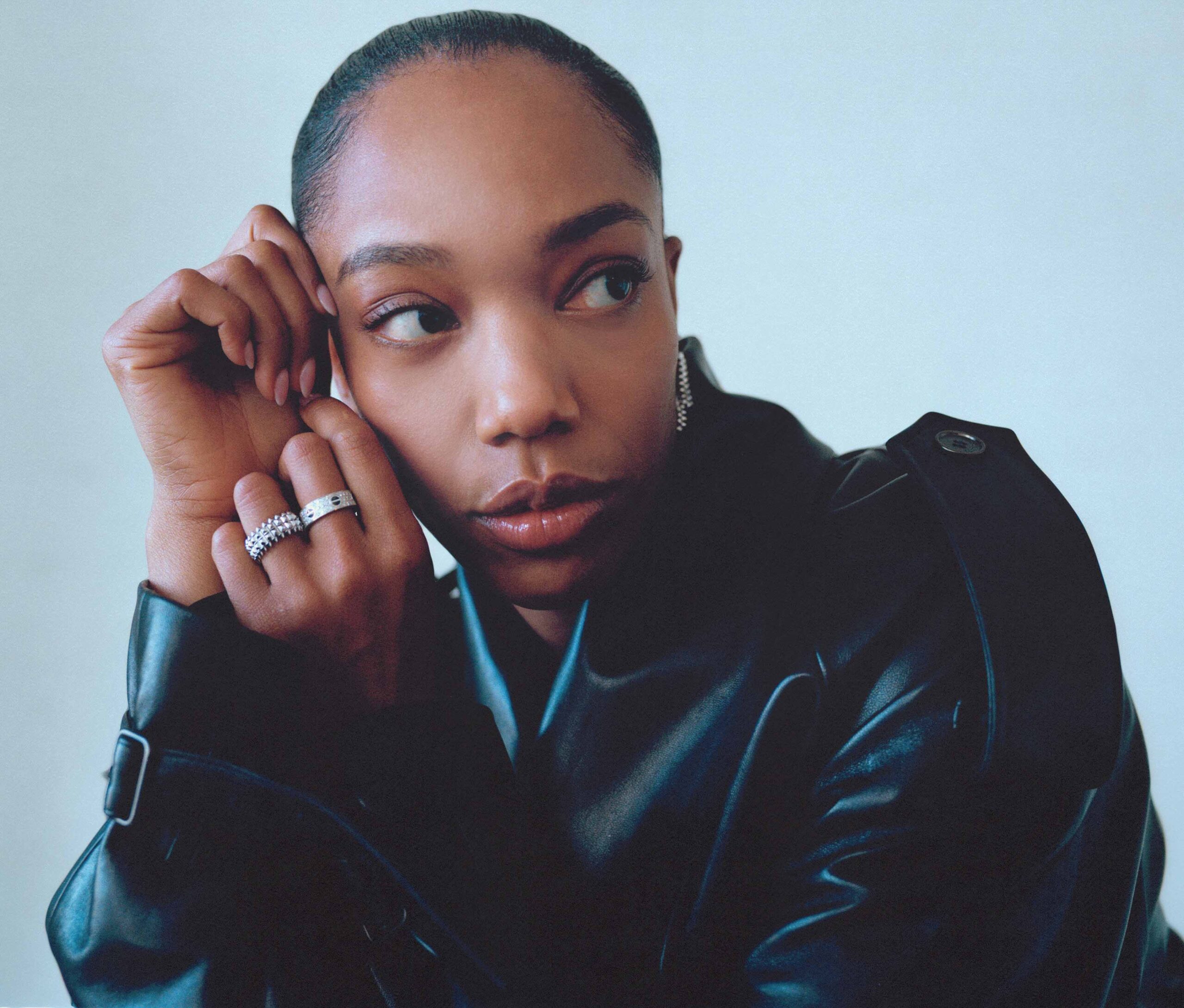
I actually do. I feel like it’s a time when my mind goes very quiet, very peaceful—even when I’m doing something quite out there or strange. It kind of goes back to theatre. The alignment sometimes feels like it’s from a different space, like you’re contacting something larger than yourself and you’re the conduit for it. When that happens, it’s such a joy. That’s like once every, like… hundred takes where you get that, and the performance is preceding you. You’re not necessarily making the decisions. It does have a kind of quiet space in it, where spirituality [enters] in. It’s the most spiritual practice I do, I think. Because I feel the most honest with myself, the quietest in my mind, and the most connected to energies. It’s this weird thing, because it’s this partially technical practice. There is a time limit. There is a day to have, there is a business to uphold, and then there’s this private experience, and the things we need to unlock inside of ourselves to share that stuff.
You know what, I’m Caribbean. We don’t fuck with that. I don’t fuck with demons, no Ouija boards. I ain’t trying to get possessed out here. It’s just not for me, and I don’t want to do anything to piss the demons off or invite them into my space. I’m a woman of love and light! It would be my worst nightmare to get haunted by some demon, because I wanted to do a job. I’m not messing with it, truly. I can promise you’ll never see me in a demon film. Ever.
I kind of like the impermanence, to be honest. I like that I don’t belong to anything for too long, that I can reinvent myself, that I have time to rest, to think, to do nothing. Sometimes, in between work, I’m literally doing nothing, and I’m okay with that—I enjoy it. The whole practice of my job is about variety and stretching, and that means I need to have change. I’m actually someone who doesn’t do change very well. It’s hard for me to shift between one thing and another, but I have learned to enjoy it with work. The unexpected nature of how it can shift and change, knowing I’m not in control, that these amazing people will come into your life—some you’ll see again, some you won’t. But you keep it moving, and you try your best. You try your best to create relationships out of that, and if you don’t, then you have those memories of an amazing time. Sometimes, work can be quite lonely, especially when you’re going away from home. But it’s always such a joy when I get to reunite, especially with crew and cast that I haven’t worked with for a while. It happens less often. It’s a lovely, lovely feeling.
For sure. There are fewer rules for me now. I kind of gather information as I go. I’m definitely more laid-back about the whole thing—but maybe that’s something I should shift and change. I just don’t have any rules, and I’m less caring about how it looks, if that makes sense? I’m just trying to be as in the moment as possible. Whatever I need to get there, I’m going to do it—as long as it doesn’t put me or anyone in harm’s way. I feel like I’m very open now about how I express myself. Before, there was a bit more methodical planning of what I would do and how I would look. I was very concerned about the end result, whereas, now, I don’t remember what I do after I do it, until I watch the film and then I’m like, “Oh, you made that choice! Interesting.” But it’s all part of the process. I feel probably the most relaxed on set than I have in my whole career so far.
Man, I don’t know. I think being a musician would be sick. If I could be a funk singer in the Seventies, that would be cool.
I’m just trying to be a good person. I feel like a little blob floating through the universe. I’m not a mum yet, that’ll be really important. But I’m a partner to someone. I’m a daughter. I’m a sister. I’m a friend—a friend who should learn how to text back better. Sorry to all my friends! But yes, I’m trying. The role I’m serving is a woman who is trying. That’s the most important role right now: trying to be a decent human, trying to grow up, and trying to be grounded in a world that feels very ungrounded right now.