Guglielmo Marconi, the 19th-century Italian electrical engineer, inventor and businessman to whom the practical radio wave-based wireless telegraph system is attributed, proposed a striking theory—that sounds, once generated, never truly die but rather fade and continue to reverberate as sound waves throughout the Universe.
Both scientific and sentimental, this notion later became the inspiration for You Are Not Alone (2010), an early work by Scottish sound installation artist Susan Philipsz. In her interview with Present Space, Philipsz discusses the sounds that she has generated through her practice and that, if Marconi’s theory holds true, continue to reverberate throughout the cosmos. “Even this interview,” as she astutely points out.
While sound waves are often thought of as abstract, ethereal and incorporeal, for Philipsz—who studied Sculpture in the late 1980s to early 1990s—sound is definitively “sculptural,” capable of filling both intimate inner body spaces and vast public architectures. This includes her own sound installations, many of which have been commissioned for some of the world’s most prestigious galleries and institutions: I See A Darkness (2018-19) in the Tanks at the Herzog & de Meuron-designed Tate Modern in London, England; Night and Fog (2016) at the Peter Zumthor-designed Kunsthaus Bregenz in Bregenz, Austria; Resonating Spaces (2019-20) at the Renzo Piano-designed Foundation Beyeler in Basel, Switzerland; and Seven Tears (2019-20) at the Tadao Ando-designed Pulitzer Arts Foundation in St. Louis as well as Prelude In The Form of A Passacaglia (2020) in the Blue Ribbon Garden at the Frank Gehry-designed Walt Disney Concert Hall in Los Angeles, United States.
Invisible to the human eye, Philipsz’s installations give sound a material presence through minimal and beautifully mounted visual counterparts—from newly-designed sound mirrors and public address systems to beguiling archival instruments with deep historical resonances. In series such as The Missing String (2013) and War Damaged Musical Instruments (2015), she presents archival instruments recovered from conflicts over the past 200 years. Disfigured, mangled and warped, these artefacts are more than aesthetic objects. They foreground instruments as precise tools whose ability to produce sound is inextricably tied to both their intricate construction and the damage they have endured. Whether a cavalry trumpet that was retrieved from a ship torpedoed by a submarine or a horn with a bullet hole near the mouthpiece, these storied instruments become vessels of human presence—now rendered as imperfect, self-conscious and vulnerable as Philipsz’s own untrained voice.
In our modern era, marked by conflict, destruction and loss, Philipsz’s work resonates with renewed urgency. Often engaging with overtly historical and political themes, her installations frame music not only as a personal expression, but as a profound “collective experience.”
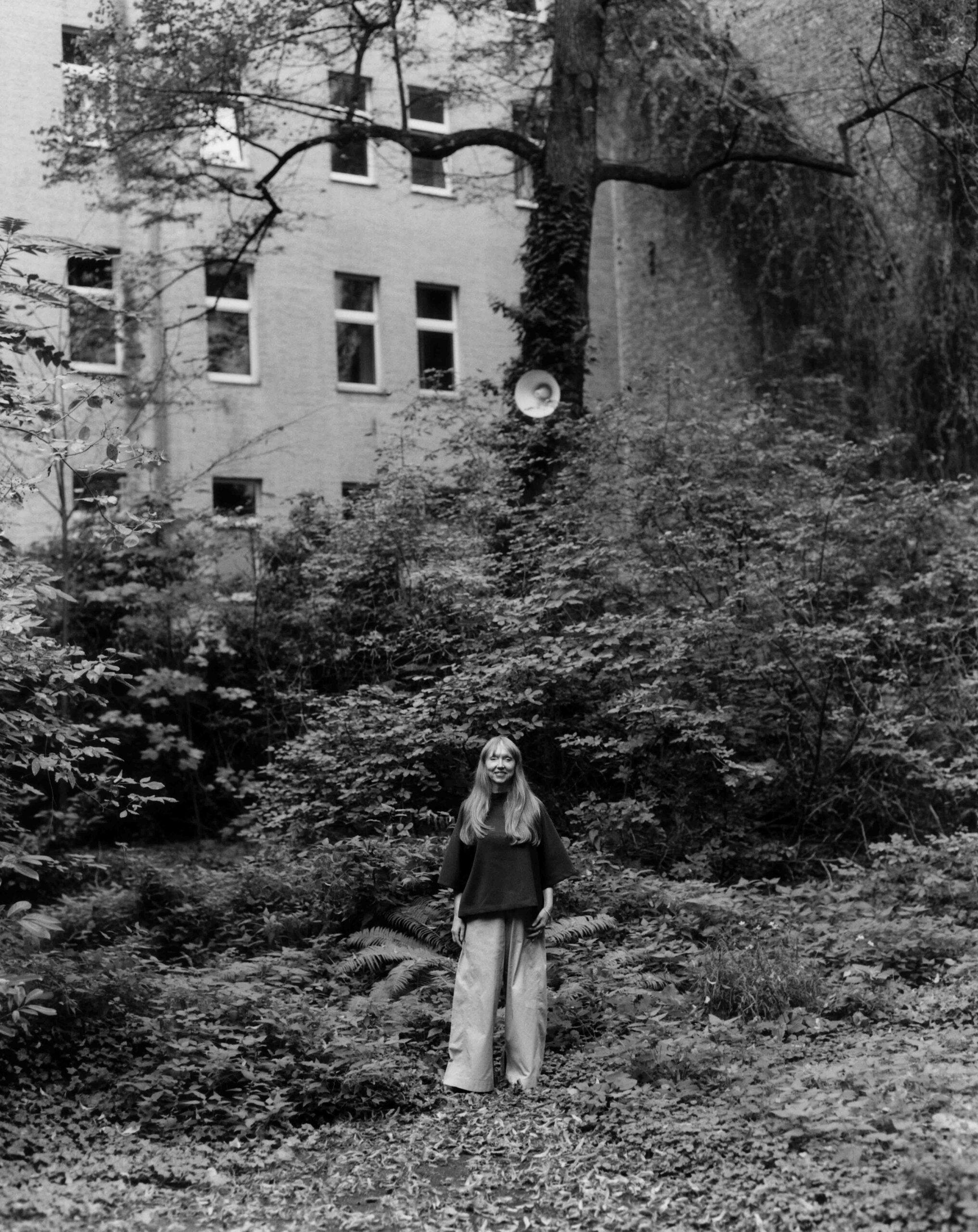
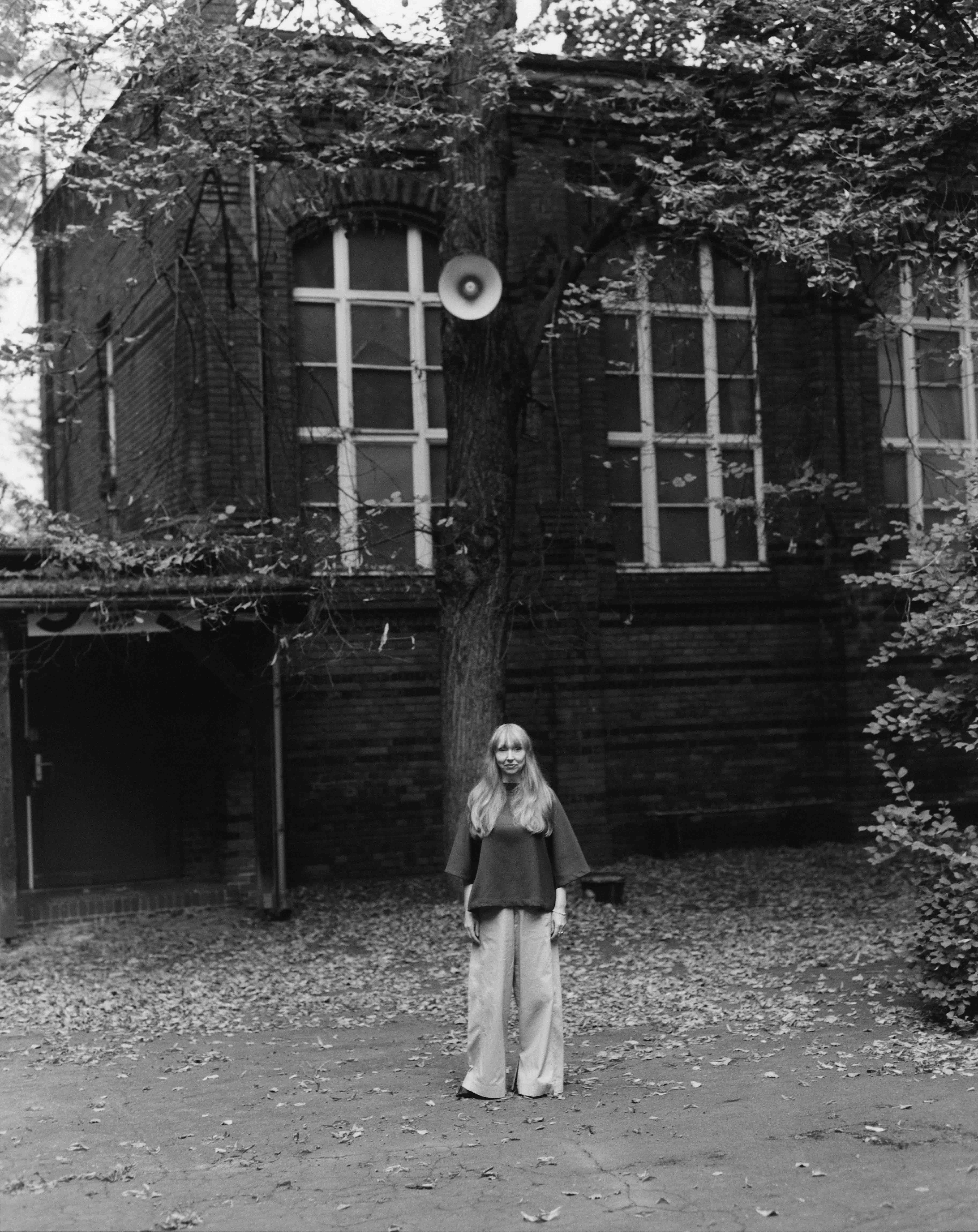
As a student, I was making wax sculptures suggestive of inner body space. I became aware of my own inner body space when [I was] singing, the way my diaphragm moved when I breathed. Then I became aware of what happened when I was projecting my voice out into space, filling that space, defining the architecture. My inner body space and the architectural space seemed to merge and inform one another.
It’s true. I’m often asked to make work for very acoustically-challenging spaces. I think long reverberation times come with the territory when working with large spaces with hard surfaces, often typical of museums. I don’t think architects considered sound when many of these buildings were built, and so now, dampening acoustics with sound proofing or building rooms within rooms to counter this problem are common.
As you say, I’m inspired by the architecture and certainly wouldn’t want to change the structure of these spaces. I prefer to work with the space and the acoustics [as they are]. A case in point is The Tanks at the Tate Modern, where I showed I See a Darkness (2018-19). That space is a huge cylindrical drum, and the acoustics are very problematic for a lot of artists. The reverberation time is so long because of the concrete surfaces and the curvature of the space, which create a disturbing echo and make it very challenging. I wanted to harness the acoustics by creating a “whispering gallery,” which was perfect for the call-and-response section of the work. The speakers were mounted on the walls and the sound followed their curvature, so the voice sounded like it was almost whispering in your ear. Despite the acoustics, the work retained its intimacy—it was quite uncanny.
One of the things I love about working with sound in public spaces is that so many unexpected things happen. The staircase in Bregenz Kunsthaus and the underside of London Bridge did interesting things with the acoustics that I hadn’t anticipated. In Bregenz all the sounds merged in the stairwell and at London Bridge the sounds bounced off the pier in the middle of the river, creating an acoustical illusion that the voice was coming from the river itself. My work for the Münster sculpture project, The Lost Reflection (2007), which was situated under the bridge that crosses the lake, was a different matter. I was fairly confident that the sound would be heard from far away on the other side as the acoustics of the underside of the bridge would be utilised and sound travels well over water, but it took a lot of convincing the team there. It was only after the sound test that they had to concede. I was right!
They do look quite sculptural which I like, and in certain contexts, there are also associations to nautical and military history. In War Damaged Musical Instruments (2015), I had them suspended from the ceiling so that people could walk around and under them. I keep going back to using them over the years, because of how they sound. They are very good for vocal recordings as they have a particular quality that suggests public address. They are also extremely durable and can remain outdoors in all weather conditions—that’s what they are built for. They are perfect for outdoor installations.
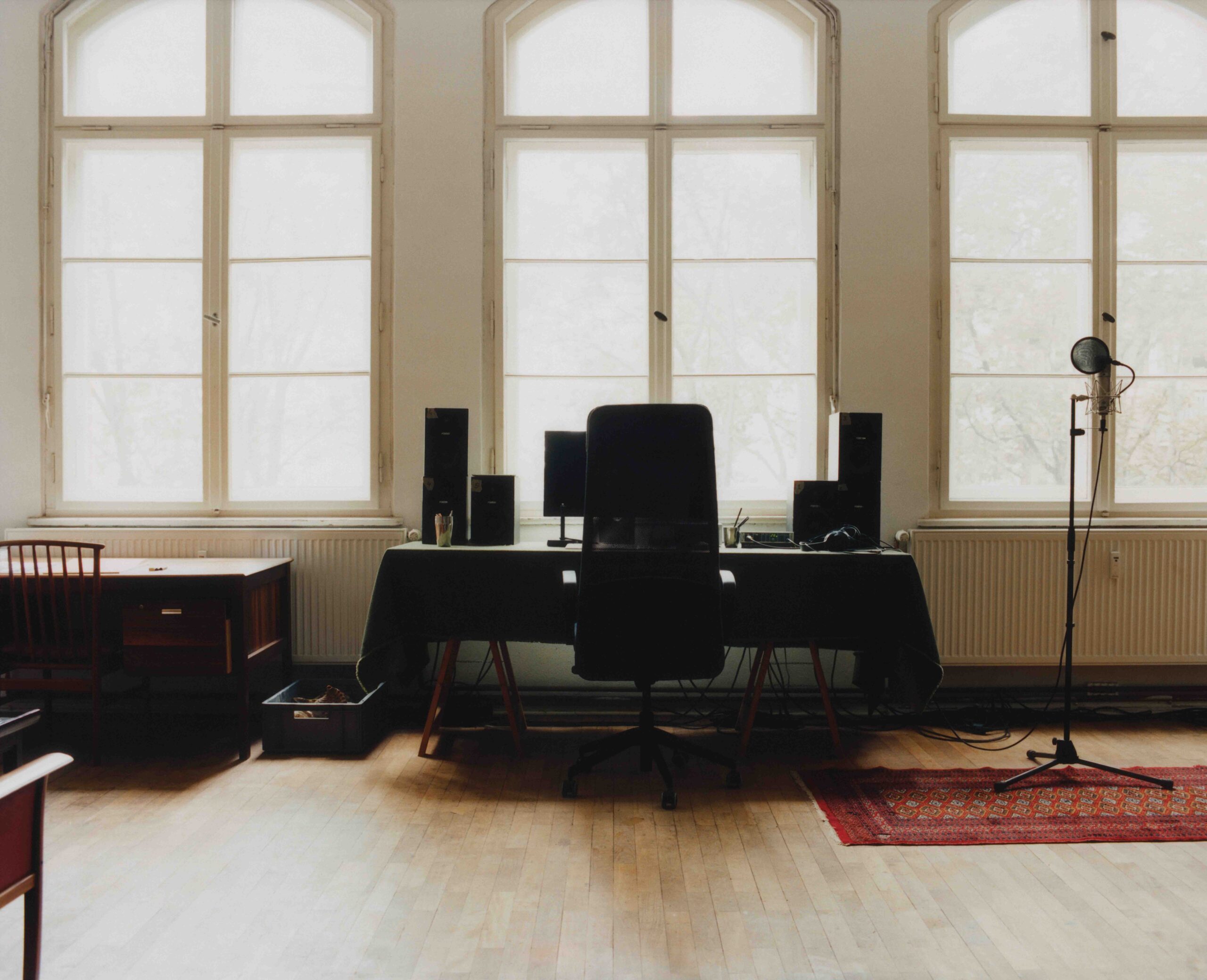
I’ve also just made a set of sound mirrors for [an] exhibition in Hangzhou, China. I recently shifted my focus from the acoustical properties of architecture to the production of objects that have their own acoustic properties. The sound mirrors are inspired by the curved concrete structures that were used to detect oncoming enemy planes, but became defunct shortly after the War began. I have made parabolic mirrors that not only reflect sound, but are reflective and act as mirrors in which you can see your own reflection. They project sound to each other across the space and are quite captivating to look at.

I first came across them in a vitrine in the atrium of a musical instrument museum in Berlin. The thought came to me as I looked at them: what would happen if you tried to produce sound from them? What would it sound like? This was the start of a very long journey.
In the end, I recorded 20 instruments in various parts of Germany and England. It took me to many interesting places, like a small regional museum in Sonderhausen in East Germany for my first recording of a horn with a bullet hole near the mouthpiece and other more famous instruments like the Balaklava Bugle that sounded the Charge of the Light Brigade in the Crimean war.
I had to find musicians who were willing to come with me to the archives where these instruments were stored, and some were in some pretty far-flung places. Once I had found instrumentalists to work with—mostly young students studying music—I could start the process of recording them. I was so focussed on getting the recordings down, often with restrictions on the amount of time I was allowed to have the instrument, that I wasn’t thinking so much about the instruments themselves. But the musicians were. One boy became quite emotional when thinking about the last person to have played the horn he was holding. He himself was probably the same age of the soldier who had last played it. It was quite moving. I had them play each of the four single tones from The Last Post. Originally, it would have been heard on the battlefield, but now it is commonly heard at military ceremonies, funerals and at the close of day.
There is something unique and personal about each individual voice. Everyone can identify with the voice, even more so when it’s unfiltered. When I sing in my work, I want it to sound unselfconscious—as if I’m singing to myself more than to an audience—so that the listener can connect with it more, but at the same time, feel a sense of unease at hearing something as personal and vulnerable as someone singing to themselves. I use my voice for exactly those reasons. It is deeply personal, both in my choice of songs and how I choose to sing them. When stripped back, the voice, with no musical accompaniment and with all its imperfections, can seem even more vulnerable and that is what I’m interested in.
I consider my voice to be an instrument which doesn’t always do what I want it to do. I like my voice as it is, untrained, but sometimes my vanity gets in the way and I cringe at bum notes. I can still feel very embarrassed listening to recordings of my own voice in public, even when people don’t realise it’s me who’s singing. Other times, I’ve surprised myself at being able to sing all the parts of a four-part madrigal, for instance. I’ve been using my own voice since the beginning. Over the years, I’ve come to know what my voice can do and what kinds of spaces will work best with my voice. For a recent commission in a subterranean tunnel in Luxembourg, I immediately knew that I would have to project my voice to the fullest. The displacement of my voice in supermarkets, under bridges, and at bus stations can have a disarming effect. The songs and how they are sung sound quite ordinary, which makes them more relatable. The juxtaposition of my intimate, untrained voice with the public realm creates a tension and confusion within the listener, which I find interesting. By hearing my disembodied voice unexpectedly, the listener becomes more aware of the place they are in. For instance, encountering a melancholy lament in a place with a lot of ambient sound—river traffic, trains trundling, street noise, and people passing by—can still create a space for contemplation, despite all the surrounding noises. It can ground you in the present. You become very aware of the place you’re in.
In Study for Strings (2012), for example, the gaps and silences are part of the work. As I only recorded the viola and cello parts, there are gaps and silences where the other instruments should be. They are perceived as absences, the absences of the other performers. They also create space for the ambient sounds—birds, distant bells, even the sound of passing trains—which all emerge and contribute to the audience’s experience of the work…
Sometimes people describe these moments to me, like the moments they are listening intently to the ambient sounds before they experience the work or the weather at that exact moment. It’s like their senses are heightened in anticipation—the ambient sounds become meaningful to them.
I have a large repertoire of material that I have been aware of since childhood—songs that have stayed with me and that I use in my work. That’s where the lullaby from Hansel and Gretel came from. And then, as part of the production process for individual commissions and exhibitions, I do a lot of research.
For [Study of Strings (2012) at] dOCUMENTA (13), I spent ages trying to find a site, and it was only when I walked to the end of the platform at Kassel Hauptbahnhof that I realised I was onto something. All I began with was the feeling that I wanted to have sound coming from a distance. It was [in] the silence and looking out into the hills that I felt there was space for projection. The research material emerged from the site after I had chosen it. I discovered that just around the bend in the tracks was Henchel and Sons, a locomotive factory that became a forced labour camp that produced Tiger I and Tiger II tanks during World War II. There were also deportations from Hauptbahnhof to Riga, Majdanek and Theresienstadt. I had read about Theresienstadt in W.G. Sebald’s Austerlitz (2001) and that’s where I first encountered Pavel Haas, who had performed his Study for String Orchestra under duress for the propaganda movie Theresienstadt (1944). That’s how I came to work with that particular composition. I isolated the viola and cello parts, which are from the accompaniment, and I recorded each instrument tone for tone. Each note was recorded separately and each tone came from its own speaker.

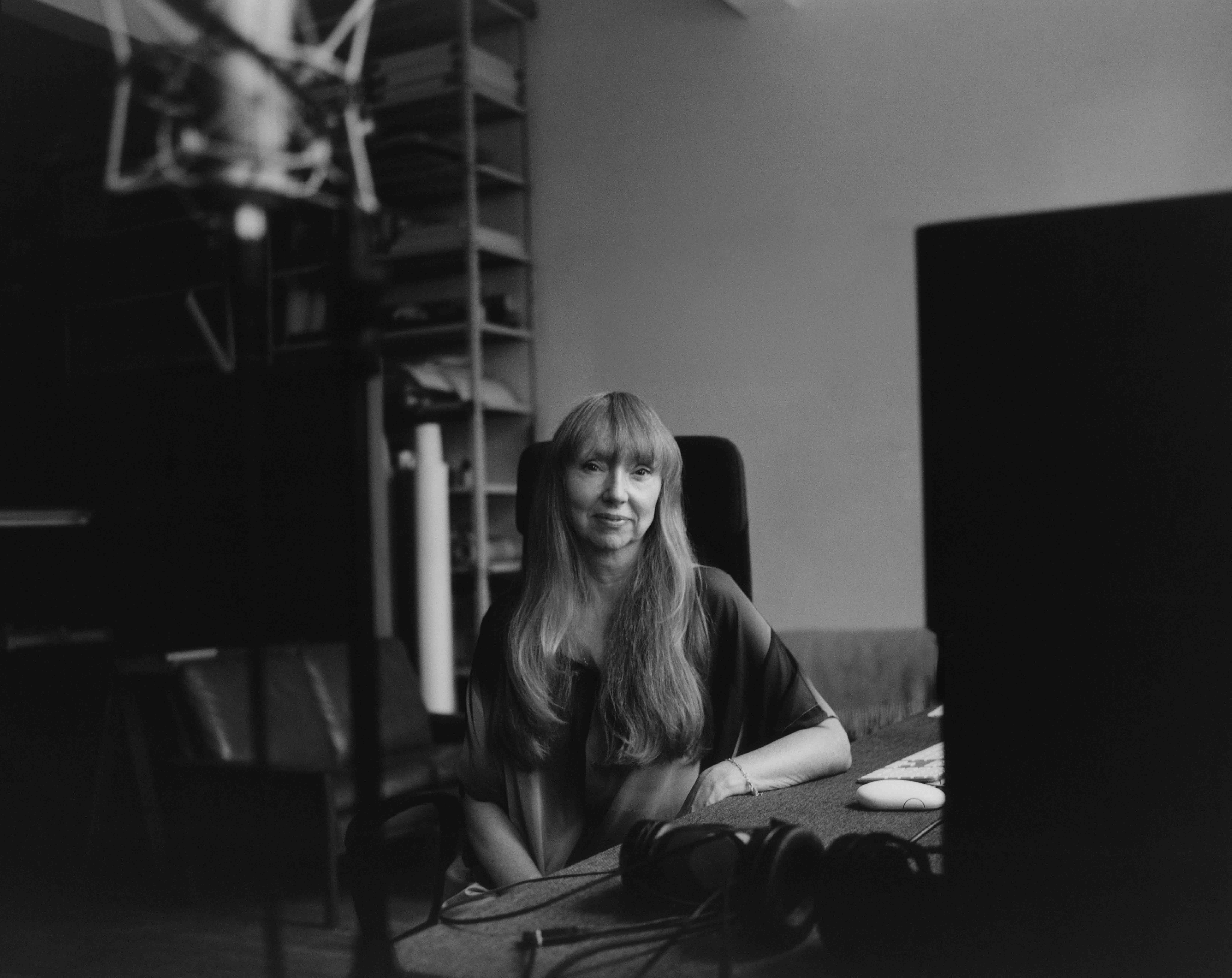

There are certain characters that I am drawn to because of my own upbringing and my own influences. Hanns Eisler and Rosa Luxemburg are public figures that I can identify with, for example, and I think there’s a certain ambiguity in how I sing The Internationale. It’s a song that I’ve enjoyed singing collectively in demonstrations, but I haven’t done so for many years. A solo voice singing it is very different. It suggests solitude, not solidarity.
I think anything that helps bring about a “collective experience” can be quite profound and can make you feel a sense of togetherness, especially when experienced by chance in a public context.
When describing their reaction to one of my installations, someone once remarked that they experienced themselves as part of a community of strangers, all listening to the same thing in the same place without any other connection to one another—an intimate moment experienced collectively. Maybe we have more in common than we imagine.
I love the idea that all sounds—however small, even our conversation now—become white noise and in the end we all become one with the Universe. I like that.