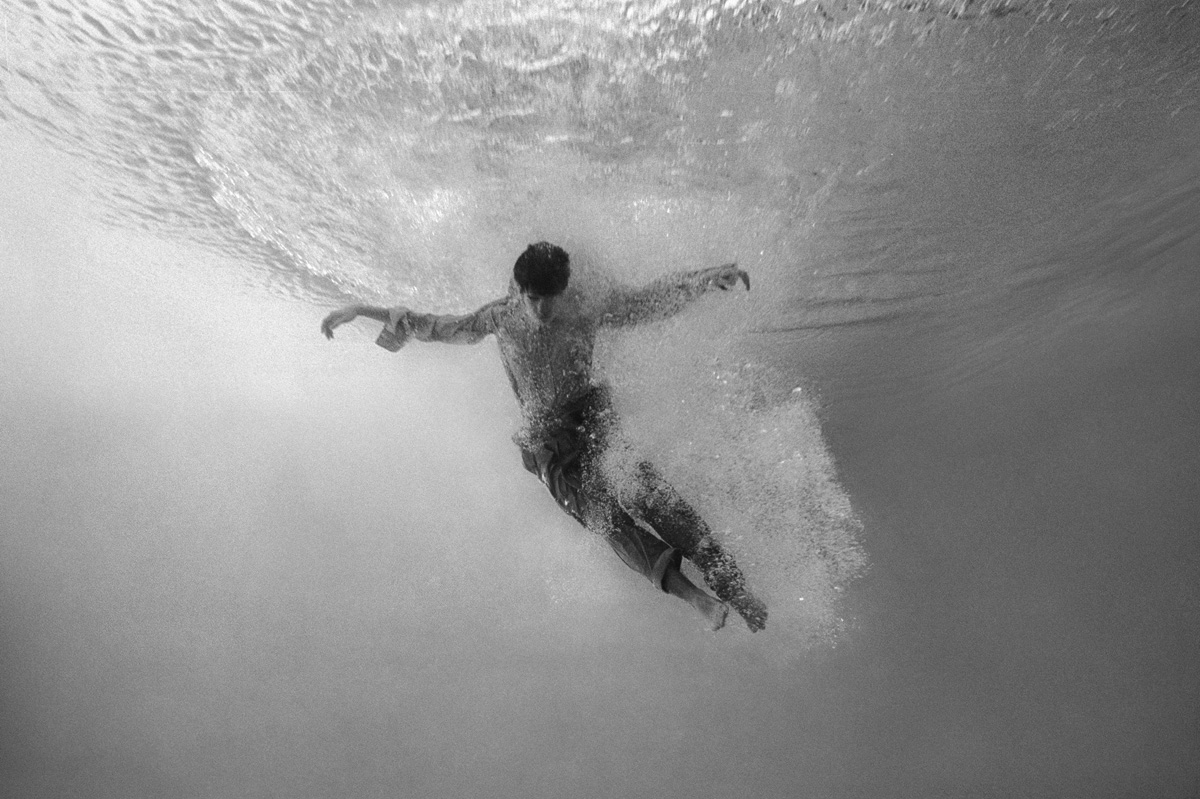
Suspended, a collaboration between Iz Öztat and Ann Antidote, is a video work that was shown at Pi Artworks Istanbul in 2019 during the 16th Istanbul Biennial. The six-minute piece portrays a scene of suspension: Öztat’s body is wrapped in white parchment, tied with rope, and hoisted in the air in the fetal position.
She is trussed, blind, and submissive.
The video work responds to the suspension of freedom of expression in the public sphere, specifically the Turkish government’s 2018 decision to ban public protests in Galatasaray Square, a central site for forums and assemblies. It also explores how the body can exist without agency, casting doubt on the power dynamics of daily life. In other words, it stands as a testimony to the potency of a suppressed minimum form.
Representations of suspended human bodies have existed for thousands of years. Suspension can serve as a ritual, inducing trance and transformation; it can evoke a sense of pleasure, a decompressing of the spine; or it can be fetishised through piercing. In Indigenous nations of North America, body suspension has been practiced as a ritual, a rite of passage, and a means of connecting with the spiritual realm. In Hindu cultures—particularly among Tamil communities during Thaipusam—skin piercing and suspension have been observed for millennia. These acts have also appeared in art, inspiring images of bodies that seem both grounded and floating.
At first, suspension might be envisioned as the body literally hanging—nailed to a cross or floating in midair. Over time, however, it becomes clear that modern culture has developed its own complex language of suspension, with meanings that shift across contexts, eras, and mediums. Jean-Jacques Rousseau’s line from The Social Contract (1762) comes to mind: “Man is born free, and everywhere he is in chains.” This idea is echoed in the recurring image of the suspended body, limbs restrained yet defying gravity.
The Earth, nature, and everything that existed before we became bipedal and started sending emails from our phones are the great instigators and mediators. Our bodies are anchored by gravity. Yet across art and film, bodies are shaped by how this mediating force is resisted, delayed, or negotiated. We rely on our sense of how the body should behave, and when art disrupts that expectation, the suspended form opens itself to multiple interpretations. As Anya Harrison writes in Frieze, the word itself suggests “a state of limbo, a temporary stop, that infinitesimally stretched-out moment before the final verdict falls.” In this way, the suspended body conveys meaning beyond the physical, encompassing themes from divine sacrifice to contemporary questions of agency and power.
One of the earliest and most lasting meanings of suspension is sacrifice. Peter Paul Rubens’ The Descent from the Cross (1611–1613) depicts Christ’s body being lowered, caught between heaven and earth. His mother, Mary, reaches out to him, her face pale with grief. Christ’s body appears to float with a luminous quality. Behind him, colours and tones coalesce sharply into an intense, fixed middle ground, where light and shadow are fixed. His muscles and body appear strained, captured in a moment that blurs the line between sleep and death. Rubens, the master of this seventeenth-century Baroque, brought this severe and powerful image of suspension into focus, rich with fabric, light, and the fragility of a man being removed from the cross—the immediate aftermath of his sacrifice and his grounding in mortality. Sacred skin is turned into flesh, and a mother’s arms into the embodiment of hopelessness.
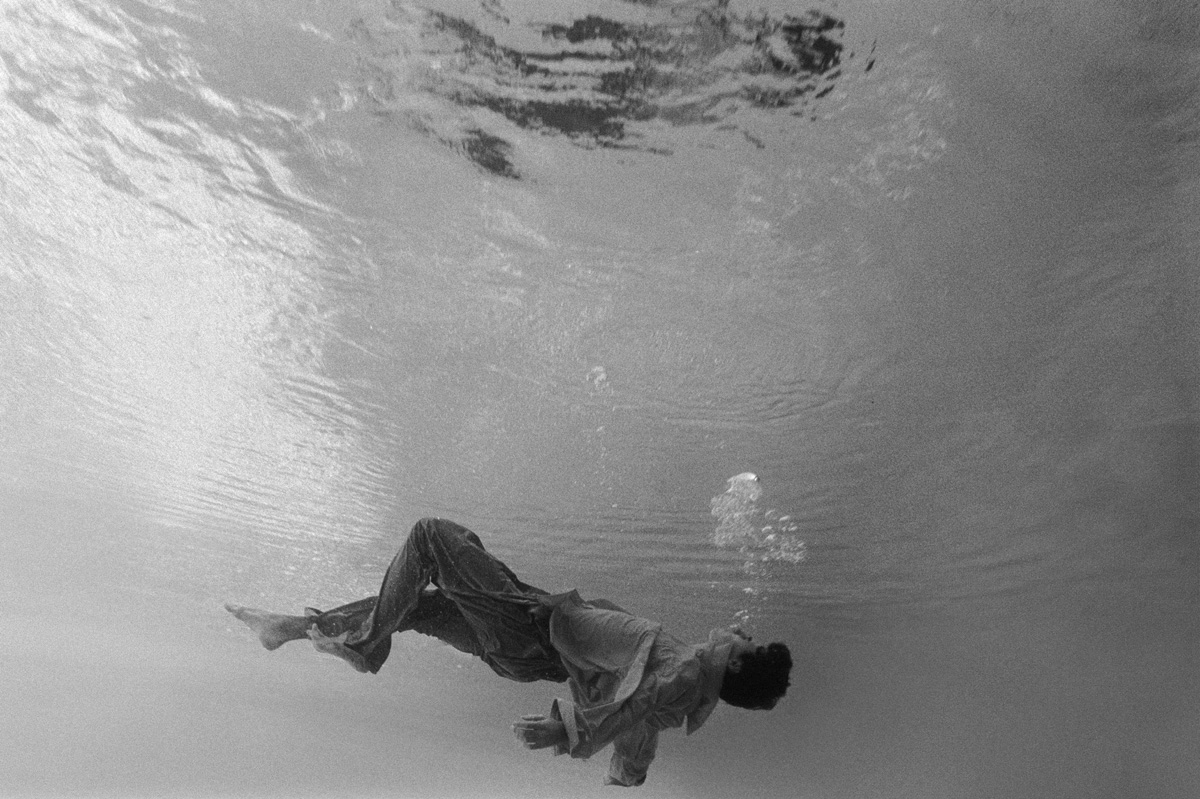
While Rubens’ painting shows the body suspended between heaven and earth, Hans Holbein the Younger’s The Body of the Dead Christ in the Tomb (1520–1522) reveals what happens once suspension ends—and it is far from divine. After the pain, but before his eventual resurrection and ascension, this formally unfamiliar painting shows Christ exsanguinated and supine, life-sized, squeezed into a narrow, horizontal panel. Most images of Christ are anodyne, endearing representations that you could wear on your chest or hang above your bed. Holbein’s painting, however, refuses this comfort. Here, Christ is compressed, immobilised, and irrevocably subject to gravity. There are no verticals, no upward axis, no compositional escape. The body does not float between states, as in Rubens’, but falls into a single finite state. The eye is directed not towards transcendence but into the grave, forcing the viewer to confront the tortured, emaciated body abandoned in indifferent darkness. Where Rubens depicts tension in suspension, as muscles brace against an imminent fall, Holbein portrays inevitability. The earth is no longer a surface beneath the body but a force acting upon it, pressing it into itself and extinguishing movement. Gravity is not anticipated; it is already a condition, the final arbiter of human flesh.
Moving into the twentieth century, a prominent example of Indigenous bodily suspension appears in the 1970 film A Man Called Horse. Set in the early nineteenth century, the story follows Lord John Morgan (Richard Harris), an English aristocrat who is captured by a Sioux community during a hunting expedition in the Dakotas. Morgan comes to respect the community and earns their acceptance. To prove his commitment and his right to marry the chief’s sister, he takes part in the Sun Vow, a sacred rite of passage traditionally performed at the summer solstice. In this ritual, he is suspended by ropes threaded through skewers in his chest. Lifted above the ground, facing the sun, with his feet over a small fire, Morgan’s body is caught between earth and sky. His pain and fear, as his body defies gravity, mark a turning point that transforms his identity. He cries out in pain, his terrified eyes shining with the same glimmer as the rain-shone teepees of his sweating and protruding chest. His body neither rises nor falls; it is withheld, gravity actively resisted through the tension between being grounded and aspiring to the spiritual, underscoring meaning as contingent on the earth departed and the one to which he returns.
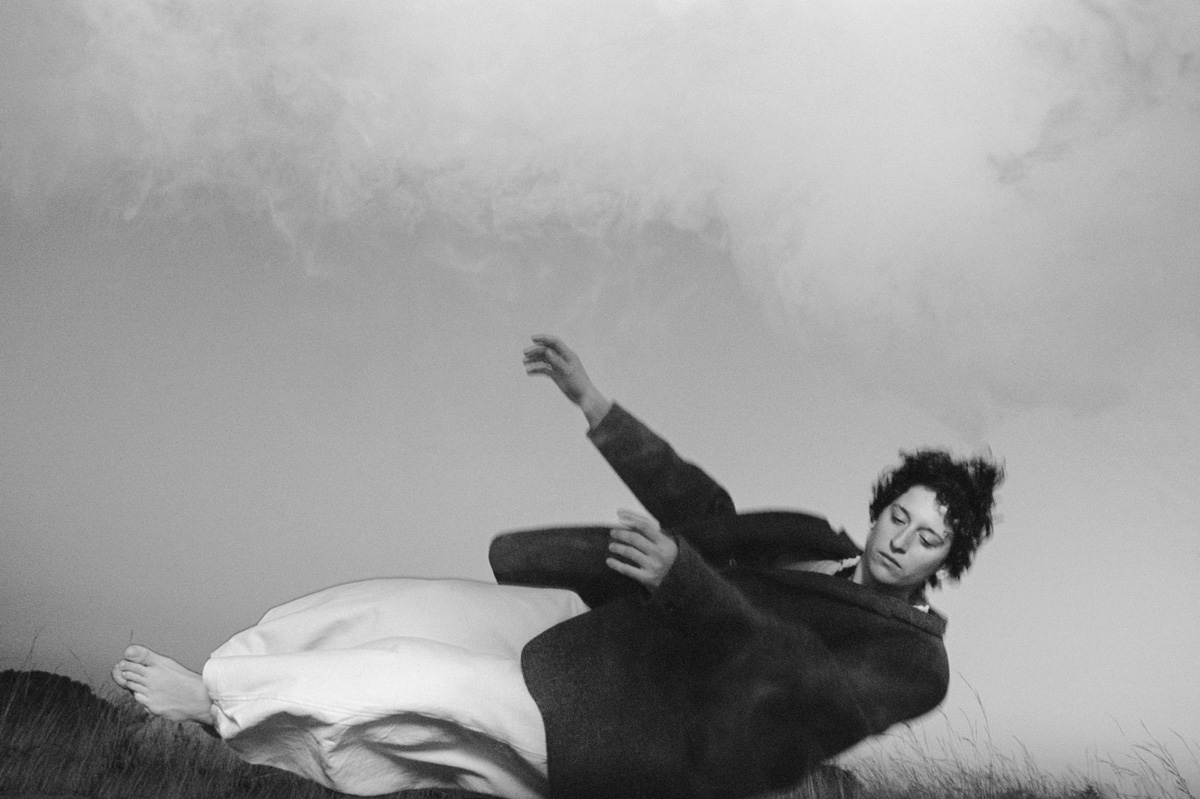
This scene was no Hollywood screenwriting from the cloaca. In a review for The New Yorker, Penelope Gilliatt acknowledged that it was “painstakingly well-researched about Sioux life,” while Vincent Canby, writing in The New York Times in 1970, noted its focus on Sioux ritual and “salvation-through-mutilation,” even as he dismissed the film as “conventionally absurd.” The Sun Vow scene is a serious reenactment of a sacred ritual. In it, the ground is both a threat and a threshold. Here, suspension is not simply a display of endurance: it enacts a deliberate resistance to gravity, distinct from the redemptive suspension seen in Western crucifixion paintings or Holbein’s portrayal of Christ pressed into the earth.
The Earth often sits out of view when acting as an arbiter, conditioning the human body as an artefact held by gravity. While early images of suspension relied on ropes, nails, or other means to keep the body aloft, in modern art suspension became psychological and abstract. Compare the crucifixions by Rubens and Francis Bacon—-three centuries apart, yet radically different in their view of the suspended body. In the twentieth century, artists like Bacon were obsessed with the human figure, painting boxers, brawlers, bankers, and popes. His figures hang in liminal spaces that suggest neither grounding nor flight; lines form impossible boxes, suspending bodies without visible supports. Though he called himself a realist, he only ever hinted at the earth and its faculties; one can feel gravity in his paintings through the compression of limbs and the taut tension of musculature, moulded like wet clay and twisted into contorted figures that lean from toilet bowls or beds, wrapped into themselves, whimpering like mangled animals. Bacon enacts physical suspension lines, pulling and scraping with paint and hoghair brushes, forcing febrile white skin and thick pink flesh to sit in a claustrophobic, airless atmosphere. The body is not lifted away from the earth but driven inward by it, as though gravity were acting internally rather than beneath the feet. The physicality of paint becomes both medium and message—the suggestion of an invisible force we cannot see but constantly negotiate. As his biographer Michael Peppiatt once wrote, he had “no interest in producing paintings that could be interpreted as having a specific, and hence necessarily limited, meaning.” Instead, his paintings convey an inward pressure that collapses the body into itself, making suspension a condition of psychic compression rather than spatial elevation. Hovering in tension, with neither the drama of ascent nor descent, they maintain a skittish existence—at times aggressively loaded, and at others brutally bare portraits that possess a restless energy.
While Bacon’s figures show gravity working inward, what if an artist used their own body—under the force of gravity—to show suspension? Kazuo Shiraga, a postwar Japanese abstract painter and founding member of the Gutai group, foregrounded direct bodily engagement with both medium and the earth, abandoning the brush and at times suspending himself from a rope attached to his studio ceiling. Dangling above the canvas, Shiraga spread thick oil paint with his feet, his body struggling against the rope. His body becoming part of the artwork, he used the rope’s movement to capture suspension in a new way. Here, gravity is a real and tangible force, tethering the human body to the earth even as it is briefly lifted.
And what if gravity were approached differently altogether? Instead of lifting the body, what if one surrendered to its pull? Cuban-American artist Ana Mendieta did precisely that in her Body Tracks performances, which began in 1974. In 1982, Mendieta was at Franklin Furnace, a performance space in New York City, where she coated her arms in animal blood and tempera before pressing her hands and arms up to a sheet of paper on the wall. Wearing a white shirt and trousers, the red began to spill towards the floor. Mendieta followed it down, dragging her arms and leaving a track of her movement in blood. Viewers witnessed the body’s passage through gravity as it completed its work. The blood is captured as a historical artefact and record, pressed into existence by the body. There is a reason this work is loaded with pathos: Mendieta imprinted the moment of action—of the body yielding—to confront the theme of violence against women, reframing the suspension of the mark as a means of portraying surrender, an act of capitulation. Giving in to gravity, giving up. It is noted that three years after this performance, on 8 September 1985, Mendieta died after falling from her Greenwich Village apartment. She had been pushed from her bedroom window on the 34th floor by her husband, the artist Carl Andre.
Arriving in the twenty-first century, with the contemporary work of Stelarc, the Earth and gravity become both maker and product of the artistic process, materialised. Based in Melbourne, the Cyprus-born Australian artist has used his suspended body as art for decades, swinging, spinning, and hovering with his skin penetrated and prostheticised into a site of experimentation. “His work has a serious intent. He explores what it is to be human, and he uses his body as his medium,” says filmmaker Richard Moore, who made a documentary on the artist in 2025. Hanging from dozens of lines, his flesh pulled by hooks, he floats to experience suspension itself. These works reduce experience to raw bodily sensation, a starting point from which new distinctions and possibilities may arise. In this sense, our index of meaning expands beyond sacrifice, resistance, or thresholds, into a space where the terrestrial is absolute and can serve as a source for subsequent expression.
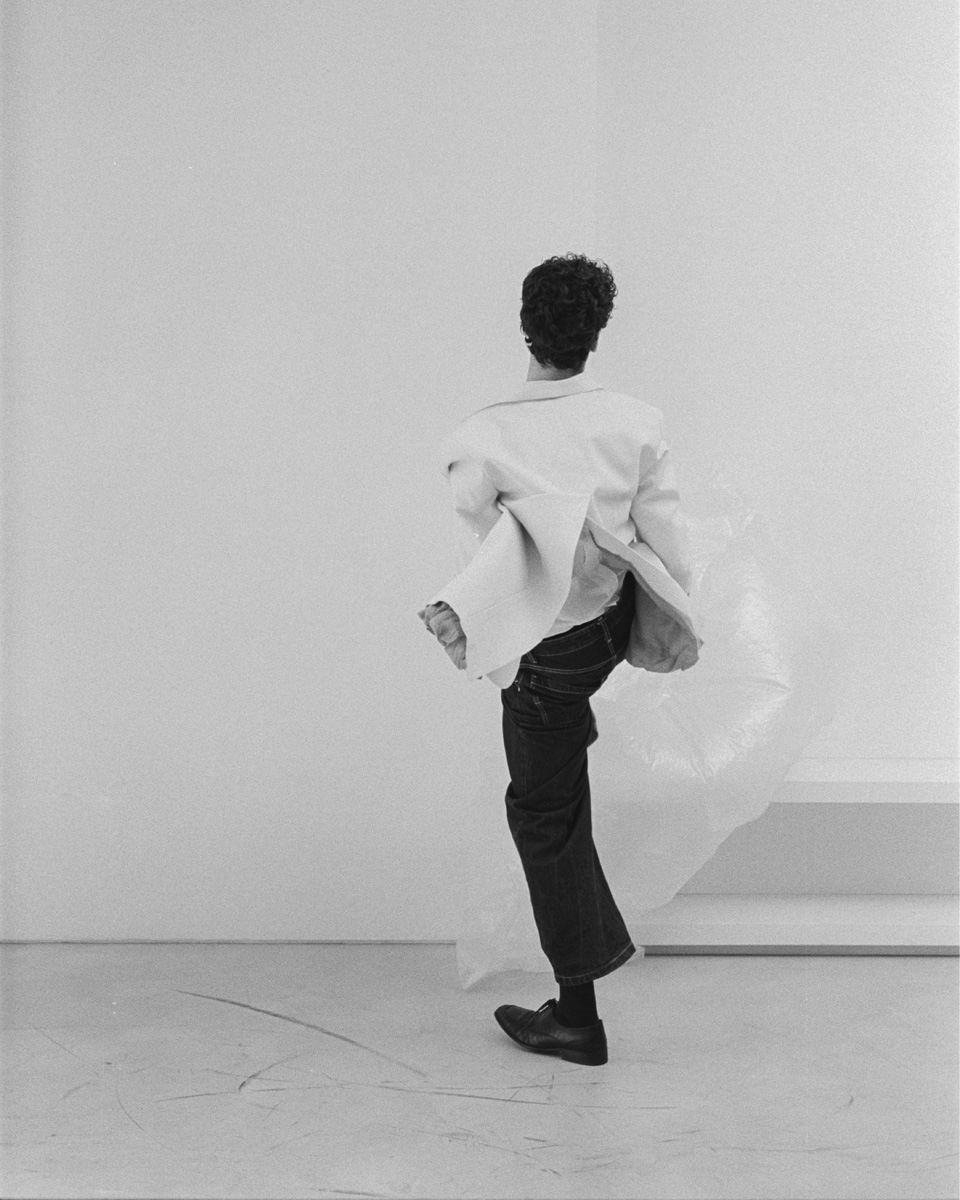
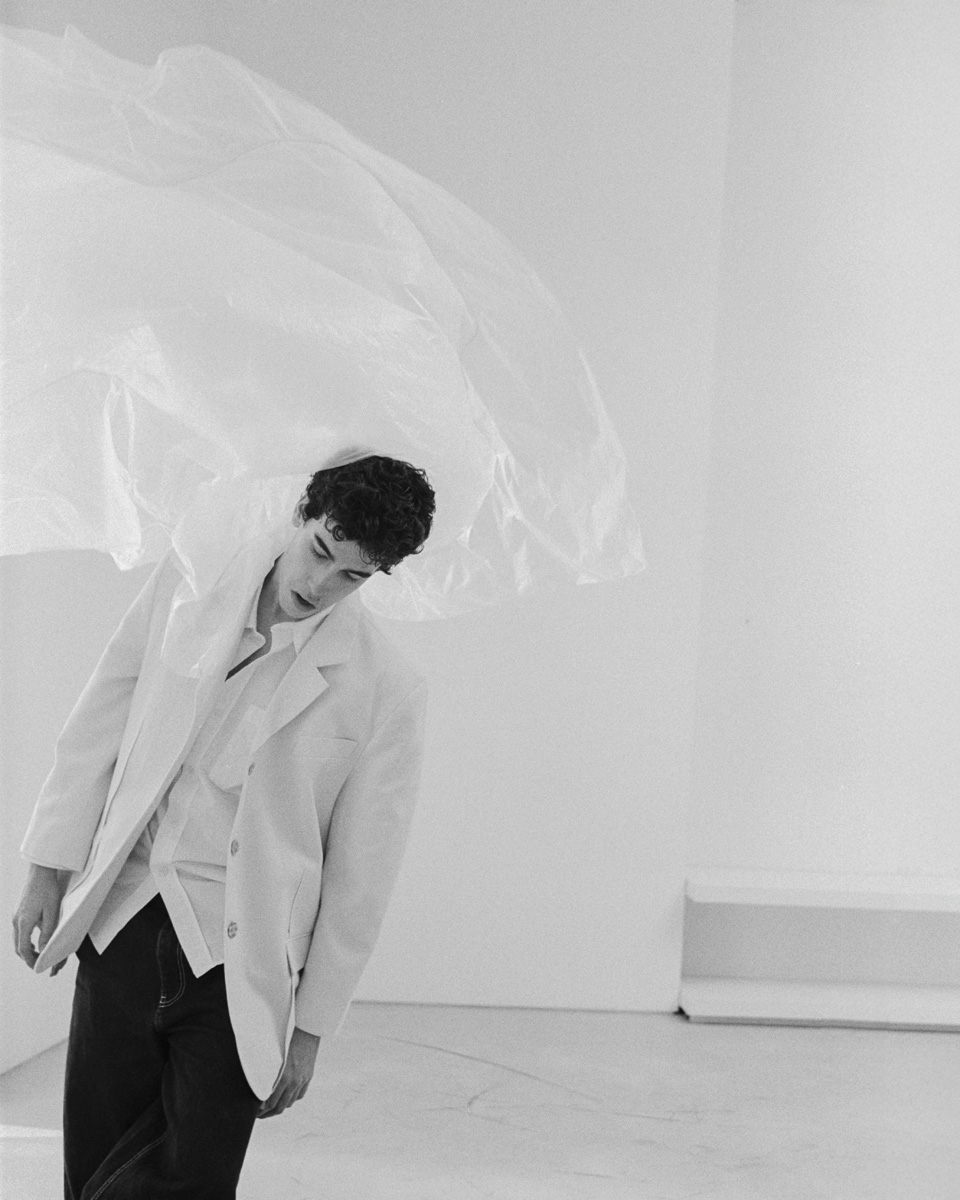
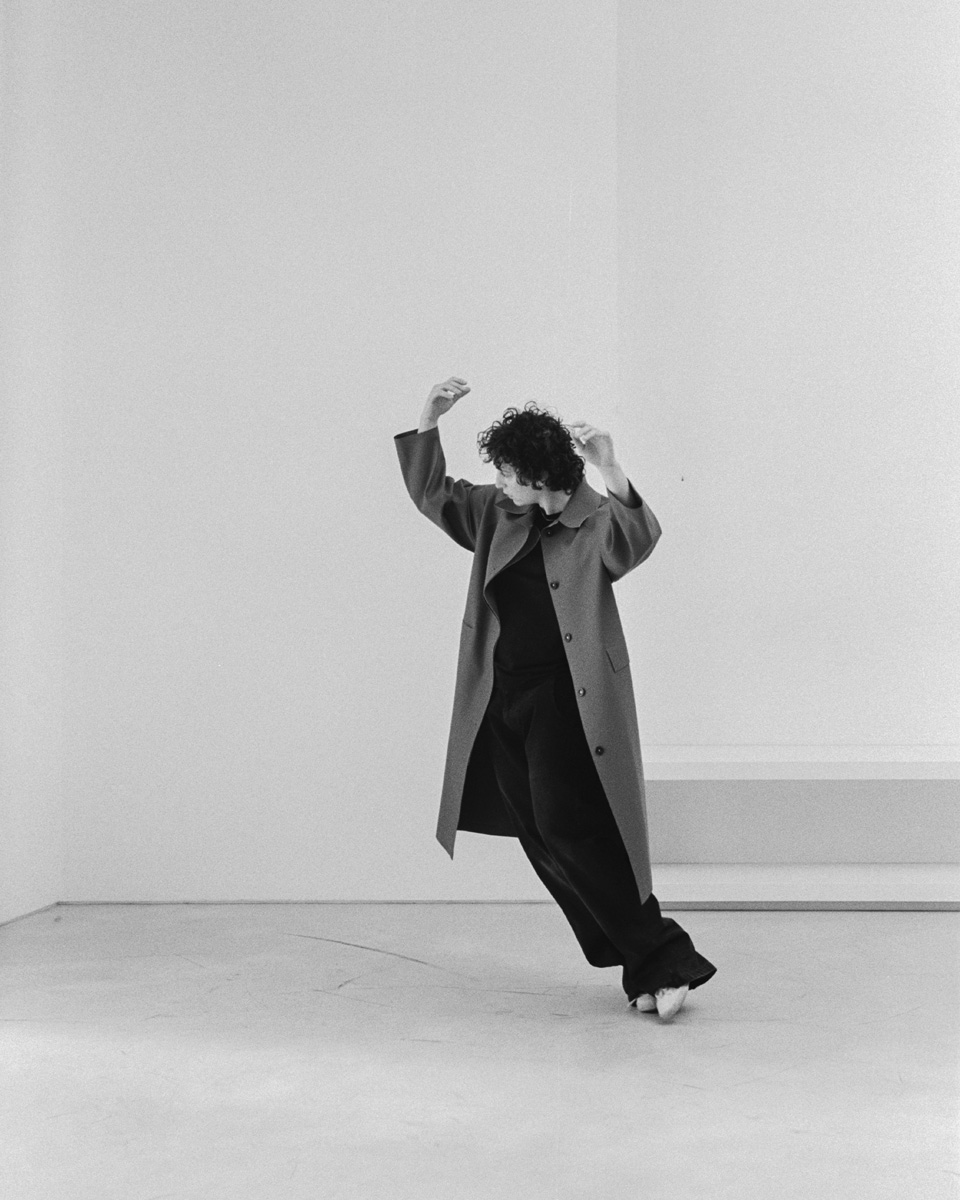
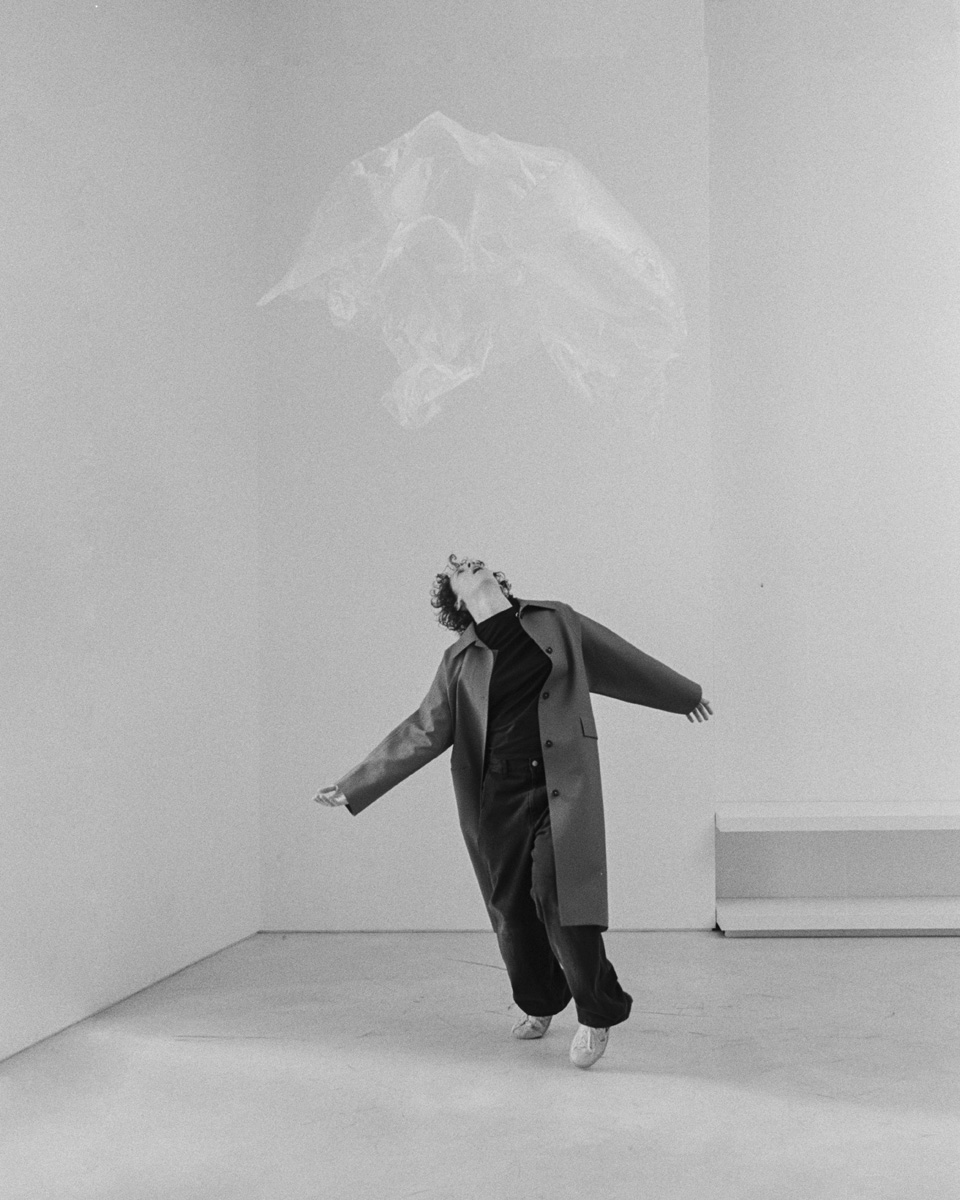
In September 2025, nine dancers took over the Brooklyn Museum’s grand Beaux-Arts Court. Dressed in black by Peter Do, they moved across the glass-topped square with remarkable lightness, periodically overlapping paths, springing and intertwining in midair before returning to the ground, holding each other and then releasing, jerking away and returning like buoys in the sea. The tension and balance in the performance had no linear guide. Tracing lines were followed and then dismissed in favour of new patterns and movements. The point was its fleeting nature, a choreography of constant recalibration in dialogue with the Earth. The collective interplay of dancers, shifting in and out of the centre of the neoclassical atrium, reminds us that dance offers another way to view suspension—not as a frozen image, but as an ongoing negotiation with gravity. . Weight shifts, arms wave in and out of the midline, and bodies sway in constant motion. As the dancers leap, just for a moment, they too are suspended. In this adaptable body, we can briefly see gravity working as a co-creator.
What ultimately unites these practices is that they are defined by the terrestrial. Their negotiation with gravity need not deny or transform it; that is the artist’s job.