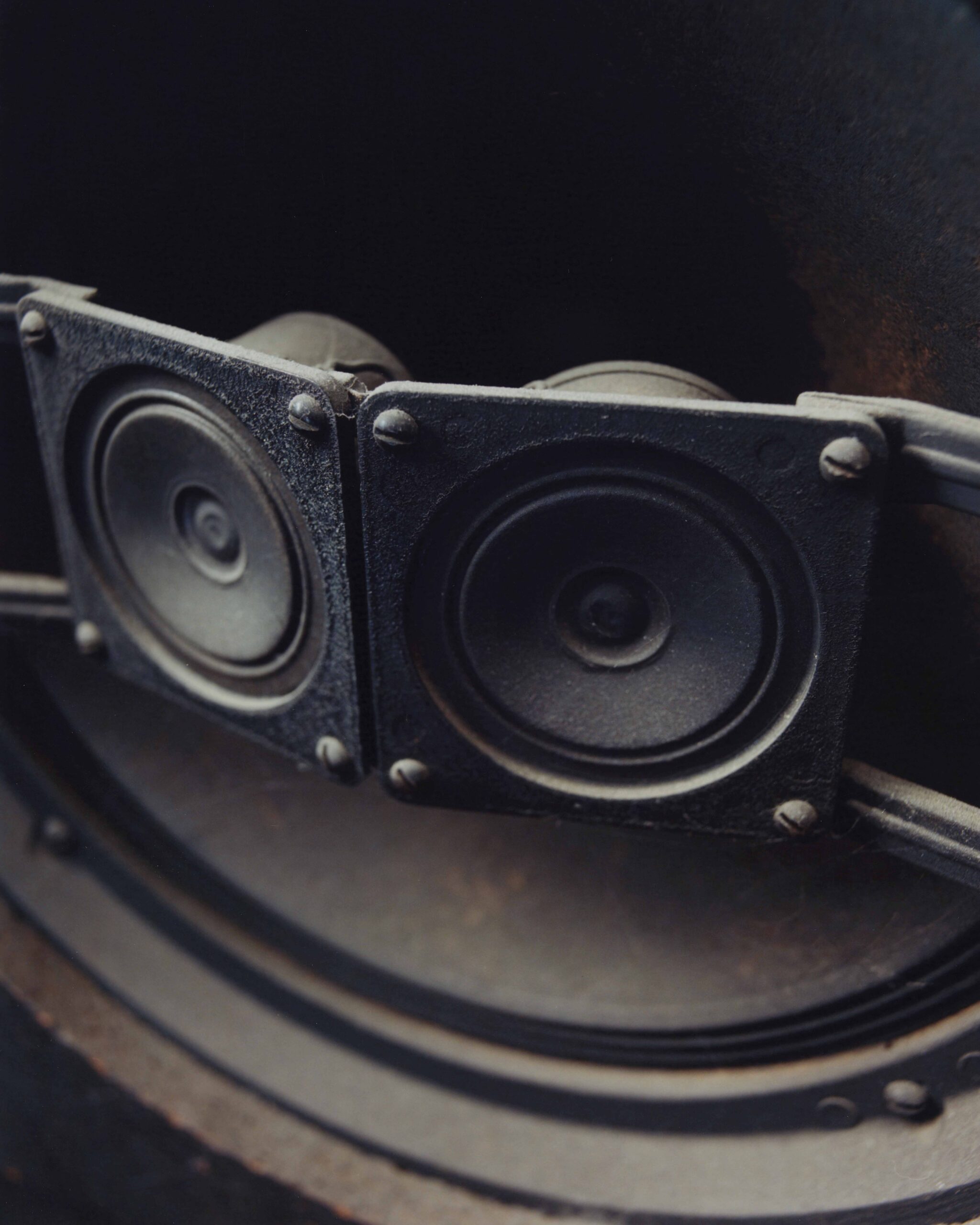
While cinema is often framed through the language of optics—images and techniques that capture the eye of the “viewer”—it is sound that subtly guides the heart through a film’s unfolding narrative. Music, in particular, serves as the emotional centre of film, shaping mood, inflecting silence, and deepening our connection to character and story. More than accompaniment, it animates the invisible currents of feeling that move beneath the image.
Sound design, too, is essential to cinematic world-building. When crafted with intention, it becomes a film’s sonic signature—evoking place, atmosphere and emotion through a layered acoustic landscape.. Carrying a distinct narrative charge, sound is capable of expressing nuance, memory, and emotional undercurrents that image and dialogue may only gesture toward. Composers and sound designers create an aural language that shapes experience from within the frame. In this liminal space between hearing and feeling, sound becomes narrative in its own right, drawing the viewer into a sensory world often before a single image registers.
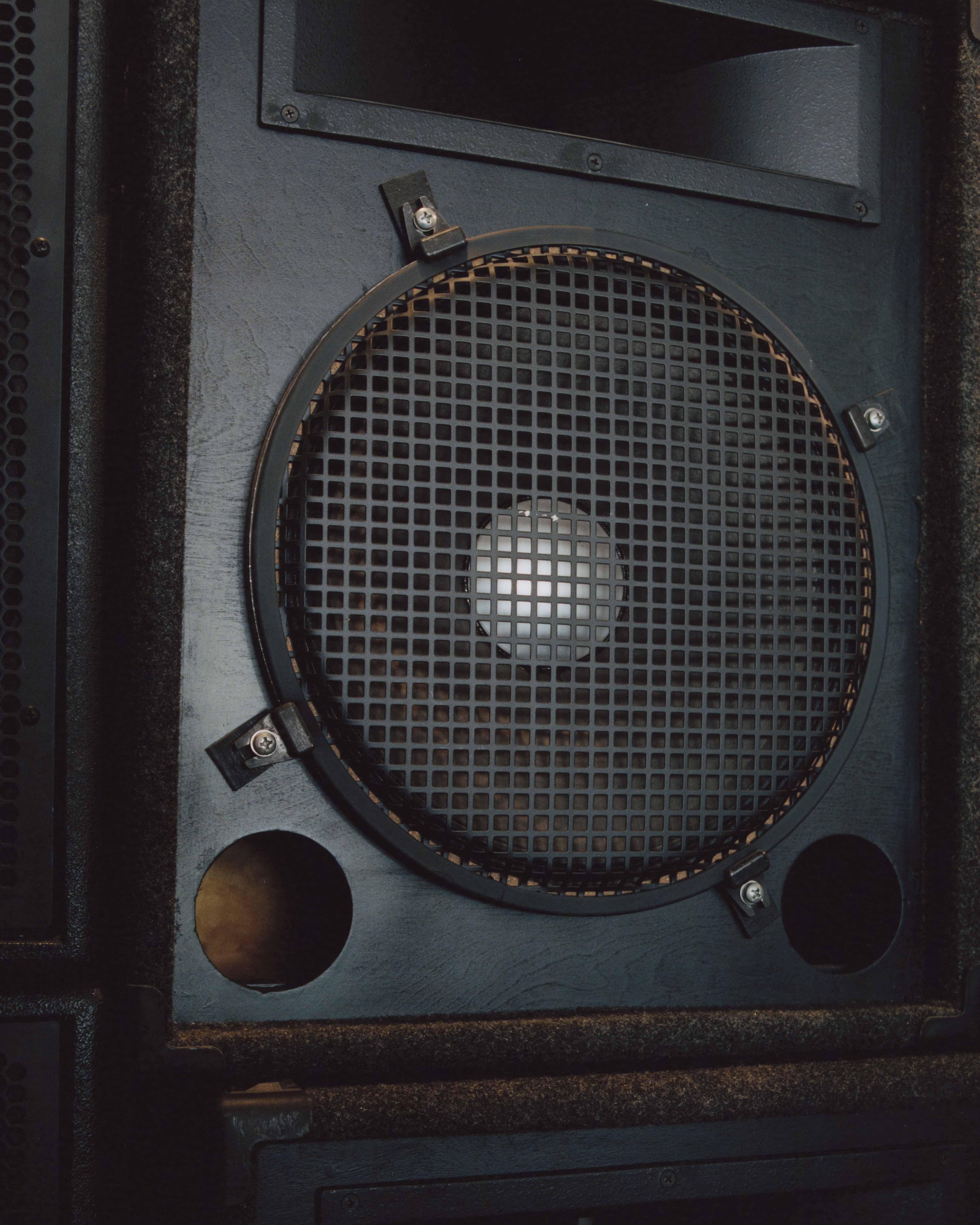
The advent of synchronised sound in cinema heralded one of the most transformative moments in film history—a seismic shift that reshaped the very grammar of the medium. Prior to this innovation, films were silent tableaux, reliant on expressive gestures, intertitles and live musical accompaniments to convey narrative and emotion. The arrival of sound technology—exemplified by Western Electric’s breakthroughs, the Vitaphone Corporation’s pioneering experiments, and the landmark release of The Jazz Singer (1927)—did more than add a new sensory dimension; it fundamentally altered the ontology of film itself.
This transition, however, was neither seamless nor universally celebrated. The introduction of sound challenged established creative conventions and industrial workflows. Playwrights supplanted silent-era screenwriters, orchestrations gave way to recorded scores, and casting hinged on vocal timbre as much as physical presence. This new auditory layer imbued Hollywood cinema with an unmistakably American cultural identity, projecting a unifying—if hegemonic—sonic signature to global audiences. Yet this very dominance sparked debate: critics lamented that sound compromised the visual purity of cinema, diluting its unique capacity for poetic imagery.
In turn, technological limitations compounded these tensions. Early sound films were constrained by static cameras and cumbersome, hidden microphones, curtailing directorial mobility and creative experimentation. The delicate balancing act of recording dialogue, music, and ambient sound demanded new technical expertise and a recalibration of artistic priorities. Nevertheless, as film scholar Tony Chanan elucidates in his book Repeated Takes (1995), sound soon evolved beyond mere documentation; the recorded voice and music became performative instruments in their own right, enabling novel modes of expression. Crooning, for instance, emerged as a new vocal style attuned to the intimacy of the microphone, while playback techniques allowed for the reimagination of music as a dynamic, malleable element within the cinematic text.

Thus, the dawn of synchronised sound inaugurated a complex interplay between image and acoustics, a dialogue that continues to underpin cinema’s evolving aesthetic. It laid the groundwork for sound’s centrality—not only as a narrative device, but as a structural and emotional force that informs the viewer’s perception and engagement.
The concept of the leitmotif, first theorised in the operatic works of Richard Wagner, constitutes one of the most enduring and profound intersections between music and narrative psychology in the arts. A leitmotif—an evocative, recurring musical phrase—becomes intimately bound to a character, emotion, or idea, an aural signifier that resonates beneath the surface of the narrative. Within cinema, this device has proven indispensable in articulating subconscious, emotional states and structuring story arcs with nuanced precision.
Hollywood’s Golden Age composers, such as Max Steiner and Bernard Herrmann, harnessed the leitmotif to extraordinary effect, embedding psychological complexity within their scores. Steiner’s work on Gone With the Wind (1939) envelops the film’s sweeping epic in themes that echo desire, loss and resilience, while Herrmann’s chilling motifs for Vertigo (1958) and Psycho (1960) render internal terror audible, shaping the viewer’s unease even before the visual cues crystallise. These leitmotifs do more than accompany the image; they instruct the audience’s emotional reception, creating a tacit language of feeling through repetition and variation.


While earlier films explore the immersive potentials of bespoke sound design, the broader landscape of film music came to include another duality: the interplay between musical scores and curated soundtracks. These two forms, though often conflated, shape cinematic experience in distinct ways. A score, composed specifically to mirror a film’s emotional trajectory, tends to operate in fluid response to the shifting cadences of narrative, guiding our perception subtly from the shadows. In contemporary cinema, the legacy of the leitmotif endures but often adopts a more complex, intertextual form. Ronald Rodman’s analyses of popular music within film soundtracks reveal how pop songs operate as modern leitmotifs, charged with cultural memory and irony.
A soundtrack composed of pre-existing songs enters the film already charged with cultural meaning. When employed effectively, such tracks do more than complement a scene—they can transform how the song is consumed thereafter, embedding the cinematic moment into the collective imagination. Consider the triumphant choreography of Twist and Shout (1963) in Ferris Bueller’s Day Off (1986), a Beatles track now encoded with adolescent rebellion, or Stuck in the Middle With You (1972) in Reservoir Dogs (1992), in which the Stealers Wheel song—once playful—has been irrevocably fused with torture and tension.
There is a parallel effect when songs are written specifically for films. Tracks like Time of My Life for Dirty Dancing (1987) or My Heart Will Go On for Titanic (1997) function almost as affective epilogues—summative gestures that distill the film’s emotional essence into a single, transportable refrain. Whether composed or curated, the thoughtful deployment of music in film crystallises mood, memory and meaning—often becoming the fingerprint through which a film is most viscerally remembered.
Quentin Tarantino’s Pulp Fiction (1994) exemplifies this: its use of nostalgic tracks refracts and disrupts narrative expectations, layering scenes with a tension born from cultural recognition and subversion. Similarly, Trainspotting’s (1996) deployment of Iggy Pop’s Lust for Life (1977) and Underworld’s Born Slippy (1996) evokes a euphoric yet nihilistic undercurrent. Thus, the leitmotif evolves from a classical musical phrase into a broader sonic signifier—a cultural marker that anticipates and shapes emotional responses even before the image demands it. In this way, music becomes a conduit for memory, identity, and the tacit psychology of film, enriching the narrative with layers of meaning that extend beyond the visible.
In today’s digital and streaming era, the relationship between film music and its audience has undergone a profound transformation, one that reshapes how sound functions both within and beyond the cinematic experience. As scholars such as Mark Katz and Tony Chanan have observed, music increasingly circulates outside its original context, engaging listeners across platforms—from curated playlists to TikTok snippets—dissolving the boundaries between film, personal memory, and popular culture.
Soundtracks have gained new autonomy, often preceding or outliving the films that birthed them. The cinematic score no longer solely accompanies the visual narrative, but exists as a standalone artefact—a cultural object that inhabits the listener’s private and social spaces. This shift alters how audiences consume and remember films; the music becomes a mnemonic device, evoking emotional landscapes long after narrative details have faded, sometimes even in abstraction from the film itself.
Consider Amélie (2001), scored by Yann Tiersen, who produced a suite of accordion-led, waltz-like miniatures that outgrew the film’s Parisian whimsy to become a kind of shorthand for charm, nostalgia, and imaginative retreat. The music circulates in cafes, commercials, and travel montages—its association with the film often eclipsed by its own cultural afterlife. Likewise, Drive (2011), in which the synth-heavy score by Cliff Martinez, which he paired with songs by Kavinsky and College, quickly transcended the film’s noir minimalism to become a defining sound of early 2010s aesthetic cool. For many, the music exists independently, its pulsing electronic textures evoking an urban solitude unbound from the film’s actual plot.
Beyond the familiar markers of the leitmotif and the emotional shorthand of pop, horror cinema has long demanded something else: soundscapes that operate as vehicles of disruption. Music in horror rarely relies on melody alone; it often trades in texture, unease, and the collapse of sonic expectation. In this space, certain instruments have emerged not as carriers of tune, but as generators of tension.
The Apprehension Engine, designed and built by Tony Duggan-Smith in collaboration with composer Mark Korven, exemplifies this shift. A latticework of metal rulers, strings and springs, this instrument is less played than provoked as it is bowed, scraped and rattled into motion. It doesn’t produce music in a conventional sense, but rather an aural instability: a series of uncanny resonances that feel both mechanical and bodily. Used in films such as The Witch (2015) and The Lighthouse (2019), its presence is deeply atmospheric, conjuring a sonic landscape in which certainty dissolves.
Robert Eggers’ The Lighthouse, in particular, pushes this sonic immersion into existential terrain. The film’s soundscape is dominated by the maddening, cyclical presence of the foghorn—a near-relentless siren that echoes the characters’ isolation and psychological unravelling. Archaic language, the crashing of waves, the wail of gulls—all are meticulously woven into the auditory fabric, creating a symphony of decay and madness. The soundscape becomes a vessel for the characters’ descent, where nature’s elemental forces collide with human fragility.

Similarly, other specialty, and often experimental, instruments, such as the theremin, the waterphone, and the Mega Marvin, employ steel bowls and protruding rods to create drones and reverberations that are equally unplaceable. Wavering tones and frictional clatter are often layered beneath scenes of psychological rupture or paranormal ambiguity. The result is a disorientation not just of mood, but of space itself. These sounds don’t underscore emotion so much as implant it, bypassing narrative cues to engage directly with the body. What emerges across these devices is a language of affect without melody, where fear is produced through friction, duration, and unresolved resonance. Instruments such as these point toward a broader truth in contemporary horror: that what unsettles most is not what we see, or even what we recognise, but what we can’t place—sonically, emotionally, spatially.
In the evolving landscape of contemporary cinema, studio A24 has carved a distinct sonic identity—one that prioritises atmosphere, psychological tension, and sonic experimentation as integral to storytelling. Its films eschew traditional horror’s reliance on jump scares or overt visual shocks, instead constructing immersive worlds that evoke anxiety and dread from within. Here, sound is not merely a tool but a fundamental framework, shaping perception and emotional resonance with surgical precision.

Hereditary (2018), Ari Aster’s debut feature, leans heavily on sonic motifs to express pathological fracture and familial trauma. The domestic becomes uncanny as creaks and faint whispers punctuate the silence, transforming ordinary household noises into harbingers of trauma. Colin Stetson’s score, with its breath-like brass drones and cyclical repetition, presses physically against the viewer, evoking a visceral sense of suffocation and inescapable fate. Amongst its most unsettling sonic elements is the now iconic tongue click—a seemingly innocuous sound that becomes a presage of doom. This click, a nervous tic of the young and ill-fated Charlie, operates on multiple levels: as a personal marker of anxiety, as a spectral echo after her death, and as a structural signal of encroaching horror. It resembles the tick of a clock, counting down to the family’s psychological disintegration, or a knock at a door—signalling not entry, but invasion. The house, already dense with silence and emotional repression, becomes a resonant chamber for this sound. As the tongue click recurs in uncanny moments, it draws the characters—and the viewer—deeper into a state of auditory paranoia.
This one small sound becomes a mnemonic device for grief and dread, threading its way through the family’s unraveling. In this way, the horror of Hereditary is not simply supernatural—it is internal, embodied. The house itself becomes a metaphor for the mind: each room sealed with repression, each corner shadowed with inherited trauma. This aligns with the classic horror trope that “the call is coming from inside the house”—a narrative structure in which the source of terror is not an external monster, but something already embedded within the self, or in this case, the family unit. Through its use of aural triggers, such as the tongue click, Hereditary doesn’t just depict fear—it sonifies it, situating terror inescapably within the mind and beneath the skin.
Similarly, Aster’s Beau Is Afraid (2023) employs sound as an unreliable narrator of internal dread. In this film, he crafts an operatic anxiety through a kaleidoscope of chaotic sonic elements—ambient noise, shrill voices, sudden silences—that mirror Beau’s fractured mental state. The score resists stable meaning, instead oscillating between discordance and fragile melody, reflecting the protagonist’s disorientation. Here, sound destabilises the viewer’s sense of reality, transforming auditory cues into expressions of subjective fear rather than external threat.
In Jonathon Glazer’s The Zone of Interest (2023), sound transcends its traditional cinematic function, emerging as a profound vehicle for moral indictment and emotional disquiet. Foregrounding the power of sound to shape ethical consciousness and emotional response, in The Zone of Interest sound design achieves a remarkable transmutation: it transforms silence into accusation, ambient noise into moral reckoning. Unlike conventional horror that relies on climaxes, jump scares, and sudden shocks, this film situates terror within the ambient soundscape, shifting the locus of horror from what is seen to what is heard, or conspicuously not heard. The visual frame is deliberately banal and domestic, exposing the veneer of bourgeois normality that masks unspeakable atrocity. It is through sound’s unignorable presence—fragmented, eerie, and often absent—that the true horror insinuates itself, demanding a form of listening that unsettles the viewer’s complacency and exposes the complicity and denial at the heart of human experience.
Mica Levi’s score eschews melody and harmony in favour of drones, pulses, and stark silences, crafting a sonic terrain in which tension arises not from explicit cues, but from omission and suggestion. Industrial sounds, distant screams, and mechanical rhythms infiltrate the film’s acoustic space, creating an atmosphere thick with unease. Here, sound becomes a presence unto itself, a character that haunts the narrative and confronts the audience with an ethical and psychological rupture, which is in turn intensified by the contrast between the emotional detachment of its characters and the visceral discomfort evoked through sound. Its horror is not confined to discrete moments of terror, but is instead woven into the very structure of the film’s sonic fabric—a sustained indictment that lingers beyond the screen.
In contrast to classic horror scores such as Bernard Herrmann’s iconic Psycho soundtrack, A24’s sound philosophy avoids directing fear through clear musical signals. Instead, sound disorients, immerses and destabilises, cultivating a sustained hum of dread rather than episodic spikes. Its horror is internalised, a ceaseless pressure that resists resolution. In A24’s oeuvre, sound is the architect of anxiety—an omnipresent force that shapes the contours of fear, identity, and subjective reality.
Tethered to cinema, yet active far beyond the screen, these contemporary scores and soundtracks inhabit a strange liminal space. In the streaming era, a film’s emotional register may be encountered first through Spotify’s algorithm or TikTok edits. In this sense, scores are no longer subordinate to image but participants in a wider ecology of feeling. They become a proxy for the mood or the message—a form of aesthetic residue that lingers, migrates and mutates long before and after the credits roll.
In this light, the listener’s mind emerges as an active participant in the sonic life of cinema. The ways we hear, remember and reimagine film music illuminates sound’s enduring power to shape identity, nostalgia, and emotional connection, transcending the screen to inhabit the intimate spaces of memory and imagination. It transforms films from visual events into immersive experiences where cultural resonances unfold in a complex dialogue between sound and image.
This vision resonates with Wagner’s ideal of the Gesamtkunstwerk—the total work of art—where image, sound and psyche converge in seamless communion. To truly listen to cinema is to acknowledge and engage with sound not as a supplement, but as the emotional and structural core of film’s enduring power.